How to Sharpen a Tungsten Electrode
Proper tungsten preparation stabilizes the welding arc and concentrates thermal energy. Master correct grinding techniques to prevent weld contamination and tungsten inclusions in structural joints.

Always grind your tungsten electrodes parallel to the long axis using dedicated abrasive wheels. Never cross-grind, as radial striations cause arc wander and premature degradation.
Ready to compare models? Start with our Best Welder: Top Home Shop & Jobsite Picks Tested.
Practical Quick-Reference Table
| Scenario / Metric | Recommended Target | Why It Matters |
|---|---|---|
| Material: Aluminum (AC) | Balled or 20-30 deg taper | Stabilizes cleaning action |
| Material: Stainless Steel (DC) | 60-degree included angle | Concentrates arc for penetration |
| Grinding Wheel Material | Dedicated Borazon or Diamond | Prevents carbon contamination |
| Grinding Direction | Longitudinal parallel lines | Eliminates lateral arc wandering |
| Taper Length | 2.5x electrode diameter | Optimizes arc column stability |
| Personal Safety | PARC/HEPA extraction hood | Mitigates radioactive dust inhalation |
Understanding Tungsten Electrode Metallurgy and Alloy Classifications
Selecting the correct tungsten alloy dictates your overall arc stability during high-frequency starts. Manufacturers add specific rare-earth oxides like lanthanum or cerium to improve electron emission and extend service life.
Pure tungsten remains suited strictly for aluminum welding under alternating current parameters. Modern inverters utilize alloyed variants found in our best tungsten for aluminum inverter guide to reduce thermal wear.
Choosing inappropriate chemical compositions leads to rapid tip degradation and weld joint contamination. Match your electrode composition directly to base material specifications and power source output characteristics.
Industry standards categorize tungsten types using standardized color bands painted on the extremity. Verify these color codes before mounting any electrode into your water-cooled or air-cooled torch collet.
- Pure tungsten carries a green color designation for AC aluminum work.
- Lanthanated electrodes feature gold or blue markings for versatile DC applications.
- Ceriated tungsten utilizes gray identifiers for low-amperage precision joint welding.
- Thoriated options display red markings but require strict handling safety precautions.
Decoding Manufacturer Color Coding Standards
Standardized color coding prevents catastrophic metallurgical mismatches on the shop floor. Always inspect the bare rod stock if faded paint obscures the original manufacturer identification markings.
Store your assorted tungsten rods inside sealed compartment containers to prevent oxidation. Mixing up alloy types degrades weld puddle control and violates strict aerospace fabrication codes.
- Inspect color bands prior to cutting or grinding operations.
- Discarad unidentifiable rods to maintain strict quality control standards.
Selecting the Proper Included Grinding Angle and Taper Length
The included grinding angle directly controls your welding arc cone geometry. Sharper angles concentrate the arc plasma stream, yielding deep root penetration on thin stainless steel assemblies.
Blunter tapers disperse thermal energy, preventing premature melting when welding heavy plates. Consult our mig vs electrode welding comparison while you standardize your exact taper length.
Incorrect taper dimensions cause erratic arc wandering and unstable shielding gas coverage. Calculate your target length precisely using digital calipers before applying the tungsten to your abrasive wheel.
Maintain consistent tip flats at the apex of your sharpened tungsten electrode. A microscopic flat prevents ball formation on direct current applications and stops tungsten particle ejection.
- Use 15 to 30-degree angles for low-amperage micro TIG tasks.
- Apply 60 to 90-degree tapers for standard DC carbon steel joints.
- Maintain a 0.5 millimeter flat on the electrode apex.
- Measure taper lengths systematically using vernier measurement tools.
Calculating Taper Geometry for Specific Amperage Ranges
Higher welding currents demand blunter angles to withstand intense thermal bombardment. Match your geometric taper to operating amperage parameters specified in your qualified welding procedure.
Small diameter electrodes require careful handling to prevent snapping during aggressive grinding. Adjust your feed pressure downward when tapering delicate micro tungsten rods on fine wheels.
- Scale taper angles upward as operating amperage increases.
- Protect delicate small-diameter rods from excessive lateral pressure.
Video Walkthrough: Tungsten Grind Angles Matter!
Dedicated Grinding Equipment Setup and Contamination Prevention
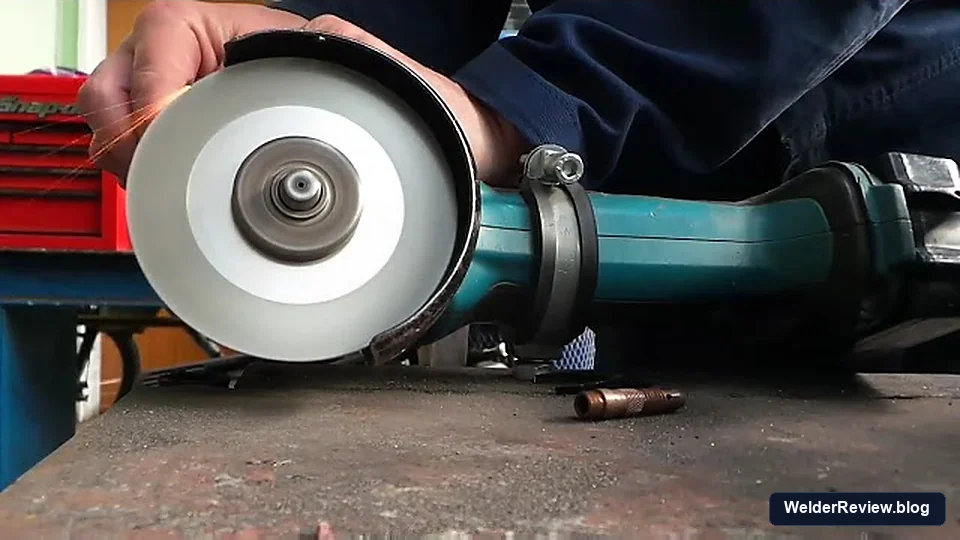
Never use standard bench grinders contaminated with carbon steel workshop debris. Ferrous particles transfer directly to your tungsten tip, causing severe weld porosity and unstable arc ignition.
Dedicate a specific, clean diamond or borazon grinding wheel exclusively for tungsten preparation. Diamond wheels maintain superior abrasive flatness and generate minimal thermal distortion across the sharpening face.
Secure your grinding apparatus firmly to a stable workbench to eliminate mechanical vibration. Excessive vibration creates uneven grinding marks that destabilize shielding gas and arc streams.
Install dedicated vacuum extraction systems to capture hazardous tungsten and oxide dust particles. Protect your respiratory system by filtering all airborne particulate matter generated during maintenance.
- Restrict grinding wheels solely to non-ferrous tungsten preparation.
- Secure grinding units to prevent chatter and asymmetrical tapers.
- Utilize diamond-coated grinding discs for superior edge retention.
- Implement local exhaust ventilation for safe workshop operations.
Maintaining Wheel Cleanliness and Dressing Procedures
Diamond wheels load up quickly with tungsten residue during heavy fabrication cycles. Clean your abrasive surface regularly using an appropriate dressing stick to restore cutting efficiency.
Overheated wheels glaze over and burn the tungsten tip during the sharpening process. Monitor contact pressure closely to prevent blue discoloration and micro-cracking along tapered surfaces.
- Dress diamond wheels periodically to remove embedded tungsten.
- Avoid excessive downward pressure that induces thermal stress cracks.
Step-by-Step Longitudinal Grinding Technique Execution
Position your tungsten rod so that grinding striations run strictly parallel to the center axis. Radial grinding marks disrupt electron flow, causing the arc to wander unpredictably across joints.
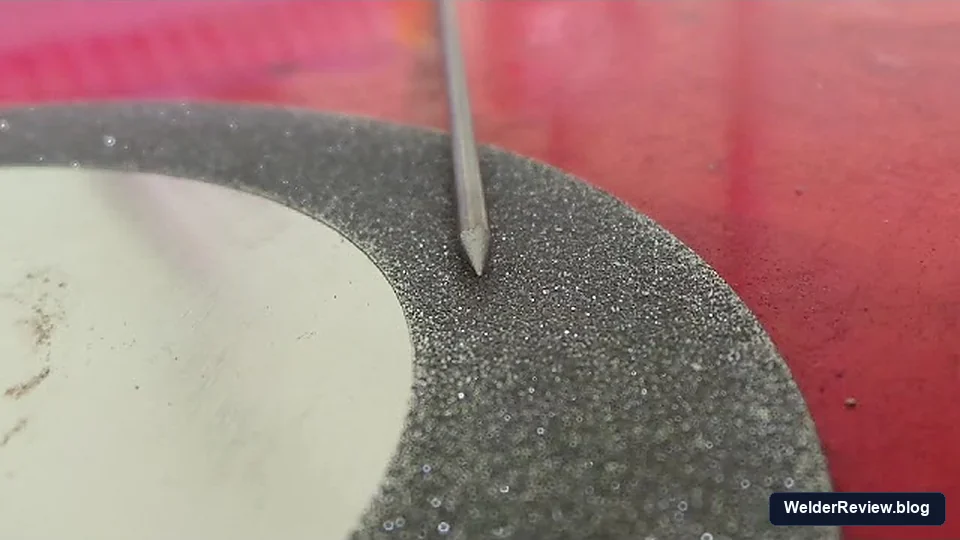
Hold the electrode gently against the rotating wheel using a steady hand guide. Check our dc electrode positive vs dc electrode negative guide while rotating the tungsten continuously.
Complete the sharpening stroke by pulling the tungsten smoothly away from the wheel. This directional motion prevents burrs from forming at the delicate apex of your sharpened electrode.
Quench hot tungsten electrodes in clean water only after complete cooling occurs. Rapid thermal shock causes microscopic internal fracturing that shatters the electrode tip upon arc ignition.
- Grind exclusively along the longitudinal axis of the rod.
- Rotate the electrode continuously to maintain radial symmetry.
- Pull the tungsten smoothly away to eliminate terminal burrs.
- Allow natural air cooling before inserting into the torch.
Utilizing Mechanical Tungsten Grinding Jigs
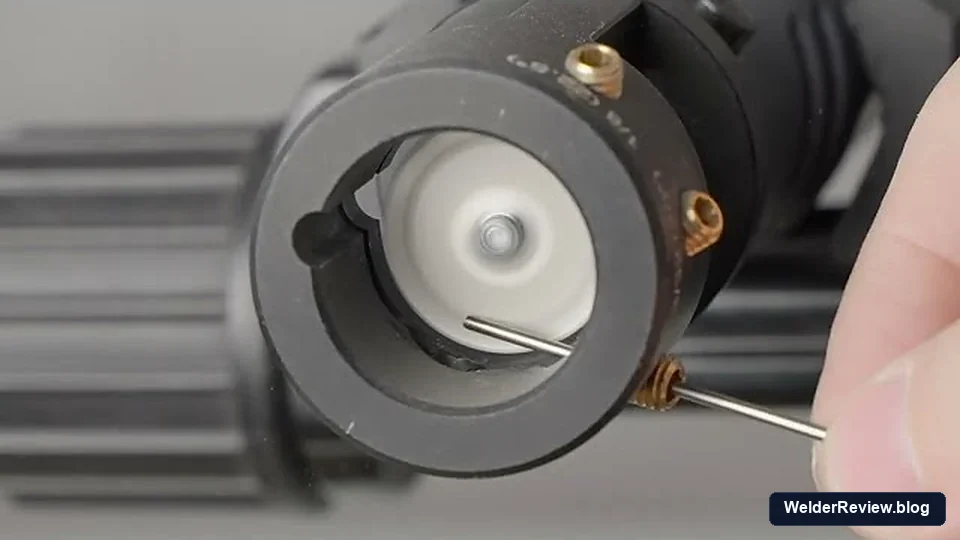
Mechanical jigs ensure precise, repeatable angles across every sharpened electrode in your shop. Insert your tungsten into the adjustable collet and slide it smoothly across the wheel slot.
Preset angle slots eliminate human error during high-production structural welding tasks. Lock your electrode depth securely before engaging the grinding surface to guarantee uniform arc performance.
- Set mechanical guides to your exact required angle specification.
- Lock electrode stick-out distances consistently prior to grinding passes.
Inspection, Cleaning, and Post-Grinding Preparation Standards
Inspect every sharpened tungsten under magnification to verify surface finish and geometry. Reject any electrode displaying asymmetrical tapers, surface cracks, or embedded abrasive wheel particles immediately.
Clean the finished tungsten using high-purity acetone and a lint-free shop wipe. Removing residual dust oils ensures pristine arc initiation and prevents contamination within sensitive titanium weld pools.
Store inspected electrodes in clean, dust-free protective tubes until required. Use our welding amperage and thickness calculator before planning operations to prevent accidental contamination from shop grease.
Inspect the blunt tip flat to ensure proper sizing for your current parameters. A uniform flat distributes thermal load evenly and prevents premature balling on direct current setups.
- Magnify sharpened tips to detect microscopic surface defects.
- Clean electrodes with pure acetone before torch insertion.
- Store prepared tungsten in dedicated sealed protective containers.
- Verify tip flat dimensions match your current setup specifications.
Identifying and Rejecting Defective Sharpening Results
Crooked tapers create asymmetric shielding gas coverage and deflect the welding arc. Discard any tungsten rod showing visible pitting, deep gouges, or uneven surface striations from improper technique.
Thermal abuse turns tungsten metal dark blue and compromises structural integrity. Cut away the damaged section completely using a diamond cutoff wheel before attempting to regrind.
- Discard electrodes with asymmetrical or eccentric tapers.
- Cut away overheated blue sections before reshaping tips.
Video Walkthrough: 🔥115MM DIAMOND DISC TO SHARPEN TUNGSTEN ELECTRODES SAW BLADES + MORE💎
Handling Thoriated and Rare-Earth Dust Safety Protocols
Thoriated tungsten electrodes contain low levels of radioactive thorium dioxide additives. Inhaling fine grinding dust presents long-term health risks that require strict engineering controls and protective gear.
Wear an approved particulate respirator whenever grinding thoriated or rare-earth tungsten electrodes. Never perform dry hand-grinding operations in unventilated workshops without proper local exhaust dust collection systems.
Collect all grinding residue in sealed disposal containers according to local environmental regulations. Prevent dust accumulation on workbench surfaces by wiping down the grinding station with wet methods.
Wash your hands thoroughly after handling unsharpened or prepared tungsten rods before eating. Maintaining strict personal hygiene eliminates accidental ingestion of radioactive thorium or rare-earth oxide particulate matter.
- Wear certified particulate respirators during all grinding procedures.
- Utilize enclosed grinding booths with HEPA filtration systems.
- Clean grinding stations using wet wiping to control dust.
- Wash hands thoroughly after handling tungsten electrode materials.
Transitioning to Non-Radioactive Alternative Alloys
Modern fabrication shops increasingly replace thoriated tungsten with safe lanthanated options. Lanthanated and cerium alloys provide exceptional arc starting performance without introducing radioactive health hazards.
Evaluate your welding procedure specifications to see if rare-earth blends qualify. Eliminating radioactive materials simplifies workshop waste disposal protocols and protects employee health during daily tasks.
- Test lanthanated variants as direct replacements for thoriated rods.
- Simplify workshop waste disposal by eliminating radioactive materials.
Troubleshooting Common Arc Instability and Wandering Causes
Arc wandering during TIG welding usually indicates improper longitudinal grinding striations. Inspect your tungsten tip immediately if the plasma arc spirals or deflects away from the joint centerline.
Contaminated shielding gas or a damaged gas lens can also destabilize the welding arc. Ensure your flow meter reads correct shielding levels and verify that your tungsten stick-out is optimal.
An excessively large tip flat causes the arc to jump erratically between edges. Regrind your electrode immediately to restore a sharp apex and stabilize the concentrated thermal plasma stream.
Check your electrical ground clamp connection if arc fluttering persists after sharpening. Loose work leads introduce electrical resistance that disrupts stable arc transfer across the structural joint interface.
- Regrind tungsten immediately if radial scratch marks appear.
- Check shielding gas flow rates and torch consumable condition.
- Reduce tip flat dimensions to stabilize erratic arc cones.
- Secure work ground clamps to eliminate electrical resistance.
Resolving Tungsten Splitting and Splattering Issues
Tungsten splitting typically stems from excessive grinding pressure or thermal shock quenching. Use lighter feed pressure and allow air cooling to prevent internal micro-fractures within brittle metal.
Excessive amperage settings will melt the tungsten tip instantly into the weld puddle. Match your electrode diameter correctly to the operating current to prevent catastrophic inclusion defects.
- Reduce grinding feed pressure to prevent internal fracturing.
- Match electrode sizing precisely to operating amperage levels.
Frequently Asked Questions
Why must I grind tungsten electrodes parallel to the axis?
Grinding parallel ensures electrons flow smoothly along longitudinal grain lines. Perpendicular marks create lateral resistance that causes the arc to wander uncontrollably.
Can I use a standard workshop bench grinder for tungsten?
Never use standard wheels contaminated with carbon steel debris. Always dedicate a clean diamond wheel exclusively to prevent severe weld porosity.
What is the ideal tip flat size for DC welding?
Maintain a flat apex measuring half the electrode diameter. This prevents spherical ball formation and stabilizes the arc cone.
Why does my tungsten electrode split during grinding?
Excessive pressure or rapid water quenching causes internal stress fractures. Always use light feed pressure and allow natural air cooling.
Do I need special precautions for thoriated tungsten?
Thoriated rods contain radioactive thorium dioxide additives. Always wear a certified particulate respirator and use local exhaust ventilation.