How to Select Tungsten Color for Welding Aluminum
Choosing the correct tungsten electrode color ensures stable arc performance on aluminum alloys. Proper selection prevents contamination and maintains optimal AC cleaning action.

Selecting pure, lanthanated, or ceriated tungsten depends on your machine inverter type and amperage range. Always match your electrode geometry to the specific AC balance settings for maximum weld integrity.
Ready to compare models? Start with our Best Welder: Top Home Shop & Jobsite Picks Tested.
Practical Quick-Reference Table
| Scenario / Metric | Recommended Target | Why It Matters |
|---|---|---|
| Conventional Transformer | Pure Tungsten (Green) | Provides traditional balling for older wave shapes. |
| Advanced AC Inverter | Lanthanated 1.5% (Gold) | Delivers superior arc starts and long tip life. |
| Low-Amperage Sheet | Ceriated 2% (Grey) | Excels at low current without splitting. |
| High-Amperage Plate | Zirconiated (Brown/White) | Resists tungsten spitting during heavy output. |
| Electrode Prep Angle | 20 to 30 Degrees | Controls arc cone width on thick aluminum. |
| Shielding Gas Flow | 15 to 20 CFH Argon | Protects hot tungsten from rapid atmospheric oxidation. |
Metallurgy of Aluminum and TIG Electrode Demands
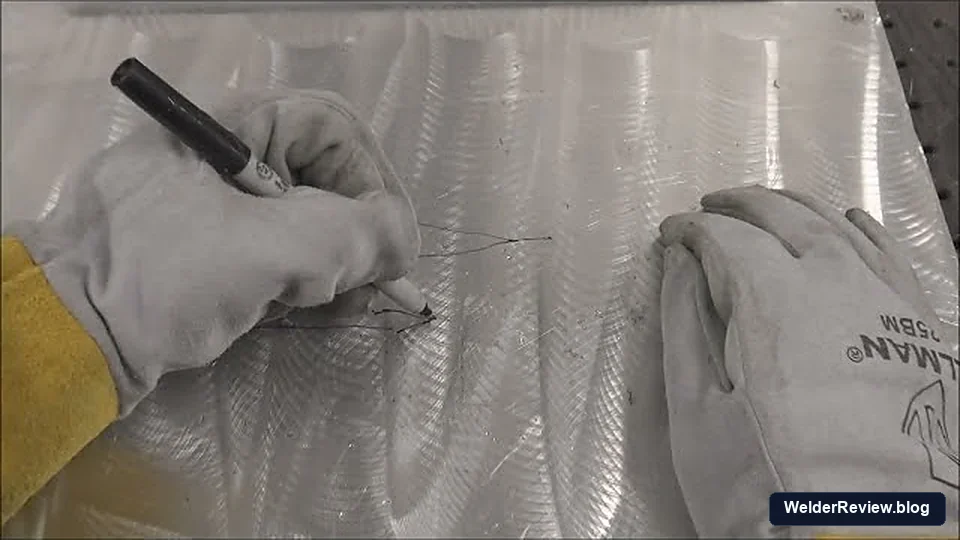
Welding aluminum requires alternating current to break up surface oxides effectively. This electrical cycle places extreme thermal stress on the tungsten electrode tip during every single AC wave transition phase.
Selecting the right color designation prevents premature tip splitting and erratic arc wandering. Operators must understand how rare-earth oxides influence electron emission characteristics under high-frequency AC welding parameters today.
Aluminum alloys present unique thermal conductivity challenges that demand precise heat input control. Your tungsten electrode must maintain a stable hemispherical profile without melting into the aluminum weld puddle.
Modern power sources deliver advanced square wave outputs that alter traditional electrode selection criteria completely. Technicians should evaluate how amperage output directly dictates the optimal tungsten diameter and alloy blend.
Aluminum features a stubborn surface oxide layer melting at 2072 degrees Fahrenheit, while the underlying pure metal melts at 1220 degrees Fahrenheit, requiring alternating current to clean and penetrate effectively.
During the electrode positive half-cycle, electrons flow from the workpiece to the tungsten, bombarding the tip and generating immense thermal loads that demand high-melting-point refractory metal alloys.
Selecting inappropriate electrode compositions leads to premature tip splitting, erratic arc cones, and tungsten inclusions within the weld pool, compromising structural integrity in critical aerospace or pressure vessel applications.
Modern inverter power sources pair exceptionally well with options from our best tungsten for aluminum inverter guide, delivering rapid arc stabilization and superior arc stability.
- Always match tungsten chemistry to your power source output type.
- Never use standard thoriated electrodes for AC aluminum applications.
- Monitor arc stability closely during high-amperage aluminum joint fabrication.
- Inspect electrode tips frequently for micro-fractures and surface pitting.
AC Balance Impact on Electrode Life
Adjusting the AC balance controls the ratio of electrode positive to negative polarity. Higher cleaning action increases thermal load on the tungsten tip significantly.
Balancing penetration and oxide removal extends operational lifespan across demanding multi-pass aluminum weldments. Operators must fine-tune frequency settings to minimize excessive tip balling phenomena.
- Increase electrode negative percentage to reduce excessive tip melting.
- Verify cleaning action settings before initiating critical structural aluminum welds.
Analyzing Pure Tungsten and Traditional Green Electrodes
Pure tungsten features a distinct green color code and contains zero alloying additives. It forms a clean balled end naturally when exposed to alternating current welding arcs.
Traditional transformer machines rely heavily on green tungsten for conventional aluminum fabrication tasks. However, current inverters often cause pure tungsten to drop globules into the weld puddle.
Thermal resistance remains relatively low in pure tungsten compared to rare-earth blended alternatives. This limitation restricts maximum amperage handling before the electrode tip deforms beyond acceptable tolerances.
Operators working with vintage equipment still appreciate the clean ball formation of green electrodes. Modern fabricators generally transition toward alloyed options for enhanced arc stability and longevity.
Pure tungsten, designated by AWS classification EWP and colored green, contains 99.5 percent pure tungsten with zero rare-earth oxide additions for arc enhancement.
When operating on traditional transformer machines, green electrodes form a naturally rounded ball at the tip during AC welding due to thermal conduction limits under heavy loads.
However, pure tungsten exhibits poor electron emission characteristics, resulting in high arc voltage demands and reduced current-carrying capacity compared to modern alloyed electrodes.
Today, experienced welders generally avoid green electrodes on advanced inverters because they tend to spit tungsten into the aluminum puddle under high-frequency square wave outputs.
- Identify pure tungsten easily by its bright green painted band.
- Maintain a clean hemispherical ball diameter matching the electrode width.
- Avoid high current loads that cause pure tungsten tips to shed.
- Use dedicated grinding tools to prevent contamination on green electrodes.
Balling Technique for Pure Tungsten
Forming a proper ball requires applying high frequency AC on a copper plate. Keep the arc short until a smooth hemispherical tip forms naturally.
Never grind pure tungsten into a sharp taper for inverter use. The lack of alloying elements causes sharp tips to melt immediately under AC loads.
- Melt the tip slowly using high amperage AC on scrap copper.
- Keep ball diameter under 1.5 times the electrode core thickness.
Video Walkthrough: Tungsten Colors Don't Matter Anymore
Evaluating Lanthanated Alloys for Modern Inverter Welders
Lanthanated tungsten electrodes offer exceptional versatility across both AC and DC welding processes. Gold and blue color codes indicate specific lanthanum oxide percentages for precise application matching.
These electrodes provide outstanding arc starting characteristics without requiring high open-circuit voltages. The rare-earth dopant distributes evenly to resist thermal shock during rapid polarity shifts.
Fabricators welding thin aluminum sheet or heavy structural plate can optimize gas coverage by pairing lanthanated variants with recommendations from our best cup for tig welding aluminum review.
Current carrying capacity remains exceptionally high without causing premature splitting or severe erosion. This makes lanthanated variants a universal favorite in modern fabrication and aerospace shops.
Lanthanated tungsten electrodes, typically containing 1.5 or 2.0 percent lanthanum oxide, offer exceptional arc starting and maintain a stable, pointed tip profile during AC cycles.
The inclusion of lanthanum significantly lowers the work function, allowing for smoother arc initiation and exceptional resistance to thermal fatigue when dealing with high amperage demands.
Gold-coded LaLa20 electrodes perform exceptionally well on both AC aluminum applications and DC steel fabrication, making them highly versatile choices for multi-process fabrication shops.
Operators can maintain a slight truncation at the tip rather than a full ball, which concentrates the arc cone for superior penetration and narrower bead profiles.
- Choose gold-coded lanthanated tungsten for general multi-purpose aluminum fabrication.
- Maintain a slight blunt taper rather than a complete ball.
- Store electrodes in dry containers to preserve surface oxide integrity.
- Inspect sharpened tips for longitudinal scratches that destabilize arcs.
Lanthanum Concentration Variations
Different percentage blends alter current capacity and ignition behavior during automated welding cycles. Standardizing on one specific blend simplifies shop inventory management and quality control.
Operators should test various oxide loadings when fine-tuning automated orbital welding equipment.
- Match percentage ratings to specific machine manufacturer recommendations.
- Test arc ignition reliability prior to production welding runs.
Understanding Ceriated and Zirconiated Tungsten Performance
Ceriated tungsten features a grey color designation and performs exceptionally well at lower amperages. It initiates arcs instantly and maintains stability without spitting molten particles into the weld.
Zirconiated tungsten displays brown or white markings and resists contamination during AC welding. It bridges the gap between pure tungsten balling and rare-earth sharpening characteristics.
Both alloy types provide reliable arc starting on aluminum alloys when using specialized inverters. Fabricators must select the specific dopant based on their typical material thickness ranges.
Thermal fatigue resistance prevents catastrophic tip failure during long production welding shifts. Proper handling ensures consistent arc voltage and superior weld bead cosmetic appearance.
Ceriated tungsten, marked by a gray color code, contains roughly 2 percent cerium oxide and works well alongside our welding amperage thickness calculator for precise joint setups.
These grey electrodes provide immediate arc ignition and stable performance at low currents, but they can degrade rapidly when subjected to extreme thermal loads above 200 amps.
Zirconiated tungsten, identified by a brown or white band, contains small amounts of zirconium oxide and provides a stable arc combined with high resistance to tungsten contamination.
Zirconiated alloys maintain a balled end naturally during heavy AC welding, bridging the gap between traditional pure tungsten and modern rare-earth alternatives for aluminum fabricators.
- Use grey ceriated tungsten for low-amperage precision aluminum components.
- Select brown zirconiated electrodes for radiographic quality aluminum welds.
- Prevent overheating by utilizing appropriate water-cooled torch setups.
- Keep grinding wheels dedicated exclusively to non-contaminated tungsten prep.
Low Amperage Aluminum Techniques
Welding thin aluminum foil requires extremely stable low-current arcs to prevent burn-through. Ceriated tungsten delivers superior performance under these delicate electrical operating parameters.
Maintain strict arc length control to avoid tungsten fouling during root passes.
- Sharpen ceriated electrodes to a moderate taper for focused arcs.
- Reduce high-frequency start intensity on ultra-thin sheet metals.
Grinding Geometry and Balling Techniques for AC Arcs
Proper electrode preparation directly influences shielding gas coverage and arc cone constriction. Grinding marks must run parallel to the length of the tungsten shank.
Transverse grinding marks create turbulent gas flow and cause erratic arc wandering issues. Modern inverter welders typically perform best with a truncated conical tip geometry.
Some operators prefer a slight ball at the tip when pairing heavy plate applications with units featured in our best tig welding machine for aluminum guide.
Always use a dedicated diamond grinding wheel to prevent cross-contamination from steel residues. Safety equipment must be worn to filter hazardous tungsten and thorium dust particles.
Proper grinding requires running longitudinal scratches parallel to the electrode length using a dedicated diamond wheel to prevent arc wander and directional instability.
For modern inverter machines using alloyed tungsten, grind the tip to a truncated point with a tapered angle measuring 20 to 30 degrees for optimal arc focus.
If utilizing pure tungsten on old transformer welders, intentionally ball the tip by striking an arc on a copper plate using high-amperage AC before starting production.
Maintain a ball diameter that never exceeds 1.5 times the electrode diameter to prevent erratic arc behavior and potential tungsten drop-off into the molten pool.
- Grind tungsten parallel to the longitudinal axis every single time.
- Truncate the sharp tip slightly to prevent inclusion defects in welds.
- Never use standard grinding wheels contaminated with carbon steel.
- Wear approved respiratory protection during dry tungsten preparation tasks.
Wheel Maintenance and Grinding Safety
Diamond wheels prevent chipping and maintain consistent surface finishes on alloyed electrodes. Clean the grinding disc periodically to remove built-up metal residue.
Proper ventilation in the prep area protects workers from hazardous airborne dust.
- Inspect diamond wheels for cracks before powering up grinders.
- Keep exhaust hoods active during all tungsten preparation procedures.
Managing Current Load and Electrode Diameter Limits
Matching electrode diameter to operating amperage prevents overheating and premature structural failure. Undersized tungsten tips melt rapidly under heavy AC square wave power inputs.
Oversized electrodes fail to maintain a stable arc root on thin aluminum sections. Technicians must calculate correct current densities for every joint design configuration.
Consulting comprehensive manufacturer amperage charts eliminates guesswork during production line setup phases. Proper sizing ensures optimal heat distribution across the aluminum workpiece.
Monitoring color changes along the tungsten shank reveals excessive thermal loading conditions immediately. Operators should adjust cooling parameters or upgrade electrode sizes when necessary.
Matching electrode diameter to joint amperage prevents catastrophic tip melting; a three-second rule applies when evaluating if your tungsten can handle the chosen welding parameters safely.
For a standard 1/8-inch electrode, AC balance settings between 65 and 80 percent negative help manage thermal loading on the tungsten tip effectively.
Exceeding manufacturer amperage limits causes the tungsten to overheat, resulting in severe spitting, oxide separation, and immediate contamination of the surrounding base metal joint.
Always consult manufacturer specification charts to verify current-carrying capacities for specific alloyed tungsten grades before running heavy production passes on thick aluminum plates.
- Size electrode diameters strictly according to recommended amperage charts.
- Upgrade to water-cooled torches when exceeding standard air-cooled limits.
- Inspect tungsten shanks for discoloration indicating thermal overload.
- Replace deformed electrodes immediately to maintain weld quality standards.
Amperage Threshold Calculations
Calculating precise current limits prevents costly weld defects and equipment damage. Inverter power sources demand accurate diameter selection due to concentrated arc energy.
Always verify machine output settings prior to striking an arc.
- Reference technical manuals for exact current carrying capacities.
- Adjust shielding gas flow rates to match larger electrode sizes.
Troubleshooting Common Tungsten Contamination Issues
Tungsten inclusion defects occur when the electrode tip contacts the molten aluminum puddle. This creates brittle spots that compromise structural integrity during mechanical load testing.
Immediate halting and grinding out of contaminated weld zones is mandatory. Operators must identify the root cause of the contact to prevent recurring quality rejections.
Arc instability and splitting often stem from incorrect gas pre-flow or post-flow settings. Ensuring adequate inert gas coverage protects the hot tungsten during cooling cycles.
Maintaining proper torch angles and arc lengths minimizes accidental puddle touching incidents significantly. Comprehensive operator training resolves most recurring tungsten contamination challenges effectively.
Tungsten contamination usually occurs when the electrode touches the molten puddle or filler rod, requiring immediate shutdown and mechanical grinding to restore proper geometry.
If your arc begins to wander or turn green unexpectedly, inspect the shielding gas coverage and ensure your argon flow rate is set between 15 and 25 CFH.
Check for loose collet bodies or damaged torch consumables that allow air infiltration, which rapidly oxidizes the hot tungsten tip and ruins arc stability.
Never continue welding with a contaminated tip; always snap off the damaged section, regrind the tungsten longitudinally, and verify your arc gap distance before proceeding.
- Grind out contaminated weld areas completely before re-welding.
- Increase gas post-flow time to protect cooling tungsten electrodes.
- Check for loose collets causing electrode slippage during welding.
- Maintain consistent arc length to eliminate puddle dipping errors.
Correcting Arc Instability
Erratic arcs usually indicate a contaminated or fractured tungsten tip condition. Quick inspection and re-grinding restore normal operational parameters instantly.
Verify electrical connections and ground clamp security to rule out faults.
- Inspect tungsten tips immediately upon noticing arc wander.
- Clean or replace damaged collets and torch bodies regularly.
Frequently Asked Questions
What color tungsten is best for welding aluminum?
Gold-coded lanthanated tungsten is generally best for modern inverters due to arc stability. Pure green tungsten works well for traditional transformer machines using balanced AC.
Can I use thoriated red tungsten on aluminum?
Avoid red thoriated tungsten for AC aluminum because it does not ball well. Radioactive thorium is also unnecessary when modern rare-earth blends offer superior performance.
Should I ball the end of my tungsten for aluminum?
Only pure green tungsten requires a distinct balled tip for traditional transformers. Modern alloyed tungsten performs best with a sharp or slightly truncated taper.
Why does my tungsten split during aluminum welding?
Splitting usually occurs from excessive amperage or incorrect AC balance settings. Using the wrong alloy blend for your specific machine type also causes thermal shock fractures.
How do I prevent tungsten inclusion in aluminum welds?
Maintain proper arc length and avoid touching the electrode to the puddle. Using high-frequency starts and correct collet tightness prevents accidental electrode dropping.