MIG vs Electrode Welding: Technical Comparison
Metal inert gas and shielded metal arc processes offer distinct structural advantages for fabricators. Choosing the right method depends heavily on your operational environment, base metals, and fabrication demands.

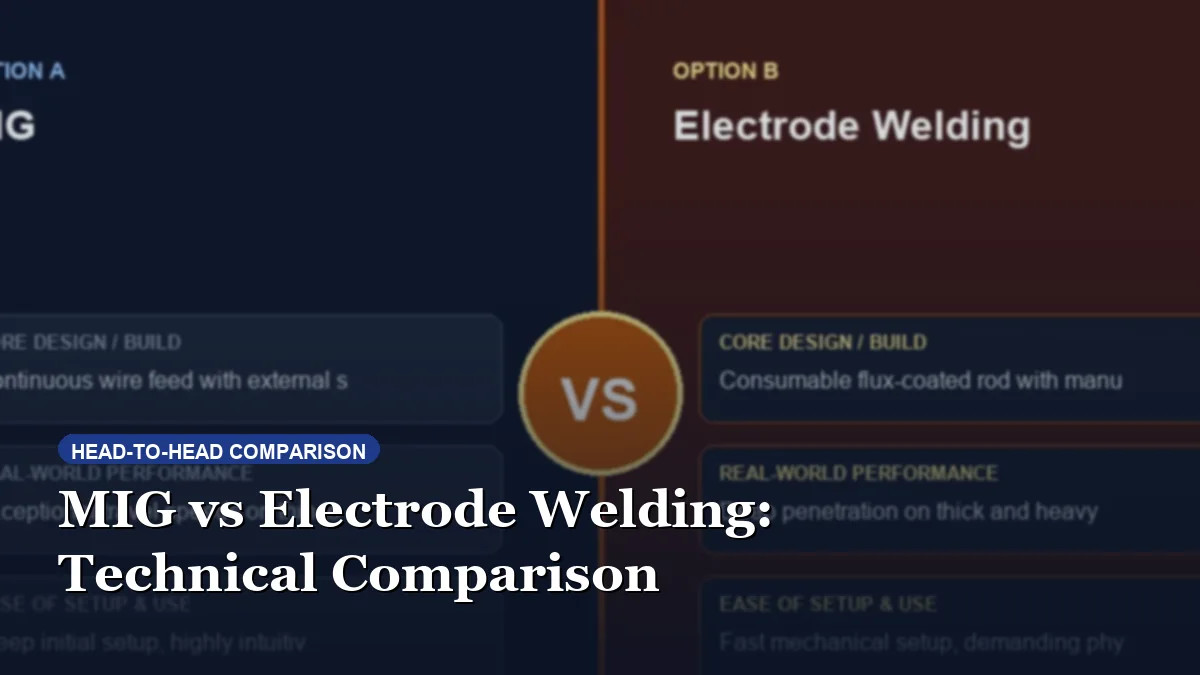
Choose MIG welding for high-speed indoor production on clean steel sheets. Opt for electrode welding when tackling heavy outdoor structural repairs involving rusted or contaminated base metals.
Compare all top models in our Best Welder: Top Home Shop & Jobsite Picks Tested.
Side-by-Side Breakdown
| Criteria | MIG | Electrode Welding | Edge |
|---|---|---|---|
| Core Design / Build | Continuous wire feed with external shielding gas | Consumable flux-coated rod with manual feed | MIG |
| Real-World Performance | Exceptional travel speeds on thin to medium steel | Deep penetration on thick and heavy structural plates | Electrode |
| Ease of Setup & Use | Steep initial setup, highly intuitive arc control | Fast mechanical setup, demanding physical technique | MIG |
| Durability & Reliability | Sensitive to drafts, requires sheltered environments | Rugged outdoor performance in wind and rain | Electrode |
| Efficiency / Operating Footprint | High deposition rates with minimal waste cleanup | Constant slag removal and stub loss downtime | MIG |
| Maintenance Requirements | Regular drive roll cleaning and contact tip changes | Simple machine upkeep with stinger jaw replacements | Electrode |
| Best Ideal Use Case | Automotive body panels and indoor production frames | Heavy equipment maintenance and pipeline construction | Tie |
Core Design and Engineering Differences
Engineering distinctions dictate how each machine transfers electrical current to the base metal. Understanding these internal mechanics helps operators select the correct power source for specific industrial fabrication requirements.
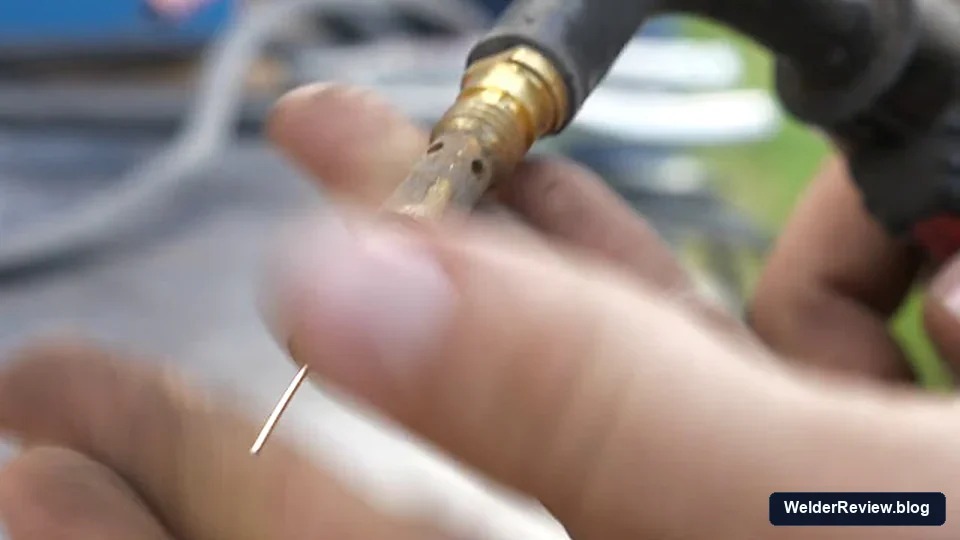
MIG systems rely on a motorized drive mechanism that pushes continuous wire through a welding gun. Choosing the best gas for mig welding mild steel ensures a stable, high-deposition arc.
Conversely, electrode systems use a constant current power source paired with a manual stinger holder. The operator strikes an arc using a flux-coated metal rod that gradually consumes during the weld puddle creation.
- Continuous solid wire versus discrete coated metal rods
- Automated wire feed systems versus manual electrode manipulation
- External pressurized gas cylinders versus self-generating flux shields
Power Delivery Mechanics
Constant voltage power sources define the MIG process, maintaining a steady arc length automatically. Minor hand movements do not drastically alter the electrical characteristics of the established arc.
Electrode machines utilize constant current power sources with steep volt-ampere curves. Any change in arc length directly alters voltage, requiring steady hand control from the welder to prevent sticking.
- Constant voltage output for stable wire melting
- Constant current output for consistent amperage delivery
Shielding Gas Dynamics
External shielding gases like argon or carbon dioxide protect the molten weld pool from atmospheric contamination. Wind currents easily disrupt this protective gas envelope, causing porosity defects in the joint.
Electrode welding creates its own gaseous shield as the flux coating burns off in the arc. This internal chemical reaction generates a protective cloud and a solid slag layer over the cooling metal.
- Required external cylinders for atmospheric isolation
- Self-contained chemical flux generating protective gaseous envelopes
Real-World Performance and Joint Penetration
Operator expectations shift dramatically when moving between these two distinct welding processes on actual job sites. Practical performance hinges on travel speed, bead appearance, and deep joint root penetration.
MIG excels in high-speed applications when utilizing proper mig wire size selection for sheet metal to ensure minimal distortion, smooth surface finishes, and rapid production rates.
Electrode welding dominates heavy industrial settings where thick structural steel requires profound root penetration. The aggressive arc characteristics blast through imperfections to fuse thick plates reliably.
- High travel speeds and smooth beads on thin sheets
- Deep root penetration and structural integrity on heavy plates
Material Thickness Handlers
Thin automotive body panels and light tubing benefit from the precise heat control of MIG setups. Lower amperages prevent burn-through on sheet metal measuring under an eighth of an inch thick.
Heavy structural beams and thick pipeline walls demand the intense energy output of electrode machines. High amperage settings ensure complete fusion throughout thick cross-sectional joint designs.
- Precise low-heat control for delicate sheet metal
- Aggressive high-amperage output for massive steel plates
Positional Welding Challenges
Overhead and vertical up welding require specialized technique when utilizing continuous wire feed systems. Proper parameter tuning prevents the molten puddle from sagging out of joint configurations.
Experienced operators find overhead and vertical groove joints manageable with fast-freeze electrode rods. The solidifying slag acts as a shelf supporting the molten metal against gravity.
- Careful parameter adjustments needed for overhead wire feeds
- Fast-freeze flux characteristics aiding vertical and overhead control
Setup Efficiency and Operational Footprint
Mobility and preparation time heavily influence daily productivity levels in professional fabrication environments. Equipment complexity dictates how quickly a technician can transition between different work zones.
Analyzing equipment in our best beginner mig welders guide reveals that bulky gas cylinders and specific drive rolls increase the physical footprint and reduce rapid deployment capabilities.
Electrode machines offer unmatched setup simplicity because they only require an electrode holder and ground clamp. Operators can transport a compact inverter unit anywhere without managing heavy gas bottles.
- Bulky gas cylinders and regulators limiting mobility
- Compact power sources and simple stinger cables for rapid deployment
Equipment Portability Factors
Moving a complete MIG setup across large construction sites involves wrestling with heavy shielding gas carts. Wheeled carts are mandatory for navigating uneven terrain safely with pressurized tanks.
Field technicians routinely sling lightweight electrode inverters over their shoulders for remote maintenance tasks. The absence of gas bottles streamlines access to elevated platforms and tight spaces.
- Heavy wheeled carts required for gas bottle transport
- Shoulder-portable inverters ideal for elevated structural work
Consumable Management Systems
Managing wire spools, contact tips, and nozzle liners requires organized inventory control in the shop. Running out of specific wire diameters halts production until spools are replaced.
Electrode storage demands dry ovens to prevent moisture absorption in low-hydrogen coatings. Welders simply grab a handful of rods from a portable canister to keep working.
- Spool inventories, contact tips, and nozzle maintenance
- Moisture-controlled rod storage and portable canister usage
Maintenance, Efficiency and Long-Term Longevity
Tool longevity relies heavily on routine preventive maintenance schedules and correct operational habits. Ignoring basic upkeep leads to erratic wire feeding, poor electrical contact, and premature equipment failure.
MIG guns demand regular cleaning of contact tips, nozzles, and internal liners to prevent birdnesting. Drive rolls must also match the specific wire type to ensure smooth, consistent feeding pressure.
Electrode holders require periodic jaw replacements due to persistent arcing wear and mechanical clamping fatigue. Power source filters also need dust clearance to maintain optimal internal cooling performance.
- Regular contact tip replacement and liner cleaning protocols
- Stinger jaw inspections and power source dust clearance
Routine Machine Upkeep
Internal drive motors and gearboxes in MIG machines require occasional lubrication and alignment checks. Ensuring proper tension prevents wire deformation and erratic arc characteristics during long runs.
Electrode power sources feature minimal moving parts, reducing mechanical maintenance overhead significantly. Technicians primarily focus on terminal connections and cooling fan cleanliness.
- Drive motor tension calibration and gearbox inspections
- Minimal mechanical failure points in simplified power units
Torch and Stinger Wear
Spatter accumulation inside MIG nozzles degrades gas coverage and causes unstable arc conditions rapidly. Operators must apply anti-spatter gels and clear obstructions frequently during heavy production shifts.
Stinger clamps suffer from constant thermal cycling and physical drops on concrete workshop floors. Durable spring mechanisms eventually lose clamping force, necessitating full holder replacement.
- Spatter buildup removal inside protective gun nozzles
- Thermal fatigue management on heavy electrode clamps
Environmental Tolerance and Weather Resistance
Job site conditions often dictate which welding process can successfully execute a sound structural joint. Environmental factors such as wind, humidity, and surface contamination test procedural limits.
MIG welding struggles outdoors because ambient wind sweeps away external shielding blankets. Operators must carefully manage setting mig welding shielding gas flow rates to prevent porosity and lack of fusion defects.
Electrode welding thrives in adverse weather conditions because its heavy slag shield protects molten metal. Rain, wind, and humid environments have minimal impact on the stability of the arc.
- Vulnerability to ambient wind disrupting gas shielding
- Robust weather tolerance utilizing internal chemical slag shields
Outdoor Wind and Drafts
Erecting temporary wind screens is mandatory when performing outdoor MIG fabrication work. Without physical barriers, shielding gas dissipates before protecting the solidifying weld puddle from atmospheric gases.
Field pipe welders rely on electrode processes precisely because wind does not affect the flux shield. The physical arc remains protected by the burning flux coating regardless of breezes.
- Mandatory wind screens for outdoor gas-shielded operations
- Unaffected arc stability during breezy field repair tasks
Mill Scale and Rust Handling
MIG processes demand scrupulously clean base metals free from heavy mill scale, paint, and rust. Surface contaminants cause excessive spattering, poor fusion, and severe internal weld porosity defects.
Certain electrode classifications cut through rust, paint, and mill scale with remarkable efficiency. The aggressive arc cleaning action burns away surface impurities during the initial joint pass.
- Zero tolerance for dirty metal surfaces in MIG setups
- Aggressive arc cleaning action on rusted steel plates
Which Option Fits Your Shop Setup
Selecting the correct welding equipment requires evaluating your typical project scope and budget constraints. Matching your machinery to everyday tasks maximizes output quality and return on investment.
Automotive restoration shops, artistic metal sculptors, and indoor production facilities benefit immensely from MIG versatility. High deposition rates and clean finishes make indoor sheet metal work highly profitable.
Mobile repair trucks, structural steel contractors, and heavy equipment maintenance yards require rugged electrode machines. Their ability to handle harsh weather and dirty steel ensures reliable field performance.
- Ideal for indoor production shops and clean sheet metal
- Essential for mobile repair trucks and heavy outdoor construction
Fabrication and Production Shops
Controlled indoor environments allow MIG systems to operate at peak efficiency with minimal downtime. Clean assembly lines benefit from fast trigger responses and low cleanup requirements.
Production shops utilizing robotic automation rely heavily on continuous wire feed technologies. Consistent feed rates and repeatable parameters ensure uniform weld quality across thousands of assemblies.
- Optimized efficiency inside climate-controlled production facilities
- Seamless integration with automated robotic welding arms
Field Repair and Construction Sites
Remote construction projects far from electrical grids require dependable, weather-resistant welding capabilities. Electrode machines run smoothly off engine-driven generators in rugged terrain.
Maintenance crews servicing heavy agricultural or earthmoving machinery depend on rugged electrode setups. Their ability to weld thick steel parts outdoors keeps heavy equipment operational.
- Reliable generator compatibility for remote construction sites
- Heavy equipment field maintenance on thick steel components
Frequently Asked Questions
Can MIG welding be used outdoors without shielding gas?
Yes, fabricators can use self-shielded flux-cored wire without external gas bottles. This variation offers outdoor wind resistance similar to traditional electrode welding processes.
Why does electrode welding leave a hard slag layer?
The flux coating on the metal rod melts and creates a protective chemical blanket. This solidifies into a protective slag layer that operators must chip away.
Which welding process is easier for absolute beginners to learn?
MIG welding features a shorter learning curve due to automated wire feeding mechanisms. Beginners quickly master clean bead creation without managing consumable rod lengths.
Do I need special electrical power outlets for these welders?
Many smaller units operate on standard household circuits, but heavy industrial machines require dedicated circuits. Always check your electrical breaker requirements before purchasing equipment.
How should welding electrodes be stored between fabrication jobs?
Low-hydrogen rods must stay in heated storage ovens to prevent moisture absorption. Proper storage prevents porosity defects and cracking in critical structural weld joints.