What Is Arc Force on a Stick Welder?
Arc force dynamically stabilizes SMAW circuits by boosting amperage during low-voltage shorts. This prevents electrode sticking in tight joints.

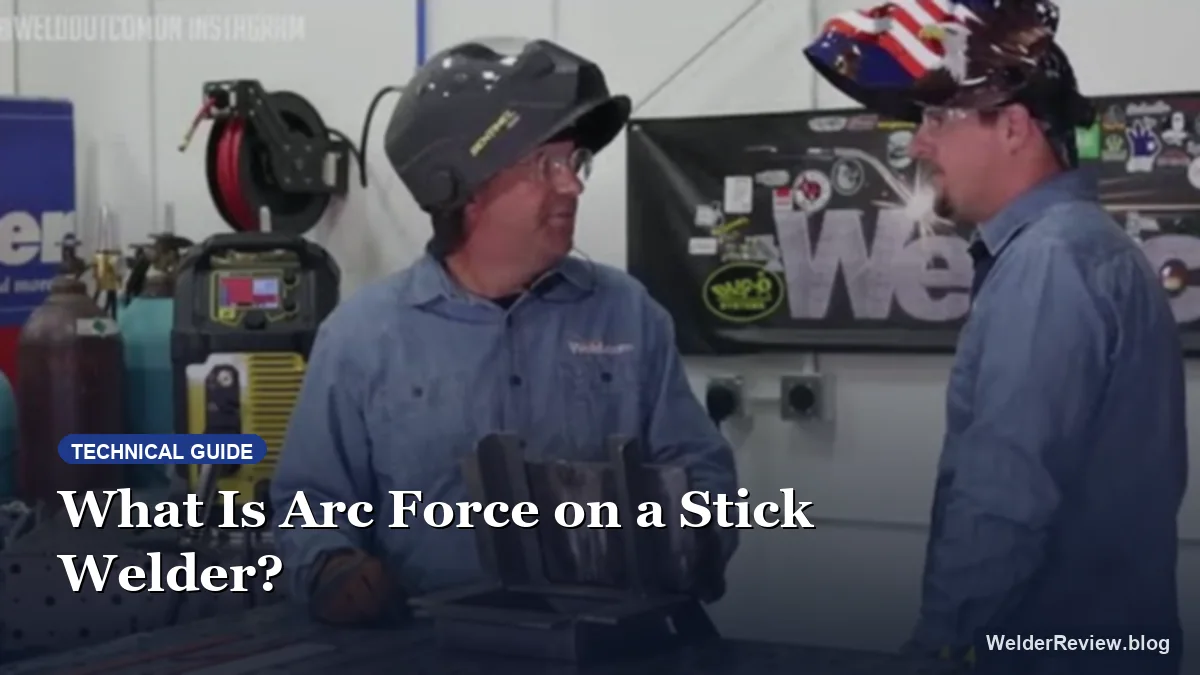
Arc force automatically adjusts machine output when your arc length shrinks dangerously close. Maintain superior control over difficult cellulosic rods without constant amperage drift.
Ready to compare models? Start with our Best Welder: Top Home Shop & Jobsite Picks Tested.
Practical Quick-Reference Table
| Scenario / Metric | Recommended Target | Why It Matters |
|---|---|---|
| E6010 Cellulosic Rods | Medium-High Setting | Prevents blowout during deep digs |
| E7018 Low-Hydrogen | Low to Moderate | Reduces excessive spatter and undercut |
| Tight Root Passes | High Arc Force | Maintains dynamic short-circuit current |
| Thin Sheet Metal | Minimal Setting | Stops burn-through on fragile edges |
| Arc Voltage Threshold | Below 18 Volts | Triggers immediate amperage boost |
| Cable Resistance Drop | Compensated via Dial | Ensures true output at workpiece |
Fundamentals of Arc Force Dynamics in SMAW
Modern shielded metal arc welding machines rely on sophisticated inverter technology. Arc force, frequently called dig or roast, manages the short-circuit characteristics of your power source.
When you push a welding electrode too close, voltage drops rapidly. Reviewing our arc welder vs stick welder comparison clarifies how these power sources manage micro-shorts to boost output amperage instantly.
This temporary surge supplies the thermal energy needed to vaporize minor bridges. Without this crucial feature, your electrode would fuse permanently to the steel workpiece.
Understanding this electrical feedback loop allows welders to manipulate puddle fluidity effectively. You gain precise command over penetration profiles without constantly fighting your power source.
- Monitors live arc voltage continuously during every welding pass.
- Delivers instantaneous amperage spikes during micro-short circuit events.
- Prevents physical electrode freezing in tight joint preparations.
- Stabilizes arc column behavior across fluctuating line voltages.
The Voltage Sensing Circuitry
Internal microprocessors sample output voltage thousands of times every second. These rapid calculations identify the exact moment an electrode touches the molten pool.
Solid-state components then command the inverter bridge to deliver extra current instantly. This lightning-fast response keeps the arc burning steadily through root passes.
- Samples voltage output at high frequency rates.
- Triggers IGBT switches for rapid current modulation.
How Dynamic Amperage Control Prevents Electrode Sticking
Electrode freezing frustrates beginners constantly. Reviewing our stick welder vs wire welder comparison highlights why arc force control eliminates this hurdle by calculating resistance across the arc gap.
When resistance drops toward zero due to physical contact, the machine reacts. It floods the contact point with extra electrons to blast away the obstruction.
This localized thermal spike melts the bridging metal instantly and restores the arc. Experienced operators rely on this automation during tight vertical pipe progressions.
You can confidently stuff the rod into a V-groove root opening. The machine automatically compensates for your aggressive technique by maintaining stable arc ionization.
- Detects impending short circuits through rapid resistance monitoring.
- Injects supplementary amperage precisely when the electrode touches metal.
- Eliminates frustrating rod freezing in tight root joints.
- Allows aggressive electrode manipulation without extinguishing the arc.
Video Walkthrough: Introduction
Calibrating Arc Force for Specific Electrode Classifications
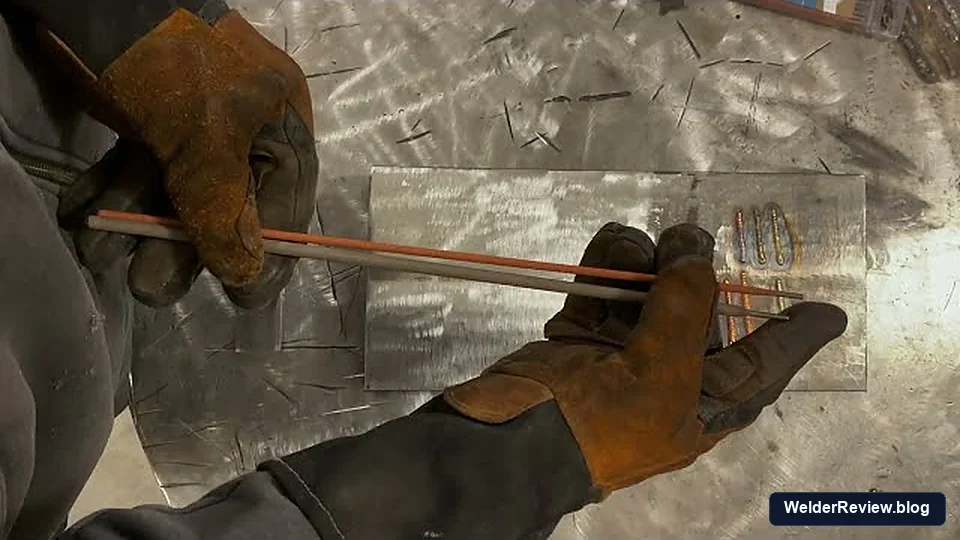
Different electrodes demand distinct arc force parameters. Using our welding amperage and thickness calculator helps you match cellulosic electrodes with aggressive dig settings for deep joint penetration.
These fast-freeze rods thrive on high current spikes because their coating relies on forceful gas expansion. Lowering arc force here causes unstable digging and erratic deposition.
Conversely, low-hydrogen basic electrodes like E7018 demand much softer parameters. Excessive arc force on basic rods generates harsh spatter, severe undercut, and excessive slag fluidity.
Always consult manufacturer specifications before dialing in your machine for specialized alloys. Matching your arc force to the rod type guarantees sound metallurgical results.
- Set arc force high for cellulosic E6010 and E6011 rods.
- Keep arc force low for basic low-hydrogen E7018 electrodes.
- Adjust settings carefully when switching between dissimilar rod classifications.
- Monitor puddle behavior to fine-tune your machine response.
Distinguishing Between Arc Force and Hot Start Features
Many welders confuse arc force with hot start, though their functions differ entirely. Hot start only provides a temporary amperage boost during initial arc ignition.
This initial surge lasts for a fraction of a second when striking cold electrodes. It prevents the rod from sticking before the flux coating establishes gas shielding.
In contrast, arc force operates continuously while you weld, monitoring every voltage dip. It regulates the arc throughout the entire length of the welding pass.
Knowing the difference helps you configure your welding machine control panel accurately. You can tune ignition ease and running stability independently for superior results.
- Hot start affects only the initial arc ignition phase.
- Arc force manages stability throughout the entire running weld.
- Both features utilize temporary amperage increases for different purposes.
- Configure each control separately based on joint preparation needs.
Adjusting Controls for Out-of-Position Welding Challenges
Overhead and vertical welding require precise parameter tuning to fight gravity. Vertical down techniques benefit from moderate arc force settings to maintain puddle control.
When welding overhead, keeping a tight arc is essential for preventing dropouts. High arc force lets you push the electrode into the joint without freezing.
However, turning the dial too high overhead causes excessive molten metal fluidity. You risk dropping hot slag onto your protective gear or burning through thin plates.
Experiment with small adjustments on scrap metal before tackling critical positional joints. Finding the sweet spot ensures sound weld reinforcement and clean toe lines.
- Increase arc force slightly for demanding overhead fillet welds.
- Maintain moderate settings during vertical uphill progression steps.
- Avoid excessive amperage boosts that create dangerous molten dropouts.
- Practice on scrap metal matching your actual project thickness.
Troubleshooting Common Arc Stability and Splatter Issues
Excessive spatter often indicates an incorrectly calibrated arc force setting. If your machine runs too hot during short-circuits, molten droplets explode violently from the joint.
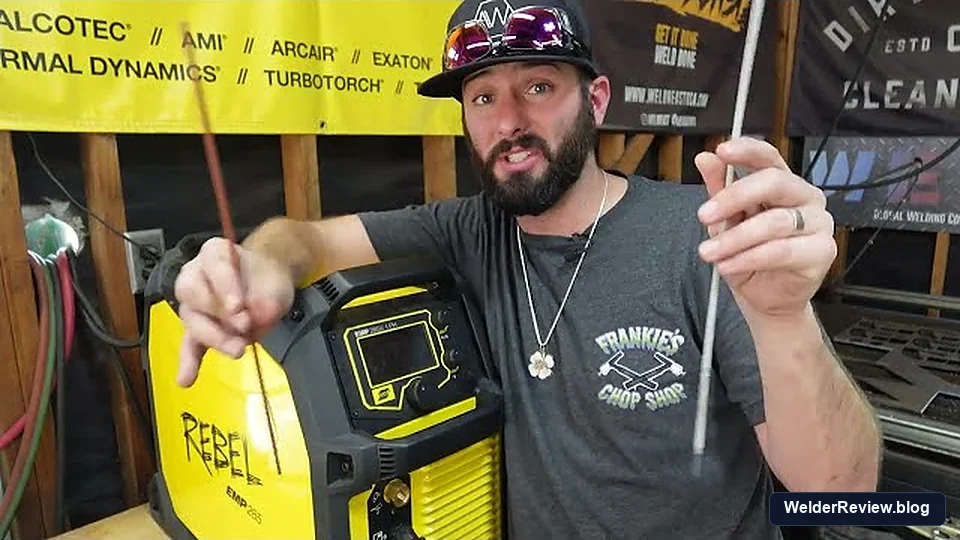
Lowering the arc force dial smooths out the transfer and reduces annoying cleanup. Conversely, dying arcs point toward insufficient dig capacity for your chosen rod angle.
Check your work clamp connection if unstable behavior persists despite proper adjustments. Poor grounding introduces electrical resistance that mimics incorrect machine tuning parameters.
Systematic troubleshooting saves valuable time and prevents costly weld rework in the field. Always isolate variable factors one by one during diagnostic test runs.
- Reduce arc force settings to minimize excessive weld spatter.
- Increase dig parameters if the electrode continually snuffs out.
- Inspect work clamps and cables for hidden electrical resistance.
- Isolate variables systematically during equipment troubleshooting procedures.
Practical Guidelines for Field Calibration and Maintenance
Routine equipment maintenance ensures your arc force circuitry functions reliably over time. Dust and metallic debris inside inverter cabinets can disrupt sensitive voltage-sensing microprocessors.
Blow out power sources with clean compressed air during shop maintenance. Consulting our best budget stick welder guide helps you inspect internal terminals for thermal oxidation and loose fasteners.
Field calibration requires welding on identical scrap coupons while tweaking dial increments. Document your preferred settings for standard structural steel applications to speed up setups.
Proper care guarantees consistent arc dynamics and extends your machine operational lifespan significantly. Take pride in mastering these essential technical equipment fundamentals every day.
- Clean interior inverter components with dry compressed air regularly.
- Inspect electrical terminals for corrosion and secure mechanical fastening.
- Document optimal dial settings for common structural steel projects.
- Perform routine test welds to verify accurate machine response.
Frequently Asked Questions
What does arc force actually do on a stick welder?
Arc force automatically increases output amperage when your working arc voltage drops dangerously low during close manual manipulation on the active job site.
This dynamic electronic boost completely prevents the metallic electrode from freezing permanently while you successfully execute difficult root passes across confined structural steel joints every single day.
How do I know when to adjust my arc force settings?
Cellulosic electrodes require much higher arc force settings to maintain stable gas ionization and achieve deep structural joint penetration in demanding field environments today.
Basic low-hydrogen rods demand significantly softer parameter adjustments to prevent excessive spatter formation and severe undercutting defects during critical industrial welding operations without any operational failure.
Is arc force the same thing as hot start?
Hot start only provides a temporary amperage boost during the initial arc ignition phase to prevent cold sticking on cold base plates.
Arc force operates continuously throughout the entire welding run by monitoring live voltage fluctuations to stabilize your molten puddle against sudden physical resistance changes in the structural metal joint.
What happens if I set arc force too high on thin metal?
Adjusting your arc force dial too high on thin sheet metal creates severe burn-through risks during active assembly tasks today.
This excessive thermal energy melts fragile base materials instantly before you can establish proper puddle control across delicate automotive or lightweight ductwork fabrication projects without any margin for error.
How does poor grounding affect my arc force performance?
Troubleshooting erratic arc behavior always starts by thoroughly checking your heavy work clamp and copper cable connections for physical wear and corrosion.
Hidden electrical resistance easily mimics improper machine settings and severely degrades overall arc stability during critical structural welding passes across demanding industrial job sites without exception.