Flux Welder vs Stick Welder: Ultimate Technical Guide
Choosing between self-shielded wire and shielded metal arc equipment defines your fabrication workflow. We analyze engineering differences, duty cycles, and real-world durability.

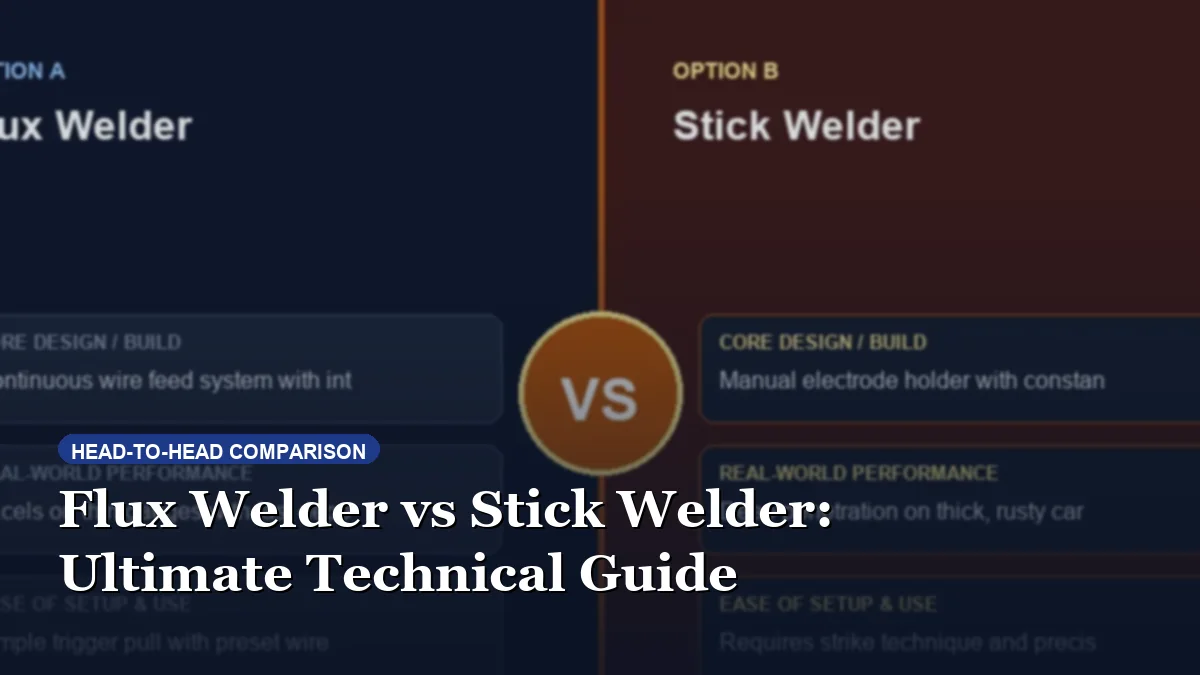
Pick flux core for sheet metal fabrication and continuous indoor wire feeding. Choose stick welding for heavy structural steel repairs and dirty, outdoor, wind-swept job sites.
Compare all top models in our Best Welder: Top Home Shop & Jobsite Picks Tested.
Side-by-Side Breakdown
| Criteria | Flux Welder | Stick Welder | Edge |
|---|---|---|---|
| Core Design / Build | Continuous wire feed system with internal drive rolls. | Manual electrode holder with constant current output. | Stick Welder |
| Real-World Performance | Excels on thin gauges with fast deposition rates. | Deep penetration on thick, rusty carbon steel. | Stick Welder |
| Ease of Setup & Use | Simple trigger pull with preset wire speed. | Requires strike technique and precise arc control. | Flux Welder |
| Durability & Reliability | Sensitive drive electronics and exposed wire liners. | Rugged transformer builds resistant to harsh sites. | Stick Welder |
| Efficiency / Operating Footprint | Higher consumable recovery with minimal stub loss. | Significant electrode stub waste and slag cleanup. | Flux Welder |
| Maintenance Requirements | Frequent liner cleaning and contact tip replacements. | Basic stinger jaw replacement and cable inspections. | Stick Welder |
| Best Ideal Use Case | Automotive body panels and light farm repairs. | Heavy structural beams and pipeline construction. | Stick Welder |
Core Architecture and Arc Mechanics
Understanding internal machine design clarifies how electrical energy transfers across the welding gap. Flux-cored arc welding utilizes a continuously fed tubular wire filled with proprietary chemical compounds.
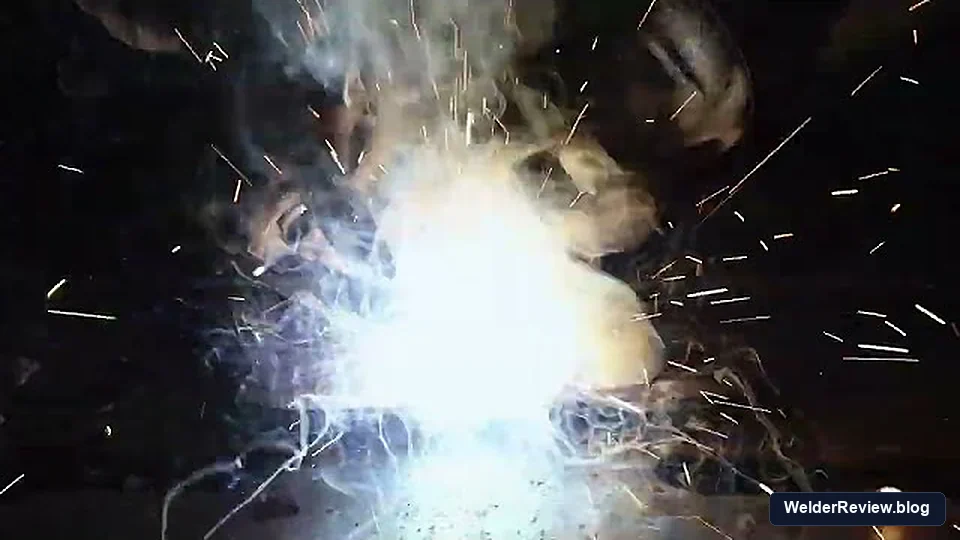
Conversely, shielded metal arc equipment relies on consumable coated electrodes clamped inside a heavy-duty manual holder. Constant voltage transformers power wire feeders, while stick units utilize constant current output.
Arc initiation differs significantly between these two popular joining methods. Wire machines start instantly upon trigger engagement, whereas stick operators must physically strike the metal surface.
Flux-core welding relies on a continuous wire feed system driven by a motorized drive roll mechanism, transferring electrical current directly through the electrode tip into the joint.
Stick welding utilizes a constant current power source paired with a coated consumable electrode held manually in an insulated stinger, striking an arc via direct workpiece contact.
The fundamental mechanical distinction lies in how filler metal is delivered, affecting operator technique, arc stability, and overall deposition rates across various structural carbon steel fabrication tasks.
- Continuous wire delivery systems require internal drive roll tensioners.
- Stick electrode holders demand manual arc gap distance management.
- Voltage stability dictates bead profile consistency across both platforms.
Internal Power Source Engineering
Modern inverter architectures have drastically reduced the physical weight of both machine classes. Inverter technology allows precise amperage control while maintaining stable arc characteristics during operation.
Heavy-duty transformer models still dominate rugged industrial stick welding environments for sheer durability.
- Inverter boards reduce unit weight significantly.
- Copper windings enhance thermal overload resistance.
Material Penetration and Thickness Capacities
Metal thickness dictates which welding process delivers structural integrity without risking burn-through. Flux-cored systems shine on thin sheet metal and medium gauge structural steel tubing.
When joining thick plate steel or heavy structural profiles, shielded metal arc equipment dominates the workspace. Deep weld penetration allows stick electrodes to fuse thick joints reliably.
Joint preparation requirements also vary depending on the chosen machine type and power output. Wire processes tolerate minor mill scale, but stick excels on severely corroded surfaces.
Flux-cored processes excel on thin to medium sheet metal, routinely handling gauges from 20 gauge up to 3/8 inch in single-pass configurations without excessive heat input distortion.
Shielded metal arc welding dominates heavy structural applications, effortlessly penetrating thick plate steel exceeding one-half inch when utilizing larger diameter electrodes and elevated amperages.
Joint preparation requirements differ significantly; flux welding forgives minor mill scale, while stick welding demands cleaner joints to prevent slag inclusions in critical structural load-bearing applications.
- Wire feeds prevent burn-through on thin automotive body panels.
- Stick rods cut through thick rust and heavy mill scale.
- Amperage output limits dictate maximum single-pass thickness.
Penetration Depth Dynamics
High heat input from coated electrodes ensures deep root fusion in demanding structural applications. Tensile strength ratings on common rods easily exceed base metal limits.
Wire processes distribute heat across a wider puddle, reducing distortion risks.
- Root pass integrity remains critical for structural safety.
- Heat affected zones vary with travel speed.
Duty Cycles and Thermal Management
Thermal capacity determines how long you can weld continuously before triggering thermal overload protection. High duty cycles keep industrial fabrication shops running through long production shifts.
Standard hobbyist wire machines often feature lower duty cycles requiring mandatory cooling intervals. Internal cooling fans dissipate heat rapidly from sensitive transformer and inverter components.
Stick welders generally offer robust thermal management designed for demanding construction environments.
Transformer-based stick welders typically offer lower duty cycles at maximum output, requiring mandatory cooling periods to prevent internal thermal overload during heavy industrial fabrication shifts.
Modern inverter-based flux core systems incorporate advanced thermal overload protection circuits alongside internal cooling fans, maximizing uptime during extended production runs on medium-thickness steel assemblies.
Monitoring operating temperatures prevents premature transformer degradation, ensuring consistent arc voltage characteristics and extending the operational lifespan of internal rectifier components under demanding workshop conditions.
- Duty cycles are rated at specific amperage outputs over ten minutes.
- Thermal switches prevent catastrophic insulation breakdown inside transformers.
- Ambient shop temperature directly impacts maximum continuous run times.
Cooling System Efficiency
Advanced tunnel cooling designs channel airflow directly across critical heat-generating semiconductor sinks. Forced-air ventilation prevents premature thermal shutdowns during heavy structural fabrication projects.
Natural convection designs rely solely on external louver vents.
- Airflow channels protect internal electronic circuit boards.
- Dust accumulation can compromise cooling fin efficiency.
Environmental Adaptability and Outdoor Use
Job site conditions frequently challenge the physical shielding mechanisms protecting molten weld pools. Wind resistance represents a major advantage for self-shielded wire and stick electrodes.
Standard gas-shielded wire setups fail instantly when outdoor gusts blow away shielding gas. Flux compounds inside the tubular wire generate protective gases autonomously.
Moisture sensitivity creates distinct operational challenges for coated stick electrodes during rainy weather.
Outdoor fabrication introduces challenging wind conditions that easily disrupt shielding gases, making self-shielded flux core and stick welding the preferred field methods for structural repair crews.
Stick electrodes feature heavy flux coatings that generate protective gas shields directly at the arc, offering superior wind resistance compared to gasless wire feeds in extreme environments.
Moisture management remains critical for stick electrodes, requiring specialized rod ovens to prevent hydrogen cracking, whereas flux wire storage demands simple dry indoor environments to prevent oxidation.
- Self-shielded wire performs reliably in windy outdoor environments.
- Coated stick electrodes require dry storage to prevent porosity.
- Shielding gas requires protective tents during windy field work.
Field Maintenance in Adverse Weather
Field technicians must store consumable electrodes in heated rod ovens to eliminate humidity. Moisture control prevents hydrogen cracking in high-strength structural steel weldments.
Wire spools need dry storage to prevent rust buildup.
- Portable rod ovens maintain optimal electrode dryness.
- Plastic storage bins protect wire spools from humidity.
Consumable Costs and Operating Efficiency
Consumable expenses accumulate quickly over extensive fabrication projects spanning multiple weeks or months. Electrode stub loss is an unavoidable reality when operating manual stick equipment.
Wire feed processes maximize material utilization by consuming nearly the entire spool continuously. Contact tips and nozzles require periodic replacement regardless of your chosen brand.
Slag removal consumes valuable labor hours following completion of every single weld pass.
Flux-cored wire minimizes stub loss waste, achieving high operating efficiency because nearly the entire spool is consumed during continuous welding cycles without discarding short electrode remnants.
Stick welding generates noticeable stub loss, discarding roughly two inches of every coated electrode, which increases long-term consumable costs during high-volume structural fabrication projects.
Setup times heavily favor wire feeders, eliminating frequent electrode changes and slag chipping bottlenecks, ultimately boosting daily productivity for mobile repair technicians and structural assembly workshops.
- Stub loss wastes a small percentage of every stick electrode.
- Continuous wire feed systems offer superior consumable efficiency.
- Slag chipping hammers add manual labor steps post-weld.
Consumable Lifecycle Analysis
Minimizing downtime associated with consumable changes boosts overall shop productivity and profitability. Quality contact tips resist burnback and extend continuous welding operating windows.
Proper electrode storage prevents flux flaking during handling.
- Tip wear causes erratic wire feeding performance.
- Coating integrity ensures stable arc shielding.
Maintenance Protocols and Long-Term Reliability
Routine equipment upkeep prevents unexpected mechanical failures during critical project deadlines. Drive roll inspection ensures consistent wire feeding without slipping or bird-nesting issues.
Stick electrode holders require jaw cleaning to maintain solid electrical contact. Cable inspections identify frayed insulation before hazardous shorts occur in the shop.
Keeping internal components free of conductive metal dust extends lifespan.
Drive roll tensioners and contact tips require frequent inspection on flux core machines to prevent bird-nesting and ensure smooth wire feeding during prolonged fabrication operations.
Stick welding setups demand minimal routine maintenance, focusing primarily on cleaning the electrode holder jaw contact points and inspecting heavy-duty welding cable insulation for fraying.
Both equipment types benefit from regular internal blowouts using compressed air to eliminate conductive metallic dust accumulation that triggers premature electronic component failure in dusty workshops.
- Clean drive rolls prevent erratic wire feed tension.
- Inspect stinger jaws regularly for pitting and wear.
- Blow out accumulated metal dust with compressed air.
Preventative Servicing Schedules
Establishing a regular maintenance routine catches minor wear items before catastrophic failure occurs. Liners need replacement periodically to eliminate friction during wire feeding.
Terminal connections require tightening to prevent resistance heating.
- Worn liners cause bird-nesting inside the cabinet.
- Loose terminals generate excessive electrical heat.
Choosing Your Ideal Shop Configuration
Selecting the right machine depends entirely on your primary materials and working environment. Automotive enthusiasts benefit tremendously from the versatility of flux-cored wire systems.
Heavy equipment repair facilities rely on rugged stick welders for maximum structural strength. Power supply availability also dictates whether 110V or 220V units suit your garage.
Evaluate your typical project scope before investing in capital fabrication equipment.
Selecting the right machine depends on your primary material thickness, available input power, and whether you execute most projects inside a climate-controlled workshop.
Fabrication shops tackling diverse structural repairs benefit from maintaining both systems, leveraging wire speed for sheet metal and heavy stick electrodes for thick structural steel.
Evaluate your typical operating environment, consumable budget, and daily duty cycle requirements carefully before investing in permanent shop infrastructure upgrades to maximize long-term productivity and weld quality.
- Match machine amperage output to your heaviest materials.
- Consider available shop electrical service limitations.
- Assess whether portability outweighs stationary shop needs.
Final Buyer Decision Framework
Weighing initial setup complexity against long-term operational costs clarifies your final purchase decision. Versatility and ease make wire systems fantastic for hobbyists.
Unmatched penetration makes stick welders indispensable for heavy repairs.
- Review your primary metal thickness requirements carefully.
- Factor in consumable and safety gear expenses.
Frequently Asked Questions
Can a flux welder run without shielding gas?
Yes, self-shielded flux wire contains internal chemical compounds that create a protective gas shield automatically. This eliminates the need for external gas cylinders.
Why does stick welding produce so much slag?
The flux coating on the electrode melts alongside the metal core, creating a protective layer. This solidified slag must be chipped off after cooling.
Which process is better for a beginner welder?
Flux core is generally easier to learn because it uses a continuous trigger-activated feed. Wire speed control simplifies the initial learning curve significantly.
Can I weld thick steel plates with a flux welder?
Yes, but multiple passes and higher amperage machines are required for heavy plates. Stick welding remains much faster for deep structural penetration.
How should I store unused stick welding electrodes?
Store electrodes in a dry environment inside sealed containers or specialized rod ovens. Moisture prevention stops porosity and cracking in finished welds.