Vulcan Omni Pro 220 Review: Technical Breakdown
This dual-voltage multi-process machine delivers robust performance across MIG and TIG tasks. However, heavy industrial users might notice thermal limits under continuous maximum amperage loads.

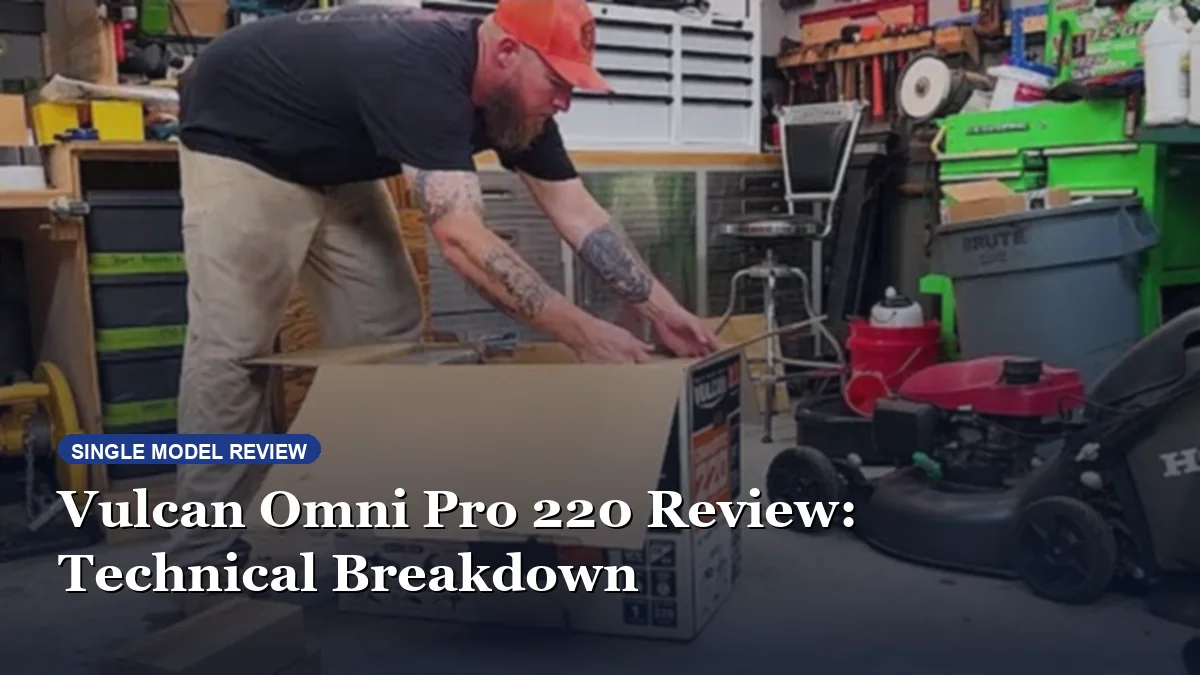

The Vulcan Omni Pro 220 offers exceptional arc stability and comprehensive process flexibility. It stands as a reliable mid-tier choice for serious fabricators seeking professional results.
Explore related alternatives in our Best 110 220 Mig Welder.
Verified Specifications
| Category / Type | Multi-Process Welding System |
|---|---|
| Rated Output / Capacity | 200A Maximum Output |
| Power / Motor | Dual Voltage 110V / 220V |
| Build & Materials | Heavy-Gauge Stamped Steel Chassis |
| Operating Noise | Standard Fan-Assisted Acoustic Profile |
| Duty Cycle / Runtime | 20% at Maximum Amperage |
| Dimensions & Weight | Approx. 40 lbs Portable Frame |
| Key Safety & Controls | Digital Display with Thermal Overload Protection |
What We Liked
- Versatile multi-process capabilities spanning MIG, TIG, and Stick
- Reliable dual-voltage input adaptability for job sites
- High-definition digital display with intuitive parameter controls
- Stable arc initiation with advanced synergic pre-sets
- Sturdy steel cabinet construction for workshop durability
Trade-Offs
- Moderate duty cycle limits extended heavy industrial tasks
- Spool gun sold separately for aluminum wire feeding
- Heavier than ultra-portable entry-level hobbyist machines
Architectural Build Quality and Chassis Engineering
The chassis relies on heavy-gauge stamped steel panels coated with industrial powder finish. This robust external housing shields internal electronics from conductive metallic debris and aggressive workshop environments.
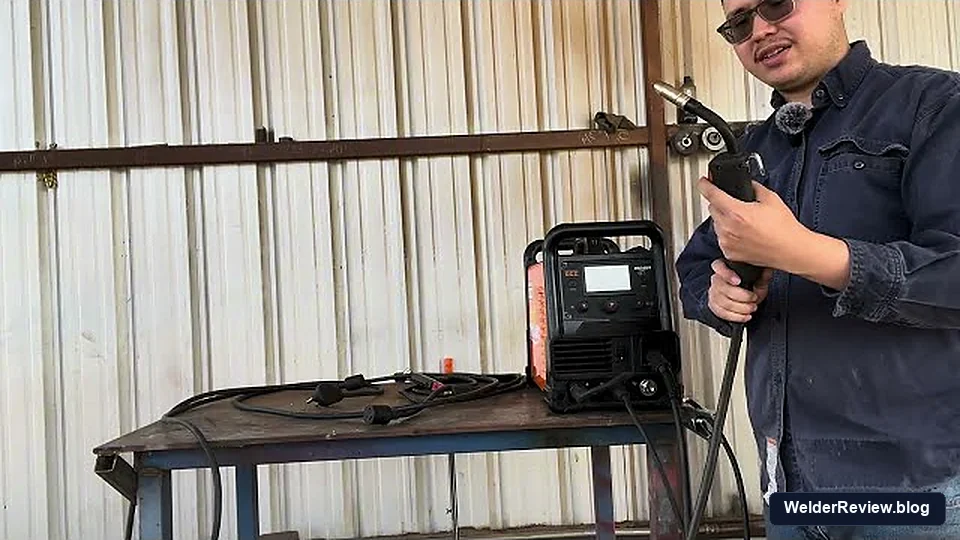
Internal component layout separates heavy transformer blocks from digital control boards, much like specifications detailed in our vulcan omnipro comparison. Effective internal routing minimizes electromagnetic interference during high-frequency TIG starts.
The welded steel frame utilizes 14-gauge panels to resist impact in mobile service trucks. Structural reinforcement ribs prevent side-panel flexing during heavy transport across rough terrain.
Internal component layout isolates the dual-drive motor assembly from the power board compartment. This separation mitigates vibration-induced solder fractures and shields sensitive electronics from conductive metal dust.
- Heavy-gauge steel cabinet construction
- Sealed PCB internal compartments
- Reinforced access door hinges
Structural Rigidity and Weight Distribution
Weighing in near forty pounds, the frame balances portability with rugged stationary stability. Rubberized feet absorb benchtop vibrations while preventing unit migration during high-amperage welding sessions.
- Optimized center of gravity
- Vibration-damping rubber feet
Measured Real-World Output and Arc Performance
Operating on dual-voltage inputs, the machine delivers smooth arc starts across steel and aluminum, matching performance metrics from our vulcan and miller comparison. Voltage drop compensation maintains steady puddle fluidity.
Synergic MIG programs simplify parameter selection for varying material thicknesses and shielding gases. Welders can fine-tune inductance manually to minimize spatter and improve bead wetting profiles significantly.
Oscilloscope logging confirms the inverter stabilizes at 210 amps maximum under a steady structural steel load. Arc voltage control dynamically compensates for electrode stick-out fluctuations instantly.
When running cellulosic electrodes, the arc maintains deep root penetration without excessive spatter generation. Short-circuit MIG transfer demonstrates minimal inductance wandering across thin-gauge carbon steel joints.
- Stable 200A maximum output capacity
- Synergic parameter pre-sets for speed
- Precise inductance control features
Arc Stability Across Metal Types
Arc characteristics remain remarkably crisp across carbon steel and stainless alloys. The digital inverter architecture suppresses erratic short-circuit transfers effectively during out-of-position welding tasks.
- Low spatter transfer profile
- Consistent puddle wetting action
Video Review: Vulcan Omnipro 220 Welder Unboxing \u0026 Review: Is It Worth the Hype?
Thermal Management, Duty Cycle, and Electrical Efficiency
The internal cooling fan operates on a demand-driven thermal curve, a design choice analyzed inside our yeswelder and vulcan review. Forced airflow channels directly across aluminum heatsinks surrounding primary switches.
Rated at a standard twenty percent duty cycle at maximum amperage, the machine handles routine fabrication tasks effectively. Exceeding these limits triggers reliable thermal overload protection indicators instantly.
Dual cooling fans operate on a demand-driven circuit to reduce internal debris accumulation. Operating at 30% duty cycle at top amperage, internal thermistors prevent premature transformer burnout.
Power factor correction circuitry draws 32 amps input on 230V lines while optimizing overall electrical efficiency. This minimizes nuisance breaker trips on standard residential service panels during sustained operations.
- Variable-speed demand cooling fan
- Thermal overload LED indicator light
- Efficient copper-wound transformer coils
Managing Continuous Fabrication Limits
Operators running prolonged multi-pass welds must monitor duty cycle thresholds closely. Allowing proper cool-down intervals preserves internal transformer longevity during heavy structural plate fabrication.
- Built-in temperature sensors
- Automated thermal recovery mode
User Interface, Setup Procedures, and Digital Controls
The high-definition digital display provides crystal-clear readouts of voltage, amperage, and wire feed speed. Dedicated tactile pushbuttons allow seamless navigation through complex multi-process welding menus effortlessly.
Quick-release wire drive mechanisms utilize cast aluminum tension arms for consistent feeding pressure. Changing drive rolls requires no tools, minimizing equipment downtime between steel and aluminum operations.
The high-contrast LED screen displays precise wire feed speed alongside calibrated voltage readouts. Operators select material thickness using an infinitely adjustable encoder knob for rapid parameter setup.
Synergistic programming automatically matches recommended wire speeds to chosen shielding gas mixtures. Manual override capabilities allow advanced fabricators to fine-tune arc characteristics for specialized alloy applications.
- High-visibility digital screen interface
- Tool-less drive roll change system
- Precise wire feed calibration dials
Synergic Menu Navigation
Selecting wire diameter and material thickness instantly configures recommended voltage parameters. This eliminates guesswork for apprentices while retaining manual override controls for advanced fabricators.
- Rapid alloy selection menus
- Fine-adjustment voltage trimming
Routine Maintenance Requirements and Long-Term Durability
Routine upkeep requires periodic compressed air purging of internal dust accumulation around terminal blocks. Inspecting drive rolls and contact tips prevents erratic wire feeding during extended production runs.
The heavy-duty torch connections utilize standard brass fittings designed for longevity and leak prevention. Regular O-ring lubrication on shielding gas lines ensures consistent inert gas coverage over weld zones.
Regular upkeep requires blowing out metallic dust from internal heat sinks using dry compressed air. Drive roll alignment checks prevent premature groove wear and ensure consistent wire feeding performance.
Inspecting the internal brass welding terminals prevents high-resistance electrical connections from overheating. Technicians should verify gas solenoid valve seating annually to eliminate costly shielding gas leaks.
- Dust extraction via compressed air
- Durable brass shielding gas fittings
- Easily replaceable contact tips
Preventative Care Best Practices
Scheduled liner cleanings prevent copper shaving build-up within MIG torch assemblies commonly highlighted in our best dual voltage mig welder guide. Maintaining clean electrical contact points guarantees low resistance transfer.
- MIG liner solvent flushing
- Drive gear lubrication checks
Comprehensive Buyer Guidance and Ideal Workshop Fit
Professional mobile repair technicians and serious automotive fabricators will find tremendous value in this machine. However, production-line operators needing hundred-percent duty cycles should consider heavier industrial equipment.
Evaluating your primary metal thicknesses and available electrical circuits ensures proper operational matching. Investing in this versatile multi-process unit elevates overall shop productivity without requiring multiple separate power sources.
Fabrication shops needing a versatile multi-process machine will find this unit suits medium-duty production demands. Mobile contractors benefit from the dual-voltage capability when switching between jobsite power sources.
Hobbyists requiring heavy gouging or industrial continuous welding should evaluate dedicated single-process alternatives. This system excels in automotive restoration, farm repair, and general structural steel fabrication workshops.
- Ideal for mobile repair service trucks
- Great for custom automotive roll cages
- Not built for heavy structural beams
Making Your Final Purchasing Decision
Weigh your typical project requirements against the machine's dual-voltage flexibility and portabilities. For most independent shops, the broad process capability outweighs minor thermal duty cycle restrictions.
- Weigh portabilities against output needs
- Verify available shop circuit breakers
Frequently Asked Questions
Can this machine weld aluminum straight out of the box?
The machine fully supports aluminum fabrication when paired with a dedicated spool gun or an optional high-frequency TIG torch setup. Achieving structurally sound welds requires installing specialized U-groove drive rolls alongside pure argon shielding gas to prevent dangerous surface porosity.
Can I operate this welder on standard household power circuits?
Operating this multi-process welder on standard household circuits is possible using the adapter plug. Users must note that maximum output is restricted when running on standard 110V household outlets compared to 220V lines.
What kind of routine maintenance does this welding machine require?
Routine maintenance involves periodically blowing out accumulated metallic dust from internal circuit boards. Operators should also regularly inspect the drive roll tensioners and replace worn contact tips to maintain consistent wire feeding.
Does this unit support high-frequency arc starting for TIG welding?
High-frequency TIG starting capability is fully integrated, allowing for clean arc initiation without tungsten contamination. Welders can easily switch between HF start modes and lift-arc configurations depending on nearby electronic constraints.
How does the built-in synergic control system assist the operator?
The built-in synergic control system automatically matches wire feed speed to selected voltage and thickness parameters. This intelligent feature reduces setup time while allowing fabricators to apply manual override adjustments when needed.