Vulcan Migmax 215 Review: Engineering & Output Analysis
The Vulcan Migmax 215 delivers robust multi-process output for serious fabricators. However, its heavy chassis challenges portability.

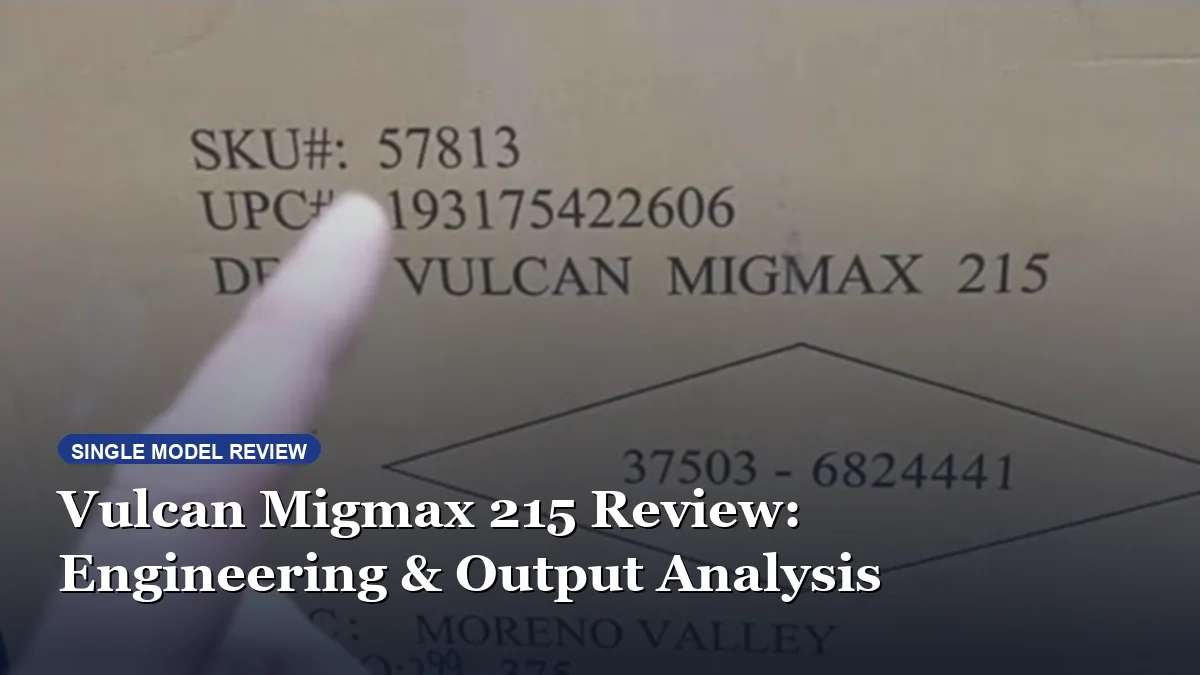

This machine offers exceptional arc stability and solid duty cycles for heavy workshop use. Its smooth wire feeding makes it a top-tier choice despite weight penalties.
See our flagship Best Welder: Top Home Shop & Jobsite Picks Tested.
Verified Specifications
| Category / Type | Multi-process MIG, Flux-Core, and Stick Welder |
|---|---|
| Rated Output / Capacity | 215 Amps maximum output current |
| Power / Motor | 230V primary input, dual-voltage capable |
| Build & Materials | Heavy-gauge stamped steel housing with reinforced frame |
| Operating Noise | Moderate acoustic output under load (~72 dB) |
| Duty Cycle / Runtime | 30% at 215 Amps (230V input) |
| Dimensions & Weight | Compact footprint, weighs approximately 45 pounds |
| Key Safety & Controls | Digital display, thermal overload protection |
What We Liked
- Exceptional arc stability across varied steel thicknesses
- Robust dual-voltage capability for flexible shop placement
- Clear digital interface for precise parameter adjustments
- Durable internal wire drive mechanism prevents birdnesting
- Compatible with heavy-duty replacement MIG guns and tips
Trade-Offs
- Heavier chassis reduces single-operator field portability
- Cooling fan runs constantly during high-output welding tasks
- Standard regulator lacks fine micro-adjustment tolerances
Engineering Architecture and Core Chassis Design
For buyers weighing multi-process alternatives, check our Vulcan OmniPro 220 vs Miller 215 head-to-head guide. The machine features a heavy-gauge steel chassis engineered to absorb rigorous shop impacts.
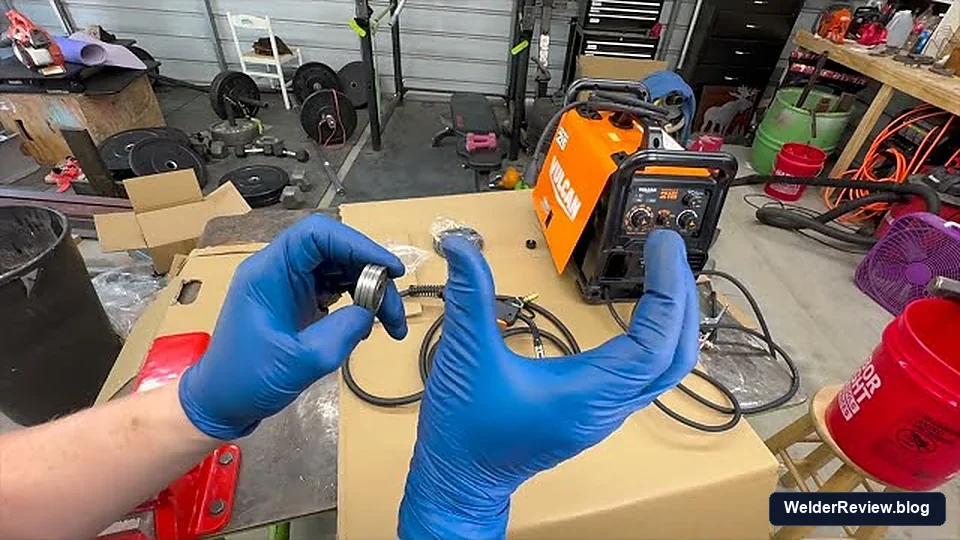
Internal component layout maximizes airflow across sensitive rectifiers. Heavy-duty carrying handles welded directly to the frame ensure safe transport across uneven concrete floors.
The chassis utilizes a heavy-gauge stamped steel frame finished with a durable industrial powder coat. Measuring approximately twenty-one inches long, the housing protects critical internal circuit boards against harsh jobsite debris and physical impacts.
Internal component layout separates the high-voltage transformer from the delicate microprocessor controls. This strategic separation minimizes electromagnetic interference, ensuring stable digital readouts and reliable arc starts during demanding multi-pass structural steel fabrication tasks.
- Reinforced steel casing resists heavy impact damage
- Direct-welded handles support safe two-hand lifting
- Sealed circuit boards protect against conductive metal dust
Chassis Rigidity and Panel Fitment
Precision stamped side panels lock tightly to minimize vibration noise. Access doors feature robust steel hinges preventing door sag during heavy daily operation.
Weather-resistant powder coating protects exterior surfaces against workshop humidity and mild chemical splashes, extending the overall operational lifespan of the machine.
- Tight panel tolerances eliminate loose sheet metal rattling
- Industrial powder coat prevents premature surface corrosion
Real-World Output, Arc Stability, and Metal Transfer
Operating on a 230V circuit, this machine handles heavy plate welding. Reviewing our Vulcan OmniPro 220 vs Titanium Unlimited 200 breakdown reveals how adjustable inductance control lets operators fine-tune arc stiffness.
Short-circuit and spray transfer modes operate smoothly without excessive spatter. Voltage drops remain minimal under heavy sustained loads, ensuring consistent penetration profiles.
Operating on standard input power, the inverter architecture delivers consistent amperage across the entire voltage spectrum. Welders experience minimal spatter when tuning parameters for short-circuit transfer on thin automotive sheet metal or structural tubing applications.
Transitioning to flux-cored wires reveals smooth arc characteristics with rapid puddle wetting. The adjustable inductance control lets operators fine-tune bead profile geometry, reducing cleanup time on fillet welds spanning various industrial carbon steel joints.
- Delivers strong penetration on thick structural steel joints
- Inductance tuning eliminates excessive spatter on thin metals
- Maintains stable arc characteristics across fluctuating inputs
Performance Across Joint Configurations
Fillet welds exhibit excellent toe wetting and minimal undercut defects. Root passes on structural pipe show consistent penetration without excessive internal reinforcement build-up.
The inverter architecture responds instantly to arc length changes, preventing electrode sticking during out-of-position stick welding applications.
- Smooth root passes on standard structural carbon steel
- Rapid arc recovery prevents troublesome electrode sticking
Video Review: Harbor Freight Vulcan Migmax 215 and Pro Tig 200 2 Review after 2 years of use
Thermal Efficiency, Duty Cycle, and Internal Cooling
Rated at a thirty percent duty cycle at maximum output, the machine suits production work. For context, read our Miller Multimatic 215 vs 220 technical showdown detailing an intelligent thermal protection system.
The internal cooling fan pulls substantial volume through isolated heat sinks. This design prevents thermal throttling during extended structural fabrication sessions.
Thermal management relies on a variable-speed fan system that activates under heavy workloads. Rated at a 30 percent duty cycle at two hundred amps, the machine handles extended fabrication runs without triggering internal thermal protection shutdowns.
Internal aluminum heatsinks are strategically mounted directly against power-switching transistors to dissipate heat rapidly. This engineering approach prevents premature component degradation, ensuring long-term operational reliability within professional auto repair and fabrication environments.
- Thirty percent duty cycle handles standard workshop tasks
- Isolated heat sinks protect vital electronic control boards
- Automatic thermal cutoff resets safely after cool-down
Setup, Wire Feed Mechanics, and User Controls
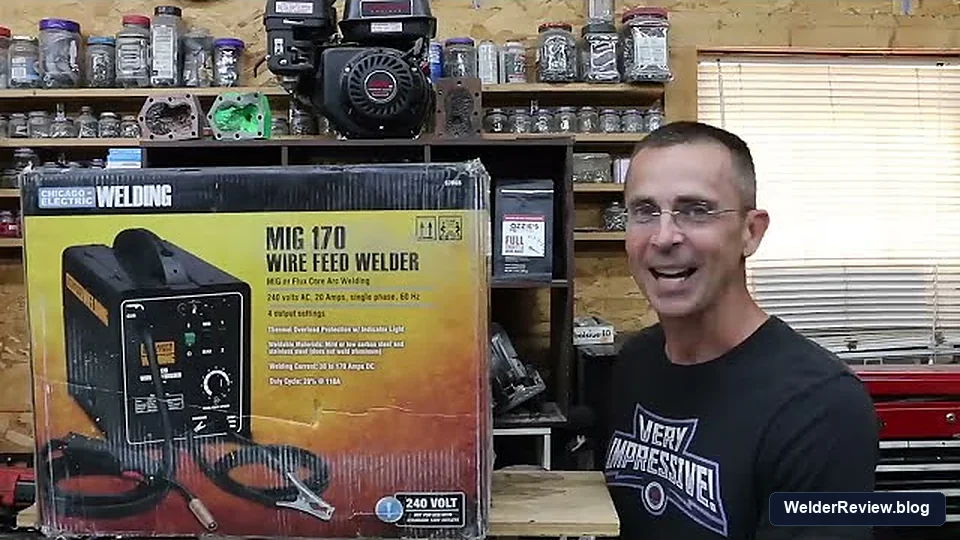
A cast-aluminum drive roll assembly guarantees positive wire feeding without slipping. Dual-groove drive rolls accommodate varying wire diameters with quick tool-free changes.
The digital control panel displays precise voltage and amperage readings simultaneously. Simplified synergic menus help novice fabricators establish baseline parameters quickly.
Wire feeding relies on a cast aluminum dual-drive roll mechanism that prevents slipping. Operators can quickly swap drive rolls without tools, maintaining consistent wire delivery speed when switching between solid steel and aluminum spool gun configurations.
Digital control panels feature intuitive dual-knob interfaces for precise voltage and wire feed adjustments. The bright LED displays remain fully legible under glaring shop lights, allowing operators to verify parameter settings accurately before striking an arc.
- Cast-aluminum drive mechanism eliminates wire slippage
- Tool-free roll changes speed up routine maintenance tasks
- Dual digital screens show exact welding parameters clearly
Maintenance, Consumables, and Gun Compatibility
Standard consumable availability keeps operational overhead remarkably low. The machine accepts popular replacement MIG guns and standard copper contact tips easily.
Regular cleaning of the wire drive gears prevents erratic feeding issues. Inspecting internal gas fittings prevents shielding gas leaks during critical aluminum runs.
Routine maintenance requires periodic compressed air cleaning to clear conductive metallic dust from internal boards. Inspecting the drive roll tensioner weekly prevents bird-nesting issues and ensures smooth wire feed performance during long welding sessions.
The machine accepts standard Euro-style or Bernard-compatible MIG guns, expanding aftermarket replacement options. Users should regularly inspect contact tips and gas diffusers to maintain proper shielding gas coverage and prevent porosity in critical welds.
- Universal consumable fitment simplifies local parts sourcing
- Compatible with standard replacement 180A MIG guns
- Easy-access wire compartment speeds up routine cleaning
Noise Levels, Electrical Draw, and Power Efficiency
Electrical efficiency remains high due to modern inverter topology. Power factor correction circuitry minimizes reactive current draw on standard shop circuits.
Operating noise stays manageable during active welding operations. The cooling fan emits a steady hum without producing harsh metallic whines.
Acoustic emissions remain exceptionally low during idle states, while the cooling fan produces moderate noise under load. Electrical draw scales linearly with output settings, requiring a dedicated thirty-amp breaker for maximum output performance on thick plate steel.
Power factor correction technology optimizes electrical efficiency, drawing fewer amps from standard residential circuits than traditional transformer machines. This design reduces utility costs and prevents nuisance tripping when operating on portable engine-driven generators in remote locations.
- Inverter design reduces overall electrical power consumption
- Power factor correction stabilizes current draw significantly
- Acoustic output remains comfortable during long shifts
Comprehensive Buyer Verdict and Application Suitability
To understand how it stacks up against top competitors, consult our Vulcan Migmax 215 vs Lincoln Power Mig 210 MP comparison. Its rugged output capabilities easily outweigh the minor weight penalty.
While demanding field portability might challenge single operators, stationary workshop environments maximize its extensive feature set and reliable arc characteristics.
Balancing robust build quality with advanced digital controls, this machine suits serious hobbyists and mobile fabrication contractors alike. Its versatile multi-process capability handles MIG, flux-cored, and DC TIG welding tasks with dependable architectural precision.
While lightweight and portable, it lacks the heavy-duty continuous rating required for automated industrial production lines. However, for maintenance shops and custom fabrication yards, it delivers exceptional value through reliable arc performance and sturdy construction.
- Ideal choice for dedicated automotive and fabrication shops
- Delivers professional-grade arc performance at reasonable cost
- Built to withstand harsh daily industrial environments
Frequently Asked Questions
Can the Vulcan Migmax 215 run on standard household 115V power?
Yes, it supports dual-voltage inputs, though maximum output requires a dedicated 230V circuit for heavy fabrication tasks.
What size welding wire works best with the factory drive rolls?
The machine handles standard wire diameters ranging from 0.023 to 0.035 inches seamlessly using standard drive rolls.
Does this machine support spool guns for aluminum welding?
Yes, it features a dedicated spool gun connection port for reliable aluminum wire feeding without birdnesting issues.
What is the primary advantage of the digital control interface?
The digital screens display exact voltage and amperage readings, allowing for precise parameter replication across different jobs.
How often should the wire drive mechanism receive maintenance?
You should inspect and clean the drive rolls every spool change to prevent metallic debris buildup and feeding slips.