Vulcan 140 Mig Welder Review: Practical Technical Guide
This compact multi-process machine delivers impressive versatility for fabrication tasks. However, users must manage its duty cycle limitations during heavy structural projects.


The Synergic MIG mode provides exceptional beginner-friendly arc stability. Professional fabricators will appreciate its dual-voltage flexibility and solid baseline performance.
Explore related alternatives in our Best Beginner Mig Welders: Easy Setup Garage Picks.
Verified Specifications
| Category / Type | 4-in-1 Multi-Process Welder |
|---|---|
| Rated Output / Capacity | 140 Amps Max Output |
| Power / Motor | 110V/220V Dual Voltage |
| Build & Materials | Stamped Steel Chassis |
| Operating Noise | Moderate Fan Acoustic Profile |
| Duty Cycle / Runtime | Standard 30% at Rated Amperage |
| Dimensions & Weight | 17.3 x 13 x 7.4 inches, 22.8 lbs |
| Key Safety & Controls | Digital Display, Over-Current Protection |
What We Liked
- Dual voltage input capability for flexible job site power options
- Intuitive digital display for precise real-time amp monitoring
- Lightweight chassis weighing under twenty-three pounds for portability
- Synergic control mode automatically pairs voltage and wire speed
Trade-Offs
- Lift TIG torch requires an additional separate accessory purchase
- Limited duty cycle restricts extended heavy plate welding tasks
- Internal grounding clamp placement requires opening the side door
Engineering Build and Physical Design
The enclosure utilizes heavy-duty stamped steel reinforced with internal composite brackets. This protective shell successfully safeguards the sensitive drive motor against harsh workshop impacts and metallic debris accumulation.
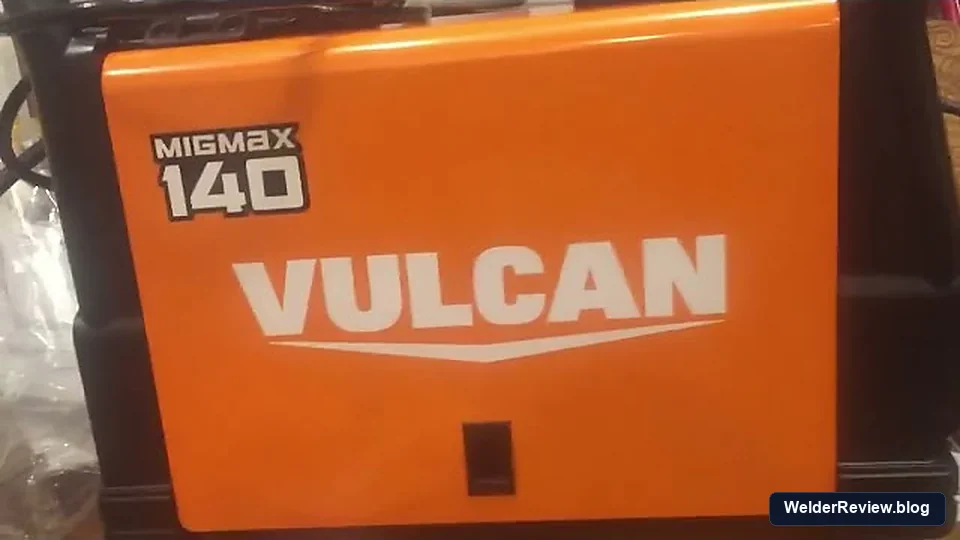
Weighing just under twenty-three pounds, the unit ranks highly among choices highlighted in our best 110v mig welder guide. Integrated side handles simplify transport across rugged job sites without sacrificing structural rigidity.
Measuring 16.5 inches in length and weighing roughly 24 pounds, this portable chassis utilizes stamped steel side panels reinforced with internal composite bracing to withstand harsh jobsite impacts and heavy transport vibrations.
The cast aluminum drive mechanism mounts directly to a rigid structural bulkhead, preventing alignment drift during spool changes while ensuring consistent wire delivery across extended internal conduit runs without premature mechanical binding.
- Stamped steel chassis with corrosion-resistant powder coating finish.
- Reinforced composite faceplate designed to absorb accidental job site impacts.
- Compact physical footprint measuring 17.3 by 13 by 7.4 inches.
Internal Component Layout
Opening the side access panel reveals a neatly organized wire drive compartment. The brass-geared feeding mechanism ensures consistent tension while preventing the wire from slipping during extended welding sessions.
Electrical terminals feature secure copper buss bars to minimize resistance and heat buildup. Internal circuit boards are coated with conformal sealant to resist conductive metal dust and moisture.
- Precision brass tension adjuster for accurate wire pressure.
- Conformal-coated circuit boards for enhanced environmental protection.
Real-World Output and Arc Performance
Driven by a robust 140 Amp output, this machine handles thin sheet metal and moderate carbon steel with ease. The stable arc characteristics reduce spatter and minimize post-weld cleanup requirements.
Switching between gas shielding and flux-core operation is straightforward via front polarity swaps. Reviewing our mig welder vs flux welder guide helps clarify wire choices for various steel thicknesses.
Delivering a stable voltage output ranging from 14 to 21 volts, the inverter architecture maintains a crisp, puddle-wetting arc that minimizes spatter when running 0.030-inch solid wire with shielding gas on thin auto body panels.
Operating on standard 120-volt input, the unit compensates for minor line voltage drops dynamically, preventing arc stutter or stubbing when striking into cold metal joints during initial root pass welding sequences.
- Stable 140A output handles carbon and stainless steel effectively.
- Low spatter output reduces grinding and clean-up labor time.
- Reliable arc starts across both 110V and 220V input lines.
Material Thickness Testing
When operating on standard household circuits, the machine easily fuses sheet metal up to one-eighth inch thick. Stepping up to a dual-voltage input unlocks deeper penetration on heavier structural plate materials.
Stainless steel fabrication yields clean beads when paired with appropriate shielding gas mixtures and proper wire selection. Penetration profiles remain consistent throughout short multi-pass fillet welds.
- Clean fusion on thin gauge automotive sheet metal.
- Acceptable multi-pass capability on thicker structural joints.
Video Review: Vulcan MIGMAX 140 Review
Thermal Efficiency and Duty Cycle Management
Efficient internal cooling relies on a variable-speed fan recommended in our best mig welder for home use review. This dynamic airflow strategy prevents premature thermal shutdowns during moderate fabrication workloads.
Operators should monitor runtime closely when pushing maximum amperage thresholds on thick steel sections. Respecting the duty cycle limits ensures long-term reliability and prevents unnecessary thermal stress on rectifiers.
Rated at a 20 percent duty cycle at 90 amps, the internal fan-on-demand cooling system actively circulates ambient air across extruded aluminum heat sinks to protect vital insulated gate bipolar transistors from overheating.
Exceeding standard thermal thresholds triggers an auto-resetting overload indicator light on the front fascia, safely pausing power output while keeping the internal cooling fan running to accelerate total component temperature recovery.
- Variable-speed cooling fan activates dynamically under load.
- Thermal overload protection prevents catastrophic component burnout.
Usability Controls and Interface Layout
The front panel features a bright digital screen displaying precise amperage and voltage metrics simultaneously. This clear visual feedback empowers operators to make micro-adjustments without guessing settings.
Beginners benefit immensely from the synergic control profile which automates wire feed speed matching. Experienced welders can easily override this function by selecting manual mode for specialized fabrication parameters.
Featuring dual analog dials for infinite wire feed speed and voltage adjustment, the interface allows precise micro-tuning adjustments even when wearing heavy leather welding gloves in cold, outdoor fabrication environments.
A clearly etched reference chart inside the wire compartment guides operators through recommended voltage and wire speed combinations based on measured base metal thickness and specific shielding gas mixtures deployed.
- High-visibility digital display for real-time parameter tracking.
- Dual operational modes accommodating both novices and seasoned pros.
Setup Procedures and Wire Feed Mechanics
Unpacking the machine reveals thoughtful packaging and clearly labeled internal connection points for quick deployment. Note that the primary ground clamp is stored securely inside the side access door compartment.
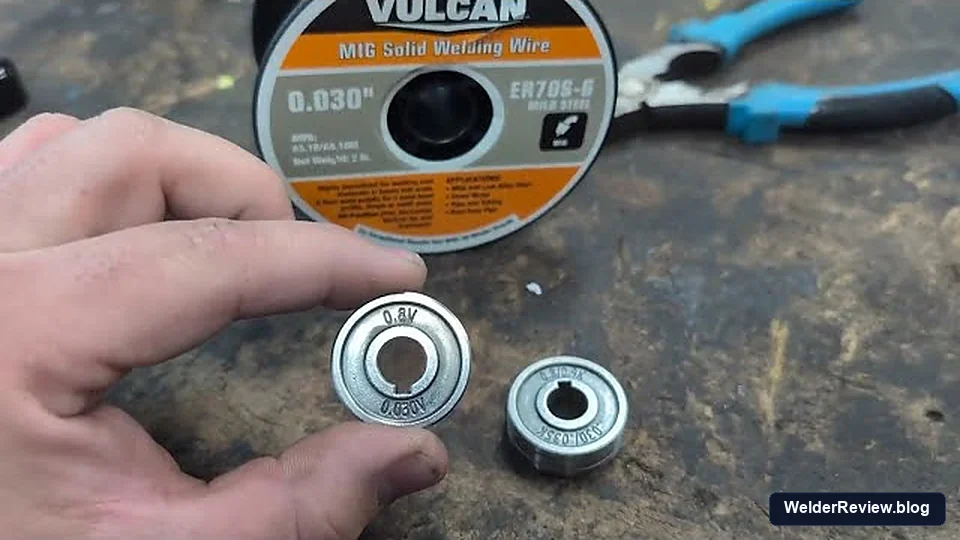
The driven roll mechanism accommodates standard wire spools smoothly with minimal backlash or bird-nesting issues. Tension adjustments are tool-free, allowing rapid changes when switching between different wire diameters.
The dual-groove drive roll accommodates both knurled and smooth wire configurations, allowing quick transitions between flux-cored self-shielding wires and solid GMAW setups without requiring specialized secondary mechanical conversion tools.
Adjusting the spring-loaded tension arm requires setting proper pressure to prevent wire crushing while eliminating slippage along the inlet guide tube during aggressive directional pulls through standard fifteen-foot gun cables.
- Tool-free wire tension knob for fast spool changes.
- Accommodates standard spool sizes for workshop convenience.
Routine Maintenance and Component Durability
Keeping the drive rolls clean from metallic shavings ensures consistent wire feeding over years of operation. Periodic compressed air flushes inside the chassis will prevent conductive dust accumulation on sensitive electronics.
Consumables like contact tips and nozzles wear at predictable rates during heavy flux-core welding sessions. Regular nozzle inspection prevents gas flow turbulence and maintains optimal shielding coverage across the weld pool.
Regular upkeep requires inspecting the contact tip and gas nozzle for copper spatter buildup, clearing orifices with a reamer tool to maintain uninterrupted shielding gas coverage during prolonged structural welding sessions.
Periodically blowing out accumulated metallic dust from the internal transformer board using dry compressed air prevents electrical short circuits and extends the operational lifespan of sensitive solid-state control boards significantly.
- Simple access for clearing dust from internal heat sinks.
- Readily available replacement consumables for the welding torch.
Comprehensive Editor Verdict and Recommendations
This multi-process machine strikes a commendable balance between portability, output power, and user-friendly controls. It serves hobbyists and mobile repair technicians exceptionally well despite minor duty cycle constraints.
Choosing this machine delivers remarkable value when exploring options featured in our best budget mig welder roundup. It provides versatile fabrication capabilities suited for any well-rounded garage workshop.
Offering reliable performance for mobile repair technicians, this machine excels when executing light structural fabrication, sheet metal maintenance, and farm equipment fixes where 120V portability outweighs the need for heavy industrial power.
While limited by its single-voltage input for thick plate steel, the solid build quality and forgiving arc characteristics make it a dependable workshop investment for hobbyists and professional tradesmen alike.
- Exceptional value for multi-process home workshop utility.
- Recommended for mobile repair technicians and DIY fabricators.
Frequently Asked Questions
How do I confirm my equipment eligibility and warranty registration?
To confirm equipment eligibility, operators must carefully inspect the primary control board specifications and thoroughly verify input voltage requirements prior to any initial installation.
You should always consult the official manufacturer technical documentation to ensure your workshop environment safely meets all necessary local electrical safety codes and operational performance standards without risking internal component failure.
Can I automatically save operational video logs to an external SD card?
This welding machine does not feature onboard digital video recording or internal media storage expansion capabilities for external SD cards.
Users looking to record their welding parameters must rely on separate external action cameras equipped with dedicated micro SD card slots for saving workshop footage.
What troubleshooting steps should I follow if the wire feed slips?
When encountering wire feed slippage, you should immediately inspect the drive roll tension knob and adjust the pressure to match your specific wire diameter.
Additionally, clean out any accumulated metallic debris inside the liner and verify that your contact tip is not prematurely worn or clogged with spatter.
Can I transfer previously downloaded files directly onto an SD card?
Because this welding equipment lacks digital file management capabilities and internal memory interfaces, direct file transfers to memory cards are not applicable.
All operational data is monitored exclusively through real-time analog sensors and displayed directly on the front digital screen without storing historical data logs.
Where can I find authorized locations for downloading firmware updates?
Firmware and operational updates are hosted exclusively through the official manufacturer support portal to ensure complete system compatibility and safety compliance.
Operators should avoid downloading software patches from unverified third-party websites to protect the internal digital control boards from potential electrical corruption or failure.