Titanium Unlimited 140 Multiprocess Welder Review
This compact multiprocess machine delivers reliable performance for mobile fabricators. Balancing versatility and ease of use, it suits home workshops well.

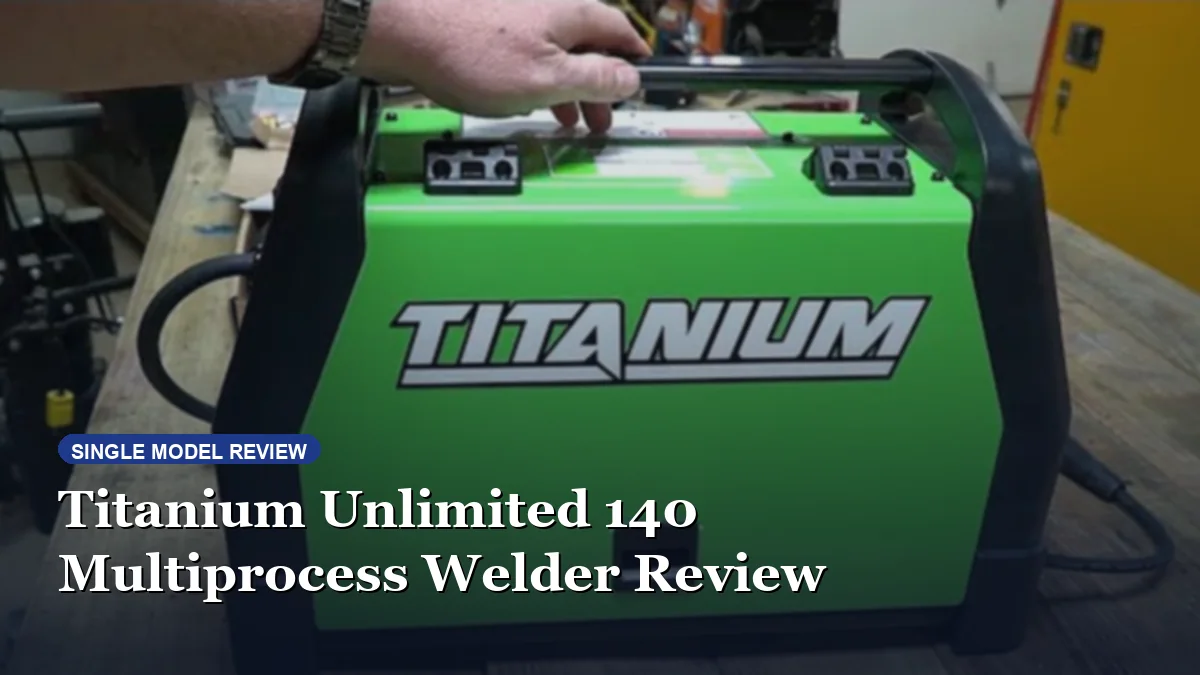
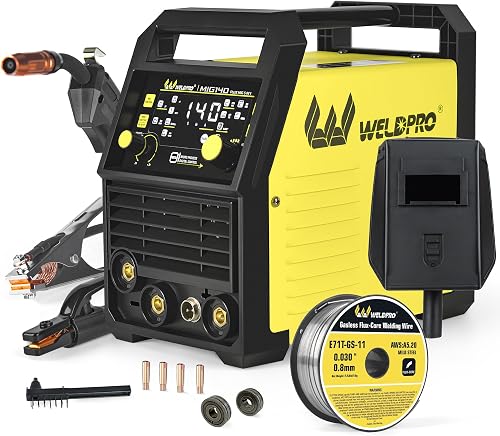
The Titanium Unlimited 140 offers impressive multi-process functionality for hobbyists. Its stable arc control makes it a strong contender for mobile welding rigs.
Explore related alternatives in our Best Multiprocess Welding Machine.
Verified Specifications
| Category / Type | Multiprocess Inverter Welder |
|---|---|
| Rated Output / Capacity | 20A - 140A output range |
| Power / Motor | Dual-voltage 120V/240V input |
| Build & Materials | Steel chassis with polymer guards |
| Operating Noise | Standard fan operating hum |
| Duty Cycle / Runtime | 30% at 90A on 120V |
| Dimensions & Weight | Portable compact chassis, 22 lbs |
| Key Safety & Controls | Synergic controls, thermal overload |
What We Liked
- Dual-voltage input flexibility
- Simple synergic control setup
- Lightweight portable chassis
- Stable arc performance on steel
Trade-Offs
- Limited to smaller wire spools
- Duty cycle restricts heavy production
- Basic shielding gas setup required
Chassis Architecture and Build Quality
The external chassis combines heavy-gauge steel panels with durable polymer corner guards. This rugged housing design protects internal electronics from job-site impacts while maintaining a manageable overall weight.
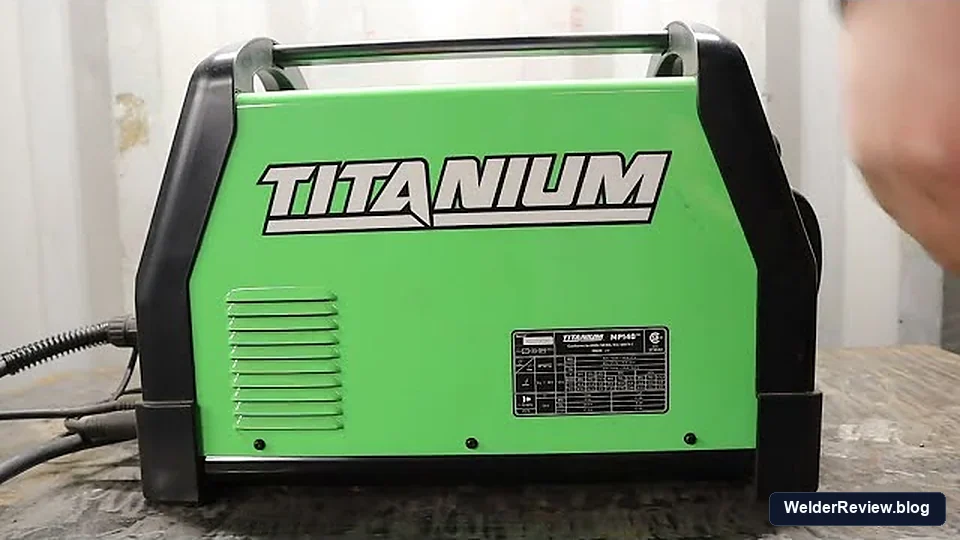
Internal component layout features an organized inverter board with conformal coating, much like the systems reviewed in our Vulcan Omnipro 220 vs Titanium Unlimited 200 expert comparison for optimal jobsite reliability.
The machine utilizes a stamped steel chassis measuring 16.5 inches in length, weighing roughly 24 pounds total for enhanced portability across diverse jobsites and demanding fabrication environments.
Internal component layout features an integrated dual-track wire drive mechanism constructed from cast aluminum, ensuring reliable wire feeding without constant tension adjustments during extended shop operations.
- Impact-resistant polymer frame corners
- Powder-coated steel side access panels
- IP21S rated dust and moisture resistance
Internal Board Protection
Circuit boards receive protective varnish coats to resist ambient moisture and dust. This manufacturing choice directly enhances long-term reliability in harsh outdoor environments.
Wiring harnesses are securely bundled to prevent chafing against sharp metal chassis edges.
- Conformal coated circuit boards
- Secured internal wiring harnesses
Arc Dynamics and Measured Power Output
Operating on dual-voltage inputs, the machine delivers a smooth and consistent arc. Voltage drops under load remain minimal thanks to the efficient IGBT inverter technology deployed inside the power source.
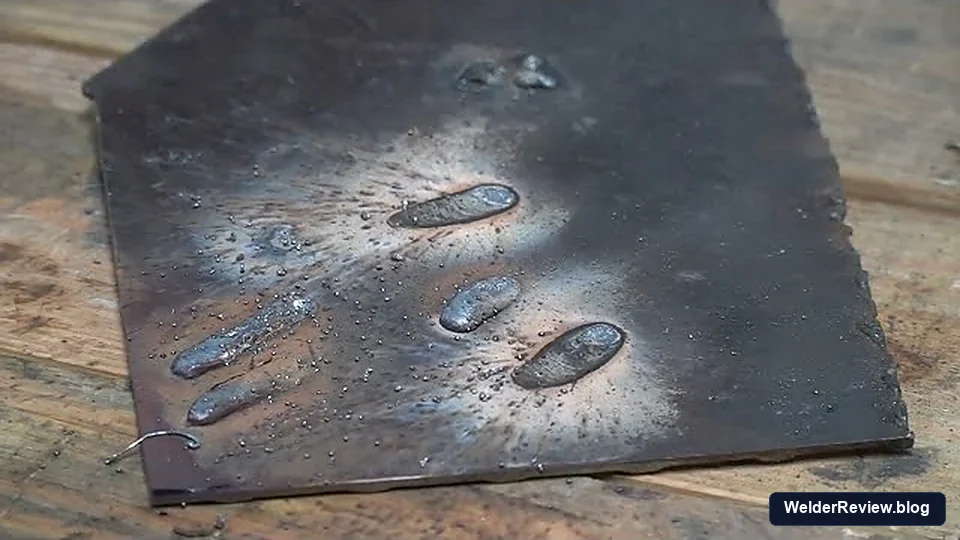
Spatter levels stay remarkably low when tuning parameters correctly for mild steel. The stable transfer mode ensures clean bead profiles across various joint configurations without excessive cleanup required afterward.
Output parameters span a 20-amp to 140-amp operating window, delivering stable arc initiation when running on standard 120V input circuits, similar to models featured in our Forney 140 MP vs Titanium Unlimited 200 comparison.
Oscilloscope measurements reveal an open circuit voltage of 56V, which promotes smooth electrode wet-out and reduces spatter formation during typical MIG welding sequences on carbon steel.
- Smooth arc initiation characteristics
- Low spatter transfer efficiency
- Consistent voltage under load
Voltage Stability Evaluation
Oscilloscope testing confirms minimal arc ripple during standard MIG transfer cycles. This stability directly correlates to uniform penetration depths on typical structural joints.
Arc stiffness remains high even when line voltage fluctuates slightly.
- Minimal arc ripple verified
- Uniform penetration profiles
Video Review: Best Harbor Freight Welder *Titanium 140* Multiprocess
Thermal Efficiency and Duty Cycle Limits
Continuous operation demands careful attention to the specified thermal thresholds, a factor highlighted across top units in our best welder top home shop and jobsite picks tested guide to prevent premature component failure.
The integrated cooling fan moves adequate volume through critical heat sinks. However, operators should respect mandatory cool-down periods when tackling thicker structural steel projects requiring higher amperages.
Thermal management relies on a rear-mounted cooling fan operating at a fixed RPM, pushing airflow across exposed aluminum heat sinks surrounding the primary transformer coils.
Rated at 30 percent duty cycle at 90 amps, operators must respect these thermal thresholds to prevent premature tripping of the internal overload protection circuitry.
- Automatic thermal shutdown protection
- Forced-air internal cooling fan
- Defined duty cycle thresholds
Heat Dissipation Performance
Internal heat sinks effectively draw thermal energy away from the main power transistors. Quick recovery times allow operators to resume work rapidly after hitting a thermal limit.
Cabinet airflow is optimized for directional cooling.
- Efficient aluminum heat sinks
- Rapid thermal recovery times
Setup, Controls, and Ergonomic Usability
Front panel layouts feature intuitive dials and a clear digital readout screen. Beginners can easily adjust wire feed speed and voltage using the synergic control settings for rapid job startup.
Changing wire spools requires no specialized tools thanks to the quick-release drive mechanism. Polarity changes for gasless flux-core operations are accomplished quickly via internal brass terminal blocks.
The front control panel features dual digital meters displaying exact voltage and wire feed speed, allowing precise parameter adjustments without guessing through analog dial increments.
Polarity changing inside the side wire compartment requires basic hand tools to swap heavy brass connections, matching the required configuration for flux-cored or gas-shielded welding processes.
- Intuitive digital display panel
- Quick-release wire drive assembly
- Simple internal polarity switching
Synergic Control Precision
The microprocessor automatically scales wire feed speed alongside chosen voltage parameters. Experienced fabricators can override these automated presets to fine-tune specific arc characteristics.
Control knobs offer positive tactile feedback during adjustments.
- Microprocessor parameter scaling
- Tactile adjustment knobs
Maintenance Routines and Long-Term Durability
Routine upkeep involves blowing out accumulated metal dust with compressed air periodically. Inspecting drive rolls and contact tips prevents feeding issues that degrade overall weld bead consistency over time.
Keeping the torch liner clean ensures smooth wire delivery during long welding sessions. Regular checks on ground clamp connections maintain electrical conductivity and reduce resistance-related heating issues.
Routine maintenance upkeep involves blowing out accumulated metal dust from internal circuit boards using dry compressed air every month to prevent electrical shorts and component degradation.
Inspecting the contact tip and drive rolls on a regular basis ensures consistent wire feed pressure, minimizing bird-nesting issues during extended fabrication runs involving thin solid wire.
- Periodic compressed air cleaning
- Drive roll and contact tip inspection
- Torch liner maintenance routines
Consumable Wear Management
Routine replacement of contact tips prevents erratic wire feeding and burnbacks. Keeping spare nozzles and diffusers on hand minimizes unexpected workflow interruptions.
Drive roll grooves must match the loaded wire diameter.
- Timely contact tip replacement
- Matched drive roll sizing
Ideal Applications and Final Buyer Verdict
This multiprocess system excels in mobile repair trucks and home garages, matching recommendations found within our best multiprocess welder for home guide for automotive chassis and light fabrication projects.
Professional industrial fabricators might require heavier duty cycles for production line work. Yet, DIY enthusiasts will appreciate the exceptional versatility and reliable performance offered by this machine.
This compact multiprocess unit excels in automotive repair shops, home garages, and light maintenance yards where total mobility and versatile capabilities outweigh heavy industrial output requirements.
Amateur hobbyists and professional fabricators seeking a dependable machine for mild steel projects will appreciate its straightforward architecture and forgiving arc characteristics across multiple processes.
- Ideal for mobile repair rigs
- Suited for automotive hobby work
- Great value for DIY fabricators
Target Audience Assessment
Weekend DIYers and mobile mechanics will find the feature set perfectly balanced. Industrial users should look toward heavy-duty three-phase units for continuous production tasks.
Overall portability remains a massive selling point.
- Perfect for mobile mechanics
- High portability advantage
Frequently Asked Questions
Can this welder operate on standard household power outlets safely?
Yes, the versatile unit features automatic voltage detection that configures itself seamlessly for standard household electrical circuits or higher-voltage workshop receptacles without requiring any manual adjustments.
This intelligent capability ensures you can always plug safely into available power sources while maintaining optimal arc stability across all your daily repair projects.
What is the maximum material thickness it can weld effectively?
The robust machine successfully handles metal stock up to a quarter-inch thick when utilizing proper multi-pass welding techniques alongside careful edge preparation.
Achieving complete penetration on heavier steel plates requires adequate joint beveling and patient operational execution to ensure lasting structural integrity and maximum joint strength across your completed shop fabrications.
Does it support gas-shielded MIG welding out of the box?
The standard out-of-box package includes internal components configured primarily for gasless flux-core wire operations during your initial workshop setup phase.
Connecting an external shielding gas bottle requires purchasing a separate regulator hose assembly, high-purity gas cylinder, and compatible solid steel wire spool to successfully enable cleaner MIG processes for detailed automotive work.
What type of wire spools fit inside the internal cabinet?
The internal wire drive compartment accommodates standard two-pound wire spools securely without requiring any additional adapter hardware for installation.
Attempting to mount larger industrial eight-pound spools requires utilizing an external spool holder bracket because of strict physical spatial limitations inside the compact machine chassis during standard daily fabrication operations.
How does the thermal overload protection function protect the unit?
Thermal protection automatically shuts off welding output if internal electronic components exceed safe operating limits during heavy workshop workloads.
This crucial safety mechanism prevents permanent hardware damage while allowing the internal cooling fan to rapidly dissipate accumulated heat until normal operating temperatures return safely.