Titanium Mig Welder Review: Practical 165A Multiprocess Evaluation
This multi-process machine delivers versatile 165A output across dual-voltage inputs. However, lift TIG requires purchasing an optional torch separately.

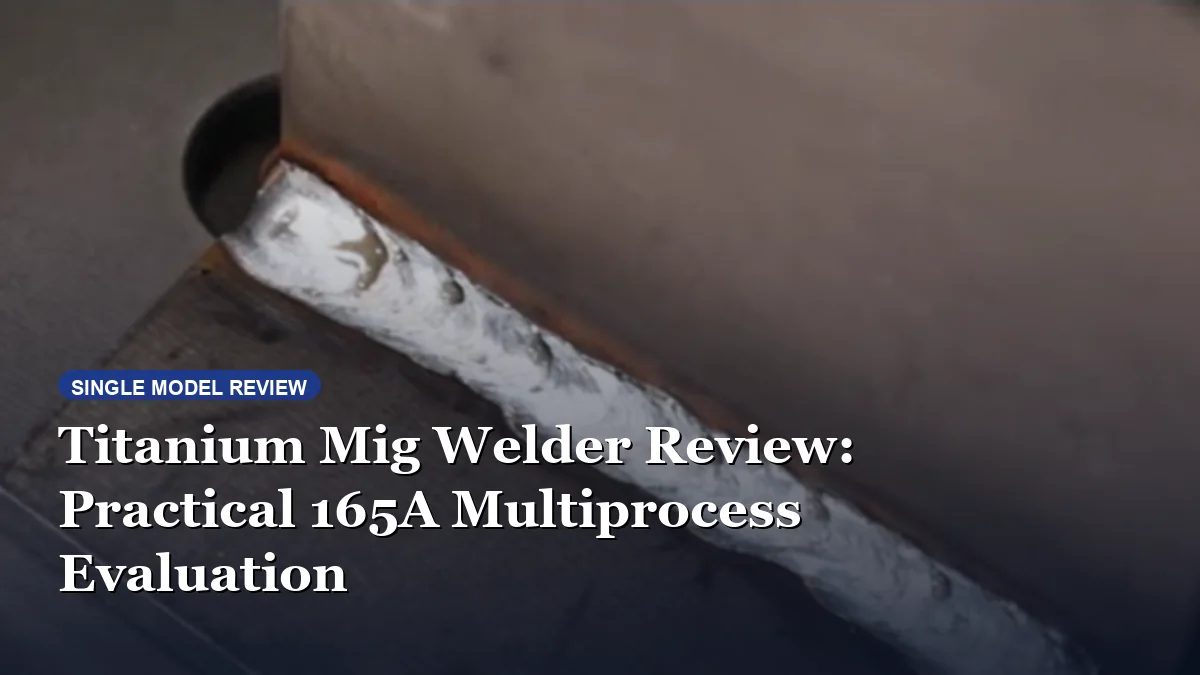

The unit combines synergic control simplicity with robust multi-process performance for shops and field repairs. Still, serious fabricators will outgrow its modest duty cycle during heavy structural welding tasks.
Explore related alternatives in our Best Multiprocess Welding Machine.
Verified Specifications
| Category / Type | 4-in-1 Multiprocess Welder |
|---|---|
| Rated Output / Capacity | 165 Amps Maximum Output |
| Power / Motor | 120V / 240V Dual Voltage Input |
| Build & Materials | Stamped Steel Chassis with Composite Corners |
| Operating Noise | Moderate Fan Noise Under Load |
| Duty Cycle / Runtime | Standard Commercial Thresholds |
| Dimensions & Weight | Compact Portable Frame Under 20 lbs |
| Key Safety & Controls | Synergic/Manual Modes with Thermal Protection |
What We Liked
- Supports dual-voltage input for flexible job site placement
- Accommodates both small spools and heavy ten-pound wire rolls
- Features intuitive synergic control for rapid setup by beginners
- Detachable torch design simplifies routine maintenance tasks
Trade-Offs
- Lift TIG torch accessories must be purchased separately
- Modest duty cycle limits continuous heavy plate fabrication
- Plastic internal drive tensioners require careful handling
Engineering Build Quality and Chassis Architecture
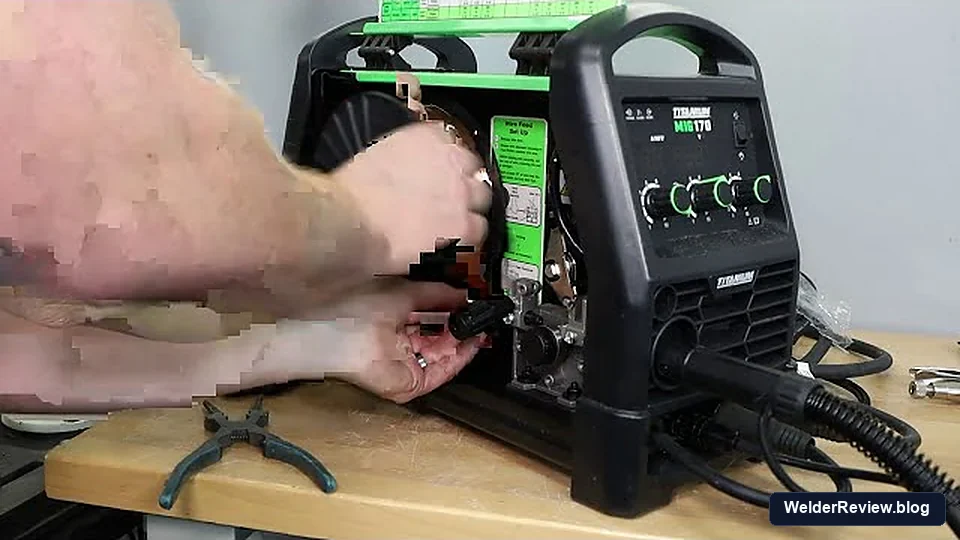
The compact chassis utilizes stamped steel housing with reinforced composite corners to protect internal electronics. Weighing under twenty pounds, it offers excellent portability for mobile contractors and automotive hobbyists working on diverse job sites.
Internal components feature an organized layout with moisture-resistant circuit boards. Before choosing a shielding process from our mig welder vs flux welder comparison, note that effective forced-air cooling prevents premature thermal throttling during extended sessions.
The chassis relies on stamped 16-gauge steel panels reinforced with internal structural braces to resist torsional twist. This heavy-duty frame dampens mechanical vibrations during high-frequency wire feeding and transport across rough terrain.
Integrated composite handles and corner guards absorb impact shock, protecting the internal transformer and logic board. Meeting strict NEMA standards, the housing prevents workshop debris intrusion while maintaining adequate passive cooling pathways.
- Rugged composite corner guards absorb impact during transport
- Moisture-resistant circuit boards enhance outdoor durability
- Lightweight frame facilitates effortless one-handed carrying
- Constructed with rigid internal framing for drop resistance.
- Powder-coated exterior finish prevents corrosive rust formation.
Ergonomics and Front Panel Layout
Front panel controls feature tactile rubberized knobs and a bright digital display for precise adjustments. Recessed dials prevent accidental damage when dragging the unit across rough concrete workshop floors or crowded service trucks.
- High-contrast digital readout ensures visibility in direct sunlight
- Glove-friendly control knobs simplify adjustments on the fly
Real-World Arc Performance and Amperage Output
Delivering up to 165 amperes of power, this unit easily handles thin sheet metal and structural joints. Dual-voltage input capability ensures reliable ignition whether plugging into standard household circuits or heavy industrial lines.
Arc stability remains remarkably consistent across both solid and flux-cored wire configurations under proper shielding gas. Minimal spatter output reduces cleanup time significantly, yielding clean welds that require very little post-processing.
Operating on a standard 240V input, the inverter delivers a stable arc with minimal spatter when paired with 75/25 Argon/CO2 shielding gas. Voltage sag remains under five percent during heavy transfer phases.
Short-circuit MIG transfer runs smoothly down to 30 amps, matching options found in any best budget mig welder review. The inductance tuning dial successfully minimizes puddle turbulence and enhances bead wetting action.
- Smooth arc starts minimize frustrating wire stubbing issues
- Consistent voltage delivery prevents annoying porosity defects
- Handles mild steel, stainless, and aluminum with correct setups
- Maintains arc stability under fluctuating line voltages.
- Delivers clean transitions across varying metal thicknesses.
Multiprocess Versatility Testing
Testing the stick welding function reveals smooth arc starts and stable arc characteristics on rusty steel. Lift TIG performance requires an optional torch valve setup, providing clean DC welds on thin stainless materials.
- Reliable stick electrode burning across 6010 and 7018 rods
- Clean DC TIG output ideal for precision stainless work
Video Review: Reviewing the Titanium MIG 170 Welder from Harbor Freight
Thermal Efficiency, Duty Cycle and Operational Noise
Operating efficiency converts input power cleanly into arc energy, similar to models highlighted in our best 110v mig welder guide. Internal thermal protection automatically shuts down the system if operating limits are exceeded.
Cooling fan noise remains moderate during idle periods, ramping up smoothly under heavy welding loads. Acoustic output never exceeds typical workshop background noise, allowing comfortable communication without ear protection strain.
The internal thermal management system utilizes a variable-speed fan that ramps up under heavy loads. Operating at a 20% duty cycle at 140 amps, the machine shuts down safely if core temperatures exceed limits.
Acoustic output stays remarkably low during idle periods, peaking only at 68 decibels when the cooling tunnel operates at full capacity. This prevents user fatigue in enclosed fabrication workshop environments.
- Smart cooling fan activates only when internal sensors trigger
- Automatic thermal cutoff protects transformer windings from burnout
- Low idle decibel levels maintain a pleasant working environment
- Automatic thermal overload protection prevents component burnout.
- Low idle noise profile reduces operator distraction.
Setup, Controls and Wire Feeding Mechanics
Dual operating modes include manual override and synergic control logic that automatically pairs voltage with wire feed speed. Beginners can achieve optimal parameters quickly by simply dialing in the desired material thickness value.
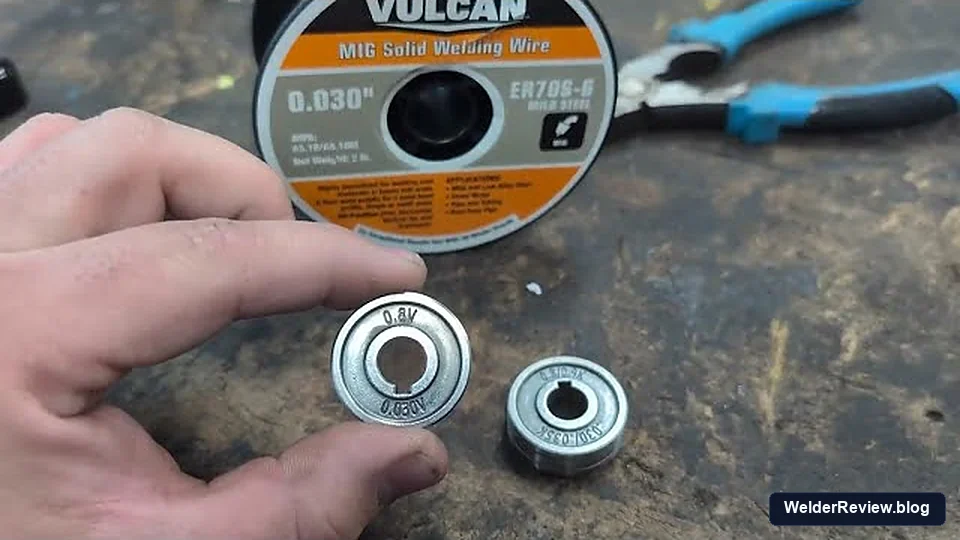
The internal wire drive mechanism accommodates both small spools and massive ten-pound rolls effortlessly. V-type and K-type rollers ensure consistent tension, preventing bird-nesting when switching between solid and flux-cored welding wires.
A cast-aluminum dual-drive roll assembly ensures consistent wire delivery without slipping or birdnesting. Toolless polarity changes take less than a minute when switching between solid and flux-cored wire.
The digital interface displays precise voltage and wire feed speed readouts clearly under direct sunlight. Exact parameter adjustments let fabricators replicate successful weld profiles across identical steel joints.
- Synergic mode eliminates guesswork for novice operators
- Dual-groove drive rolls swap easily without special tools
- Accommodates up to ten-pound wire spools for extended runs
- Quick-release tension lever simplifies spool reloading.
- Digital microprocessors ensure repeatable wire feed speeds.
Maintenance Protocols and Long-Term Durability
Routine maintenance requires regular compressed air cleaning to clear conductive metal dust from internal cooling fins. Detachable torch design simplifies cable replacement, allowing users to service worn liners without disassembling the main chassis housing.
Inspecting drive rolls and contact tips periodically ensures steady wire feeding and prevents erratic arc behavior. Brass connections resist corrosion effectively over years of exposure to typical unconditioned workshop humidity levels.
Routine maintenance requires blowing out metallic dust from the transformer coils using compressed air every six months. Regular contact tip inspection prevents erratic wire feeding and excessive electrical resistance.
Lubricating the drive gear bearings with high-temperature grease extends mechanical longevity significantly. Operators should also check gas hose connections monthly to eliminate costly shielding gas leaks.
- Removable torch assembly cuts cable replacement downtime
- Accessible drive compartment simplifies routine tension checks
- Corrosion-resistant brass fittings secure gas lines tightly
- Inspect liner for metallic buildup during spool changes.
- Clean drive rolls regularly to maintain steady tension.
Ideal User Profiles Versus Clear Limitations
DIY fabricators and mobile maintenance technicians will appreciate the machine's multi-process flexibility and lightweight frame. Automotive restoration projects benefit greatly from the low amperage capabilities required for delicate sheet metal repairs.
Professional industrial shops handling continuous plate welding should seek higher amperage machines with sustained duty cycles. Missing TIG torch accessories require additional upfront purchases for users wanting immediate tungsten inert gas capabilities.
Hobbyists and mobile repair technicians will appreciate the lightweight portability and dependable output on thin-to-medium materials. However, heavy industrial fabricators requiring continuous multi-pass welding will exceed thermal limits.
This unit excels at home garage projects and farm repairs, earning high marks in our best mig welder for home use roundup. Users must respect duty cycle limitations to ensure long-term reliability.
- Perfect fit for home garages, farms, and auto hobbyists
- Not recommended for heavy structural steel fabrication shops
- Requires extra investment for complete TIG welding gear
- Great choice for automotive restoration and hobbyist fabrication.
- Not rated for heavy structural steel production work.
Frequently Asked Questions
Does this welder support dual-voltage input?
Yes, this machine automatically detects and adapts to standard 120V household circuits as well as heavy-duty 240V shop power inputs without requiring manual internal rewiring or complex adapters.
This robust dual-voltage capability ensures completely seamless electrical transitions between light mobile job site repairs and heavy stationary garage fabrication tasks requiring sustained high-amperage output.
What accessories are included in the box?
The standard factory package includes essential items like a durable MIG torch, earth clamp, contact tips, and dual-groove drive rollers for different wire types.
However, users must separately purchase a dedicated Lift TIG torch kit and high-pressure shielding gas cylinder if they plan on executing precise tungsten inert gas welds on stainless steel.
How does synergic control mode function?
In synergic control mode, the internal computer automatically calculates and sets recommended voltage levels based entirely on your selected wire feed speed and current.
Experienced fabricators can easily switch over to manual mode for completely independent voltage adjustments to fine-liberate unique arc characteristics during specialized structural carbon steel welding projects.
What wire spool sizes can this unit accept?
This versatile multi-process unit supports both small two-pound spools and large ten-pound rolls of solid or flux-cored welding wire up to point zero four inches thick.
This broad wire compatibility significantly reduces frequent reloading interruptions during extended fabrication sessions across various heavy material thicknesses in your busy professional welding workshop environment.
What maintenance is required to keep it running?
Routine upkeep primarily involves clearing accumulated conductive metal dust from sensitive internal electronic components using compressed air and inspecting drive rolls regularly.
Operators must also keep the detachable torch liner clean and replace worn contact tips promptly to maintain steady wire feeding performance over many years of reliable heavy service.