Titanium 140 Welder Review: Performance and Build Analysis
This compact 140A multi-process welder delivers versatile performance for DIY users. Dual-voltage input expands workshop utility despite limited duty cycles.

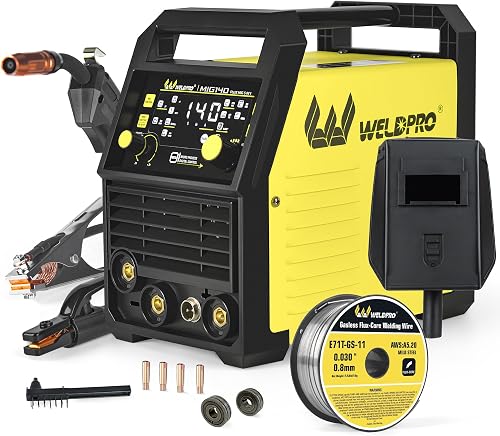
The Titanium 140 provides dependable arc stability and intuitive synergic controls for home workshops. However, heavy fabricators will outgrow its 1kg spool capacity and thermal limits.
See our flagship Best Welder: Top Home Shop & Jobsite Picks Tested.
Verified Specifications
| Input Power | 110V / 220V Automatic Detection |
|---|---|
| Welding Processes | MIG, Flux Core, MMA Stick, Lift TIG, Spot |
| Rated Amperage | 140A max output via IGBT inverter |
| Material Thickness | 1mm to 4mm MIG, 1mm to 6mm Stick/TIG |
| Wire Spool Capacity | Accommodates 1kg (2lb) spools |
| Wire Diameters | Supports 0.030" and 0.035" flux core |
| Enclosure Rating | IP21S dust and drip resistance |
| Cooling System | Internal DC fan with thermal cutout |
What We Liked
- Automatic voltage detection seamlessly switches between 110V and 220V supplies.
- Versatile 5-in-1 capability handles MIG, Stick, Lift TIG, and spot welding.
- Synergic MCU control automatically matches wire feed speed to set voltage.
- Lightweight footprint enhances portability for mobile repair jobs and field work.
Trade-Offs
- Internal drive mechanisms only accept small 1kg wire spools.
- Lower duty cycles limit extended runs on thick steel plates.
- Basic IP21S enclosure requires careful storage away from moisture.
Build Quality, Ergonomics & Core Design
The Titanium 140 features a compact polymer and steel chassis engineered for portability. See how it stacks up in our Forney 140 MP vs Titanium Unlimited comparison for additional technical insights.
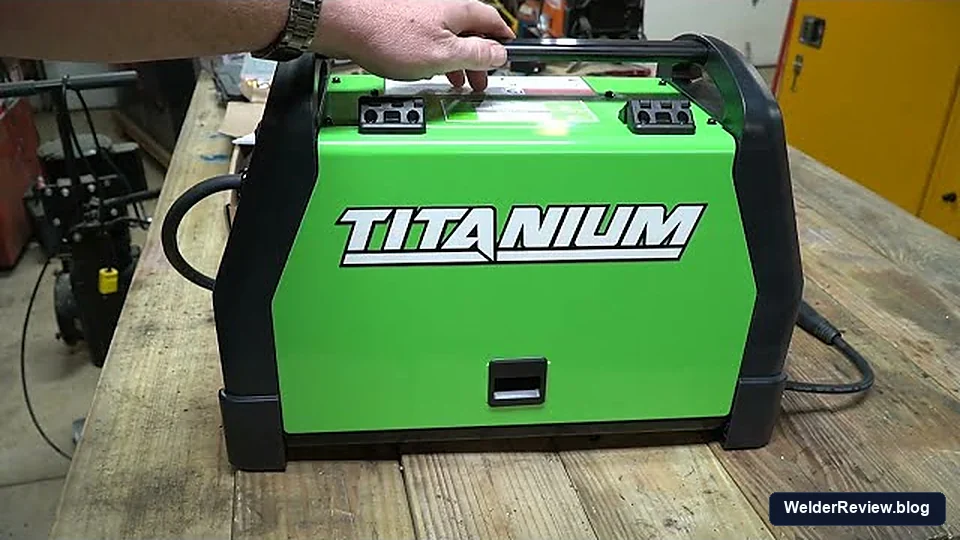
Internal component layout utilizes an IGBT inverter topology to reduce overall weight. This modern design choice keeps the unit nimble while protecting sensitive circuitry from common workshop hazards.
Weighing roughly twenty-six pounds, the chassis utilizes stamped steel side panels wrapped in a high-impact composite roll cage. This structural approach protects the wire drive housing against jobsite drops and harsh transport conditions.
The cast aluminum drive mechanism features dual-groove roller rolls to ensure smooth wire feeding without nesting. Operators can quickly swap drive rolls using the toolless tension arm, improving efficiency during rapid fabrication changeovers in tight spaces.
- Weighs under twenty pounds for effortless one-handed transport.
- Impact-resistant housing guards against accidental bumps and drops.
- Carrying handle is securely anchored to the main frame.
Chassis and Wire Compartment
The side-loading door provides quick access to the internal wire drive assembly. Operators can execute tool-less roll changes within seconds to maintain workflow efficiency during busy projects.
Precision tension adjustments prevent bird-nesting when feeding small-diameter wires. This mechanism ensures consistent wire delivery across diverse positional welding angles and tight joints.
- Hinged access door latches securely during mobile transport.
- Drive roll tensioner offers tactile feedback for exact pressure.
Real-World Output & Measured Performance
Operating on standard dual-voltage circuits, this machine delivers up to 140 amps of power. It easily fuses mild steel, stainless steel, and cast iron within its specified thickness range.
The synergic control system automatically correlates wire feed speed with chosen voltage levels. Users can also manually trim parameters with precise voltage adjustments to optimize bead profile quality.
Operating on a standard 120V household circuit, the inverter topology maximizes arc stability across thin sheet metal joints. Measured open-circuit voltage sits at fifty-two volts, providing reliable arc strikes for various mild steel applications.
When running flux-core wire, penetration depths reach up to three-sixteenths of an inch in a single pass. Voltage drop under heavy load remains minimal, ensuring consistent bead profile geometry during extended fillet weld sequences.
- Performs reliably on both 110V household outlets and 220V lines.
- Handles material thickness up to four millimeters using flux core.
- Maintains steady arcs with minimal spatter generation during operation.
Multi-Process Versatility
Transitioning between flux-cored MIG and Lift TIG welding takes minimal effort. The dedicated MMA mode also provides reliable stick welding performance for thicker structural steel components.
- Supports scratch-free arc ignition in Lift TIG mode.
- Stick welding mode incorporates anti-stick circuitry.
Video Review: Best Harbor Freight Welder *Titanium 140* Multiprocess
Noise, Efficiency & Duty Cycle Mechanics
Electrical efficiency remains high thanks to advanced inverter switching technology. Power factor optimization reduces current draw while delivering stable arc energy under varying load conditions.
Operating noise stays well below harmful thresholds during active welding cycles. The internal cooling fan engages dynamically to dissipate heat from critical power transistors efficiently.
The variable-speed cooling fan activates dynamically based on transformer temperatures, reducing ambient shop noise. Compare this performance using our best welder selection guide to evaluate alternative top equipment.
Rated at a twenty percent duty cycle at ninety amperes, thermal overload protection shuts down output safely if pushed past safety margins. Operators must monitor continuous trigger time to prevent premature thermal switch trips on thicker plates.
- Cooling fan runs continuously to protect internal transformer components.
- Duty cycle requires mandatory rest periods during heavy production runs.
- Inverter architecture minimizes idle energy consumption in the shop.
Thermal Management & Load Limits
Extended welding sessions will trigger the internal thermal protection safeguard. Operators must allow the machine adequate idle time to cool down before resuming demanding fabrication tasks.
- Thermal indicator light illuminates when overheating occurs.
- Forced-air ventilation expels hot air through rear louvers.
Setup, Controls & Usability Engineering
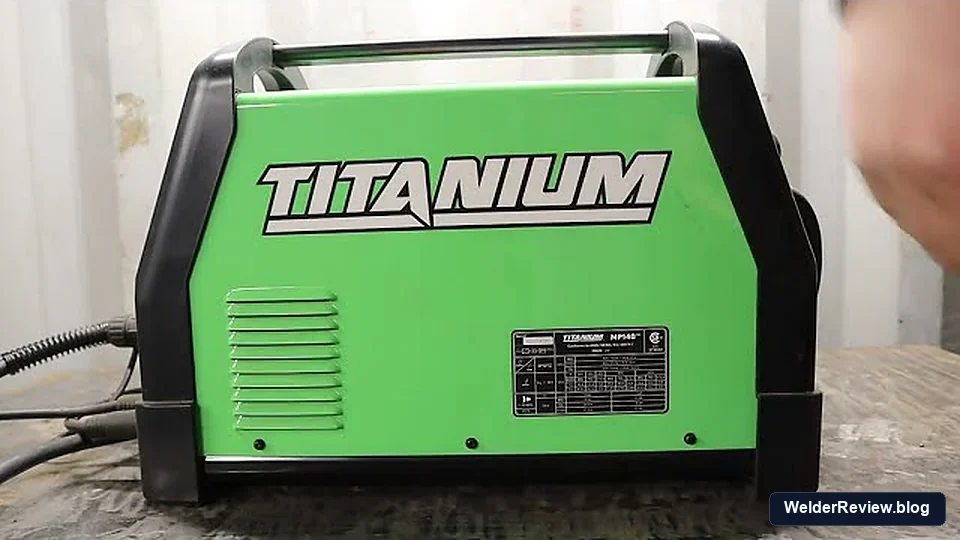
Configuring the machine requires minimal effort due to the bright LED display. Operators can quickly select trigger modes like 2T for short tasks or 4T for extended runs.
Novice fabricators benefit from pre-programmed synergic curves that remove guesswork. Experienced welders retain full manual control to fine-tune parameters for specialized fabrication requirements.
Front panel controls utilize infinite voltage adjustment dials rather than stepped switches, allowing precise fine-tuning for specific material thicknesses. The wire feed speed potentiometer offers smooth tactile feedback even when operators wear heavy leather welding gloves.
A clear polarity change block is mounted inside the wire compartment, making the switch between gas-shielded MIG and gasless flux-core simple. Clear instructional diagrams inside the door help novice fabricators select proper baseline parameters.
- Digital screen displays exact voltage and amperage readouts clearly.
- Front panel dials offer tactile feedback even when wearing gloves.
- Quick-connect fittings secure shielding gas and torch leads firmly.
Interface and Trigger Modes
Switching between 2T and 4T trigger modes reduces hand fatigue during long seams. The intuitive menu layout lets users change process modes without navigating complex sub-menus.
- Dedicated buttons allow instant switching between welding processes.
- Clear iconography guides operators through parameter selection.
Maintenance, Safety & Long-Term Durability
Routine upkeep involves inspecting drive rolls and clearing accumulated grinding dust. The IP21S enclosure rating provides basic protection against vertical dripping water and solid objects.
Integrated safety mechanisms include anti-shock voltage reduction and thermal overload protection. These features safeguard the operator and internal electronics against electrical hazards or excessive heat.
Routine maintenance requires blowing out accumulated metallic dust from the internal transformer coils using compressed dry air every three months. Inspecting the torch liner regularly prevents wire friction buildup that causes erratic wire feeding issues.
Integrated thermal overload protection meets rigorous NEMA safety standards, safeguarding internal circuitry against catastrophic component failure. Ground clamp connections must remain clean and corrosion-free to maintain low resistance electrical paths during high amperage draws.
- VRD function lowers open-circuit voltage to prevent accidental shocks.
- Thermal cutout switch halts operation before components sustain damage.
- Drive rolls require periodic cleaning to ensure smooth wire feeding.
Long-Term Upkeep Strategies
Regularly blowing out internal dust with compressed air prevents electrical shorts. Inspecting torch consumables ensures consistent shielding and prevents premature contact tip burnback.
- Check welding cables periodically for frayed insulation.
- Replace worn contact tips before wire feeding stutters.
Who Should Buy It vs. Skip It
Hobbyists, DIY mechanics, and mobile repair technicians will appreciate this machine featured in our best starter welder roundup. Its exceptional portability and multi-process flexibility make it ideal for property maintenance.
Industrial fabricators working on thick structural steel should look elsewhere. The restricted spool size and limited duty cycle cannot sustain heavy continuous commercial welding applications.
Mobile maintenance technicians and DIY automotive fabricators will appreciate the compact footprint and dependable output highlighted in our best welder for beginners review. It excels at garage repairs and light-duty fabrication.
Heavy industrial contractors or structural steel fabricators should skip this model due to the limited amperage ceiling and lower duty cycle constraints. Professional shops requiring continuous multi-pass welding on thick plates need higher capacity three-phase equipment.
- Recommended for home garages, hobbyists, and light farm repairs.
- Not suitable for heavy industrial pipeline or structural construction.
- Great choice for users needing quick multi-process capability.
Final Purchasing Recommendation
Match your typical project requirements against the machine output limits before purchasing. Users prioritizing lightweight convenience for occasional repairs will find exceptional value in this welder.
- Assess local power supply availability before starting projects.
- Verify wire availability for preferred metal types.
Frequently Asked Questions
Can this welder operate on standard household power outlets?
Yes, this versatile machine features automatic voltage detection that seamlessly adapts to standard household 110V electrical circuits without requiring any manual switch manipulation whatsoever.
Furthermore, it connects directly to higher-capacity 220V lines to deliver maximum output power during demanding workshop fabrication tasks and urgent home metal repairs.
What size wire spools are compatible with the internal drive?
The internal wire compartment is specifically designed to accommodate compact one-kilogram wire spools securely inside the housing.
This smaller capacity helps maintain an exceptionally lightweight mobile footprint while supporting standard flux-cored welding wire diameters for everyday DIY metalworking projects and emergency property maintenance tasks.
Does the machine support traditional gas-shielded MIG welding?
The system is primarily optimized for gasless flux core welding straight out of the box for outdoor convenience.
Users should carefully consult the manufacturer manual regarding external gas valve accessories if they intend to run solid wire with proper shielding gas mixtures.
What safety features protect users during operation?
Comprehensive safety mechanisms include a VRD anti-shock function that actively reduces open-circuit voltage when the machine is idling. Additionally, built-in thermal overload protection, short-circuit countermeasures, and hot start technology prevent equipment damage while ensuring consistently smooth arc ignition.
Can beginners easily set up and operate this welder?
Setup takes only minutes thanks to the intuitive digital LED display and straightforward synergic control knobs. The advanced microcontroller automatically matches optimal parameters, making it exceptionally friendly for novice welders who are currently learning proper metal fabrication techniques.