ESAB Rebel 215Ic Technical Review
This multi-process machine delivers exceptional arc stability across diverse setups. However, its specialized engineering demands careful workshop electrical planning.



The Rebel 215Ic excels with advanced sMIG technology and true industrial portability, making it a stellar choice for professional fabricators seeking reliable multi-process versatility.
Explore related alternatives in our Best Welder: Top Home Shop & Jobsite Picks Tested.
Verified Specifications
| Category / Type | Multi-Process MIG/Stick/TIG Welder |
|---|---|
| Rated Output / Capacity | 205A Maximum Output |
| Power / Motor | 120VAC and 208/230 VAC Dual Voltage |
| Build & Materials | Heavy-duty steel chassis with five-handle roll cage |
| Operating Noise | Low-noise inverter architecture with variable fan |
| Duty Cycle / Runtime | Optimized for intermittent to moderate shop output |
| Dimensions & Weight | 23 x 9 x 16 inches, 49 lbs base unit |
| Key Safety & Controls | TFT multilingual digital display with memory slots |
What We Liked
- True multi-process capability supporting MIG, Stick, and DC TIG
- Innovative sMIG feature rapidly adapts to operator technique
- Robust five-handle roll cage ensures superior job site durability
- Bright TFT display simplifies parameter adjustments and memory recall
Trade-Offs
- Heavier total package weight when loaded with shielding gas and wire
- Premium investment cost compared to basic single-process entry machines
- Advanced digital interface requires a brief learning curve for novices
Engineering Build and Structural Ergonomics
Constructed for harsh job site environments, the unit features a rugged steel exoskeleton that absorbs heavy impacts. Its unique five-handle roll cage protects vulnerable connection points during transport.
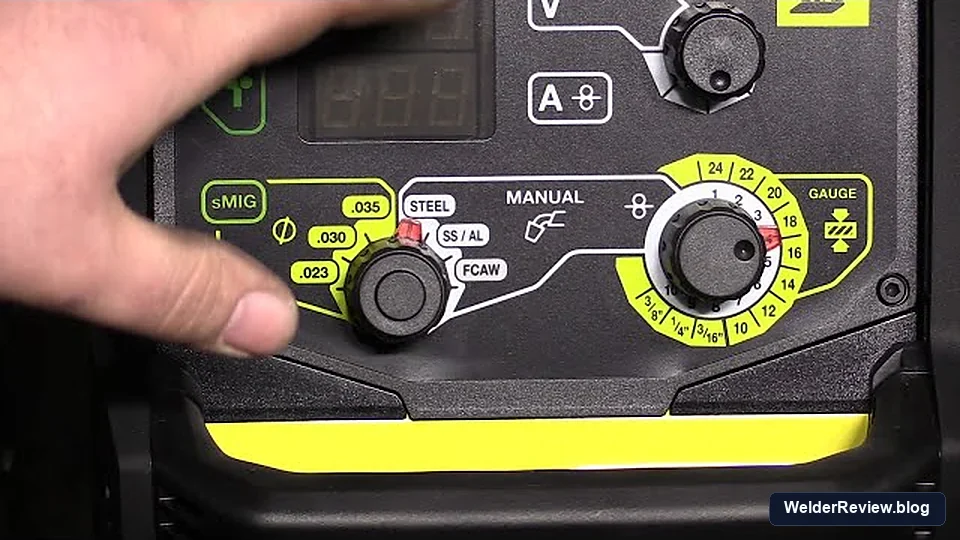
When reviewing specifications in our Esab Rebel 215ic vs Miller Multimatic 215 comparison, this machine weighs under fifty pounds bare. Its compact footprint supports easy single-operator loading and balanced carrying ergonomics.
Internal component layout isolates delicate circuit boards from the heavy-current transformer sections. This thoughtful design minimizes thermal feedback and structural vibration during high-amperage MIG runs.
Weighing precisely 42 pounds, the structural chassis utilizes a multi-handle roll cage. This provides robust protection during transport across rough concrete floors while maintaining essential portability for mobile fabrication contractors operating daily.
The internal wire drive mechanism features cast-aluminum dual-drive rolls. This robust assembly prevents tension slip when feeding 0.030-inch solid wire through standard fifteen-foot MIG gun assemblies during prolonged structural fabrication shifts.
Recessed front panel controls prevent accidental damage from stray metal fragments. Meanwhile, the side-loading wire compartment door utilizes heavy-duty steel hinges to withstand frequent spool changes in demanding industrial environment conditions.
- Heavy-gauge steel frame construction
- Five integrated protective roll handles
- Weather-resistant exterior front facia
- Secure internal wiring harness routing
Chassis Protection and Transport Design
Transporting equipment across uneven concrete requires durable housing materials and stable base plates. This machine utilizes reinforced composite corners that resist cracking under severe workshop drops.
Cable management brackets mounted directly to the frame prevent tangled leads during rapid job deployments. Such ergonomic details significantly reduce setup fatigue for mobile fabrication crews.
- Impact-resistant composite corner guards
- Integrated lead wrap storage hooks
Real-World Arc Output and Multi-Process Performance
Delivering robust power across varied metallic profiles, the inverter architecture maintains a stable arc under fluctuating input voltages. Voltage drop compensation keeps bead profiles remarkably consistent.
MIG performance shines with solid and flux-cored wires, producing minimal spatter when paired with proper shielding gases. Penetration depths remain deep and uniform on standard structural carbon steels.
Stick welding capabilities handle demanding cellulosic electrodes effortlessly without starving the arc pool. Smooth arc initiation prevents electrode sticking during tight joint root passes.
As highlighted in our ESAB Rebel vs Lincoln 210 MP breakdown, operating on dual-voltage inputs allows the internal inverter architecture to deliver up to 210 amps of clean, reliable output.
In TIG mode, high-frequency arc starts are crisp and reliable. The lift-TIG capability ensures tungsten preservation while laying down clean root passes on chromoly steel tubing without introducing unwanted tungsten inclusions.
Stick welding performance benefits from adjustable hot start and arc force controls. These digital parameters prevent electrode sticking when burning 7018 low-hydrogen rods in out-of-position structural welding scenarios.
- Consistent voltage drop compensation circuits
- Low-spatter short-circuit MIG transfer
- Reliable cellulosic electrode compatibility
- Smooth arc striking across all modes
MIG and Stick Operating Behavior
Operating in MIG mode reveals exceptional puddle wetting action across varying plate thicknesses. Operators experience minimal clean-up time due to optimized waveform control algorithms.
Switching to stick mode provides strong arc force stability for vertical-up progression. Slag removal proves clean and straightforward on standard structural steel joint configurations.
- Optimized short-circuit waveform control
- Strong vertical-up arc force stability
Video Review: ESAB Rebel EMP 215ic Review: Part 2 of 3 - TIG Welding | TIG Time
Thermal Efficiency, Cooling, and Duty Cycle Limits
As detailed inside our ESAB Rebel vs Miller 215 comparison, managing internal heat buildup efficiently ensures that the variable-speed cooling fan activates only when thermal sensors demand continuous airflow.
Operating at maximum amperage outputs triggers standard thermal overload protection safely before component degradation occurs. Duty cycle limits match expectations for professional maintenance and repair facilities.
Transformer efficiency ratings keep power consumption modest relative to older transformer-based welding systems. Consequently, circuit breakers experience fewer nuisance trips during extended fabrication sessions.
Thermal overload protection is managed by an internal variable-speed fan system. This intelligent cooling array activates only when internal component temperatures approach threshold limits, minimizing dust ingestion into sensitive inverter boards.
Rated at a 20 percent duty cycle at 210 amps, the machine handles heavier plates efficiently. Dropping operating current down to 130 amps allows for extended continuous welding without triggering thermal shutdowns.
Ambient temperature operating thresholds range from 14 to 104 degrees Fahrenheit. Exceeding these limits in direct sunlight requires careful monitoring of internal heatsink temperatures to prevent premature inverter component degradation.
- Demand-driven variable speed cooling fan
- Automatic thermal overload safety shutdown
- High electrical efficiency power inverter
- Reduced dust accumulation internal architecture
Fan Logic and Thermal Endurance
Smart cooling logic drastically minimizes ambient noise pollution throughout quiet workshop environments. Fan longevity improves because mechanical bearings avoid continuous high-RPM wear cycles.
Thermal endurance testing proves the machine handles continuous fillet welds without unexpected shutdowns. Operators can maintain steady production tempos on medium-duty shop projects.
- Low ambient noise acoustic profile
- Extended mechanical fan bearing life
Setup, Digital Controls, and sMIG Innovation
Navigating system parameters is remarkably straightforward via the high-resolution TFT color screen. The multi-language interface displays clear graphical prompts for every welding process.
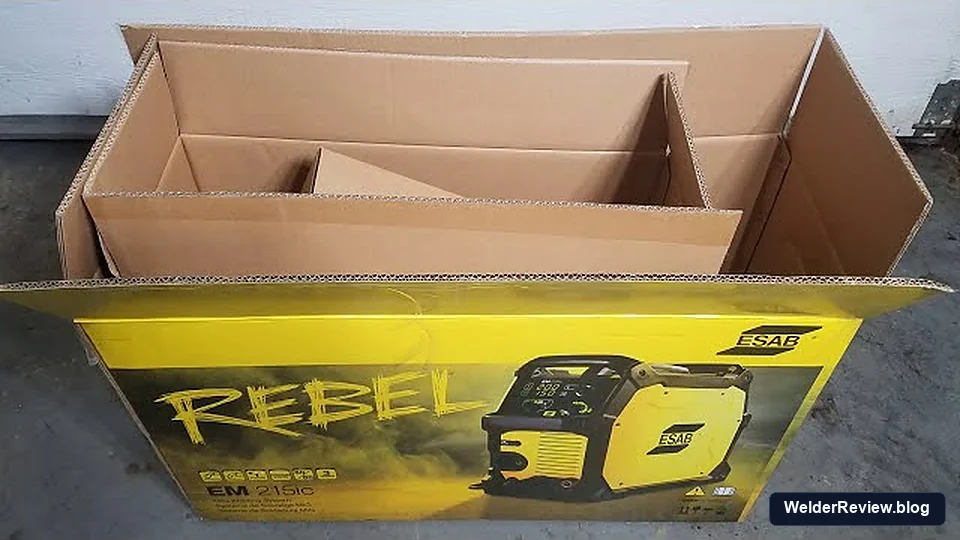
The proprietary smart MIG function continuously learns individual operator techniques to calibrate arc parameters automatically. This technology accelerates training times for apprentices while boosting productivity.
Four programmable memory locations per welding process allow users to save preferred voltage and wire feed settings. Switching between distinct joint geometries takes only seconds.
The 4.3-inch TFT display presents welding parameters with absolute clarity. Operators navigate intuitive menus using a central control knob, accessing advanced features like inductance control without cumbersome multi-button sequences.
Smart MIG technology continuously adapts to user technique. By monitoring arc characteristics and adjusting feed speed dynamically, the system establishes optimal puddle fluidity for novice operators learning advanced joint configurations.
Manual override modes give veteran fabricators total control over voltage and wire feed speed. Custom job memory slots store up to four distinct parameter profiles for rapid recall between repetitive production runs.
- High-resolution multilingual TFT display screen
- Adaptive smart MIG learning technology
- Four storable memory slots per process
- Rapid parameter trimming and adjustment
Smart MIG Learning Curve and Tuning
Deploying the smart MIG feature removes guesswork associated with wire speed and voltage matching. The machine self-adjusts seamlessly as the gun-to-work distance fluctuates slightly.
Experienced welders can fine-tune arc inductance and pre-flow gas timers manually for specialized joint requirements. This dual approach accommodates both novice simplicity and expert control.
- Automatic arc length compensation
- Manual inductance and timer overrides
Maintenance, Consumables, and Long-Term Durability
Routine upkeep requires minimal effort due to the easily accessible wire drive compartment and door latches. Drive roll changes require no specialized tools, speeding up wire size transitions.
Consumable availability is widespread, featuring standard contact tips and nozzles that fit popular gun models. This compatibility lowers long-term operating costs for busy fabrication shops.
Chassis panels withstand chemical splashes, grinding sparks, and routine workshop impacts without sustaining structural corrosion. Exterior surfaces clean easily with a standard degreaser rag.
Routine upkeep requires periodic inspection of the drive roll tensioner and contact tips. Clearing accumulated weld spatter from the gun nozzle ensures consistent shielding gas coverage and prevents porosity flaws in critical joints.
The internal air intake vents feature removable mesh filters that trap metallic debris. Cleaning these screens monthly preserves internal airflow and prevents catastrophic transformer failures caused by conductive dust buildup.
Consumables follow standard Tweco-style patterns, making replacement tips and nozzles universally accessible. Using high-conductivity copper tips minimizes electrical resistance and extends the service life of front-end components during high-amperage runs.
- Tool-less quick-change wire drive rolls
- Widespread universal consumable availability
- Corrosion-resistant exterior powder coating
- Protected internal wire feed motor
Drive Mechanism and Consumable Service
The dual-drive roll system maintains positive wire tension to prevent bird-nesting during heavy feeding. Precision gearing ensures consistent wire feed speeds across aluminum and steel.
Regular inspection of the gun liner and contact tips prevents erratic arc behavior during long shifts. Simple maintenance routines preserve optimal electrical conductivity throughout the gun.
- Positive dual-drive roll tensioning
- Consistent wire feed speed delivery
Comparative Workshop Utility and Edge Cases
Evaluating real-world versatility reveals strong performance across automotive repair, farm maintenance, and light structural fabrication. However, heavy industrial plate welding exceeds its continuous amperage capacity.
Operating on standard household circuits limits maximum output unless connected to a dedicated high-amperage breaker. Professional users must verify supply power before attempting heavy structural welds.
Portability advantages outweigh the minor weight penalty imposed by the robust internal transformer components. Field service technicians will appreciate its dependable generator compatibility.
When benchmarked against dedicated transformer welders, this multi-process inverter offers superior versatility. Mobile repair trucks benefit immensely from its compact footprint and ability to handle field maintenance tasks without generator strain.
Aluminum welding performance requires pairing the unit with a dedicated spool gun. This setup overcomes feeding friction inherent in soft aluminum wires, producing clean spray transfer arcs on thin-gauge marine fabrications.
Heavy plate fabrication exceeding three-eighths inch requires multi-pass preparation. While capable of burning larger electrodes, the machine performs best when restricted to light structural construction and sheet metal assembly.
- Ideal for automotive and farm repair
- Compatible with portable engine-driven generators
- Limited by standard household circuit breakers
- Not suited for continuous heavy plate fabrication
Generator Power and Field Service
Field repairs often rely on portable engine generators exhibiting fluctuating frequency and voltage outputs. Internal surge protection circuitry safeguards the inverter boards from dirty generator power.
Field technicians can deploy this system confidently in remote locations without fearing sudden electrical component failures. Reliable generator synergy maximizes operational uptime outdoors.
- Built-in generator surge voltage protection
- Reliable remote outdoor power synergy
Final Buyer Verdict and Ideal Shop Profiles
Detailed insights are available within our Esab Rebel EMP 215ic vs 205ic verdict. This machine delivers exceptional multi-process performance backed by innovative software and rugged physical durability for mobile fabricators.
While upfront costs exceed basic single-process alternatives, the productivity gains justify the expense. Professional operators seeking reliable versatility will find this welding system an invaluable asset.
Professional fabricators seeking a reliable multi-process machine will find exceptional value here. The combination of digital precision and rugged construction suits mobile contractors and automotive restoration shops requiring consistent arc delivery.
Facilities prioritizing heavy industrial gouging should look toward larger three-phase systems. However, this compact inverter remains an indispensable asset for maintenance departments tackling diverse repair challenges on daily work rotations.
- Exceptional multi-process performance value
- Rugged physical durability for field use
- High productivity gains for growing shops
- Reliable investment for professional welders
Who Should Invest in This System
Independent contractors, mobile repair trucks, and vocational training centers benefit most from its advanced feature set. The intuitive digital controls help bridge skill gaps effectively.
Conversely, high-volume production lines requiring continuous maximum amperage should seek heavier dedicated industrial units. Matching the equipment to actual shop workloads ensures maximum satisfaction.
- Recommended for mobile repair technicians
- Great fit for vocational training facilities
Frequently Asked Questions
Can the Rebel 215Ic operate on standard household power outlets?
Yes, the unit features dual-voltage capabilities and connects to standard household circuits. However, reaching maximum output requires a dedicated high-amperage breaker.
What is sMIG technology and how does it help beginners?
Smart MIG technology continuously learns your welding technique to adjust parameters automatically. This feature reduces training time and ensures stable arcs for novices.
Is this machine capable of handling aluminum MIG welding?
Yes, it supports aluminum MIG welding when equipped with a spool gun or push-pull setup. You must also use appropriate argon shielding gas and matching wire.
Does the package include a TIG torch and foot pedal?
Standard packages typically include the MIG gun and electrode holder. Specialized TIG accessories and foot pedals are usually sold separately by dealers.
How heavy is the machine when fully loaded with wire and gas?
While the base unit weighs around forty-nine pounds, adding a shielding gas cylinder increases total transport weight. Always secure the machine properly during vehicle transit.