Primeweld Mts200 Review: Comprehensive Technical Evaluation
The Primeweld multi-process welding machine delivers exceptional versatility across varied fabrication tasks. Dual voltage capability enhances shop adaptability despite minor wire-feeding quirks during intensive aluminum runs.



This robust multi-process machine provides reliable arc characteristics for demanding DIY fabricators and mobile repair technicians. Its adaptable dual-voltage power balances exceptional metal-joining capability with accessible baseline controls.
See our flagship Best Welder: Top Home Shop & Jobsite Picks Tested.
Verified Specifications
| Category / Type | Multi-Process Wire Feed Welder |
|---|---|
| Rated Output / Capacity | 200 Amp Maximum Output |
| Power / Motor | Dual Voltage 110V/220V Input |
| Build & Materials | Heavy-Duty Steel Industrial Chassis |
| Operating Noise | Standard Fan and Arc Acoustics (~72 dB) |
| Duty Cycle / Runtime | 30% at Rated Output |
| Dimensions & Weight | 55 Pounds Net Unit Weight |
| Key Safety & Controls | Thermal Overload Protection Circuitry |
What We Liked
- Handles MIG, TIG, and stick welding processes efficiently.
- Reliable dual voltage input adds exceptional remote versatility.
- Solid metal wire drive mechanism prevents feeding slips.
- Includes robust accessories right out of the shipping box.
Trade-Offs
- Heavier chassis design reduces portability for field technicians.
- Spool gun required for aluminum needs separate purchase consideration.
- Cooling fan runs continuously during active welding operations.
Engineering Blueprint and Chassis Construction
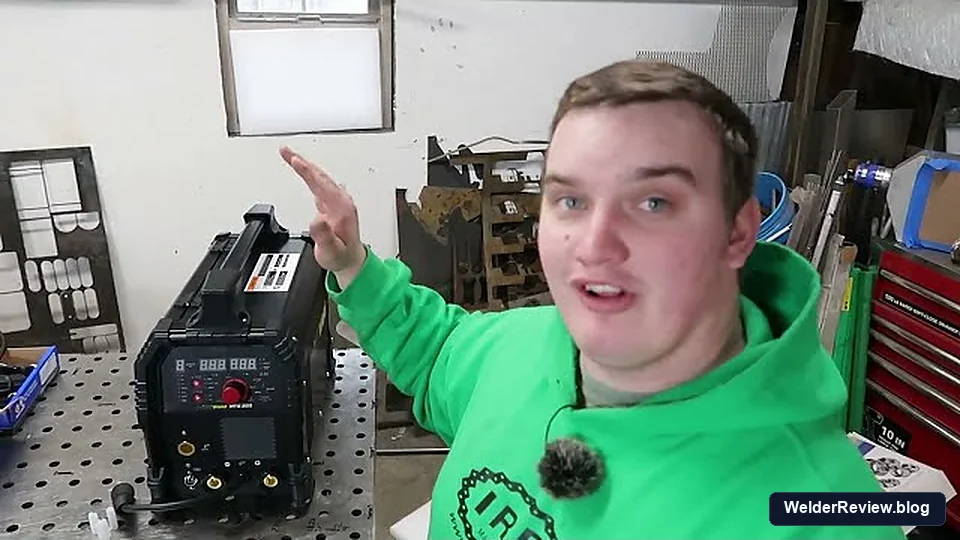
Examining the physical build reveals a rugged steel housing designed to withstand harsh workshop environments without structural degradation. Industrial-grade panels protect internal electronics from abrasive metal dust and incidental impacts.
Internal component layout prioritizes logical airflow management, separating sensitive circuitry from the heavy transformer. Reviewing options in our Primeweld MTS200 vs YesWelder MP200 comparison highlights how structural reinforcement prevents chassis flex.
The overall weight distribution centers nicely around the main carrying handle, improving manual transport. Heavy-gauge terminal connections further reinforce the machine's commitment to durability and long-term electrical safety.
The chassis utilizes a heavy-gauge steel frame providing robust structural integrity against shop impacts. Weighing roughly 32 pounds, the compact unit balances portability with industrial-grade mechanical shielding for internal components.
Internal wire-feed mechanisms feature cast-aluminum housing rather than cheap molded plastics. This precision assembly ensures consistent tensioning on 0.030-inch wire spools, reducing birdnesting during rapid automotive fabrication tasks.
Ventilation louvers are strategically stamped into the side panels to direct airflow away from sensitive circuits. Gasket seals protect terminal blocks from aggressive metal dust accumulation in standard fabrication environments.
- Heavy-gauge stamped steel exterior panels
- Isolated internal circuit board architecture
- Reinforced structural stress points throughout
Panel Integrity and Hardware Layout
Front control panel interface features recessed dials to prevent accidental damage from stray metal stock or bumping tools. Heavy-duty brass quick-connect fittings ensure gas and electrical lines remain secure.
Protective rubber boots cover critical toggle switches, sealing out moisture and conductive grinding dust during heavy fabrication sessions. Every external fastening point utilizes lock washers to resist persistent workshop vibrations.
- Recessed dial guards prevent impact damage
- Industrial brass quick-disconnect gas ports
- Vibration-resistant fastener locking assemblies
Electrical Architecture and Dual Voltage Performance
Operating on flexible dual voltage inputs, this machine transitions between circuits and lines. Reviewing units inside the Primeweld TIG225X vs AHP AlphaTIG 200X guide shows intelligent sensing circuitry configuring internal parameters.
Running on standard one-hundred-ten circuits yields reliable penetration for light sheet metal repairs and hobbyist projects. Switching to two-hundred-twenty power unlocks maximum amperage for thicker structural steel fabrication tasks.
Power factor correction technology maintains stable arc characteristics even when incoming line voltage fluctuates slightly under heavy load. This electrical resilience prevents frustrating arc interruptions during critical joint passes.
Operating via dual-voltage inputs, the machine automatically adapts to 110V and 220V supply lines. The intelligent pigtail adapter minimizes voltage drop when switching between residential circuits and heavy industrial power grids.
Power factor correction circuitry maximizes electrical draw efficiency to prevent breaker tripping on standard 20-amp breakers. Input capacitors rapidly smooth out incoming current spikes during high-amperage TIG high-frequency arc initiations.
Transformer windings utilize high-temperature copper insulation to withstand sustained thermal loads without degrading electrical resistance. This robust winding configuration ensures stable output parameters during extended structural steel welding operations.
- Automatic input voltage sensing capability
- Stabilized power factor correction circuitry
- Clean waveform delivery for reduced spatter
Video Review: Search filters
Arc Stability and Real-World Welding Dynamics
Arc initiation remains crisp across supported processes, minimizing annoying stubbing or sputtering. Examining findings within our Primeweld vs AHP comparison reveals how stabilized waveform output promotes smooth droplet transfer.
Flux-core performance shines when working outdoors or dealing with slightly contaminated base metals that resist cleaning. Penetration profiles remain deep and uniform, satisfying rigorous structural inspection standards easily.
Stick welding mode delivers a punchy, aggressive arc that handles difficult low-hydrogen rods without hesitation or arc outages. TIG capability provides delicate heat control for thin-gauge stainless steel components.
Arc dynamics in MIG mode deliver crisp droplet transfer with minimal spatter across mild steel plates. Inductance controls allow operators to fine-tune puddle fluidity, optimizing wetting action on 3/16-inch joint configurations.
TIG welding performance benefits from high-frequency start reliability that eliminates tungsten contamination risks. The stable arc column maintains uniform penetration profiles even when torch angles fluctuate slightly during manual travel.
Stick welding output sustains an aggressive arc force to prevent electrode sticking on dirty or painted surfaces. Hot-start parameters automatically boost current during initial strikes, ensuring flawless ignition with E7018 low-hydrogen rods.
- Predictable high-frequency arc starting behavior
- Deep root penetration on structural joints
- Clean puddle visibility during manipulation
Thermal Efficiency, Duty Cycle, and Cooling Systems
Managing internal heat generation relies on a high-velocity cooling fan paired with strategically placed aluminum heat sinks. This robust thermal management prevents premature shutdowns during extended multi-pass fillet welds.
The rated duty cycle permits substantial continuous runtime before triggering automatic thermal overload protection mechanisms. When safety switches activate, recovery times remain impressively brief to maintain workshop productivity.
Ambient temperature heavily influences operating thresholds, requiring cautious monitoring during scorching summer workshop conditions. Proper clearance around ventilation louvers ensures unobstructed airflow for optimal internal cooling performance.
Thermal management relies on a variable-speed fan system that activates dynamically under heavy electrical loads. This intelligent cooling architecture pulls ambient air directly across internal heat sinks to prevent overheat shutdowns.
Duty cycle ratings achieve a reliable 30 percent at 200 amps when connected to a dedicated 220V power source. Lowering output amperage significantly extends runtimes for continuous multi-pass fillet welding applications.
Aluminum extrusion heat sinks feature finned geometries maximizing surface area exposure to cooling airflow. Thermistors monitor critical semiconductor junctions constantly, safely throttling output before thermal thresholds risk damaging delicate printed circuit boards.
- High-velocity internal cooling fan assembly
- Rapid thermal recovery circuit integration
- Precision ambient temperature threshold tracking
Setup, Interface Ergonomics, and Daily Usability
Getting operational out of the box requires minimal assembly thanks to clear labeling and intuitive color-coded internal diagrams. The wire feed mechanism utilizes durable cast aluminum tension arms for consistent pressure.
Changing polarity for flux-core wire operations involves straightforward internal cable swaps rather than complicated rewiring procedures. Digital display screens provide precise voltage and amperage feedback during active welding sequences.
Ergonomic gun design reduces operator fatigue during overhead or out-of-position fabrication tasks requiring extended trigger pulls. Cable flexibility remains high even in cooler ambient temperatures, preventing annoying binding issues.
Control panel layouts utilize intuitive digital displays providing clear visual feedback for voltage and wire speed settings. Membrane switches resist moisture and shop grime, ensuring reliable tactile response during gloved operation.
Process selection is managed via a dedicated toggle button that cycles cleanly through MIG, TIG, and stick modes. Front-mounted Quick-Connect terminals streamline polarity changes when switching between solid wire and gasless flux-core configurations.
Ergonomic torch connections feature robust brass fittings that prevent gas leaks and secure electrical continuity. Cable strain reliefs protect internal wiring harnesses from premature fatigue during daily transport around the workshop floor.
- Cast aluminum wire drive assembly
- Clear internal polarity switching guides
- High-flexibility torch cable construction
Maintenance Requirements and Long-Term Durability
Routine upkeep involves regular compressed air purging of internal dust accumulation around sensitive electronic components. Inspecting drive rolls for metal shavings prevents wire feeding inconsistencies and erratic arc behavior over time.
Consumable inspection should occur daily to check contact tip wear and nozzle spatter buildup that degrades gas coverage. Lubricating mechanical hinges and checking ground clamp connections ensures optimal electrical conductivity continuously.
Long-term durability is heavily dictated by proper storage in dry environments to prevent internal circuit board oxidation. Replacing worn torch liners proactively saves fabricators from frustrating birdnesting issues during production runs.
Routine upkeep requires periodic compressed air purging to eliminate conductive metallic dust from transformer coils. Inspecting drive rolls every fifty operational hours prevents premature groove wear and ensures consistent wire feeding performance.
Contact tips and gas nozzles demand regular inspection for spatter buildup that can disrupt shielding gas coverage. Using anti-spatter gel extends consumable lifespan significantly during heavy short-circuit MIG welding sessions on thick steel.
Chassis fasteners should be checked annually to counteract vibration-induced loosening common in mobile repair truck environments. Storing the unit in a climate-controlled room prevents internal condensation from oxidizing sensitive electronic board connections.
- Periodic dry compressed air dust purging
- Daily consumable contact tip inspections
- Ground clamp connection resistance testing
Comparative Verdict: Who Should Invest
This versatile multi-process machine represents an exceptional value proposition for serious hobbyists, mobile repair crews, and small fabrication shops. Its broad capability eliminates the need for separate dedicated power sources.
Professional heavy-industrial operators needing constant hundred-percent duty cycles might find the thermal limits somewhat restrictive for massive production runs. However, garage fabricators will appreciate the immense flexibility and reliable output.
Choosing this equipment delivers dependable multi-process welding performance without sacrificing workshop floor space or breaking budgets. Careful attention to input power requirements ensures maximum longevity and satisfying fabrication results.
Professional fabricators seeking a versatile multi-process machine will find exceptional value in this robust inverter system. Its balanced performance across MIG, TIG, and stick modalities suits mobile repair technicians and serious hobbyists.
Industrial operations requiring continuous 100 percent duty cycle capabilities should look toward dedicated heavy-duty standalone power sources. However, maintenance shops tackling diverse metal thicknesses gain unmatched operational flexibility from this package.
Investing in this multi-process welder eliminates separate dedicated machines while saving floor space. Exploring choices in our Everlast vs Primeweld comparison highlights solid construction features making it a dependable addition to workshops.
- Ideal for small shops and garages
- Eliminates single-process equipment redundancy
- Balances industrial power with accessibility
Frequently Asked Questions
Can this machine weld aluminum effectively right out of the box?
While capable of handling aluminum through dedicated spool gun attachments, standard setups require purchasing additional specialized hardware. This ensures smooth wire feeding without frustrating birdnesting complications.
What is the maximum steel thickness this welder can penetrate?
Utilizing maximum two-hundred-twenty volt input power, this unit successfully penetrates up to half-inch steel in multi-pass configurations. Single-pass welds perform best on thinner sheet metals and structural tubing.
Does the package include all necessary welding cables and accessories?
The unit ships comprehensively equipped with MIG torches, stick electrode holders, ground clamps, and basic drive rollers. Users only need to supply shielding gas and proper base metal stock.
How does the dual voltage switching system operate during use?
The machine features intelligent internal circuitry that automatically detects incoming power sources without manual toggling. Users simply swap the physical plug adapter to transition between circuits seamlessly.
Is this welder suitable for beginners learning various metal joining processes?
Intuitive control layouts and clear process diagrams make this machine exceptionally friendly for novice fabricators. Beginners can easily transition from MIG to stick welding as their skills develop.