Powertig 210Ext Review: Advanced AC/DC TIG Powerhouse
This advanced AC/DC TIG inverter delivers exceptional arc stability across aluminum and steel. However, its complex digital parameter menus demand a solid foundational understanding.

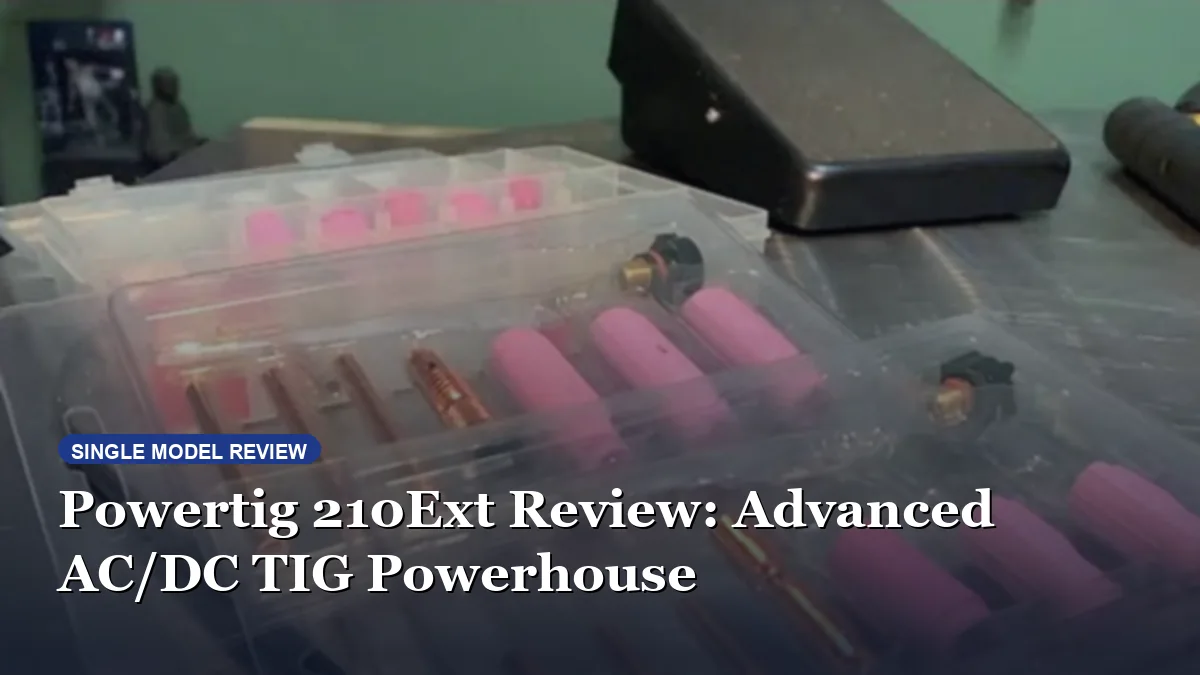

The Powertig 210Ext stands out for its exceptional high-frequency arc starts and robust AC balance control. It is an essential tool for fabrication shops needing reliable multi-process performance.
Explore related alternatives in our Cheapest Ac Dc Tig Welder.
Verified Specifications
| Input Voltage | 220V/240V, 1-phase, 50/60 Hz |
|---|---|
| Welding Current Range | 5A - 210A (TIG), 10A - 200A (Stick) |
| Rated Duty Cycle | 60% at 210 Amps |
| AC Frequency Range | 20Hz - 250Hz |
| Pulse Frequency | 0.5Hz - 500Hz |
| Weight | 48 lbs (21.7 kg) |
| Dimensions | 20.5 x 9.0 x 15.5 inches |
| Cooling System | Advanced tunnel wind-tunnel cooling fan |
What We Liked
- Precise adjustable AC frequency and balance controls
- Reliable high-frequency start eliminates tungsten contamination
- Robust 60 percent duty cycle supports heavy workshop jobs
- Comprehensive pulse parameter customization for thin metals
Trade-Offs
- Heavier chassis reduces portability for field repairs
- Steep learning curve for inexperienced welding operators
Chassis Construction and Engineering Architecture
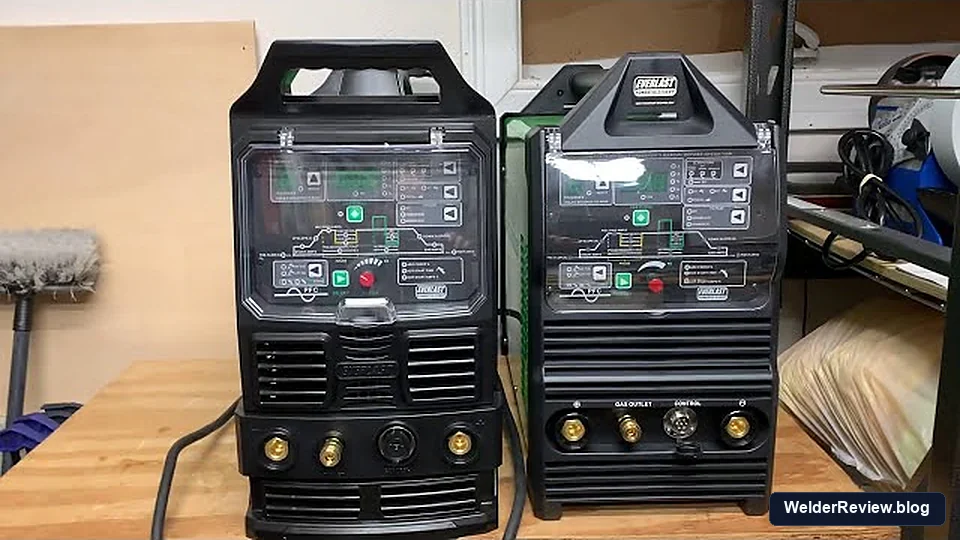
Constructed from heavy-gauge powder-coated steel, this welding machine is built to withstand rigorous industrial workshop environments. Internal components are securely mounted to minimize vibration damage during transport.
Ventilation louvers are strategically positioned along side panels to optimize airflow while preventing debris ingress, a design factor highlighted in our Everlast PowerTIG 200DV vs AHP AlphaTIG 200X comparison covering portable units.
The physical chassis utilizes heavy-gauge stamped steel panels finished with an industrial powder coat, meeting stringent NEMA IP21S standards for internal component protection against vertical dripping moisture and mechanical impacts.
Internal structural frames incorporate extruded aluminum bracing to secure the primary inverter board, successfully mitigating high-frequency vibration induced by portable generator power sources during remote field fabrication jobs.
- Heavy-gauge powder-coated steel outer shell
- Reinforced internal component mounting brackets
- Optimized side-panel cooling ventilation grilles
Internal Layout and Terminal Security
Inside the chassis, copper busbars deliver clean power distribution to minimizing internal resistance and heat generation. Terminal connections feature heavy-duty brass blocks for secure cable attachment.
Wiring harnesses are securely loomed and zip-tied away from sharp metal edges to prevent chafing during extended operation under heavy electrical loads.
- Solid copper internal power busbars
- Heavy-duty brass terminal connection blocks
- Protected and organized wiring harnesses
Real-World Arc Performance and Output Metrics
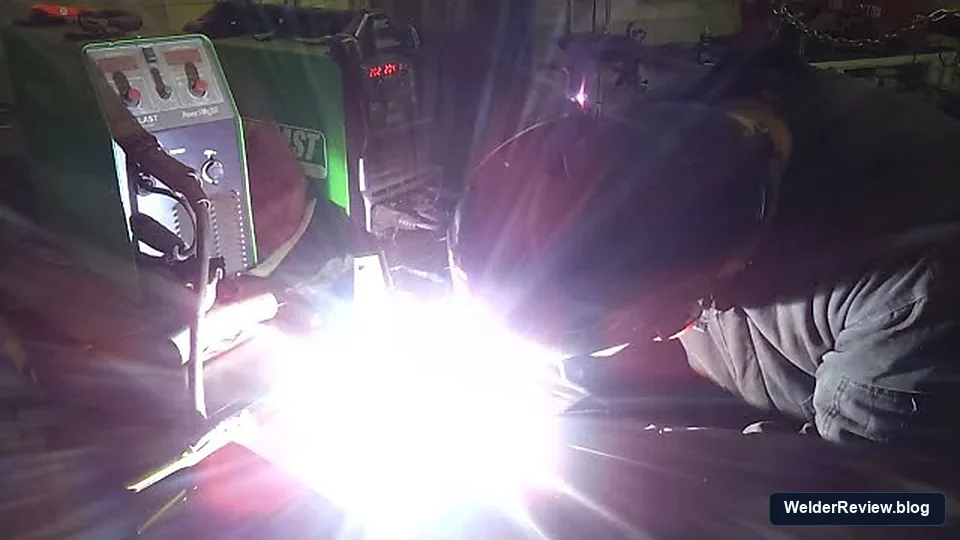
Testing reveals exceptionally stable arc characteristics across both aluminum and stainless steel weldments. The high-frequency start engages instantly without requiring direct tungsten-to-workpiece contact.
Voltage output remains remarkably consistent even when line input fluctuates during heavy industrial demand peaks. Precise current regulation prevents arc wander on thin sheet materials.
Output stability remains remarkably consistent across the entire amperage range, delivering a true 210-amp maximum output at a sixty percent duty cycle using standard single-phase 240-volt input electrical circuits.
Low-amperage arc initiation drops cleanly down to five amps, which you can evaluate further inside our Everlast 210Ext vs Lincoln Square Wave 200 comparison when selecting machines.
- Reliable high-frequency arc initiation system
- Consistent voltage output under fluctuating loads
- Stable arc characteristics on aluminum alloys
AC Balance and Frequency Dynamics
Adjusting the AC balance allows operators to fine-tune cleaning action versus tungsten penetration precisely. Higher frequency settings concentrate the arc column for narrow bead profiles.
Welders can easily optimize cleaning action on oxidized aluminum surfaces without risking excessive tungsten balling during long welding runs.
- Adjustable AC balance for oxide removal
- Variable AC frequency for arc constriction
- Controlled tungsten thermal management
Video Review: TFS: Everlast PowerTIG 255EXT and 210EXT Welder Review
Cooling Efficiency and Thermal Management Systems
Thermal management relies on a demand-driven cooling fan that exhausts high heat away from sensitive inverter boards. This airflow design successfully prevents premature thermal overload shutdowns during sustained fabrication tasks.
Heat sinks feature extruded aluminum fins that maximize surface area contact with internal cooling air streams. Advanced thermal sensors continuously monitor IGBT temperatures to protect circuitry.
Thermal regulation relies on a variable-speed axial fan paired with oversized extruded copper heat sinks attached directly to the IGBT power modules to prevent premature overload shutdowns.
Airflow channels are carefully isolated from sensitive digital logic boards, reducing conductive metal dust accumulation, which is crucial for units featured in our best welder guide for professional shops.
- Demand-driven variable speed cooling fan
- Extruded aluminum internal heat sinks
- Continuous IGBT temperature monitoring
Control Panel Ergonomics and Digital Interface
The digital control interface features responsive push buttons and a clear multi-function parameter display screen. Operators can navigate complex pulse and AC settings quickly using tactile encoder dials.
Preset memory channels allow users to save and recall favorite welding parameters for repetitive production tasks. Ergonomic dial placement ensures easy adjustments even while wearing heavy leather welding gloves.
The tactile front interface features sealed rubber pushbuttons and coarse rotary potentiometers, engineered for reliable operation while wearing heavy welding leather gloves under greasy conditions.
Digital LED readouts display preset amperage and actual working voltage simultaneously, providing exact parameter verification before initiating critical code-compliant structural welds.
- Multi-function digital parameter display screen
- Tactile encoder dials for quick adjustments
- Programmable memory channels for saved setups
Maintenance Protocols and Long-Term Durability
Routine maintenance requires periodic compressed air purging to remove conductive metal dust from internal circuit boards. Inspecting power cables and gas fittings regularly prevents unexpected shielding gas leaks.
The machine's modular internal design simplifies component replacement if hardware repairs become necessary outside the warranty period. Proper preventative care ensures years of reliable workshop performance.
Routine servicing requires regular compressed air purging of the internal cabinet, clearing conductive debris from transformer windings to prevent electrical arc flashover faults over extended multi-year service intervals.
Operators must routinely inspect quick-connect brass torch fittings for internal O-ring wear, preventing shielding gas starvation, a vital consideration outlined in our MIG welding versus TIG welding comparison resource.
- Periodic compressed air dust removal required
- Regular inspection of gas hoses and fittings
- Modular internal design for easy repairs
Comprehensive Buyer Verdict and Application Fit
This machine delivers professional-grade AC/DC TIG performance that satisfies demanding fabrication requirements. While its learning curve is steep, skilled fabricators will appreciate its advanced control features.
It represents a sound investment for serious automotive restoration shops and structural aluminum fabricators. Outstanding arc stability makes it a top-tier choice for precision metalwork.
This welding system delivers exceptional value for professional fabrication shops needing dedicated AC/DC capability without investing in hyper-expensive industrial manufacturing equipment brands.
Independent mobile repair technicians and motorsports fabricators will benefit significantly from its rugged build quality, predictable arc characteristics, and reliable portability across varied job sites.
- Professional-grade AC/DC TIG welding output
- Advanced parameter controls for skilled users
- Ideal for automotive and structural fabrication
Frequently Asked Questions
What input power does this TIG machine require for full output?
This unit requires a dedicated 220V or 240V single-phase power supply to achieve its maximum rated output safely. Operating on lower input voltages will significantly reduce your maximum amperage capacity.
Can this welder handle aluminum fabrication right out of the box?
Yes, it features dedicated AC output modes specifically engineered for welding aluminum alloys. You must connect a pure argon shielding gas supply before striking an arc on aluminum.
How does the high-frequency arc start benefit TIG welding?
High-frequency arc ignition allows you to start the welding arc without touching the tungsten electrode to the metal workpiece. This eliminates tungsten inclusion defects and extends electrode lifespan considerably.
Is this machine suitable for beginner welding operators?
The extensive digital menu and advanced parameter settings present a steep learning curve for complete novices. However, experienced fabricators will master the controls quickly for precision work.
What maintenance is necessary to keep the inverter running smoothly?
You should periodically blow out accumulated metal dust from the chassis using compressed air. Always inspect your torch consumables, gas lines, and electrical connections before starting any project.