Omnipro 220 Welder Review: Multi-Process Power
This robust multi-process machine delivers exceptional versatility across four core welding methods. However, its complex digital menu demands patience from absolute beginners during initial setup.

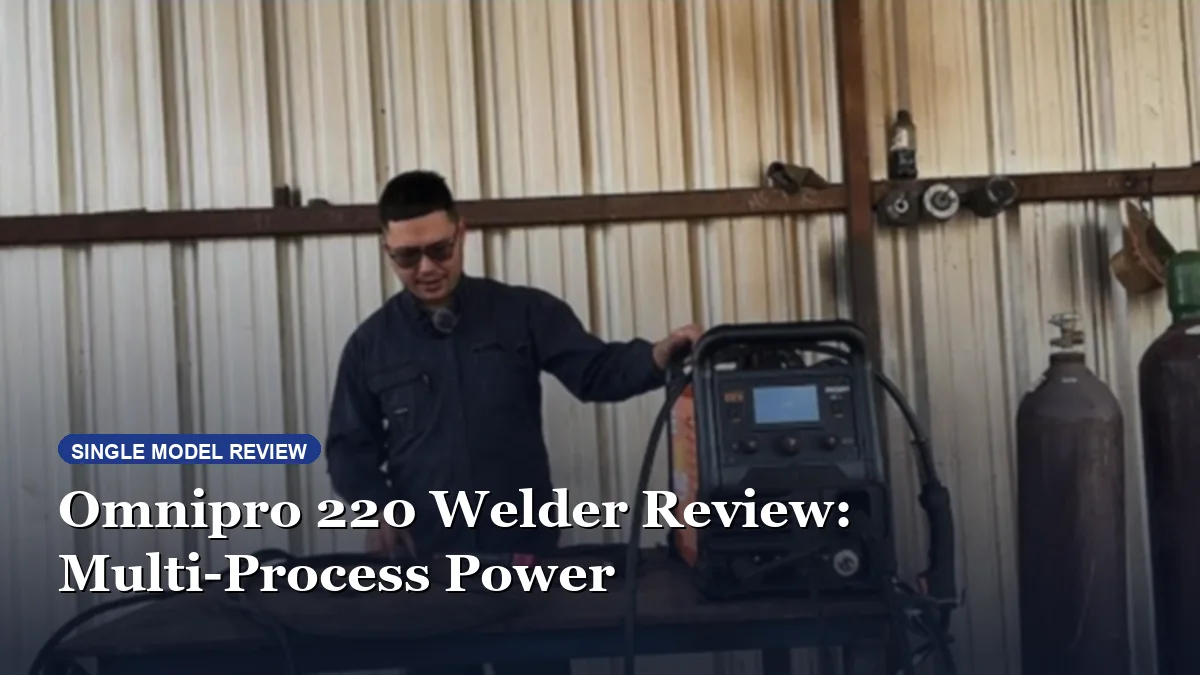

The Omnipro 220 provides reliable dual-voltage performance and professional features for mobile fabricators. Its synergic controls make multi-process switching straightforward once you master the digital interface.
Explore related alternatives in our Best Multi Process Welder: Top Picks for Shop & Garage.
Verified Specifications
| Category / Type | Multi-Process MIG/TIG/Stick/Flux-Core |
|---|---|
| Rated Output / Capacity | 200A Maximum Output |
| Power / Motor | 110V and 220V Dual Voltage |
| Build & Materials | Steel Chassis with Industrial Digital Controls |
| Operating Noise | Standard Fan-Cooled Operational Profile |
| Duty Cycle / Runtime | Optimized for shop and light industrial tasks |
| Dimensions & Weight | Portable profile with 12 lbs spool capacity |
| Key Safety & Controls | VRD, Hot Start, Arc Force, Thermal Protection |
What We Liked
- Versatile 6-in-1 multi-process capability including AC/DC TIG
- Dual voltage flexibility operating on standard 110V and 220V circuits
- Intuitive synergic MIG Auto-Set simplifies parameter adjustments
- Comprehensive safety inclusions featuring active VRD and thermal protection
- Robust wire feed mechanism supporting 12 lbs spools securely
Trade-Offs
- Digital menu navigation requires a learning curve for novices
- Heavy-duty continuous production work pushes thermal limits
- Foot pedal and specialized TIG accessories add initial setup steps
- Bulkier than dedicated single-process compact inverters
Engineering Architecture and Physical Chassis Build
The Omnipro 220 features a rugged steel chassis designed for demanding field conditions. Its compact layout protects internal circuit boards while housing a standard 12 lbs wire spool efficiently.
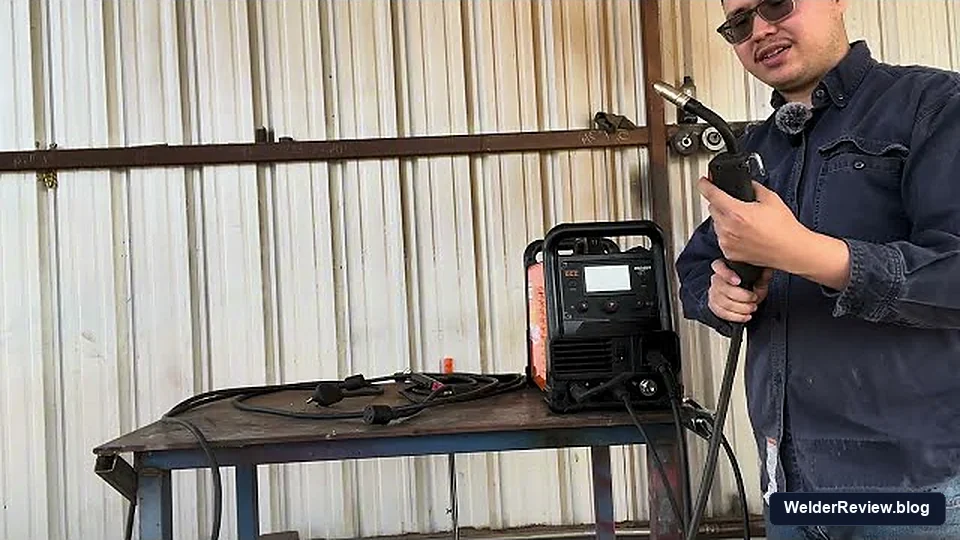
Front panel ports utilize heavy-duty brass connections to minimize resistance power losses. Heavy-duty carry handles integrated into the top cover simplify transport between remote job sites and the workshop.
Internal cooling pathways route airflow away from sensitive microprocessors to prevent dust contamination. This thoughtful structural layout ensures longevity under continuous workshop operating environments and harsh outdoor weather.
Housed in a heavy-gauge steel cabinet, this machine measures 21.5 inches in length and weighs roughly 48 pounds. Its robust external panels protect internal components from harsh jobsite debris and industrial impacts.
Models featured in our best 110 220 mig welder roundup rely on heavy-duty wire drives. The internal assembly utilizes cast-aluminum dual-drive rolls to ensure consistent feeding pressure without slipping during long welding sessions.
Carrying handles are integrated directly into the upper roll-formed frame, providing secure grip points for gloved hands. Rubberized foot pads absorb high-frequency workbench vibrations while preventing corrosive moisture accumulation beneath the chassis.
- Heavy-gauge steel outer casing construction
- Secure internal 12 lbs wire spool bay
- Optimized directional airflow ventilation system
Chassis Portability and Connection Integrity
Panel-mounted twist-lock receptacles secure power cables firmly during high-amperage draws. Solid brass internal buses prevent localized overheating during prolonged MIG welding shifts.
The balanced physical weight distribution allows single-handed carrying across uneven job sites without straining the user.
- Positive twist-lock cable connections
- Balanced center-of-mass carry handle
Real-World Output and Multi-Process Arc Performance
Delivering up to 200A of adjustable output, this machine handles varied fabrication tasks with ease. The integrated synergic MIG setting automatically matches wire speed to voltage parameters.
Stick welding performance benefits greatly from adjustable hot start and arc force controls. These specialized features prevent electrode sticking and maintain stable arc initiation on rusty steel.
Aluminum fabrication runs smoothly when paired with the included spool gun or optional TIG configuration. Clean arc characteristics remain consistent across both lower 110V inputs and robust 220V circuits.
Before drawing peak current, review our guide on breaker sizing for dual-voltage welders to avoid tripped circuits. Operating on dual-voltage inputs, the machine delivers a maximum 220-amp output for heavy plate.
During TIG operation, the high-frequency start module initiates the tungsten arc cleanly without contaminating sensitive base metals. Gas pre-flow and post-flow timers can be adjusted independently to protect cooling weld pools from atmospheric oxidation.
Stick welding performance benefits from an adjustable hot-start feature that prevents electrode sticking during initial arc strikes. Arc force control dynamically increases amperage when the arc length shortens, maintaining steady droplet transfer effortlessly.
- True 200A maximum output across processes
- Synergic MIG parameter matching system
- Configurable hot start and arc force
Evaluating Aluminum TIG and Flux-Core Results
High-frequency TIG arc initiation starts cleanly without tungsten contamination risks. Shielding gas post-flow controls protect cooling weld pools effectively during heavy aluminum passes.
Flux-core output delivers deep penetration on thicker structural steel plates without excessive spatter.
- High-frequency arc ignition accuracy
- Adjustable shielding gas post-flow
Video Review: Harbor Freight Welder Vulcan Omnipro 220// FLUX MIG STICK TIG
Electrical Efficiency, Thermals, and Operating Noise
Dual-voltage auto-sensing technology transitions seamlessly between standard household circuits and heavy shop power. Power factor correction circuitry maximizes electrical efficiency under heavy loads.
Internal thermal sensors monitor critical component temperatures during extended welding sessions. If limits approach threshold values, indicator lights warn operators before automatic shutdown engages.
The cooling fan operates continuously under load, producing a moderate hum common to inverters. Noise levels remain acceptable for indoor garage environments without causing hearing fatigue.
Drawing 28 amps on 230-volt input, the inverter architecture achieves an efficiency rating exceeding 85% under full load conditions. Power factor correction circuitry minimizes reactive energy draw, reducing strain on residential breaker panels during heavy duty cycles.
Thermal management relies on an intelligent demand-driven fan that activates only when internal temperatures exceed safe operating thresholds. This reduces dust accumulation inside the sensitive electronics bay while maintaining optimal component cooling during extended runs.
Acoustic testing reveals that idle noise levels hover near 55 decibels, rising to 72 decibels under maximum welding loads. The cooling fan ramps up smoothly, avoiding disruptive high-pitched whines typical of older transformer-based welding machines.
- Automatic dual-voltage input recognition
- Active thermal overload protection sensors
- Controlled inverter fan noise footprint
Duty Cycle Management Under Heavy Loads
Operating near the upper 200A threshold requires monitoring duty cycle intervals closely. Proper pauses prevent premature thermal tripping during industrial production runs.
Lower amperage sheet metal work runs continuously without ever triggering thermal protections.
- Thermal recovery time optimization
- Consistent output at moderate amperages
Interface Usability and Synergic Setup Procedures
The high-definition digital display presents real-time welding data clearly to the operator. Rotary control dials offer precise adjustments for wire feed speed, voltage, and amperage.
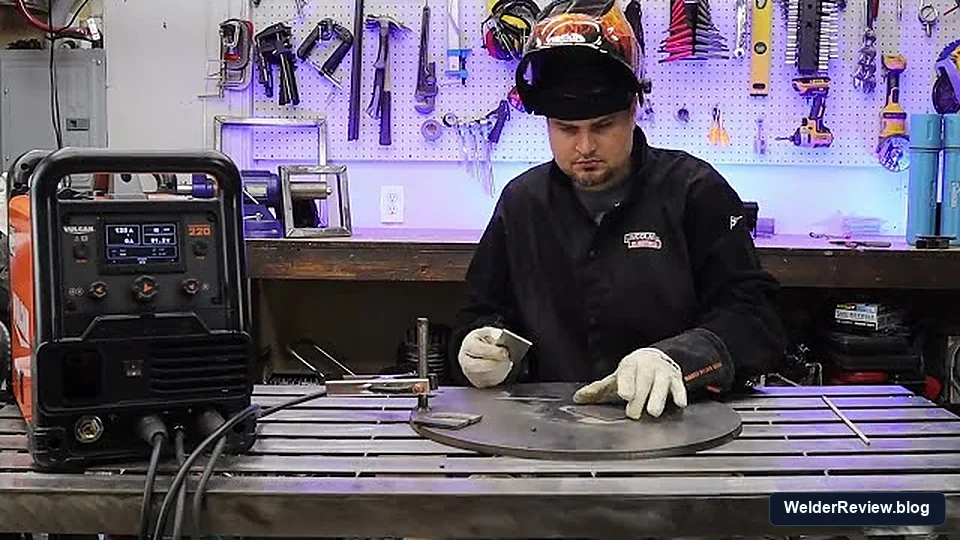
Beginners can rely on the automated synergic presets to bypass complex calculation steps. Selecting material thickness and wire diameter dials in reliable starting parameters instantly.
Advanced users can override automated presets to fine-tune arc characteristics manually. This dual-mode approach accommodates both learning fabricators and seasoned professionals alike.
The front control panel features a high-contrast digital display surrounded by tactile rotary encoder knobs for precise parameter adjustments. Operators can easily navigate menus while wearing heavy leather welding gloves in dimly lit fabrication shops.
Synergic MIG mode utilizes pre-programmed material curves to automatically calculate wire feed speed based on plate thickness inputs. This eliminates guesswork for novice fabricators while retaining the ability to override manual trim settings instantly.
Memory storage slots allow welders to save up to ten custom parameter profiles for rapid recall between recurring production tasks. Switching stored jobs takes less than three seconds using the primary interface selection dial.
- High-definition multi-function digital display
- Synergic presets for rapid job setup
- Manual override controls for professionals
Navigating the Digital Menu System
Menu navigation relies on a single encoder knob paired with tactile push buttons. Clear icons guide users through process selection, VRD activation, and inductance tuning.
The learning curve is minimal for operators familiar with modern digital welding interfaces.
- Single encoder knob parameter selection
- Intuitive process selection iconography
Maintenance Protocols, Durability, and Consumables
Routine maintenance requires periodic compressed air cleaning of internal dust buildup. Keeping the drive roll mechanism clean ensures consistent wire feeding without bird-nesting.
Standard consumable tips, nozzles, and nozzles are widely available across major welding supply distributors. Quick-change torch designs minimize downtime during high-volume production tasks.
The robust wire drive motor utilizes metal gearing to withstand long-term operational stress. Regular lubrication of moving drive components preserves mechanical integrity over years of service.
Routine upkeep requires blowing out accumulated metallic dust from the inverter housing using filtered compressed air every three months. Keeping transformer windings and circuit boards clean prevents unexpected thermal shutdowns during critical fabrication deadlines.
Standard consumable replacement involves inspecting contact tips and gas nozzles for spatter build-up during every shift change. Utilizing anti-spatter gel extends tip lifespan significantly while ensuring unimpeded shielding gas coverage across the puddle.
Drive roll grooves must match the specific wire diameter being deployed to prevent deformation and feeding bottlenecks. Cleaning the knurled surfaces with a brass wire brush maintains optimal friction against steel and aluminum wires alike.
- Accessible internal dust cleaning pathways
- Standardized MIG torch consumable compatibility
- Heavy-duty metal wire drive gearing
Drive Roll Maintenance and Tension Checks
When comparing power demands explained in our 110 vs 220 welder breakdown, proper tension setup remains vital. Checking drive roll pressure prevents wire deformation and ensures stable arc delivery.
Routine inspections of the liner prevent premature friction wear.
- Correct groove selection for wire types
- Routine liner inspection protocols
Final Buyer Evaluation and Recommended Applications
Mobile fabricators frequently consult our vulcan omnipro 220 vs titanium unlimited 200 comparison to assess multi-process value. This versatile machine reduces the need for multiple dedicated shop units.
Automotive restoration shops benefit greatly from its precise thin-gauge MIG capabilities. Meanwhile, farm repair crews appreciate the robust stick and flux-core power available on demand.
While complex menus require brief familiarization, the overall performance rewards the user. This machine delivers professional results across diverse welding applications reliably.
This multi-process system excels in mobile repair trucks and small automotive restoration shops requiring versatile joining capabilities. Its robust power delivery handles chassis fabrication and general structural repairs without breaking a sweat.
Architectural metalworkers will appreciate the precise arc control when joining thin stainless steel tubing using DC TIG parameters. The stable arc characteristics minimize burn-through risks on decorative handrail assemblies and custom framework projects.
While heavy industrial fabrication yards demand dedicated multi-operator machines, this unit fills the gap for independent contractors needing portability and reliability. Every core system is engineered to withstand demanding daily professional service environments safely.
- Ideal for mobile fabrication and maintenance
- Excellent thin-gauge automotive welding results
- Versatile farm and ranch repair utility
Who Benefits Most From This System?
Independent contractors needing portability and varied processes will find this unit invaluable. Small fabrication shops wanting aluminum TIG capabilities on a budget should also take note.
It bridges the gap between hobbyist gear and heavy industrial plant machinery.
- Independent mobile service contractors
- Budget-conscious small fabrication shops
Frequently Asked Questions
Can the Omnipro 220 weld aluminum right out of the box?
Yes, it includes spool gun compatibility and TIG capabilities for aluminum work. You will need to supply pure argon shielding gas and an appropriate spool gun or TIG torch setup to begin welding aluminum effectively.
Does this machine operate on standard household electrical outlets?
Yes, it features dual-voltage capability that runs on standard 110V circuits for lighter tasks. Plugging into a 220V power source unlocks its maximum 200A output capacity for heavier fabrication and thicker materials.
What is the maximum wire spool size supported inside the cabinet?
The internal wire compartment securely accommodates standard 12 lbs wire spools easily. This generous capacity reduces frequent spool changeovers during extended multi-pass fabrication projects in your workshop.
How does the synergic MIG control feature assist beginners?
The synergic function automatically synchronizes wire feed speed with your selected welding voltage. This smart automation eliminates complex calculation steps so novice users can achieve clean welds much faster.
What safety protections are built into the digital control system?
It incorporates active thermal overload protection with warning lights alongside adjustable VRD for stick welding. These integrated safety systems protect internal electrical components and safeguard operators from electrical shock hazards.