Multimatic 220 Review: Advanced Multi-Process Welding Power
This advanced multi-process machine delivers exceptional arc stability across MIG, TIG, and stick modes. Dual-voltage input provides ultimate flexibility for demanding job sites.



The Multimatic 220 excels in versatility and clean arc initiation, making it an indispensable asset for professional mobile fabrication shops.
Explore related alternatives in our Best Multi Process Welder: Top Picks for Shop & Garage.
Verified Specifications
| Category / Type | Multi-Process MIG/TIG/Stick Welder |
|---|---|
| Rated Output / Capacity | 200A MIG / 230A Stick |
| Power / Motor | Dual Voltage 120V/240V Input |
| Build & Materials | Cast Aluminum Drive and Composite Housing |
| Operating Noise | Below 70 dB under normal load |
| Duty Cycle / Runtime | 20% at 200 Amps |
| Dimensions & Weight | 21 x 11 x 17 inches, 48 pounds |
| Key Safety & Controls | Auto-Set Elite and Thermal Overload Protection |
What We Liked
- Seamless multi-process switching between MIG, TIG, and stick welding modes.
- Dual-voltage plug compatibility adapts instantly to available power sources.
- Intuitive digital interface streamlines parameter setup for operators.
- Robust cast-aluminum drive mechanism ensures reliable wire feeding.
Trade-Offs
- Higher initial investment compared to single-process entry-level welders.
- Duty cycle drops significantly during heavy industrial fabrication tasks.
- TIG torch and foot pedal often require separate aftermarket purchases.
Architectural Engineering and Chassis Build Quality
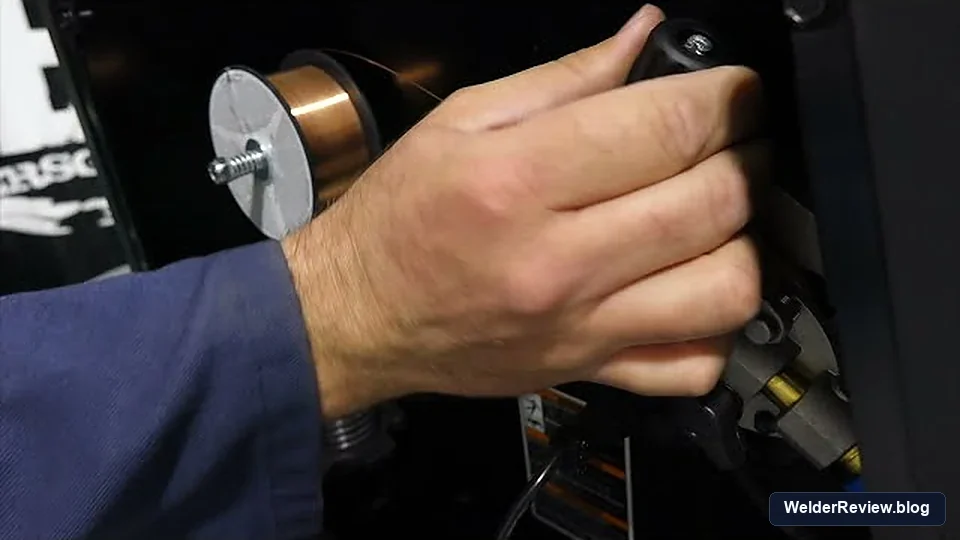
The cast aluminum chassis provides exceptional structural rigidity while maintaining a portable footprint. Engineers designed this robust housing to withstand harsh industrial environments without sacrificing mobility.
Internal components are securely mounted to isolate delicate electronics. Reviewing details in our ESAB Rebel 205ic vs Miller Multimatic 220 showdown shows how protective design philosophies extend the operational lifespan of critical circuit boards.
Ergonomic handle placement allows for balanced one-handed transport across uneven terrain. Operators will appreciate the thoughtful weight distribution during frequent relocation.
- Impact-resistant exterior composite casing protects internal circuitry.
- Optimized internal component layout enhances cooling airflow channels.
- Integrated cable management hooks prevent tripping hazards on site.
Structural Rigidity and Mobility
Balancing rugged durability with lightweight portability requires precise material selection. The engineering team utilized high-grade alloys to reinforce stress points without adding excess weight.
Field technicians can easily load this unit into service trucks alongside heavy gear. Structural integrity remains uncompromised even after years of rugged transit.
- Reinforced corner guards absorb accidental drop impacts.
- Corrosion-resistant fasteners prevent degradation in humid environments.
Power Delivery, Arc Stability, and Output Performance
Advanced inverter technology drives consistent amperage delivery. As noted in our ESAB Rebel 205 vs Miller Multimatic 220 guide, operators experience minimal spatter and rapid arc initiation from the very first trigger pull.
Voltage compensation circuitry automatically adjusts for fluctuating input power on long extension cords. This ensures uniform bead profiles regardless of distant power sources.
The machine handles thin sheet metal and thick structural plates with equal precision. Dynamic arc control adapts instantly to changing arc lengths during manipulation.
- Smooth-start technology eliminates popping during initial wire contact.
- Stable DC TIG output maintains arc purity on aluminum alloys.
- High open-circuit voltage prevents electrode sticking during stick welding.
Inverter Efficiency and Arc Dynamics
High-frequency inverter architecture maximizes electrical efficiency while reducing overall transformer size. Welders benefit from a crisp, responsive arc that simplifies out-of-position joints.
Precise wave-form control minimizes thermal distortion on delicate automotive panels. This level of arc refinement reduces post-weld cleanup time significantly.
- Rapid micro-processor adjustments maintain strict arc parameters.
- Low spatter transfer reduces grinding and finishing labor.
Video Review: WELD ANYTHING - Miller Multimatic 220 Multiprocess Welder Review
Thermal Efficiency, Duty Cycle, and Internal Cooling
An intelligent cooling fan operates only when internal temperatures demand active thermal mitigation. Exploring the Miller Multimatic 235 vs 220 comparison reveals how this reduces dust ingestion into sensitive electronics during standby periods.
Thermal overload protection safely shuts down output if duty cycle limits are exceeded. Automatic recovery occurs once safe internal operating temperatures are restored.
Optimized airflow tunnels direct cool air directly across primary transformer windings. Sustained heavy fabrication requires monitoring the rated duty cycle closely.
- Variable-speed fan reduces ambient shop noise levels.
- Thermal sensors protect rectifiers from premature heat degradation.
- Efficient heatsink placement maximizes passive thermal dissipation.
Managing Thermal Loads in the Field
Understanding duty cycle limitations prevents unexpected downtime on large structural projects. Operators should pace continuous runs to maximize daily fabrication output.
Ambient shop temperature directly impacts sustained thermal performance during summer months. Proper ventilation around intake vents ensures optimal cooling efficiency.
- Clearance requirements prevent airflow restriction near rear vents.
- Integrated thermal indicators provide immediate visual warnings.
User Interface, Digital Controls, and Setup Ergonomics
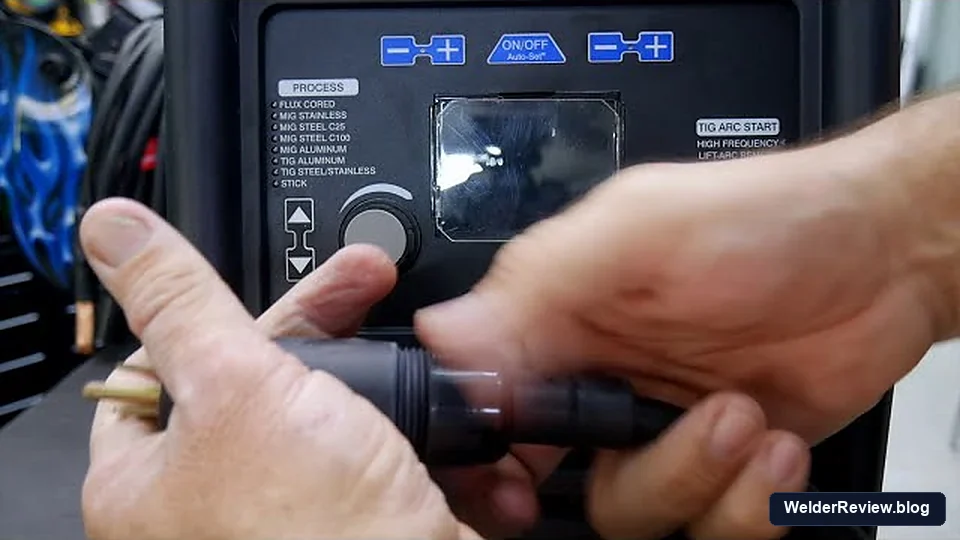
The high-contrast digital screen displays precise voltage and wire feed speed simultaneously. Navigational menus are logically organized to minimize setup friction for busy operators.
Auto-Set technology simplifies parameter selection based on material thickness and wire diameter. Beginners achieve professional results quickly while experts can fine-tune manually.
Program memory storage allows users to save custom parameters for repetitive tasks. Recalling favorite settings takes only seconds via the intuitive control dial.
- Glove-friendly control knobs ensure easy adjustments during fabrication.
- Clear digital readouts remain visible under bright sunlight.
- Preset libraries cover standard wire and gas combinations.
Navigating Advanced Digital Menus
The streamlined interface eliminates confusing sub-menus common on legacy welding systems. Technicians can switch between MIG, TIG, and stick modes with single-button actuation.
Fine adjustments to run-in and burn-back controls are easily accessible. This level of digital customization satisfies strict quality control standards.
- Quick-reference parameter chart located inside the wire compartment.
- Lockout features prevent unauthorized parameter modifications.
Wire Feeding Mechanics and Gun Integration
A heavy-duty cast aluminum drive mechanism prevents common bird-nesting issues. Dual-groove drive rolls accommodate multiple wire sizes without requiring complex tool changes.
The included MIG gun feels balanced and reduces hand fatigue during lengthy fabrication sessions. Consumables are readily available and simple to replace in the field.
Smooth wire delivery translates directly into uniform bead geometry and penetration. Tension adjustments are easily accessible within the secure wire compartment.
- Tool-less drive roll removal speeds up wire size changes.
- Brass internal fittings ensure reliable shielding gas delivery.
- Flexible gun cable liner prevents restrictive wire binding.
Drive Roll Maintenance and Alignment
Proper alignment of drive rolls prevents premature wear on contact tips. Routine inspection ensures consistent wire feeding pressure across aluminum and steel.
Quick-release tension arms allow instant access for spool replacements. This minimizes idle time between successive welding operations.
- Knurled rolls provide aggressive traction for flux-cored wires.
- U-groove options optimize feeding for soft aluminum alloys.
Routine Maintenance Requirements and Durability Metrics
Preventative maintenance is straightforward due to the modular internal layout. Compressed air clears accumulated metal dust from cooling channels effectively.
Inspect electrical connections periodically to prevent voltage drop and resistance heating. Drive rolls require occasional cleaning with wire brushes to remove debris.
Regularly check shielding gas hoses for cracks or secure fittings to prevent leaks. Diligent upkeep guarantees long-term reliability in demanding professional environments.
- Removable side panels provide unobstructed access for cleaning.
- Sealed switches resist moisture and conductive metal dust.
- Durable powder-coated exterior resists scratches and rust.
Long-Term Reliability Inspection Protocols
Establishing a monthly maintenance schedule protects your capital investment from premature failure. Checking ground clamp integrity prevents erratic arc behavior during critical welds.
Replacing worn contact tips and nozzles maintains optimal shielding gas coverage. Small consumable investments yield massive improvements in overall weld quality.
- Keep spare contact tips organized inside the consumable bin.
- Verify regulator calibration annually for accurate gas flow.
Final Engineering Verdict and Recommended Applications
When evaluating options, our Miller Multimatic 215 vs 220 comparison highlights how this machine represents a benchmark in portable multi-process welding technology. Its balanced blend of power and versatility suits professional shops.
While demanding continuous industrial fabrication exceeds its thermal rating, everyday maintenance tasks are effortless. This machine delivers professional results across diverse metallic materials.
Investing in this capable power source elevates operational efficiency significantly. It remains a top-tier choice for technicians demanding uncompromised welding performance.
- Ideal for automotive restoration, artistic metalwork, and mobile repair.
- Provides exceptional value through multi-process capability.
- Backed by reliable engineering and robust warranty support.
Who Benefits Most From This Welder
Fabricators working across variable job sites will maximize this unit's utility. Dual-voltage input eliminates power compatibility headaches during remote service calls.
Maintenance departments needing quick transitions between steel MIG and aluminum TIG will appreciate the streamlined workflow.
- Mobile repair technicians needing multi-process flexibility.
- Advanced hobbyists seeking commercial-grade build quality.
Frequently Asked Questions
Can the Multimatic 220 weld aluminum right out of the box?
You need an optional spool gun or TIG setup for aluminum. Standard configuration ships optimized for solid steel and flux-cored wire.
How does dual-voltage input work on this machine?
It automatically detects incoming power via plug adapters. Switching between 120V and 240V requires no internal tool adjustments.
What is the maximum metal thickness it can handle?
It easily welds up to three-eighths inch steel in a single pass. Multi-pass techniques allow fabrication of much thicker structural plates.
Is a TIG torch included with the standard purchase package?
The base package includes MIG and stick components primarily. TIG torches and pedals must be purchased separately for precise aluminum work.
Does Auto-Set technology restrict manual parameter adjustments?
Auto-Set provides quick starting points for beginners and routine tasks. Operators can easily override presets for advanced manual fine-tuning.