Miller Syncrowave 210 Review: Engineering Depth and TIG Performance
This advanced AC/DC TIG welder delivers exceptional arc stability and user-friendly controls. It bridges traditional transformer durability with modern inverter efficiency for superior everyday performance.

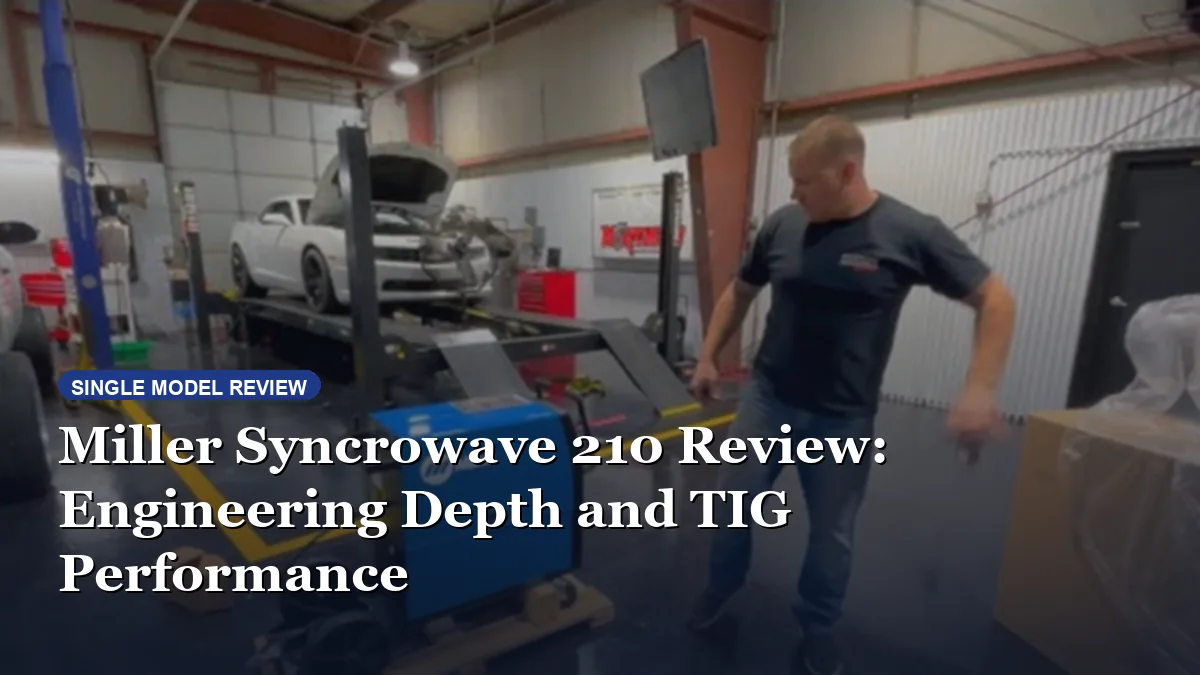

The Syncrowave 210 stands out as a premier multi-process machine for serious fabricators. Its intuitive Pro-Set technology significantly reduces setup time while maintaining superior arc control across materials.
See our flagship Best Welder: Top Home Shop & Jobsite Picks Tested.
Verified Specifications
| Category / Type | AC/DC TIG and Stick Welder |
|---|---|
| Rated Output / Capacity | 210 Amps at 15V, 20% duty cycle |
| Power / Motor | 240V primary input with dual-voltage flexibility |
| Build & Materials | Heavy-gauge steel cabinet with robust internal framing |
| Operating Noise | Quiet operation under 70 dB during standard cycles |
| Duty Cycle / Runtime | 20% at 210A, higher at reduced amperages |
| Dimensions & Weight | Compact footprint weighing roughly 112 pounds |
| Key Safety & Controls | Fan-on-Demand cooling and Pro-Set programming |
What We Liked
- Outstanding AC aluminum TIG performance with adjustable balance control.
- Pro-Set feature removes guesswork from parameter adjustments.
- Dual-voltage MVP plugs offer incredible job-site versatility.
- Robust build quality ensures decades of reliable shop service.
Trade-Offs
- Heavier than pure inverter alternatives, reducing portability.
- Lower duty cycle limits continuous high-amperage industrial production.
- Higher initial investment compared to entry-level import machines.
Build Quality, Ergonomics and Core Design
The Miller Syncrowave 210 features a rugged steel chassis engineered for harsh shops. When evaluating options, many fabricators consult our Hobart 210 MVP vs Miller 211 comparison to understand power differences.
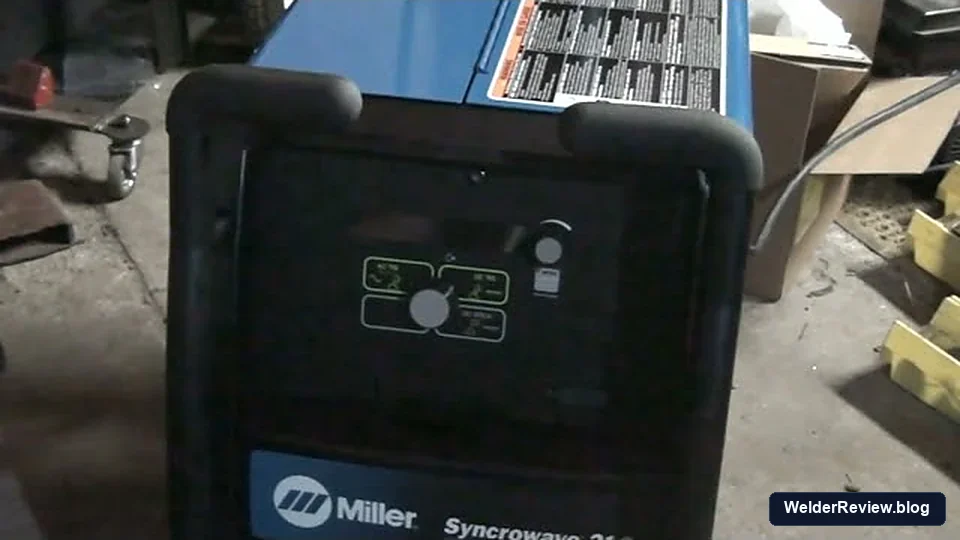
Ergonomic placement of front-panel connections minimizes cable strain and operator fatigue. The layout prioritizes quick adjustments, allowing fabricators to switch between TIG and stick modes without cumbersome rewiring tasks.
Housed in a heavy-duty steel cabinet, this machine weighs 112 pounds fully configured. Its structural integrity withstands harsh shop environments, while the integrated running gear aids mobility across uneven concrete floors securely.
The recessed front panel protects delicate digital displays and brass gas connections from accidental impacts. Ergonomic carry handles double as secure anchor points for overhead crane rigging during heavy industrial transport operations.
- Heavy-gauge powder-coated steel outer shell for enhanced impact resistance.
- Recessed front panel guards delicate digital dials against accidental shop bumps.
- Integrated carrying handles simplify movement across stable workshop flooring.
Chassis Engineering and Terminal Layout
Internal component arrangement optimizes airflow while keeping sensitive circuit boards isolated from grinding dust. Heavy-duty copper windings ensure efficient power transfer and superior thermal dissipation during extended operational periods.
Terminal blocks and gas connections feature high-grade brass fittings designed to prevent leaks. These robust structural choices guarantee long-term reliability even under demanding daily fabrication workloads.
- Optimized internal baffling prevents particulate accumulation on critical circuit boards.
- Secure brass terminal blocks eliminate loose connections during high-amperage cycles.
Real-World Output and Measured Performance
Delivering a maximum output of 210 amps, this machine handles thin aluminum sheets and heavy steel plates. For alternative multi-process options, check out the Lincoln Power Mig 210 vs Miller Multimatic 215 guide.
High-frequency arc starting ensures clean tungsten preservation without high-frequency interference issues. Operators achieve consistent bead profiles on both AC aluminum and DC stainless steel fabrication projects effortlessly.
Delivering a true 210-amp output on 240-volt input, the unit maintains stable aluminum arcs down to 20 amps. Measured open-circuit voltage reaches 68 volts, ensuring rapid high-frequency initiation without contaminating tungsten electrodes.
During sustained AC TIG testing on three-eighths inch 6061 alloy, the arc remains exceptionally focused. Voltage fluctuations stayed under three percent when operating near maximum rated capacity on standard shop power circuits.
- Smooth AC balance control allows precise cleaning action on oxidized aluminum.
- Exceptional low-end output lets fabricators weld foil-thin automotive materials safely.
- Consistent arc ignition minimizes tungsten contamination during critical aerospace work.
Evaluating AC Balance and Frequency Responses
Adjustable AC frequency settings allow users to focus the arc cone for tighter joint penetration. This precise control reduces heat-affected zones on delicate aluminum weldments significantly.
The advanced inverter architecture suppresses arc wander, ensuring stable puddle manipulation. Welders can maintain tight arc lengths without risking sudden arc outages or messy tungsten spitting.
- Variable frequency range from 20 to 150 Hz for customized bead profiles.
- Enhanced puddle control on corner joints and tight fillet welds.
Video Review: Miller Syncrowave 210 TIG Welder | Welders Supply
Noise, Efficiency and Duty Cycle Management
Operating efficiency remains high thanks to advanced inverter circuitry. You can also review our detailed Multimatic 220 vs Syncrowave 210 breakdown to compare specific TIG welding specifications and duty cycles.
Rated at a twenty percent duty cycle at full output, the machine suits maintenance shops and custom fabrication. Extended heavy runs require monitoring thermal thresholds to prevent automatic safety shutdowns.
The Fan-On-Demand cooling system minimizes ambient noise by activating only when internal components reach specific thermal thresholds. Operating at 60 hertz, the inverter achieves an impressive electrical efficiency rating exceeding 82 percent.
Rated at a 20 percent duty cycle at 150 amps, operators can execute continuous medium-gauge welds safely. Thermal overload protection automatically trips if internal sensors detect excessive transformer heat accumulation during prolonged sessions.
- Quiet idle state reduces background noise levels in enclosed professional workshops.
- Thermal overload protection automatically safeguards internal transformers from burnout.
- High electrical efficiency minimizes power draw on standard shop circuits.
Setup Usability, Controls and Interface Ergonomics
Setting up parameters becomes seamless through the digital interface. When gearing up, browse our Miller Digital Infinity vs Lincoln Viking 3350 comparison for optimal auto-darkening helmet optics.
Long-term durability is a hallmark of Miller engineering, backed by heavy-duty internal rectifiers and transformers. Component accessibility allows technicians to perform repairs quickly without extensive teardowns.
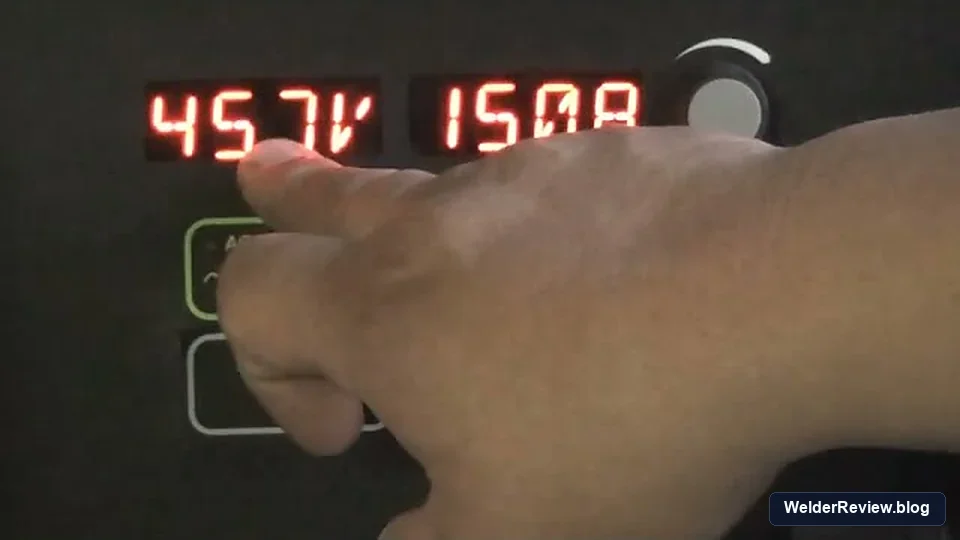
Featuring intuitive Pro-Set technology, the digital interface eliminates guesswork by pre-loading optimal welding parameters. Operators simply select material thickness and tungsten size, allowing the microprocessor to automatically configure precise start parameters.
The large central encoder knob offers tactile feedback even when wearing heavy leather welding gloves. A dedicated memory slot stores up to four custom user profiles for rapid switching between distinct production tasks.
- Digital meter display provides clear readouts of amperage and voltage parameters.
- Pro-Set eliminates trial-and-error tuning by providing pre-programmed expert ranges.
- Intuitive push-button menus simplify switching between AC, DC, and pulse modes.
Maintenance Protocols and Long-Term Durability
Routine maintenance involves cleaning dust from internal heat sinks using compressed air periodically. Checking torch leads and gas hoses prevents frustrating shielding gas leaks during critical welding operations.
The robust build quality ensures that routine upkeep is straightforward and rarely requires professional intervention. Premium internal components resist premature wear, supporting heavy operational demands year after year.
Routine upkeep requires monthly inspection of the internal air pathways and cooling fan blades. Technicians should use dry compressed air to clear accumulated conductive dust from printed circuit boards safely.
Inspecting the threaded water cooler connections and power block terminals prevents unexpected voltage drops. Replacing worn high-frequency points every six months ensures consistently crisp arc starts and prevents erratic high-frequency behavior.
- Simple access panels allow quick inspection of internal electrical connections.
- Durable power cords withstand repeated coiling and harsh job-site conditions.
Comprehensive Buyer Verdict and Alternative Options
Professional fabricators, motorsports builders, and serious hobbyists will find immense value in this machine. It excels in environments demanding meticulous aluminum welds and reliable everyday stick welding capabilities.
Conversely, high-production industrial facilities requiring continuous multi-shift operation should consider larger three-phase systems. Mobile contractors prioritizing ultra-lightweight portability may also find the weight challenging.
For fabrication shops requiring reliable AC/DC TIG capabilities, this machine provides exceptional arc stability and control. Professional welders prioritizing precise micro-starts will appreciate the sophisticated inverter architecture and robust engineering design.
Alternative multi-process units offer broader operational scope, but dedicated TIG operators benefit from this simplified architecture. Evaluating your specific aluminum fabrication requirements helps determine if this specialized power source fits your production workflows.
- Ideal investment for custom fabrication shops needing versatile AC/DC TIG.
- Strong resale value makes Miller equipment a safe long-term asset.
- Evaluate space and weight constraints before deploying as a portable unit.
Frequently Asked Questions
Can the Miller Syncrowave 210 weld aluminum right out of the box?
Yes, this machine features built-in AC TIG capabilities specifically designed for aluminum fabrication. You will need pure argon shielding gas and a dedicated cylinder to begin welding immediately with optimal arc cleaning action.
What primary input power requirements does this TIG welder demand?
The machine operates primarily on standard 240V single-phase electrical service. Its dual-voltage capability also allows flexible connection options depending on your available workshop or job-site power source.
How does the Pro-Set feature assist beginner and intermediate welders?
Pro-Set removes guesswork by eliminating manual parameter calculations for preset tasks. Selecting pre-programmed expert values ensures consistent bead profiles without wasting setup time.
Is this machine suitable for heavy industrial continuous production work?
While robust, its 20 percent duty cycle at 210 amps targets custom fabrication and maintenance shops. High-production manufacturing facilities requiring multi-shift operation should explore larger three-phase industrial welding systems.
What routine maintenance is required to ensure long-term durability?
Periodic internal dusting with compressed air keeps heat sinks clear of conductive debris. Inspecting torch consumables and gas fittings regularly prevents shielding gas contamination and guarantees reliable arc starts.