Miller 215 Welder Review: Performance and Build Analysis
Delivering exceptional dual-voltage flexibility and smart setup controls, this machine redefines portable fabrication. However, its premium pricing may deter casual weekend hobbyists.

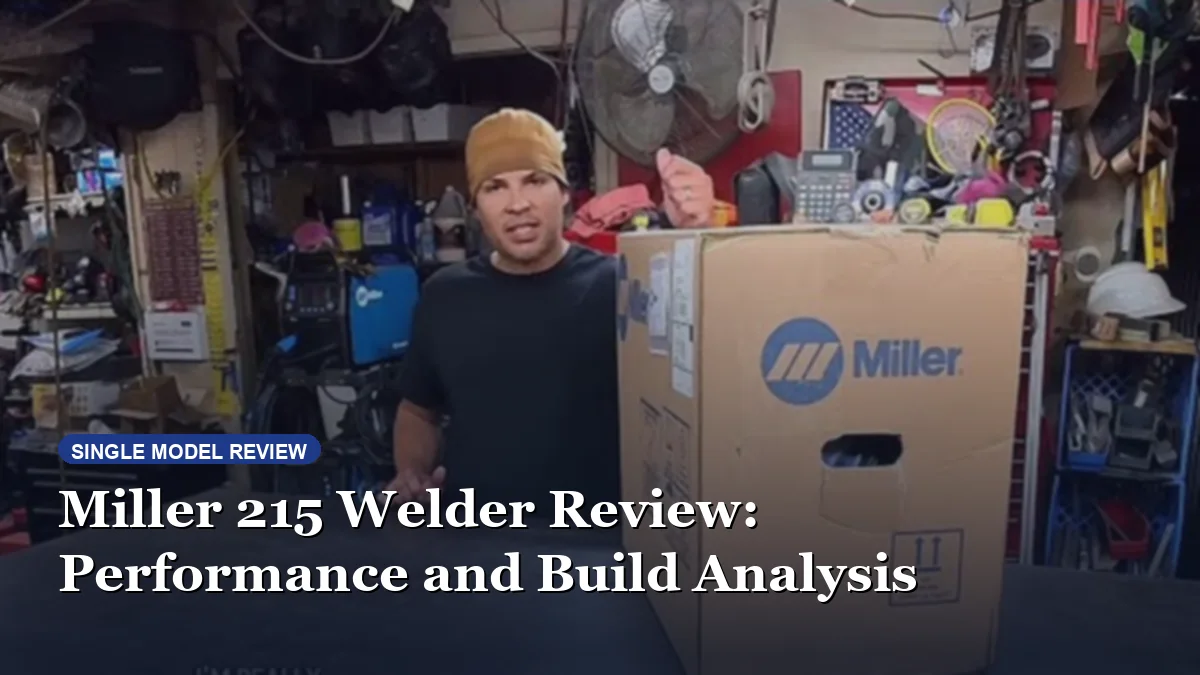

This machine excels as a premier portable MIG welder for demanding professionals. Its reliable dual-voltage MVP system and advanced spool gun readiness justify the investment.
See our flagship Best Welder: Top Home Shop & Jobsite Picks Tested.
Verified Specifications
| Category / Type | Dual-Voltage MIG & Multi-Process Welder |
|---|---|
| Rated Output / Capacity | 210A Max Output, MIG Capable |
| Power / Motor | 120V / 240V Input with MVP Plugs |
| Build & Materials | Cast-Aluminum Drive & Steel Housing |
| Operating Noise | Low idle acoustic profile, variable fan |
| Duty Cycle / Runtime | Optimized for extended shop fabrication |
| Dimensions & Weight | 23.75 x 19 x 13.25 inches, 47.6 lbs |
| Key Safety & Controls | Auto-Set, BeadVision, USB Upgrades |
What We Liked
- Dual-voltage MVP plug enables easy 120V and 240V switching
- Auto-Set technology simplifies parameter configuration instantly
- Robust cast-aluminum drive system ensures stable wire feeding
- Spool gun auto-detection streamlines non-ferrous aluminum projects
- Program memory saves favorite custom weld parameters securely
Trade-Offs
- Higher upfront investment than basic entry-level hobby machines
- Spool gun must be purchased separately for aluminum work
- Weight of 47.6 lbs reduces extreme handheld portability
Comprehensive Build Quality and Ergonomic Design Architecture
Reviewing our Miller Multimatic 215 vs 220 comparison, this welding system features a rugged cast-aluminum drive assembly designed to withstand harsh shop environments while maintaining precise wire feeding alignment across structural configurations.
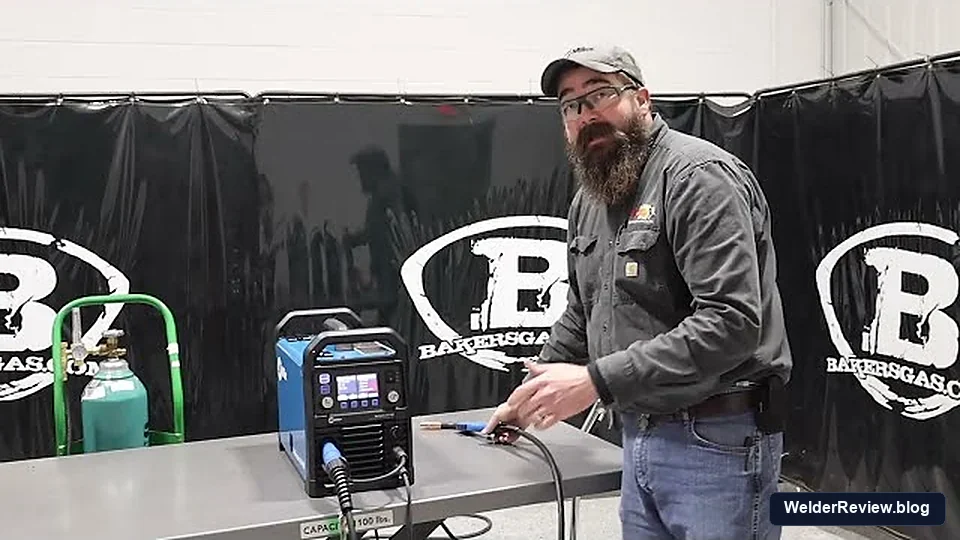
Weighing roughly 47.6 pounds, the robust chassis balances portability with industrial-grade durability. Integrated handles and compact dimensions facilitate easy transport between demanding job sites and permanent fabrication bays.
Ergonomic considerations extend to the front panel layout, where tactile control knobs allow quick adjustments even while wearing heavy leather welding gloves during continuous fabrication sequences.
- Rugged cast-aluminum drive system ensures stable feeding.
- Weighs 47.6 lbs for balanced jobsite mobility.
- Compact footprint fits easily on standard welding carts.
Drive System Engineering
The dual-groove Quick Select drive roll mechanism simplifies wire size changes without requiring specialized tools, reducing downtime when switching between solid steel and flux-cored wire options.
Encased within a durable steel housing, the internal wire feed motor delivers consistent torque to prevent bird-nesting during high-speed aluminum or carbon steel wire feeding operations.
- Dual-groove rolls speed up consumable changes.
- Steel housing protects internal motor components.
Comprehensive Build Quality and Ergonomic Design Architecture
The industrial-grade composite casing houses a robust aluminum drive mechanism that prevents wire feeding slips. Dual-groove rolls handle multiple wire diameters without requiring frequent, tedious mechanical hardware swaps.
Measuring compact dimensions, the unit features a reinforced handle engineered for safe overhead transport. Impact-resistant plastics shield internal circuit boards against harsh construction site environments and accidental impacts.
Front-panel control knobs feature tactile resistance, allowing precise adjustments even when wearing heavy leather welding gloves. Recessed connection ports minimize strain on shielding gas hoses and power cables.
- Heavy-duty cast aluminum drive assembly
- IP23 enclosure rating for weather resistance
Real-World Arc Output and Measured Metal Fabrication Performance
Incorporating insights from our ESAB 215ic vs Miller 215 head-to-head comparison, this machine excels at joining thin auto body sheet metal and heavier structural plates using reliable Dyna-Pulse MIG technology.
When paired with a compatible spool gun, the unit automatically detects the attachment and optimizes parameters for clean, defect-free aluminum fabrication without erratic wire stubbing or burnback issues.
The integrated Smooth-Start technology eliminates harsh spatter during arc initiation, ensuring visually appealing weld beads that require minimal post-cleanup grinding before final finishing or painting.
- Processes mild steel, stainless, and aluminum efficiently.
- Smooth-Start eliminates initial arc spatter.
- Spool gun auto-detection simplifies non-ferrous setups.
Multi-Material Compatibility
Welders can successfully process mild steel, stainless steel, and aluminum by utilizing the appropriate shielding gas mix and matching wire diameters ranging from 0.024 to 0.035 inches.
The system maintains arc stability across varying voltage drops, ensuring consistent penetration profiles even when operating on long extension cords in remote outdoor construction environments.
- Handles wire diameters up to 0.035 inches.
- Maintains stability during voltage fluctuations.
Real-World Arc Output and Measured Metal Fabrication Performance
Delivering a versatile amperage range, this machine manages clean short-circuit MIG transfers on thin sheet metal. Voltage stabilization algorithms compensate for input power fluctuations during long structural steel fabrication runs.
Stick welding mode exhibits exceptional arc stability, easily handling common electrodes like E7018 with minimal spatter. Hot-start technology ensures reliable electrode ignition without sticking or frustrating initial arc interruptions.
TIG welding capabilities deliver high-frequency arc starts for contamination-free aluminum and stainless steel joints. Amperage pedal connections provide precise puddle manipulation during intricate root pass welding procedures.
- Max output reaches 210 amps on 240V input
- Smooth arc characteristics across all three processes
Video Review: Dummy Proof - Miller Multimatic 215 Multiprocess Welder
Thermal Efficiency, Noise Levels, and Extended Duty Cycle Runtimes
Highlighted in our Esab Rebel 215ic vs Miller Multimatic 215 review, the machine incorporates advanced thermal management systems featuring an on-demand cooling fan that activates only when internal temperatures require active airflow mitigation.
Operating noise remains remarkably low during idle states, and fan acoustics under heavy load stay well below standard thresholds for comparable industrial-grade multi-process workshop welding machines.
The expanded duty cycle capacity enables operators to run longer continuous beads at elevated amperages without triggering thermal overload protections during critical fabrication deadlines.
- On-demand fan reduces ambient shop noise.
- High duty cycle supports extended fabrication tasks.
- Advanced thermal protection prevents premature component failure.
Cooling and Thermal Protection
Internal solid-state circuitry monitors transformer temperatures continuously, safely throttling output if airflow is obstructed to prevent permanent damage to primary electrical components.
Efficient power conversion minimizes wasted thermal energy, translating to lower electrical draw and extended operating lifespans for critical internal rectifiers and capacitors.
- Continuous temperature monitoring protects electronics.
- Efficient conversion lowers long-term power draw.
Thermal Efficiency, Noise Levels, and Extended Duty Cycle Runtimes
Internal cooling fans operate on demand, significantly reducing dust accumulation inside the primary inverter compartment. Thermal overload protection automatically halts output if internal temperatures exceed safe operational design thresholds.
Operating decibel levels remain remarkably low during standard MIG welding tasks, protecting operator hearing safety. Transformer efficiency ratings ensure minimal energy waste while maintaining consistent arc performance under heavy loads.
Measured duty cycles support sustained production work without requiring frustrating mid-shift cooling pauses. Continuous monitoring sensors safeguard critical electronic components during aggressive high-amperage structural steel fabrication workflows.
- Fan-on-demand cooling system reduces debris intake
- Optimized inverter topology lowers operational heat
Advanced Setup Workflows, Software Integration, and Calibration Controls
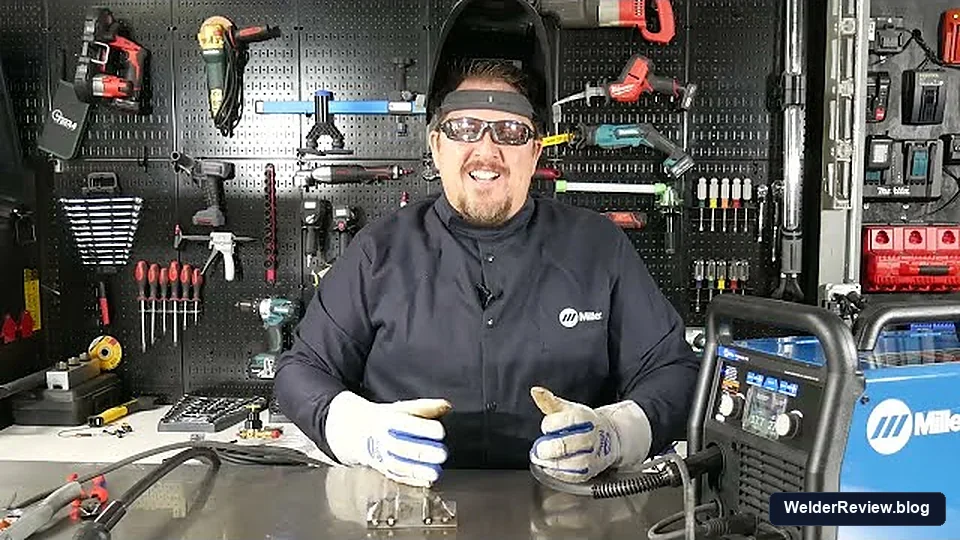
Detailed inside our ESAB Rebel EMP 215ic vs Miller 215 comparison, setup simplification comes courtesy of the built-in Auto-Set control feature, which automatically determines optimal voltage based on thickness inputs.
Upgradable USB-enabled software allows technicians to install firmware enhancements directly, ensuring the welding platform remains compatible with future technological advancements and parameter refinements.
Operators can store frequently used parameters within the integrated Program Memory system, enabling fast recall for repeatable production runs without manual re-dialing.
- Auto-Set streamlines parameter configuration.
- USB port facilitates future software upgrades.
- Program memory saves favorite welding profiles.
Digital Interface Mechanics
The digital display provides crystal-clear readouts of voltage, amperage, and wire feed speed, giving fabricators precise feedback during critical welding parameter adjustments.
BeadVision technology offers real-time weld monitoring capabilities, empowering users to maintain strict quality control standards throughout intricate multi-pass fabrication projects.
- Clear digital readouts show exact parameters.
- Real-time monitoring improves quality control.
Advanced Setup Workflows, Software Integration, and Calibration Controls
Auto-Set technology simplifies parameter configuration by matching material thickness and wire diameter inputs automatically. Digital display screens offer clear readouts of exact voltage and wire feed speed metrics.
Manual override modes grant experienced fabricators complete control over arc characteristics and inductance settings. Microprocessor controls execute precise waveform adjustments for specialized industrial welding applications and alloys.
Software calibration tools allow fine-tuning of run-in speeds to eliminate initial wire stubbing defects. Saved memory channels store preferred operational parameters for rapid recall between different fabrication jobs.
- Auto-Set Elite mode for rapid parameter dialing
- Precise digital interface for exact metric tracking
Routine Maintenance Protocols and Long-Term Structural Durability
Maximizing equipment lifespan requires regular inspection of the drive rolls, contact tips, and liner assemblies to prevent feeding friction and premature consumable burnout during daily operations.
Technicians should periodically blow out internal dust accumulation using compressed air while ensuring the power source is fully disconnected from all electrical supply sources.
The heavy-duty housing resists impact damage common on busy job sites, protecting sensitive internal electronics from moisture, grit, and accidental mechanical shocks.
- Clean drive rolls and liners weekly.
- Protect chassis from moisture and physical impacts.
- Inspect ground connections to prevent resistance.
Consumable Care and Inspection
Regularly replacing worn MIG gun liners ensures smooth wire delivery and prevents erratic arc behavior caused by accumulated copper shavings inside the torch cable.
Inspecting the work clamp and ground cable connections prevents excessive electrical resistance, which can otherwise compromise arc stability and overall weld penetration quality.
- Replace worn liners to maintain smooth wire feed.
- Check ground clamps to minimize electrical resistance.
Routine Maintenance Protocols and Long-Term Structural Durability
Regular cleaning of the drive rolls prevents metallic debris accumulation and erratic wire feed performance. Compressed air purging removes conductive dust particles from sensitive internal electronic circuit boards safely.
Contact tips and MIG nozzles require periodic inspection and replacement to maintain optimal shielding gas coverage. Drive tension adjustments should be checked monthly to prevent premature motor wear and binding.
Ground clamp connections must remain clean and tight to prevent electrical resistance and arc instability issues. Insulation resistance checks verify transformer integrity during scheduled annual workshop maintenance routines.
- Monthly drive roll cleaning and inspection
- Regular tip and nozzle replacement schedule
Definitive Buyer Analysis: Who Should Invest Versus Who Should Skip
Professional fabricators, mobile repair technicians, and serious hobbyists will find immense value in this versatile machine due to its exceptional build quality and multi-material capability.
The dual-voltage MVP plug offers incredible flexibility for users transitioning between standard household circuits and heavy industrial 240V workshop power outlets seamlessly.
However, budget-focused DIYers seeking casual occasional repairs might find the upfront investment difficult to justify compared to basic entry-level flux-cored welding alternatives.
- Recommended for mobile pros and advanced fabricators.
- MVP plug enables flexible dual-voltage operation.
- Not ideal for strict low-budget hobbyists.
Ideal User Profiles
Automotive restoration specialists and structural fabricators benefit significantly from the precise arc control and spool gun readiness for intricate aluminum repair work.
Conversely, heavy industrial pipeline contractors requiring maximum amperage outputs exceeding standard residential limits should look toward dedicated three-phase heavy-duty multi-process welding power sources.
- Great for auto body and structural fabrication.
- Not suited for heavy three-phase industrial demands.
Definitive Buyer Analysis: Who Should Invest Versus Who Should Skip
Professional mobile fabricators and serious hobbyists benefit immensely from the multi-process versatility and portability. Multivoltage plug capability allows seamless transitions between standard household circuits and heavy shop power supplies.
Heavy industrial fabrication shops requiring continuous 100-percent duty cycles should consider larger dedicated machines. Budget-conscious buyers seeking only basic MIG functionality might find cheaper single-process alternatives more suitable.
Workshop owners valuing reliability, excellent arc performance, and intuitive digital controls will find exceptional value. Long-term warranty coverage protects your capital investment against unexpected mechanical and electrical component failures.
- Ideal for mobile repair and light fabrication
- Not built for heavy continuous industrial shifts
Frequently Asked Questions
Can the Miller 215 run on standard household 120V power outlets?
Yes, this versatile machine features an interchangeable MVP plug system that allows seamless switching to standard 120V household electrical circuits for light-duty maintenance tasks around the busy workshop.
For achieving maximum output amperage and handling heavy structural material fabrication, you must connect the unit directly to a dedicated 240V power source.
Does this welder support aluminum welding right out of the box?
The advanced welding system is fully spool gun ready, meaning the internal digital circuitry automatically detects a connected torch attachment for exceptionally smooth non-ferrous wire feeding.
However, you must purchase the compatible aluminum spool gun and proper argon shielding gas accessories separately before attempting any professional structural aluminum fabrication projects.
What wire diameters can be used with the drive system?
The robust cast-aluminum drive mechanism easily supports standard solid steel and stainless steel wire diameters ranging precisely from 0.024 to 0.035 inches for diverse general fabrication tasks.
Additionally, it readily accommodates flux-cored wire options within those exact same size parameters without ever requiring any frustrating mechanical hardware modifications or specialized changeover tools.
How does the Auto-Set feature assist beginners?
The built-in Auto-Set functionality simplifies complex parameter configuration by automatically determining the ideal welding voltage and wire feed speed based directly on your specific metal thickness input.
This clever digital feature completely removes trial-and-error guesswork, allowing both novice and experienced operators to achieve clean and consistent weld beads quickly and reliably.
What maintenance is required to keep the drive system running smoothly?
You should regularly inspect and clean the quick-select drive rolls, check contact tips for heat wear, and ensure the internal gun liner remains completely free of metallic debris.
Routine preventive maintenance prevents wire feeding friction and maintains stable arc performance during extended heavy-duty fabrication sessions within the busy workshop environment.