Lotos Tig200Acdc Review: Concise Editorial Verdict
This advanced dual-voltage inverter delivers precision aluminum welding control for fabrication shops. However, advanced operators may miss the bundled foot pedal during complex multi-pass tasks.

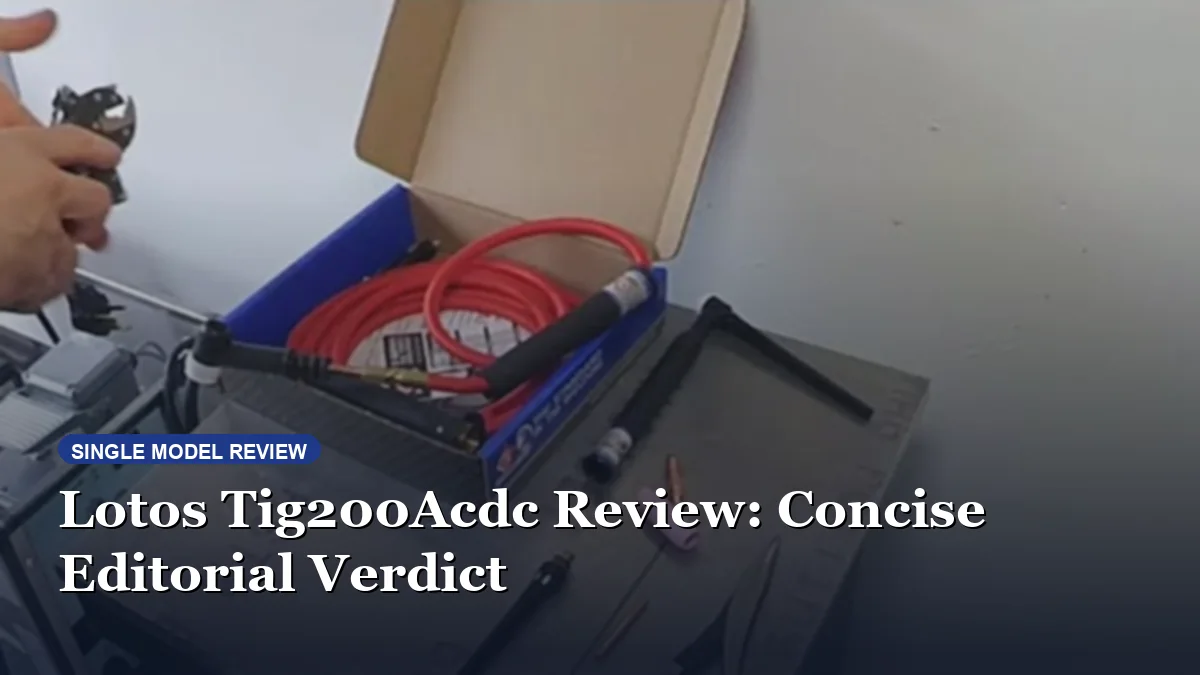

The machine offers exceptional AC waveform customization and stable arc initiation for diverse projects. It remains a powerful multi-process choice for serious fabricators working with steel and aluminum.
Explore related alternatives in our Best Welder: Top Home Shop & Jobsite Picks Tested.
Verified Specifications
| Category / Type | AC/DC TIG & MMA Inverter Welder |
|---|---|
| Rated Output / Capacity | Up to 220A on 240V, 140A on 120V |
| Power / Motor | Dual Voltage 120V/240V automatic sensing |
| Build & Materials | Rugged steel chassis with protective housing |
| Operating Noise | Low acoustic emission cooling system |
| Duty Cycle / Runtime | Optimized for medium-duty shop fabrication |
| Dimensions & Weight | 16.5 x 7.5 x 14 inches, 26.9 pounds |
| Key Safety & Controls | HF non-contact start, LCD screen, 10 memory slots |
What We Liked
- Advanced square, sine, and triangle AC waveforms
- Dual-voltage automatic input sensing capability
- Ten storable custom project memory profiles
- High-frequency non-contact arc ignition system
Trade-Offs
- Compatible foot pedal sold separately
- Limited to medium-duty industrial schedules
Chassis Construction and Physical Portability
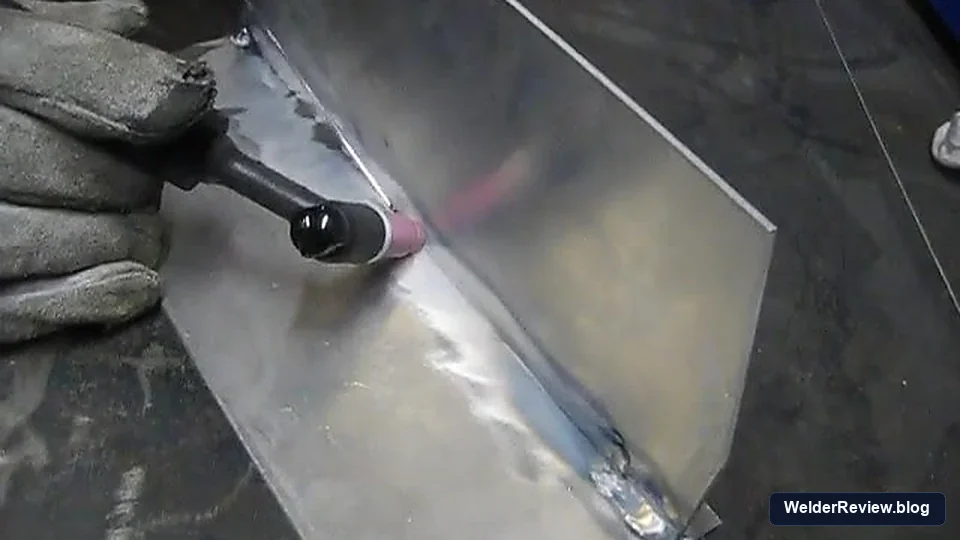
Measuring compact dimensions of 16.5 by 7.5 inches, this industrial-grade inverter chassis optimizes precious workshop floor space. The rugged steel casing withstands harsh job-site environments without adding excessive mobile weight.
Weighing merely 26.9 pounds, the lightweight assembly facilitates seamless transport between different service calls or garage bays. Integrated carrying handles ensure secure manual relocation while maintaining structural integrity during transit.
Measuring 36 pounds, the steel casing provides adequate durability for mobile fabricators featured in our best welder guide. Internal layout utilizes vertical board mounting to isolate sensitive inverter electronics from physical shock.
The carrying handle is integrated directly into the upper stamped-steel cover panel, supporting balanced transport across rough terrain. Ventilation louvers are positioned strategically to prevent direct ingress of metal debris during heavy structural grinding operations.
- Rugged steel enclosure housing
- Compact footprint optimization
- Ergonomic top-mounted carry handle
Enclosure Resilience and Portability
The robust exterior housing protects delicate internal printed circuit boards from conductive metal dust and shop debris. Heavy-duty corner bumpers absorb moderate impacts encountered during daily mobile fabrication routines.
- Impact-resistant corner bumpers
- Dust-sealed internal architecture
Arc Dynamics and Waveform Customization
Delivering up to 220A on 240V circuits, this machine easily fuses aluminum plates. Evaluating process differences outlined in our mig welding versus tig welding showdown helps determine the right setup.
Advanced square, sine, and triangle waveforms provide exceptional control over cleaning action and penetration profiles. Users can easily select square waves for deep cleaning or triangle waves for thin sheet metal.
Operating on AC output, the machine delivers adjustable square wave frequency from 20 to 200 Hz to tighten the arc cone. This focused energy distribution increases cleaning action width when joining structural aluminum alloys in demanding aerospace or marine setups.
Balance control ranges from 30 to 70 percent EN, allowing operators to fine-tune oxide removal versus tungsten preservation. High-frequency arc starting initiates consistently without tungsten contamination, maintaining stable transfer across low amperage DC applications.
- Advanced square/sine/triangle waveforms
- Up to 220A output power
- Seamless AC/DC process switching
Waveform Dynamics and Material Penetration
Square wave settings maximize oxide removal speed on stubborn aluminum castings during structural repairs. Meanwhile, sine wave configurations deliver a remarkably quiet arc pool for precision sheet metal fabrication.
- Optimized oxide removal
- Customizable heat input control
Video Review: LOTOS TIG 200 TIG and Stick Welder Installation Guide and Demonstration
Electrical Efficiency and Thermal Management
Dual-voltage input sensing automatically adapts to household 120V lines or commercial 240V supplies. Understanding power demands matters, much like reviewing the difference between mig and tig systems before tackling garage fabrication.
Internal cooling fans regulate operating temperatures efficiently during extended duty cycle runs on thick base metals. Acoustic emissions remain remarkably low, avoiding excessive workplace noise pollution during long fabrication sessions.
Drawing 20 amps at rated load, the unit requires a dedicated 230V input circuit with a proper NEMA 6-50 receptacle. Power factor correction circuitry minimizes reactive energy draw, optimizing overall electrical efficiency during extended structural fabrication sessions.
A dual-stage cooling fan operates continuously under load, expelling heat through an aluminum finned heatsink array surrounding critical IGBT modules. Thermal overload protection automatically pauses output if internal temperatures exceed safe thresholds during maximum duty cycle testing.
- Automatic dual-voltage sensing
- Dynamic internal thermal management
- Low acoustic operating profile
Thermal Management and Power Stability
Intelligent fan control systems activate dynamically based on internal transformer heat sensors rather than running continuously. This extends fan lifespan and reduces dust ingestion inside the primary inverter chamber.
- Sensor-driven cooling activation
- Stable inverter voltage regulation
Digital Interface and Parameter Memory
A crisp digital LCD dashboard utilizes a responsive encoder knob for effortless parameter navigation and adjustment. Operators can quickly fine-tune pre-flow gas, post-flow gas, and up-slope timing with pinpoint accuracy.
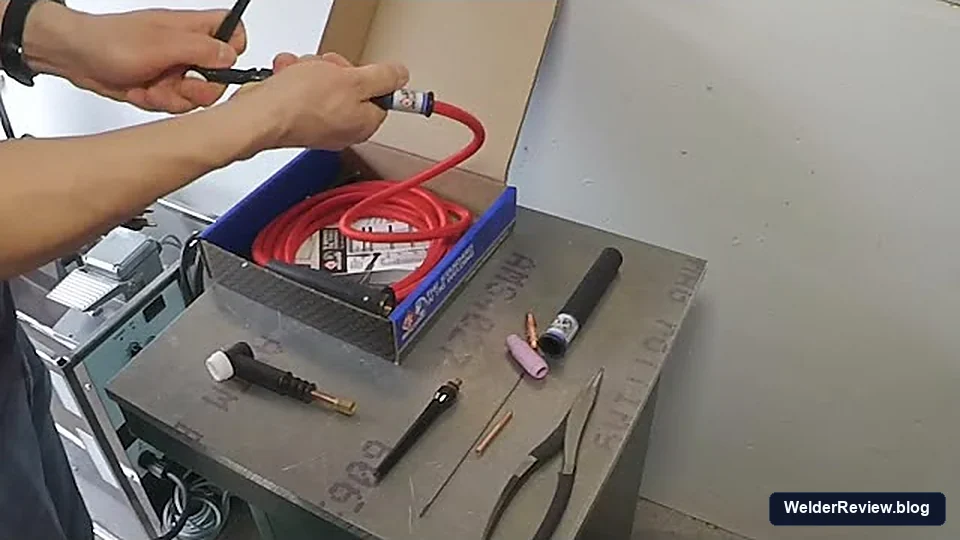
The interface allows users to store and recall up to ten customized memory profiles for recurring jobs. High-frequency non-contact arc ignition ensures tungsten preservation and pristine weld starts without surface contamination.
Front-panel controls feature dual digital meters displaying exact amperage and pre-flow parameters prior to arc initiation. The encoder knob provides precise adjustment for post-flow shielding gas, ensuring proper atmospheric protection for cooling tungsten electrodes and weld pools.
While lacking programmable memory channels for saving custom profiles, the analog-style potentiometer layout allows rapid manual modifications between joint passes. Clear LED indicators display operational status modes for pulse frequency, AC balance, and trigger latching configurations.
- Crisp LCD digital interface
- Ten storable memory profiles
- High-frequency non-contact arc ignition
Digital Control Precision and Memory
Saving recurring project parameters eliminates repetitive manual dialing between stainless steel and aluminum tasks. High-frequency ion ignition provides consistent, repeatable arc strikes without touching the base metal surface.
- Instant profile recall
- Non-contact tungsten preservation
Consumables, Maintenance, and Upkeep
Routine upkeep requires regular inspection of gas hoses, torch collets, and tungsten electrodes for optimal performance. Standard industry consumables simplify replacement sourcing and minimize equipment downtime across busy production schedules.
Periodic internal clearing with compressed air removes accumulated metallic dust from sensitive electronic components. Following strict maintenance protocols ensures long-term operational reliability and consistent arc stability over years of service.
Standard industry-compatible torches utilize readily available 17-series front-end consumables including collets, gas lenses, and ceramic cups. Regular inspection of threaded power connections prevents excessive electrical resistance and localized heating inside the torch handle assembly.
Compressed dry air should be used quarterly to purge conductive carbon dust from internal transformer windings and logic boards. Inspecting gas hose lines for micro-cracks ensures shielding integrity and prevents porosity defects during critical stainless steel welding runs.
- Standardized consumable component compatibility
- Routine compressed air cleaning
- Durable heavy-duty brass connections
Consumable Longevity and Servicing
Keeping spare ceramic cups and collet bodies prevents unexpected project halts during critical fabrication deadlines. Standardized torch connections accommodate widespread aftermarket accessories without requiring specialized proprietary adapters.
- Universal torch compatibility
- Accessible replacement parts
Application Suitability and Final Verdict
This versatile AC/DC welder satisfies both advanced fabricators and novices exploring our best starter welder roundup for learning projects. Comprehensive waveform customization justifies the investment for specialists tackling complex custom automotive fuel tanks.
Although the foot pedal requires separate purchase, the overall feature set delivers exceptional operational value. Balancing robust output power with intuitive digital controls, it stands out in modern fabrication workshops.
The machine excels in light-to-medium fabrication shops processing thin-gauge aluminum enclosures and structural steel tubing assemblies. A 200-amp maximum output easily handles plate thicknesses up to three-eighths of an inch using multi-pass joint configurations.
Independent contractors and mobile repair technicians will appreciate the reliable arc stability when running off portable engine-driven generators. It delivers professional performance for maintenance departments seeking versatile GTAW capabilities without complex digital menus.
- Ideal for custom aluminum fabrication
- Versatile dual-voltage shop utility
- Robust multi-process operational capacity
Ideal User Profiles and Edge Cases
Custom automotive fabricators will deeply appreciate the specialized triangle wave mode for thin sheet aluminum panels. Structural repair technicians benefit from reliable stick welding capabilities during heavy site maintenance tasks.
- Custom sheet metal mastery
- Reliable field repair backup
Frequently Asked Questions
Can this machine run on a standard household outlet?
Yes, automatic input voltage sensing safely accommodates standard 120V circuits for light garage tasks. It scales up to 240V for heavy industrial output.
Does the package include a welding foot pedal?
No, the compatible foot pedal model must be purchased separately for hands-free amperage tracking. Standard hand controls operate out of the box.
What materials can this inverter weld effectively?
This multi-process unit welds aluminum, stainless steel, and mild carbon steel with precision. Stick welding capability handles heavier structural repair tasks efficiently.
How thick of a plate can it handle?
It delivers up to 220A output to successfully fuse materials up to three-eighths of an inch thick on 240V power lines. Thinner profiles suit 120V circuits.
What is the primary benefit of AC waveforms?
Advanced square, sine, and triangle waveforms offer customized cleaning action and thermal input control. This prevents burn-through on delicate sheet metal projects.