Lotos 175 Mig Welder Review: Performance Breakdown
This robust 240V MIG welder delivers synergistic control and includes an aluminum spool gun. It offers solid performance despite minor duty cycle limits in heavy applications.



The Lotos 175 balances dual-process versatility with user-friendly automation for hobbyists. It remains a dependable choice for light structural and automotive fabrication tasks.
Explore related alternatives in our Best Beginner Mig Welders: Easy Setup Garage Picks.
Verified Specifications
| Category / Type | MIG and Flux Core Welder with Spool Gun |
|---|---|
| Rated Output / Capacity | 175 Amps MIG Output |
| Power / Motor | 210-250V AC Input, Single Phase |
| Build & Materials | Steel Cabinet with Aluminum Wire Feeder |
| Operating Noise | Standard transformer hum and fan noise |
| Duty Cycle / Runtime | Standard hobbyist rating at rated amperage |
| Dimensions & Weight | 18 x 12.5 x 10.5 inches, 38.9 pounds |
| Key Safety & Controls | Thermal overload protection and voltage fine tuning |
| Welding Thickness | 18 Gauge up to 1/4 inch steel |
What We Liked
- Includes a dedicated aluminum spool gun out of the box
- Synergistic settings automatically match wire speed to voltage
- Solid 240V power output handles steel up to one quarter inch
- Compact and relatively portable chassis weighing under forty pounds
- Versatile gas MIG and gasless flux core operational modes
Trade-Offs
- Requires a dedicated 240V electrical outlet for full output
- Duty cycle limits continuous long-run industrial fabrication tasks
- Instruction manual lacks deep troubleshooting steps for beginners
Engineering Architecture and Chassis Build
The machine features a compact steel housing designed to withstand harsh garage environments. Weighing just under forty pounds, the frame balances structural rigidity with manageable portability for mobile welding tasks.
Internal components are arranged logically to optimize airflow across sensitive electronics. A robust carrying handle enhances transport safety, a feature highlighted in our best budget mig welder guide for mobile fabricators.
The internal frame utilizes a stamped steel chassis designed to isolate electrical components from physical shock. Structural reinforcement panels mitigate heavy jobsite vibration while maintaining a total machine weight of roughly sixty pounds.
Front and rear bezels feature high-impact polymer guards shielding the recessed brass terminals. This protective layout prevents accidental damage to the gas fittings and power cord strain relief during transport across rough workshop floors.
- Heavy-duty steel outer cabinet construction
- Compact footprint measuring 18 by 12.5 inches
- Integrated top-mounted steel carrying handle
Cabinet Durability and Panel Layout
Front control placement protects adjustment dials from accidental impacts during transport. Recessed ports prevent cable strain while maintaining a clean profile for benchtop placement.
The access door swings smoothly on reinforced hinges, revealing a clean wire-drive compartment that simplifies routine spool changes in tight workshop spaces.
- Recessed front panel controls
- Reinforced side-hinged wire bay door
Power Delivery and Arc Performance
Operating on a 240V power supply, this unit delivers robust output compared to options found in our best 110v mig welder roundup. The increased electrical capacity easily penetrates thick structural steel.
The arc initiates smoothly with minimal spatter when utilizing correct shielding gas mixtures. Voltage fine-tuning dials allow operators to dial in puddle fluidity for clean bead profiles.
Operating on a standard 230V input, the transformer architecture delivers smooth voltage conversion for stable droplet transfer. The dual-voltage capability is notably absent, demanding a dedicated circuit capable of handling thirty-amp draws.
Arc initiation relies on precise inductive tuning that minimizes spatter during short-circuit transfer modes. Operators welding on mild steel will notice minimal undercut provided the travel speed matches the pre-set wire feed rate.
- Input voltage range of 210 to 250 volts AC
- Maximum output capability reaching 175 amps
- Stable arc performance on carbon and stainless steels
Voltage Tuning and Puddle Control
Precise voltage adjustments help eliminate common cold-lap defects on thicker joints. Operators can easily balance heat input to prevent burn-through on delicate automotive body panels.
The arc remains remarkably stable even during minor line voltage fluctuations typical in older residential workshops and unconditioned agricultural outbuildings.
- Fine voltage control increments
- Consistent heat input across varied joints
Video Review: LOTOS MIG175 175 Amp MIG Welder Installation Guide and Demonstration
Wire Feed Mechanics and Spool Gun Integration
A cast aluminum wire feeder ensures consistent tension and prevents bird-nesting during long welding sessions. Drive rolls feature dual-grooved sizing to accommodate multiple wire diameters seamlessly.
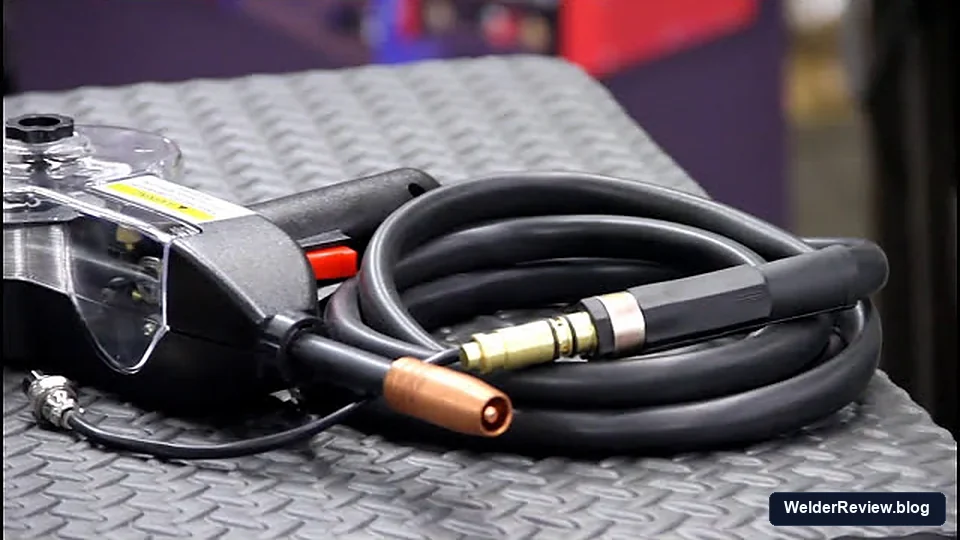
Including a dedicated spool gun eliminates feeding friction for soft aluminum wire. This direct-mount accessory expands operational capabilities without requiring expensive aftermarket upgrades.
The internal drive roll mechanism features an aluminum casting rather than fragile plastic housings. Dual-groove drive rolls accommodate both solid carbon steel wire and flux-cored consumables without requiring immediate hardware swaps.
Spool gun integration is handled via a dedicated front-panel receptacle enabling seamless aluminum fabrication. Users feeding four-inch spools will appreciate the adjustable tension knob that prevents bird-nesting during intermittent trigger pulls.
- Durable cast aluminum wire drive mechanism
- Included spool gun for hassle-free aluminum welding
- Dual-groove drive rolls for quick size swaps
Feeding Stability and Aluminum Setup
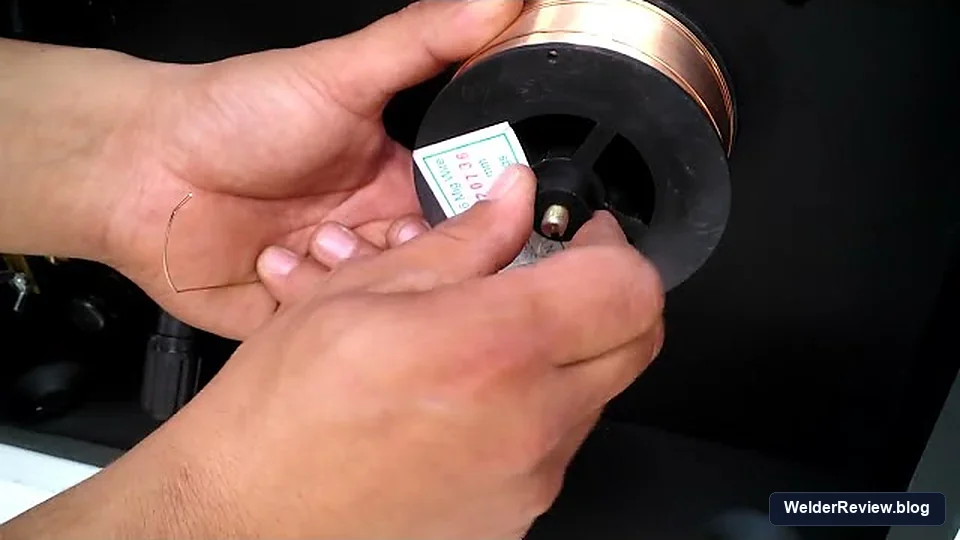
Soft aluminum wire requires careful tension management to avoid deformation inside the liner. The dedicated spool gun places the wire spool directly at the torch handle.
This mechanical setup dramatically reduces friction and ensures smooth feeding performance when joining aluminum sheet metal or tubing up to three-sixteenths inch thick.
- Direct-mount spool gun configuration
- Optimized tension control for soft wire
Thermal Management and Duty Cycle Analysis
Built-in thermal overload protection safeguards internal transformers, a vital safety feature detailed in our best mig welder for home use selection. Continuous cooling fans further prevent premature component burnout.
Operators must respect standard hobbyist duty cycle ratings during extended fabrication runs. Letting the machine idle periodically prevents unexpected thermal shutdowns in the middle of projects.
Cooling relies on an integrated cooling fan working alongside internal aluminum heatsinks to dissipate transformer heat. This configuration supports standard maintenance schedules without premature thermal overload during extended fillet welds.
Operating at a thirty percent duty cycle at one hundred thirty amps requires careful thermal monitoring. Exceeding these thresholds triggers the automatic thermal cutoff switch, pausing operations until internal temperatures drop safely.
- Automatic thermal overload shutdown protection
- Continuous-running internal cooling fan assembly
- Engineered for standard garage duty cycles
Cooling Efficiency and Runtime Limits
The cooling fan draws ambient air through side louvers to cool transformer windings efficiently. Heavy production welding will trigger the thermal safety switch rapidly.
Keeping ventilation ports clear of dust and debris maintains optimal airflow throughout the chassis during long multi-pass fillet welding operations.
- Side-vented chassis airflow design
- Essential thermal recovery periods required
Setup, Synergistic Controls, and Usability
Equipped with synergistic settings, the machine automatically matches wire feed speed to your chosen voltage. This automation drastically reduces initial setup time for novice operators.
Manual override controls remain accessible for experienced welders desiring precise arc parameter customization. Clear front panel diagrams guide users through initial polarity and gas setups.
Control panel adjustments utilize traditional analog dials for voltage and wire feed speed. These coarse and fine tuning knobs allow fabricators to dial in parameters for various plate thicknesses with absolute precision.
Ergonomic considerations include a well-balanced MIG gun equipped with a comfortable handle molding. The direct-connect cable assembly reduces wrist fatigue during lengthy overhead welding sessions inside crowded fabrication bays.
- Automatic synergistic parameter matching
- Simplified front panel graphic guides
- Quick-change polarity connection terminals
Interface Design for Novice Welders
The simplified control dial layout removes guesswork when transitioning between different metal thicknesses. Beginners can achieve acceptable bead profiles within minutes of unboxing.
Clear instructional labeling inside the wire-bay cover outlines recommended settings for solid wire and gas shielding. Review our mig welder vs flux welder comparison to understand how shielding gas changes process requirements.
- Intuitive dial configurations
- Helpful internal setup charts
Maintenance Protocols and Long-Term Durability
Routine maintenance involves clearing accumulated metal dust from the drive compartment using compressed air. Inspecting contact tips and gas nozzles regularly prevents erratic arc behavior.
Drive rolls should be cleaned periodically to remove brass shavings from copper-coated steel wire. Proper liner maintenance ensures smooth wire travel and extends torch component lifespan.
Regular upkeep demands routine cleaning of the contact tip and gas nozzle using specialized reaming tools. Inspecting the drive roll teeth for metallic debris prevents erratic wire feeding and premature liner wear.
Long-term durability improves significantly when compressed air is periodically blown through the cabinet enclosure. Protecting internal circuit boards from conductive metal dust ensures reliable electrical continuity across multiple years of service.
- Regular compressed air dust clearance recommended
- Periodic contact tip and nozzle inspection
- Drive roll cleaning prevents wire slip
Consumable Care and Troubleshooting
Keeping a stock of replacement contact tips and liners minimizes unexpected workshop downtime. Worn contact tips cause arc wander and inconsistent weld penetration profiles.
Checking ground clamp connections securely ensures stable electrical conductivity and prevents unnecessary resistance heating during high-amperage welding sessions.
- Stock spare contact tips and nozzles
- Verify secure ground clamp connections
Definitive Verdict for Fabricators and Hobbyists
This machine offers exceptional value for DIYers seeking a complete welding package. The inclusion of a spool gun and synergistic controls makes it exceptionally user-friendly.
While heavy industrial fabricators will outgrow its duty cycle, garage hobbyists and automotive restorers will find it to be a capable and reliable shop companion.
Professional fabricators seeking a dependable secondary power source will appreciate its robust output capabilities. Meanwhile, dedicated home shop hobbyists benefit from an accessible learning curve paired with industrial construction standards.
While missing advanced digital pulse modes, this machine excels at executing strong structural welds on standard gauges. Investing time in proper joint preparation yields professional results matching those from costlier workshop welders.
- Exceptional value with included spool gun
- Ideal for automotive repair and home fabrication
- Balanced blend of automation and control
Frequently Asked Questions
Can this welder operate on a standard household 110V outlet?
No, this machine requires a 240V electrical supply to reach its rated output. Plugging it into lower voltage circuits will prevent proper operation and trip breakers.
Is the aluminum spool gun included in the standard purchase package?
Yes, a dedicated aluminum spool gun comes included in the box, eliminating any need for separate aftermarket purchases. It connects directly for hassle-free aluminum wire feeding.
What is the maximum metal thickness this unit can weld effectively?
The machine handles mild or stainless steel up to one-quarter inch thick using proper multi-pass techniques. Aluminum materials should remain at three-sixteenths inch or thinner.
Does this machine support flux-cored welding without shielding gas?
Yes, it supports gasless flux-cored welding by simply swapping internal polarity connections. This mode works exceptionally well for outdoor repairs where wind disperses shielding gas.
How do the synergistic settings assist beginner operators?
The synergistic controls automatically match wire feed speed to your voltage selection. This intelligent automation drastically reduces setup time and ensures clean bead formation.