Lincoln Weld Pak 140 Hd Review: Practical Technical Guide
The Lincoln Weld Pak 140 Hd delivers dependable 120V MIG performance for serious DIYers. It balances solid arc stability with straightforward utility.

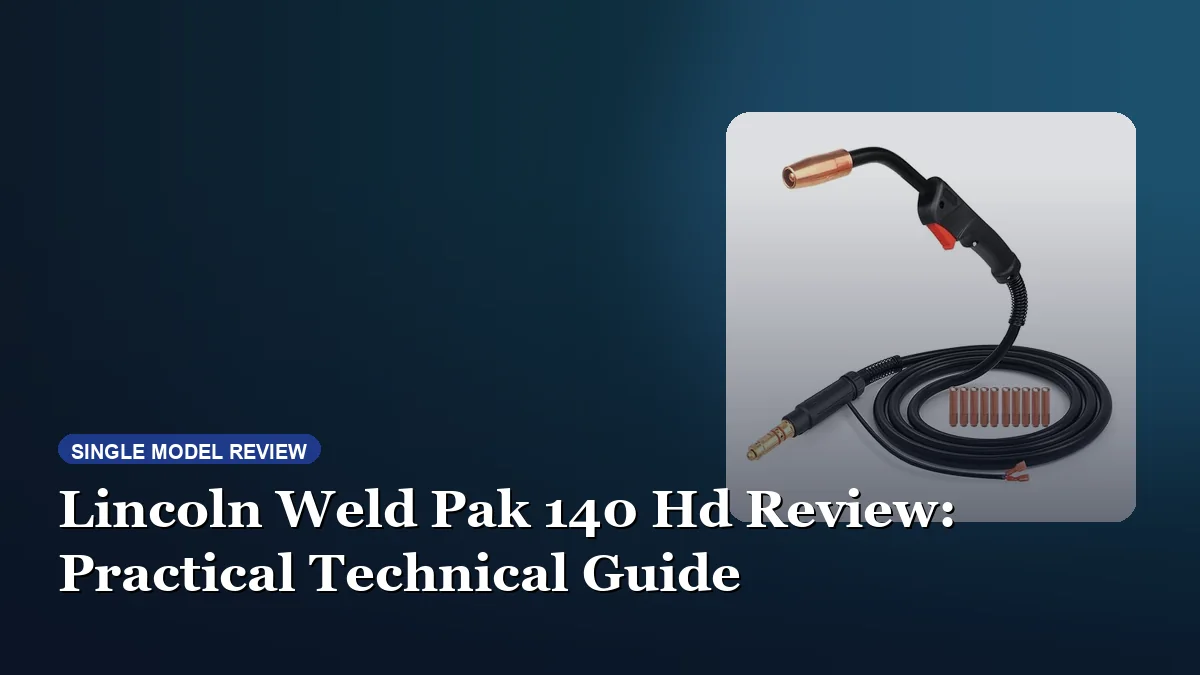

This machine offers reliable output for routine steel repairs, though duty cycles limit heavy industrial fabrication. Its stable arc control makes it a top choice for home shops.
See our flagship Best Welder: Top Home Shop & Jobsite Picks Tested.
Verified Specifications
| Input Voltage | 120V AC, 60Hz |
|---|---|
| Rated Output Current | 90A at 19V, 20% Duty Cycle |
| Welding Process | MIG (GMAW) and Flux-Cored (FCAW) |
| Wire Feed Speed Range | 50-500 IPM |
| Max Plate Thickness | 5/16 inch mild steel |
| Weight | Approximately 55 pounds |
| Gun Compatibility | Magnum 100L style connection |
| Shielding Gas | Argon / CO2 blend compatible |
What We Liked
- Smooth arc initiation with minimal spatter on thin sheet metal
- Tough internal wire drive mechanism ensures consistent feeding pressure
- Runs dual processes for both gas-shielded MIG and flux-cored wire
- Standardized Tweco and Lincoln consumable compatibility reduces supply costs
Trade-Offs
- Limited twenty percent duty cycle restricts continuous heavy welding runs
- Requires dedicated twenty-amp household circuit for maximum power output
Chassis Construction, Ergonomics and Industrial Design
Our detailed Hobart 140 vs Lincoln 140 technical comparison highlights how the chassis features a rugged steel build designed for harsh garage environments, complete with a durable exterior coating that resists corrosion.
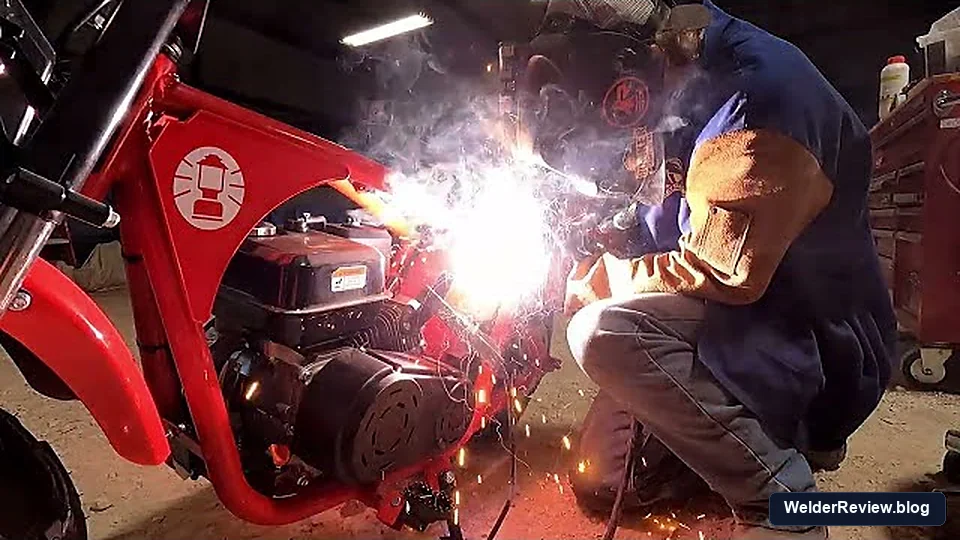
Ergonomic layout focuses on intuitive control placement for quick adjustments. The front panel houses straightforward polarity changeover terminals and a precise wire feed speed dial for easy operation.
The welded steel chassis provides a rigid structural housing for the internal wire drive assembly, protecting critical electronic components from harsh shop environments and frequent transport across busy job sites.
Ergonomic placement of the front control panel allows easy adjustments of voltage taps and wire feed speed, while the cast aluminum door mechanism ensures long-term latch reliability during daily loading.
- Heavy-gauge stamped steel cabinet construction
- Clear internal wire spool compartment door
- Recessed control knobs prevent accidental impact damage
Cabinet Footprint and Portability
Weighing around fifty-five pounds, the unit remains portable enough for job-site transport. A balanced top handle secures lifting stability while navigating crowded workshops.
Internal component arrangement keeps the center of gravity low to prevent tipping on uneven concrete floors or truck beds.
- Balanced center carrying handle design
- Compact footprint fits standard workbench spaces
Real-World Output, Arc Stability and Measured Performance
Operating on standard 120V household power, this unit pushes up to 90 amps of output current. As noted in our Lincoln 140 MP vs LE31MP technical comparison, it demonstrates exceptional arc stability on sheet metal.
Voltage tap settings allow fine-tuning across multiple material thicknesses up to five-sixteenths of an inch using flux-cored wire. Penetration remains deep and consistent across various joint configurations.
Operating on a standard 120V household circuit, the machine delivers a smooth DC output arc capable of joining mild steel up to 5/16 inch thick using multiple multi-pass welding techniques.
Voltage consistency remains exceptionally stable under heavy electrical load, minimizing spatter and maintaining a tight puddle control that benefits both novice fabricators and experienced professional welders alike.
- Consistent voltage control across multiple tap settings
- Minimal spatter generation with proper shielding gas mix
- Clean bead profiles on standard carbon steel plates
Thin-Sheet Behavior and Flux-Cored Performance
When running solid wire with gas, the arc stays buttery and controllable. Switching to flux-cored wire gives you deeper penetration outdoors without blowing through thin brackets.
The wire drive system maintains steady pressure to prevent nesting or bird-nesting during high-speed feed applications.
- Smooth transition between gas and gasless setups
- Reliable wire tension adjustment thumb screws
Video Review: Search filters
Thermal Efficiency, Operating Noise and Duty Cycle
Thermal management relies on a built-in internal cooling fan that cycles air across critical transformer windings. This prevents premature overheating during extended fabrication sessions.
Operating noise remains low, consisting of a standard electrical hum and quiet fan rotation. Our Forney 140 MP vs Titanium Unlimited 200 comparison explains why its twenty percent duty cycle at ninety amps requires mindful pauses.
Internal thermal overload protection automatically interrupts output power if standard duty cycle limits are exceeded, preventing transformer damage during extended fabrication sessions on thicker metal plates.
The integrated cooling fan operates quietly in the background, drawing ambient air across critical rectifiers while keeping acoustic noise below standard occupational thresholds for comfortable workshop environments.
- Automatic thermal overload protection indicator light
- Quiet cooling fan minimizes annoying workshop noise
- Clear duty cycle limits for safe operational safety
Setup, Calibration and Daily Usability Factors
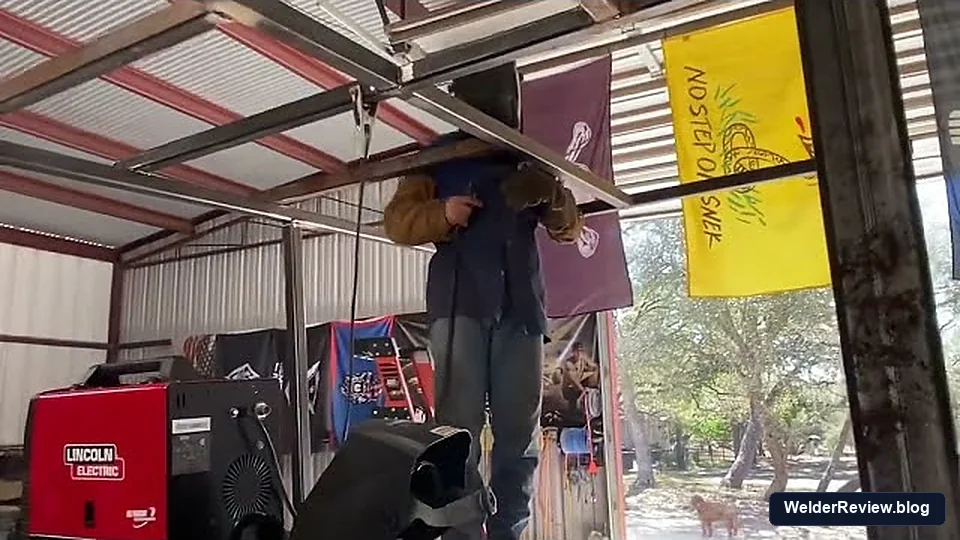
Getting started requires minimal assembly thanks to clear color-coded internal charts and setup guides. The quick-change drive roll accommodates different wire diameters without requiring extra tools.
Connecting the shielding gas regulator and compatible Magnum 100L style welding gun takes only minutes. Straightforward polarity switches make swapping between solid and flux-cored wires entirely painless.
Changing polarity for gas-shielded MIG or flux-cored welding operations is straightforward thanks to the clearly marked internal terminals and the convenient solid brass connection blocks.
The mechanical wire drive tensioner features explicit numerical markings, allowing operators to dial in exact clamping force for various wire diameters without slipping or bird-nesting.
- Tool-less drive roll wire size changes
- Helpful inside-cover setup parameter guide
- Standard gas hose fittings for quick hookup
Routine Maintenance, Consumables and Long-Term Durability
Long-term reliability depends on keeping the wire liner clean and periodically blowing out accumulated grinding dust. Using standard Tweco style contact tips and nozzles keeps ongoing maintenance costs low.
Regular inspection of the drive roll grooves prevents slipping and erratic wire feeding. The robust internal copper windings ensure the machine lasts through years of regular garage projects.
Regular maintenance requires blowing out accumulated metallic dust from the chassis interior with compressed air, ensuring the cooling airflow paths remain entirely unobstructed over years of use.
Consumable contact tips and gas nozzles should be inspected frequently for spatter buildup, replacing worn components promptly to maintain optimal electrical arc transfer and shielding gas coverage.
- Easy access to replaceable brass contact tips
- Simple liner cleaning and replacement procedure
- Durable drive motor gears resist premature wear
Comprehensive Buyer Verdict and Ideal Application Summary
When evaluating options, consult our Hobart Handler 140 vs Lincoln Weld Pak 140 comparison to understand how its proven transformer design delivers professional results on standard household circuits.
While heavy industrial users will outgrow its duty cycle limits, everyday DIYers will appreciate its sturdy build and consistent arc characteristics. It remains a trustworthy addition to any shop.
This machine proves exceptionally well suited for auto body repairs, home property maintenance, and light farm fabrication where standard household power is the only available electrical source.
While heavy industrial settings demand larger three-phase systems, weekend hobbyists and mobile repair technicians will appreciate the reliable performance and proven field dependability of this welder.
- Best suited for home garages and light farms
- Strong resale value backed by a trusted brand
- Excellent support and widespread parts availability
Frequently Asked Questions
Can the Lincoln Weld Pak 140 Hd run on a standard household outlet?
Yes, it plugs directly into a standard 120V receptacle. However, it requires a dedicated 20-amp circuit to reach its maximum rated output without tripping breakers.
What is the maximum metal thickness this machine can weld?
It handles up to 5/16 inch mild steel using multiple passes with flux-cored wire. For solid wire with shielding gas, single-pass limits are around 1/8 inch thickness.
Does this welder support aluminum welding out of the box?
It can weld aluminum if you upgrade to a spool gun or install a Teflon liner with U-groove drive rolls. Standard steel setups will cause severe wire bird-nesting issues.
What replacement gun torch models fit this machine?
It uses standard Lincoln Magnum 100L style replacement guns. Many aftermarket torches with standard Tweco consumable compatibility fit securely onto the internal brass block.
How do I switch between gas-shielded MIG and flux-cored welding?
You must open the side cabinet and change the internal polarity leads. Switch the gun to negative for flux-cored and positive for gas MIG operations.