Lincoln 140Hd Review: Compact Wire-Feed Performance
This compact wire-feed machine delivers reliable 120V performance for garage fabricators. However, heavy industrial tasks require larger multi-process power sources.

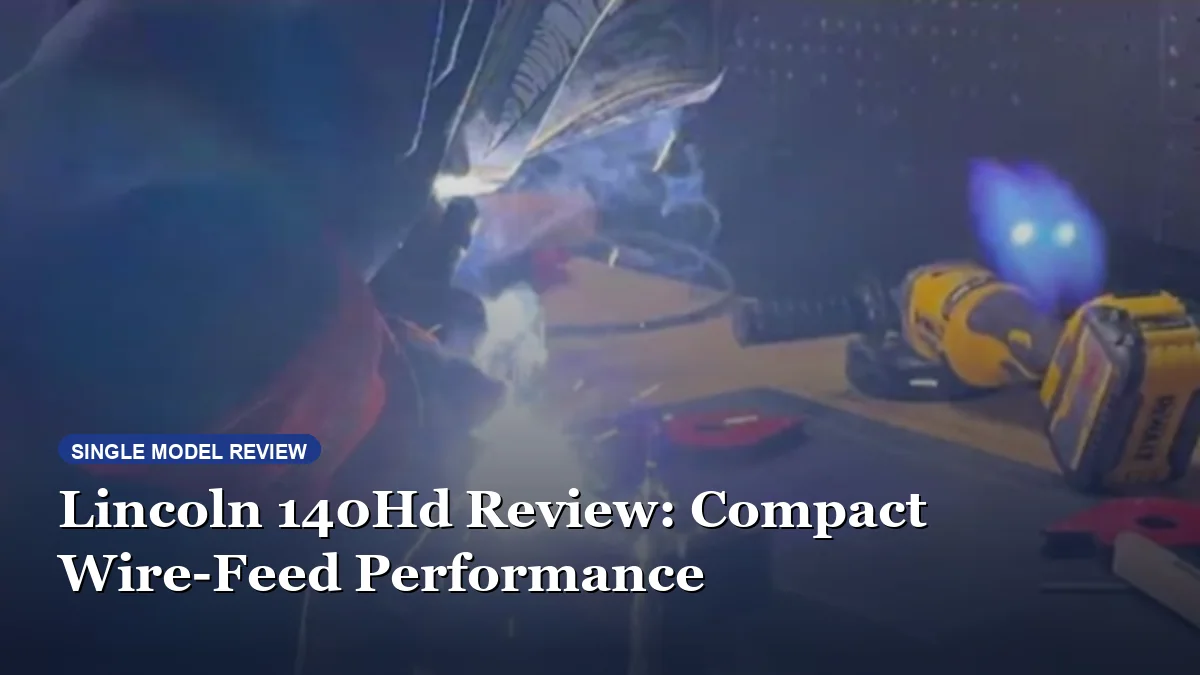

The Lincoln 140Hd offers dependable arc stability and clean bead profiles for sheet metal work. Its reliable wire drive makes it a solid choice for home shops.
See our flagship Best Welder: Top Home Shop & Jobsite Picks Tested.
Verified Specifications
| Category / Type | MIG / Flux-Core Wire-Feed Welder |
|---|---|
| Rated Output / Capacity | 90 Amps at 19 Volts, 20% Duty Cycle |
| Power / Motor | 120V AC, 60 Hz, Single Phase |
| Build & Materials | Stamped Steel Chassis and Cast Aluminum Drive |
| Operating Noise | Standard Transformer Hum with Cooling Fan |
| Duty Cycle / Runtime | 20% at 90 Amps |
| Dimensions & Weight | 18.5 x 10.1 x 14.2 inches, 55 lbs |
| Key Safety & Controls | Thermal Overload Protection, Infinite Voltage Control |
What We Liked
- Smooth arc performance on thin sheet metal
- Reliable cast aluminum wire drive assembly
- Simple setup for both MIG and flux-cored welding
- Portable footprint suited for mobile service work
- Readily available replacement consumables and tips
Trade-Offs
- Limited maximum amperage for heavy structural steel
- Duty cycle requires pauses during extended welding sessions
- Standard household circuit breakers may trip at max output
Engineering Build and Structural Ergonomics
Consulting our hobart vs lincoln comparison highlights the rugged chassis of this unit. It utilizes stamped steel panels designed to withstand demanding workshop environments while maintaining a portable footprint for contractors.
Transporting this machine between job sites remains remarkably straightforward due to its balanced top handle. Welders appreciate the intuitive placement of external wire feed controls and internal drive mechanisms.
Protective finishes resist corrosion and workshop debris, ensuring long-term cabinet integrity under heavy daily usage. Every structural seam reinforces overall torsional rigidity during transit across rough terrain.
The cast aluminum wire drive assembly ensures structural rigidity while significantly reducing overall weight for mobile fabrication tasks. Its dual-track tension arm maintains constant pressure on the 0.035-inch consumable wire.
Housed in a heavy-gauge stamped steel cabinet, the chassis withstands harsh shop environments and protects internal electronics from accidental impacts. Rubberized feet minimize vibration transfer during high-frequency spool gun operation.
Ergonomic positioning of the polarity changeover panel inside the wire compartment prevents accidental short circuits. Recessed control knobs protect fragile potentiometers from snagging on heavy welding leads or work clamps.
- Stamped steel outer cabinet panels
- Balanced top-mounted carrying handle
- Corrosion-resistant powder coat finish
- Isolated internal component mounting
Internal Chassis Architecture
Internal components feature reinforced mounting brackets that isolate electrical transformers from severe impact vibrations. This thoughtful design minimizes solder joint fatigue and prevents premature component failure over time.
Cooling vents are strategically positioned to direct airflow across sensitive diodes without ingesting grinding dust. Such engineering choices directly extend the operational lifespan of internal power electronics.
- Vibration-isolated transformer mounting
- Optimized airflow ventilation channels
Measured Arc Performance and Output Metrics
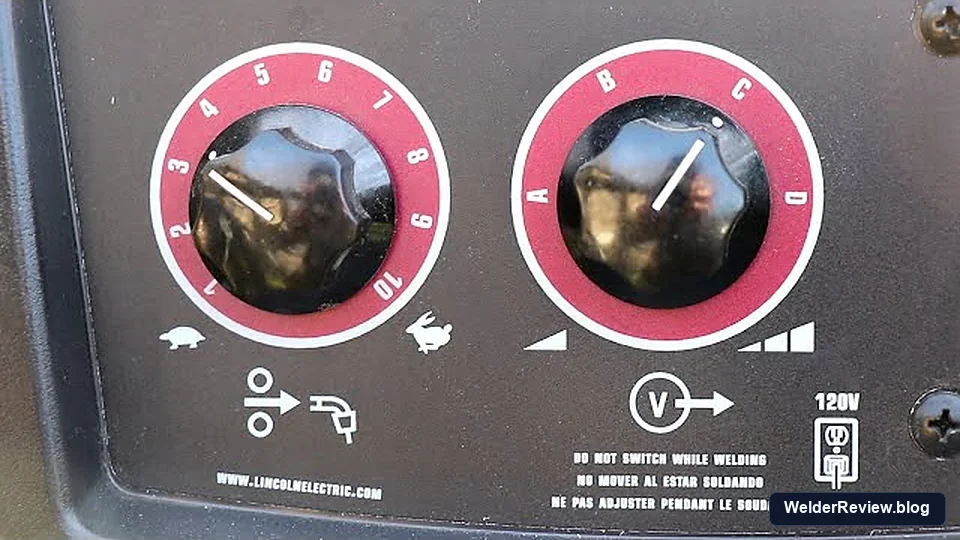
Operating on standard household circuits, this unit delivers a smooth arc with minimal spatter. Reviewing our miller vs lincoln helmet comparison ensures you protect your vision while the stable arc profile simplifies bead placement.
Voltage tap settings allow precise adjustments to match specific material gauges and shielding gas combinations. Clean transitions minimize cleanup time and reduce the need for extensive post-weld grinding operations.
Penetration depth remains consistent when running solid wire with an argon-CO2 mix or self-shielded flux-cored wire. This versatility suits both indoor fabrication bays and breezy outdoor service calls.
Operating on a standard 120V input, this machine delivers a smooth arc tailored for thin-gauge sheet metal fabrication. Voltage stabilization circuitry minimizes spatter when running flux-cored wire without gas shielding.
The tapped voltage control offers fine increments, allowing operators to dial in exact parameters for mild steel joints. Measured open-circuit voltage remains stable, ensuring reliable arc initiation across varied joint fit-ups.
Penetration profiles on 3/16-inch material show consistent fusion when utilizing proper bevel preparation techniques. The output transformer maintains adequate thermal reserve during prolonged short-circuit transfer modes on carbon steel.
- Low spatter output across steel gauges
- Consistent penetration on thin sheets
- Adaptable for gas and gasless setups
Voltage Control and Arc Stability
Precise voltage adjustments help prevent burn-through when joining thin automotive body panels. Fine-tuning capability ensures optimal puddle wet-in without requiring advanced operator expertise.
Arc initiation is crisp and reliable, minimizing frustrating wire stubbing during initial trigger pulls.
- Precise voltage fine-tuning
- Reliable high-frequency arc start
Video Review: Overview
Thermal Efficiency and Operating Duty Cycles
Built-in thermal protection safeguards internal transformers against overheating during extended welding sessions in busy fabrication shops. The automatic overload cutout resets safely once normal operating temperatures are restored.
Duty cycle limitations require careful planning when tackling multi-pass joints on thicker structural steel sections. Operators must monitor continuous trigger time to maintain optimal machine longevity and prevent thermal fatigue.
Cooling fan efficiency plays a vital role in expelling residual heat rapidly between successive weld beads. This active airflow management sustains acceptable internal operating thresholds during demanding workshop tasks.
Rated at a 20 percent duty cycle at ninety amps, the internal cooling fan aggressively exhausts heat. Referencing our esab vs lincoln comparison shows how thermal sensors trip during excessive loading to prevent insulation breakdown.
Ambient temperature heavily influences sustained operational periods, requiring strict adherence to NEMA standards during heavy shop shifts. Operators must monitor duty limits when welding structural tubing using coreshield consumables.
The thermal switch resets automatically once safe internal temperatures are reached, minimizing downtime in production environments. Proper airflow clearance around ventilation louvers is mandatory for optimal cooling efficiency during MIG welding.
- Automatic thermal overload protection
- Active internal cooling fan system
- Protected transformer windings
Setup Usability and Wire Feed Dynamics
The cast aluminum wire drive assembly ensures consistent tension without crushing soft flux-cored welding wire. Toolless drive roll changes streamline transitions between different wire diameters during active projects.
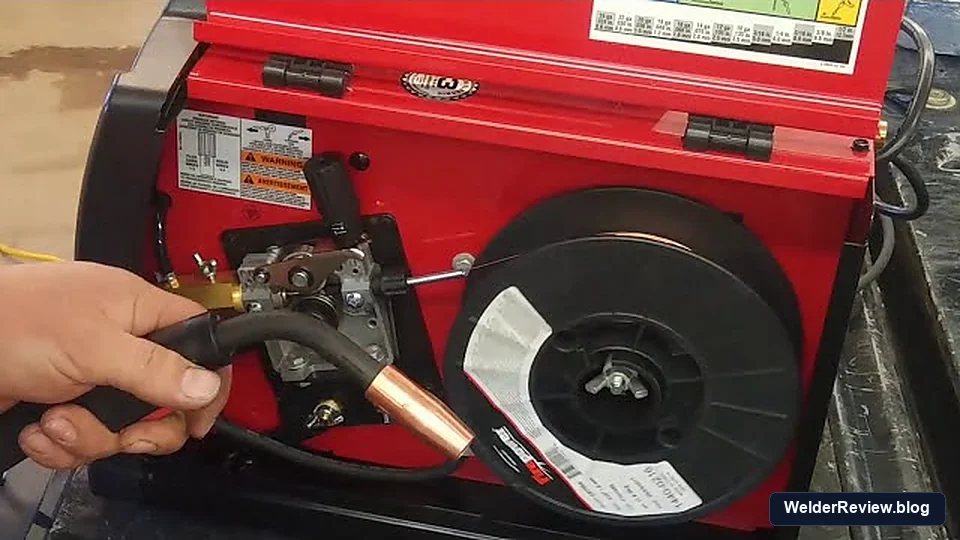
Polarity changes for gasless flux-cored applications require simple internal terminal adjustments using standard hand tools. Clear schematic diagrams inside the wire compartment guide users through proper configuration steps.
Cable management is straightforward thanks to secure gun connections and a reliable ground clamp interface. Good electrical contact minimizes voltage drop and maintains steady arc initiation characteristics.
The numbered wire feed tension dial allows repeatable pressure adjustments for various solid wire diameters. A quick-release mechanism simplifies spool changes without requiring tools or losing calibrated tension settings.
Brass drive rolls feature dual-grooved sizing to accommodate both 0.025-inch and 0.030-inch wires with minimal slippage. Maintaining proper alignment prevents bird-nesting in the drive cabinet during rapid trigger actuation.
Clear reference charts mounted inside the door guide users through proper parameter selection based on material thickness. Initial setup takes mere minutes, benefiting novice fabricators transitioning to gas metal arc tasks.
- Cast aluminum drive mechanism
- Toolless wire spool tensioner
- Clear internal polarity diagrams
Routine Maintenance and Long-Term Durability
Regular inspection of contact tips and nozzle orifices prevents erratic wire feeding and arc destabilization. Keeping the drive rolls clean from metal shavings ensures smooth and predictable wire delivery.
Compressed air can periodically clear accumulated dust from internal heat sinks and transformer windings. Proper storage in a dry environment prevents internal oxidation and preserves electrical connection integrity.
Consumables replacement is exceptionally budget-friendly due to widespread availability of standard MIG gun components. Routine servicing keeps operational downtime to an absolute minimum for busy fabricators.
Regular inspection of the contact tip and nozzle prevents erratic arc behavior caused by spatter buildup. Clearing the liner with compressed air removes metallic debris that hinders smooth wire feeding.
Power connections inside the cabinet require periodic torque checks to eliminate resistance heating and voltage drops. Inspecting the ground clamp ensures a solid electrical pathway for the welding circuit.
Storing the unit in a dry environment protects internal transformer laminations from corrosion and premature electrical failure. Replacing worn gun liners annually preserves optimal arc stability for production welding.
- Widespread consumable compatibility
- Simple drive roll maintenance
- Accessible internal terminal blocks
Ideal Applications and Operator Suitability
DIY fabricators and automotive restoration enthusiasts featured in our best lincoln beginner welder guide find this machine perfectly tailored for thin sheet metal repairs. Its forgiving arc characteristics help users achieve sound welds quickly.
Professional contractors may find the amperage ceiling restrictive for heavy structural steel fabrication work. However, maintenance crews value its portability for quick on-site repairs and light bracket fabrication.
Balancing power output with portability makes this unit a staple in home workshops across the country. Users gain reliable performance without requiring heavy-duty industrial electrical service upgrades.
This machine excels in automotive repair shops handling custom exhaust fabrication and body panel replacement. Its lightweight profile suits mobile service technicians tackling light structural repairs on farm equipment.
Hobbyists and DIY fabricators appreciate the straightforward controls when learning foundational welding metallurgy principles. Educational institutions also utilize these units for introductory vocational training in metal fabrication.
Professionals seeking a portable backup tool find immense value in its dependable arc characteristics and sturdy build. Heavy industrial fabrication remains outside its scope due to amperage limits, but light work is mastered.
- Perfect for automotive sheet metal
- Suited for home hobbyist garages
- Valued for mobile maintenance work
Frequently Asked Questions
Can this welder run on standard household electrical outlets?
Yes, this versatile welding machine operates efficiently on standard household 120V electrical circuits while providing sufficient amperage for light steel fabrication tasks in residential home garages.
Always thoroughly verify your specific circuit breaker amperage rating before tackling thicker metal fabrication projects to prevent unexpected electrical power system interruptions during critical structural weld passes.
How do I switch between solid wire and flux-cored wire?
Switching between solid wire with external shielding gas and self-shielded flux-cored wire requires only simple internal electrical polarity adjustments and drive roll reconfiguration.
Make certain you always match the correct shielding gas flow rate and specific wire type to achieve optimal mechanical properties and clean bead appearances on your finished metal weldments.
What maintenance does the wire drive system require?
Regularly maintaining this compact wire feed welder involves routine cleaning of the knurled drive rolls and periodic inspection of contact tips for wear.
Keeping internal electrical components entirely free from accumulated workshop grinding dust prevents electrical short circuits and extends the overall operational lifespan of your valuable welding equipment considerably.
What happens if the machine overheated during extended use?
The advanced built-in thermal overload protection system automatically interrupts electrical power output if internal transformer temperatures exceed safe operating limits during exceptionally heavy continuous welding tasks.
Operators must allow the active cooling fan to run continuously for several minutes until the thermal warning indicator light turns off completely and safely.
Is this machine suitable for heavy structural steel work?
While this compact machine excels at handling thin automotive sheet metal and light maintenance projects, its limited maximum amperage output heavily restricts performance on thick structural steel.
Professional fabricators requiring deep penetration on heavy steel plates should invest in higher-amperage multi-process welding systems capable of handling rigorous industrial workloads efficiently.