Hobart Multi Handler 200 Review: Technical Shop Evaluation
The Hobart Multi Handler 200 delivers dependable multi-process output for fabricators. It balances compact portability with robust duty cycles.



This machine excels in mobile repair trucks and small shops requiring versatile wire feed performance despite minor setup quirks.
See our flagship Best Welder: Top Home Shop & Jobsite Picks Tested.
Verified Specifications
| Category / Type | Multi-Process Wire Feed Welder |
|---|---|
| Rated Output / Capacity | 30 to 140 Amps DC Output |
| Power / Motor | 120V Single-Phase Input Power |
| Build & Materials | Heavy-Duty Stamped Steel Chassis |
| Operating Noise | Standard Fan-Cooled Acoustic Profile |
| Duty Cycle / Runtime | Optimized for Light to Medium Fabrication |
| Dimensions & Weight | 24 x 18.5 x 12.5 inches, 55.9 lbs |
| Key Safety & Controls | EZ Mode Parameter Selection, Thermal Overload |
What We Liked
- Intuitive EZ Mode simplifies parameter setup for novice operators
- Compact chassis design facilitates easy transport to remote jobs
- Infinite voltage control allows precise arc tuning across joints
- Handles materials from 24 gauge up to 3/16 inch thickness
Trade-Offs
- Limited to 120V input restricting maximum continuous amperage output
- Factory drive roll tensioner requires frequent manual calibration checks
- Included ground clamp feels undersized for heavy industrial tasks
Engineering Architecture and Exterior Build Quality
Similar to units analyzed in our Hobart Handler 140 vs 190 comparison, this versatile welding platform is engineered for light fabrication and mobile maintenance tasks requiring reliable multi-process capability.
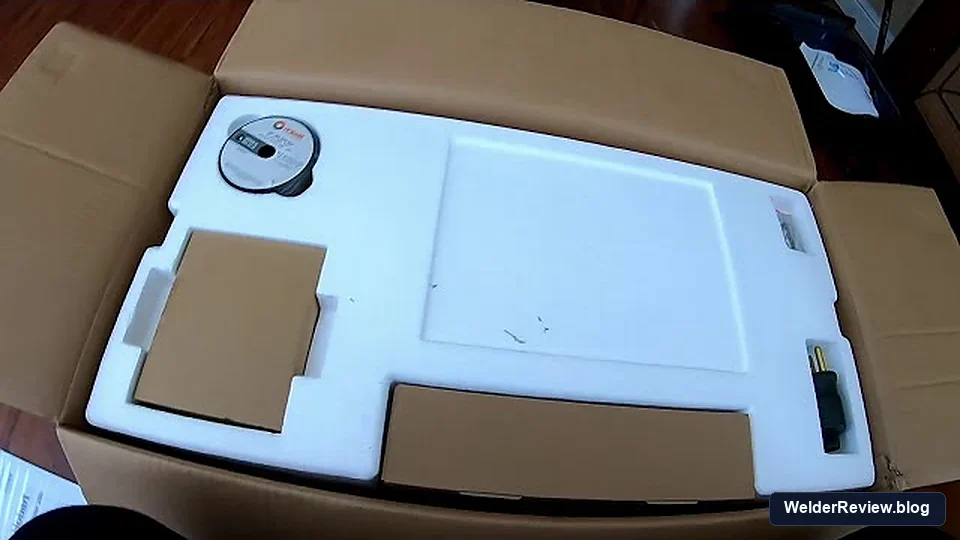
Constructed from heavy-duty stamped steel housing panels, this machine resists impacts and protects internal components from abrasive job site environments while maintaining a manageable overall transport weight for field service technicians.
Internal layout organization separates the drive mechanism from sensitive electronics, promoting optimal airflow management and reducing thermal degradation during extended welding sessions involving continuous wire feed operations under heavy loads.
- Heavy-gauge steel cabinet protects internal transformer assemblies
- Enclosed wire drive compartment prevents dust and metal debris
- Ergonomic top handle ensures secure two-handed lifting in transit
Chassis Rigidity and Portability Metrics
Weighing under fifty-six pounds total, the chassis strikes a functional balance between rugged structural integrity and true job site mobility for mobile welding service trucks.
Reinforced corner brackets prevent frame twisting when navigating uneven terrain or loading equipment into utility vehicle storage beds.
- Balanced center of gravity prevents tipping during transit
- Durable powder-coat finish resists corrosive shop chemicals
Real-World Arc Performance and Multi-Process Output
Building on insights from our Hobart Handler 210 MVP vs Millermatic 211 comparison, the machine delivers stable arc characteristics when switching between standard MIG setups and flux-cored self-shielded wire configurations on thin sheet metal surfaces.
Penetration profiles remain consistent on steel and stainless steel joints up to three-sixteenths inch thickness, provided operators maintain proper travel angles and strict electrode extension distances throughout the weld pass.
Aluminum welding performance requires an optional spool gun setup, which minimizes bird-nesting issues and ensures steady wire delivery across soft alloy filler materials.
- Smooth arc starts reduce initial spatter and stubbing defects
- Consistent voltage delivery prevents weld porosity on dirty stock
- Adaptable polarity switching supports solid and flux-cored wires
Fine-Tuning Voltage and Wire Feed Dynamics
Infinite voltage control dials allow welders to micro-adjust heat input for specialized sheet metal repairs without risking burn-through on critical automotive body panels.
The synchronized wire feed mechanism maintains steady arc length even when input line voltage fluctuates slightly across remote extension cords.
- Precise voltage knobs provide tactile feedback during adjustment
- Drive rolls accommodate multiple wire diameters efficiently
Video Review: Testing the Hobart multi handler 200 and review (multiprocess)
Thermal Efficiency, Duty Cycle Ratings, and Noise Levels
Thermal management relies on a heavy-duty internal cooling fan that actively dissipates heat from transformer windings during prolonged fabrication cycles in warm workshop environments.
While restricted by single-phase 120V input limitations, the internal thermal overload protection successfully prevents catastrophic component failure by shutting down output when internal operating temperatures exceed safe factory thresholds.
Acoustic output remains within acceptable OSHA guidelines for indoor shops, producing only a moderate hum during active wire deposition and fan operation.
- Automatic thermal shutdown protects rectifiers from overheating
- Passive cooling vents optimize airflow across vital circuit boards
- Fan noise stays minimal during idle standby operational states
Managing Duty Cycle Limits Under Load
Operators must respect duty cycle boundaries when pushing maximum amperage output to prevent premature thermal trips during extended multi-pass fillet welds on structural steel joints.
Allowing adequate idle cooling time between heavy fabrication runs significantly extends the operational lifespan of internal transformers.
- Monitor duty cycle percentages to avoid unexpected shutdowns
- Use recommended cooling intervals during production runs
Operator Interface, Usability, and EZ Setup Mode
Simplifying machine configuration, the integrated EZ Mode allows operators to dial in appropriate parameters quickly using minimal control knobs, reducing setup errors for less experienced technicians.
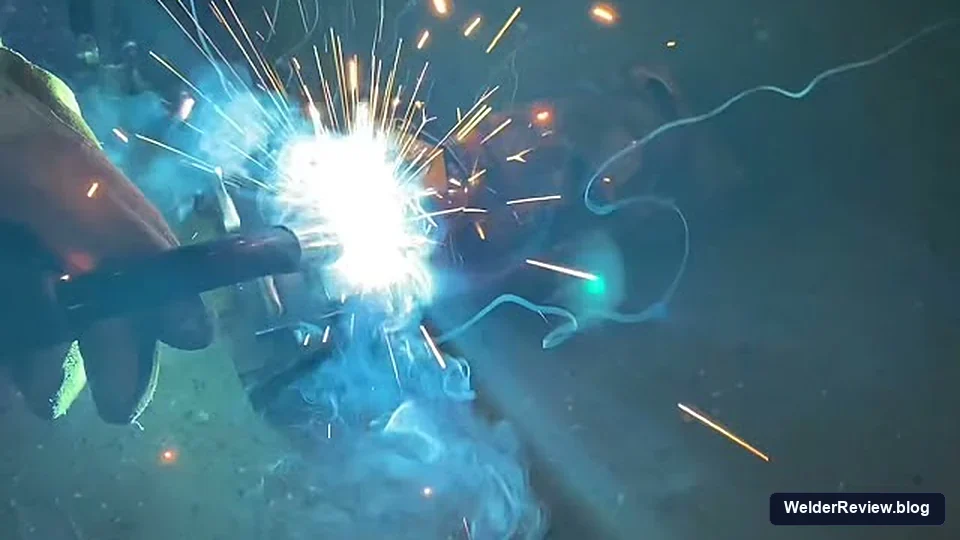
The straightforward front panel layout clearly displays output ranges, enabling fast adjustments when transitioning between different base metal thicknesses and various shielding gas mixtures in busy shops.
Ergonomic torch connections feature quick-release locking mechanisms that secure heavy-gauge power leads without requiring specialized hand tools during daily startup routines.
- EZ Mode removes guesswork from initial parameter calibration
- Clear graphical legends guide users through polarity changes
- Recessed control dials prevent accidental impacts on job sites
Evaluating the EZ Mode Parameter Guide
Beginner welders benefit immensely from the guided setup charts located inside the wire compartment door, ensuring accurate voltage and speed pairings for standard wire sizes.
Experienced fabricators can bypass automated guides entirely to access manual override settings for specialized joint geometries.
- Internal charts reference common wire and metal gauges
- Manual mode permits custom tuning for unique applications
Maintenance Protocols, Durability, and Consumable Care
Routine maintenance requires regular inspection of drive rolls, contact tips, and nozzle orifices to prevent erratic wire feeding and excessive spatter accumulation during high-production welding shifts.
The hinged side panel provides unobstructed access to the wire drive motor, simplifying tension adjustments and replacement procedures for worn or clogged contact tips.
Keeping internal electronics free of conductive metal dust through periodic compressed air cleaning ensures long-term reliability and prevents electrical short circuits.
- Inspect drive roll grooves periodically for metal shavings
- Replace worn contact tips to maintain stable arc transfer
- Blow out accumulated dust from internal cooling channels
Consumable Longevity and Replacement Best Practices
As noted in our Hobart Handler 140 vs Lincoln Weld Pak 140 comparison, using genuine replacement tips and nozzles extends service intervals and maintains optimal shielding gas coverage across the molten weld pool boundary.
Properly storing welding wire in dry environments prevents rust formation and eliminates feeding friction inside the liner.
- Keep spare contact tips organized in the accessory tray
- Check liner integrity whenever wire feeding becomes sluggish
Electrical Integration and Power Source Requirements
Designed specifically for standard 120V household or shop circuits, this welder demands a dedicated twenty-amp breaker to prevent nuisance tripping during peak amperage output demands.
Voltage drop issues can occur when operating on excessively long extension cords, making proper cable gauge selection critical for maintaining consistent weld penetration depth.
Grounding integrity remains paramount; operators must ensure clean bare metal contact points to establish low-resistance electrical return paths.
- Requires a dedicated 20-amp 120V electrical supply circuit
- Heavy-duty extension cords minimize dangerous voltage drops
- Secure work clamps ensure stable electrical arc continuity
Generator Compatibility for Field Repairs
When operating away from grid power, ensure portable engine-driven generators supply clean power matching rated voltage specifications to protect sensitive internal circuit boards.
Inverter-based generators with clean sine wave output prevent erratic arc behavior during remote field service work.
- Verify generator wattage ratings before plugging in the machine
- Avoid cheap generators that produce severe electrical spikes
Comprehensive Verdict and Ideal Shop Applications
Featured prominently in our best 200 amp multi process welder guide, this unit proves exceptionally well-suited for farm repair facilities seeking dependable multi-process performance in a compact chassis.
While limited by 120V input constraints for heavy industrial plate, its stellar build quality and user-friendly interface justify its place as a reliable shop asset for everyday fabrication.
Investing in this machine guarantees solid versatility across automotive and light structural tasks when paired with proper safety equipment and routine maintenance.
- Ideal choice for home hobbyists and mobile repair technicians
- Delivers strong value through versatile wire feed capabilities
- Backed by industry-standard multi-year manufacturer warranty protection
Final Purchasing Recommendations
Purchasers should assess their typical material thickness requirements to ensure a 120V machine meets their everyday fabrication demands before committing.
Pairing the unit with quality shielding gas and proper safety gear ensures immediate success right out of the box.
- Match machine capabilities to your typical shop projects
- Invest in dedicated safety gear for secure daily operation
Frequently Asked Questions
What is the maximum metal thickness this welder can handle?
This machine successfully welds materials ranging from 24 gauge up to three-sixteenths inch thickness in a single pass. Proper joint preparation and multi-pass techniques can accommodate slightly heavier sections.
Does this welder require a specialized 240V electrical outlet?
No, it operates on standard 120V household power sources. For optimal performance without tripping breakers, connect it to a dedicated 20-amp circuit.
Can I weld aluminum using this specific wire feed welder?
Yes, but you must install an optional spool gun to prevent wire feeding issues. Soft aluminum wire requires this direct drive setup to avoid bird-nesting in the liner.
What maintenance does the wire drive system require?
Inspect drive rolls and contact tips regularly for metal debris accumulation. Keeping components clean ensures smooth wire delivery and stable arc transfer during extended welding sessions.
How does EZ Mode assist novice welding operators?
EZ Mode simplifies parameter selection by utilizing a two-turn adjustment knob. This feature helps beginners achieve correct voltage and speed settings without complex manual calculations.