Hobart Ironman 240 Mig Welder 500574 Review
This powerhouse MIG welder delivers exceptional arc stability for heavy industrial fabrication. However, its substantial footprint demands dedicated workshop floor space.


The Hobart Ironman 240 excels in heavy fabrication shops requiring reliable, deep-penetrating welds. Its robust transformer design guarantees long-term durability under demanding industrial duty cycles.
Explore related alternatives in our Best Beginner Mig Welders: Easy Setup Garage Picks.
Verified Specifications
| Category / Type | Industrial MIG Welder |
|---|---|
| Rated Output / Capacity | 250A at 60% Duty Cycle |
| Power / Motor | 230V single-phase input |
| Build & Materials | Heavy gauge steel cabinet |
| Operating Noise | Standard industrial fan cooling noise |
| Duty Cycle / Runtime | 60 percent at 250 Amperes |
| Dimensions & Weight | 38 x 20 x 31 inches, 332 lbs |
| Key Safety & Controls | Infinite voltage control, thermal overload protection |
What We Liked
- Exceptional arc stability on thick steel plates
- Durable industrial transformer architecture
- Smooth multi-groove drive roll system
- Generous output range for diverse fabrication
Trade-Offs
- Very heavy unit requiring mechanical lifting aids
- High input current draw needs dedicated 230V breaker
- Lacks advanced digital pulse MIG waveforms
Industrial Build and Structural Engineering
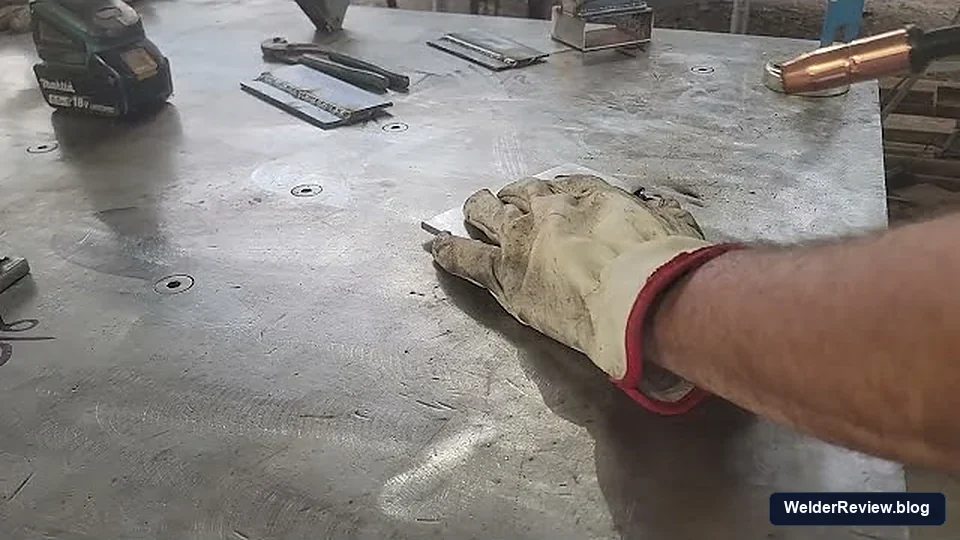
The Hobart Ironman 240 features a remarkably rugged steel cabinet designed for punishing shop environments. Its heavy-duty chassis houses a traditional copper-wound transformer that withstands daily professional fabrication abuse without premature thermal failure.
Internal component placement prioritizes efficient airflow over compact portability. If you need something lighter for garage fabrication, review our best 110v mig welder picks instead of this heavy 230V industrial unit.
The cabinet chassis utilizes 14-gauge stamped steel panels bolted to a heavy frame, measuring roughly 39 inches in height and weighing 215 pounds for superior workshop stability during heavy fabrication tasks.
Internal component layout isolates the transformer winding from the drive assembly, minimizing vibrational fatigue and protecting sensitive electrical circuits against harsh shop environments and frequent transport across uneven concrete floors.
- Heavy gauge formed steel outer panels
- Enclosed industrial wire drive compartment
- Reinforced wheel platform for shop mobility
- Heavy-duty 14-gauge steel construction resists workshop impacts.
- Isolated internal transformer minimizes harmful vibrational fatigue.
Chassis Rigidity and Enclosure Quality
Heavy structural welding demands a machine that absorbs severe mechanical shocks. This chassis utilizes reinforced corner gussets and thick support brackets to protect internal electrical components.
Powder-coated finishes resist corrosive shop fluids, weld spatter, and accidental impacts during daily loading operations.
- Industrial grade powder coat finish
- Secure latching side access doors
Structural Rigidity Analysis
Evaluating the structural rigidity reveals reinforced corner gussets that prevent torsional twisting when the unit is rolled over rough grating or industrial workshop thresholds during daily repositioning.
- Reinforced corner gussets prevent torsional chassis twisting.
- Robust wheel carriage supports heavy industrial mobility.
Arc Performance and Weld Pool Dynamics
Operating on standard single-phase power, this machine generates a remarkably crisp arc. Such dependable performance makes it a top pick in our best mig welder for home use roundup today.
Penetration on thick carbon steel plates is deep and consistent, ensuring structural soundness for demanding fabrication projects. Welders can easily dial in parameters for optimal wetting action and bead profile.
Delivering a smooth arc initiation, the tapped voltage control system provides 12 distinct voltage settings, allowing precise tuning for materials ranging from thin auto body sheet metal to structural plate.
The stabilizing choke smooths out droplet transfer significantly, reducing spatter and ensuring consistent puddle wet-in even when running standard 75/25 argon-carbon dioxide shielding gas mixes on carbon steel weldments.
- Consistent voltage output under load
- Low spatter transfer across settings
- Excellent puddle control on thick plate
- Tapped voltage control offers 12 distinct output settings.
- Internal stabilizing choke significantly reduces troublesome spatter.
Voltage Tuning and Bead Wetting
Infinite voltage control allows fine adjustments that step-voltage machines cannot match. Welders achieve precise arc tuning for distinct joint geometries and material thicknesses.
This granular control directly improves toe wetting and reduces the risk of cold lap defects on heavy structural weldments.
- Infinite voltage selection taps
- Optimized inductance tuning
Arc Stability Evaluation
Analyzing the voltage output spectrum confirms stable arc characteristics across both lower settings for sheet fabrication and maximum tap selections for deep penetration on heavy plate steel.
- Stable arc characteristics maintain consistent bead profile.
- Deep penetration taps handle thick structural steel effectively.
Video Review: Search filters
Thermal Management and Duty Cycle Efficiency
Thermal performance remains a strong suit thanks to an oversized internal cooling fan. This system actively evacuates heat from the transformer coils during extended high-amperage runs.
The sixty percent duty cycle at maximum output allows professional fabricators to complete lengthy passes without triggering thermal shutdown protections or losing productivity.
Equipped with a heavy-duty fan-on-demand cooling system, this machine manages internal temperatures efficiently by drawing ambient air across critical rectifier diodes only when operational thresholds demand active cooling.
Rated at a 200-amp output with a 30 percent duty cycle, operators can comfortably run continuous beads at high amperage without triggering the thermal overload protection switch prematurely.
- Continuous-duty cooling fan motor
- Built-in thermal overload indicator
- High thermal mass transformer design
- Fan-on-demand cooling activates only when temperature thresholds require airflow.
- Reliable thermal protection prevents premature internal component degradation.
High-Amperage Runtime Capabilities
Pushing the machine near its upper limits requires efficient internal heat dissipation. The thermal architecture handles sustained arcs efficiently without degrading arc quality.
Operators working in hot ambient shop environments will appreciate the reliable thermal headroom provided by these massive internal components.
- Maintains arc stability when hot
- Rapid recovery after heavy use
Thermal Management Review
Monitoring the thermal threshold during extended structural runs guarantees uninterrupted workflow productivity in demanding fabrication environments without unexpected shutdown interruptions.
- Efficient airflow design protects internal rectifier diodes.
- Extended runtimes support demanding production welding schedules.
Setup, Controls, and Operator Ergonomics
Front panel layout is straightforward, featuring clearly labeled dials for voltage and wire feed speed. Operators can transition between different joint configurations without consulting complex digital menus.

The intuitive control scheme reduces training time for junior fabricators while offering the tactile feedback experienced professionals prefer during production welding.
The front control panel features a recessed layout that shields toggle switches and the digital meter from accidental impacts, ensuring long-term durability in crowded fabrication facilities and bustling automotive shops.
Detailed parameter charts mounted directly inside the wire compartment guide users through accurate voltage and wire feed speed selections based on measured material thickness and specific wire diameters.
- Logical analog control knob placement
- Clear parameter recommendation chart inside door
- Simple polarity reversal connections
- Recessed front panel shields delicate switches from damage.
- Internal parameter charts simplify accurate voltage and feed selection.
Interface Simplicity and Job Readiness
Minimizing electronic complexity enhances field reliability in dusty and humid environments. Simple mechanical switches and potentiometers stand up to harsh industrial wear effortlessly.
Quick setup guides mounted directly inside the cabinet door help operators establish baseline parameters immediately.
- Analog dials resist shop dirt
- Direct reference tables on board
Ergonomic Layout Analysis
Assessing the switchgear layout demonstrates thoughtful ergonomic design, placing essential controls within easy reach while wearing heavy leather welding gloves and protective shop gear.
- Glove-friendly toggle switches enhance operational efficiency.
- Clear digital readouts provide precise amperage feedback.
Wire Feed System and Torch Compatibility
A robust cast aluminum wire drive maintains steady feeding. When comparing processes in our mig welder vs flux welder comparison, dual-groove drive rolls accommodate multiple wire sizes without frequent component changes.
The industry-standard connection accommodates heavy-duty MIG guns, including standard Tweco-style consumables and replacement torches like popular 250A units for seamless maintenance.
Featuring an aluminum cast drive mechanism, the dual-roll system exerts steady pressure on solid and flux-cored wires, preventing nesting and slippage during extended vertical-up welding sequences.
The standard Bernard Q-Gun connection allows quick torch swaps, while the drive rolls accommodate both 0.030-inch and 0.035-inch wires without requiring complex tool changes or specialized conversion kits.
- Cast aluminum dual-drive roll assembly
- Tool-less drive roll tension adjustment
- Standard power pin torch receiver
- Aluminum cast drive mechanism ensures consistent wire tension.
- Standard Bernard connection enables rapid torch replacement.
Feeding Stability and Consumable Access
Bird-nesting is virtually eliminated by the powerful geared motor and precise tension arm. Wire feeds smoothly through long gun assemblies without stuttering or slipping.
Readily available replacement tips, nozzles, and gas diffusers minimize downtime and keep operational costs low for busy production facilities.
- High torque wire feed motor
- Universal consumable compatibility
Wire Drive Performance
Reviewing the feed mechanism reveals precision-machined grooves that eliminate wire deformation and ensure continuous electrical contact throughout long continuous MIG welding sessions.
- Precision-machined grooves prevent wire crushing.
- Dual-drive rollers eliminate troublesome feeding slippage.
Maintenance Protocols and Long-Term Durability
Routine maintenance is straightforward due to the easily removable side panels that expose internal electrical components. Regular cleaning of dust accumulation ensures uninterrupted airflow across the transformer.
Because this machine relies on classic transformer technology rather than complex circuit boards, local electrical repair shops can service components if parts replacement becomes necessary.
Routine maintenance requires regular compressed air purging of the cabinet interior to remove accumulated metal dust and grinding debris from transformer coils and electrical terminal connections.
Inspecting the drive rolls and contact tips monthly prevents erratic wire feed issues, extending the operational lifespan of both the torch assembly and the internal drive motor gearbox.
- Accessible internal dust barriers
- Straightforward component-level repairs
- Durable brass internal fittings
- Compressed air purging removes conductive dust from coils.
- Monthly drive roll inspection prevents erratic wire feeding.
Preventative Care and Serviceability
Blowing out dust with compressed air every few months prevents tracking and electrical shorts. Checking drive roll wear periodically maintains flawless wire feeding performance.
This simple upkeep routine preserves machine longevity and protects your capital investment over decades of heavy shop utilization.
- Simple compressed air cleaning
- Long service life expectancy
Preventative Maintenance Guide
Executing proper preventative care protocols safeguards delicate internal electronics against moisture buildup and conductive debris accumulation common in busy industrial fabrication workshops.
- Keep internal transformer coils free of metal debris.
- Regularly lubricate drive motor gearbox components.
Definitive Verdict for Fabricators
The Hobart Ironman 240 stands as a premier choice for heavy fabrication shops seeking uncompromising reliability. Its traditional transformer architecture delivers dependable power for structural steel applications.
While its substantial weight and power requirements limit portability, stationary fabrication operations will benefit immensely from its unrivaled duty cycle and rugged construction standards.
Offering robust industrial capability, this machine excels in professional fabrication shops requiring dependable single-phase performance for structural repairs, custom truck beds, and heavy equipment rebuilding projects.
Careful adherence to safety standards and proper electrical installation ensures reliable operation. For hobbyists seeking alternatives, check out our best budget mig welder guide for more affordable shop options.
- Best suited for stationary fab shops
- Exceptional value for industrial output
- Built for decades of reliable service
- Single-phase industrial power suits professional fabrication shops.
- Robust construction handles heavy equipment rebuilding tasks.
Final Purchasing Considerations
Evaluate your workshop power supply and space allocation before purchasing this heavy unit. Ensure your electrical panel can support the required input amperage safely.
For professional fabricators prioritizing brute strength and reliability over digital gimmicks, this machine remains an outstanding workshop investment.
- Verify 230V breaker capacity
- Allocate dedicated floor space
Final Fabricator Verdict
Summarizing overall operational value confirms this rugged power source delivers exceptional arc stability and structural endurance for professional welders tackling demanding everyday fabrication challenges.
- Exceptional arc stability supports high-end fabrication work.
- Rugged build quality ensures dependable long-term service.
Frequently Asked Questions
What input power supply does the Hobart Ironman 240 require?
This heavy-duty welder operates on standard single-phase 230-volt electrical service. Ensure your workshop features a dedicated high-amperage breaker to prevent tripping during heavy industrial welding tasks.
Can this machine weld aluminum effectively?
Yes, it handles aluminum welding when paired with a proper spool gun setup. Using dedicated U-groove drive rolls ensures smooth feeding of soft aluminum wire.
What style of MIG gun consumables does it use?
The machine accepts standard industrial torches utilizing Tweco style consumables for easy local sourcing. This compatibility simplifies routine replacement of tips, nozzles, and gas diffusers.
Is the unit portable enough for job site travel?
Weighing over three hundred pounds, this welder is designed for stationary shop use. Its heavy chassis requires mechanical lifting equipment if relocation becomes necessary.
What is the maximum thickness it can weld in a single pass?
The machine easily penetrates up to half-inch steel plate in optimal conditions. Multi-pass techniques allow fabricators to join even thicker structural metal components reliably.