Hobart Handler 210 MVP Review: Technical Performance
This dual-voltage machine delivers reliable MIG performance for diverse shop applications. Its main trade-off involves limited spool gun bundling out of the box.

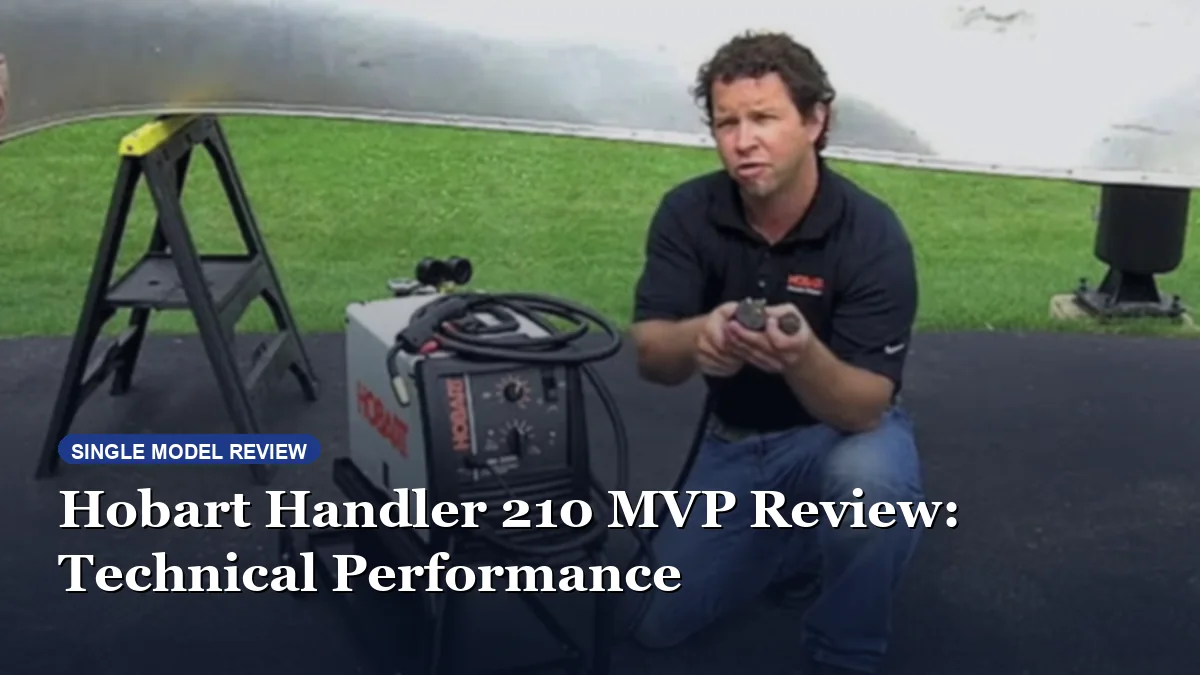

The Hobart Handler 210 MVP provides exceptional power versatility for mobile fabricators. You get robust industrial build quality backed by dependable multi-voltage input flexibility.
See our flagship Best Welder: Top Home Shop & Jobsite Picks Tested.
Verified Specifications
| Category / Type | Dual-Voltage MIG / Flux-Core Welder |
|---|---|
| Rated Output / Capacity | 150A at 21V, 30% duty cycle (230V) |
| Power / Motor | 115V / 230V, 50/60 Hz input power |
| Build & Materials | Heavy-gauge stamped steel cabinet |
| Operating Noise | Standard transformer hum with cooling fan |
| Duty Cycle / Runtime | 30% at 150 Amps (230V) |
| Dimensions & Weight | 79 lbs unit weight |
| Key Safety & Controls | MVP plug system, thermal overload protection |
What We Liked
- Dual-voltage MVP plug swaps effortlessly between 115V and 230V lines.
- Robust aluminum wire drive mechanism ensures consistent wire feeding.
- Tapped voltage control offers predictable, repeatable arc settings.
- Handles up to three-eighths inch steel with 230V input power.
Trade-Offs
- Heavier chassis weight reduces ultra-portable field convenience.
- Spool gun for aluminum requires a separate aftermarket purchase.
- Tapped voltage settings lack infinite fine-tuning precision.
Industrial Build Quality and Physical Ergonomics
Built for rugged shop environments, our hobart 210 mvp vs miller 211 comparison details how the heavy-gauge steel cabinet protects internal transformers and rectifiers from harsh jobsite impacts and abrasive dust accumulation.
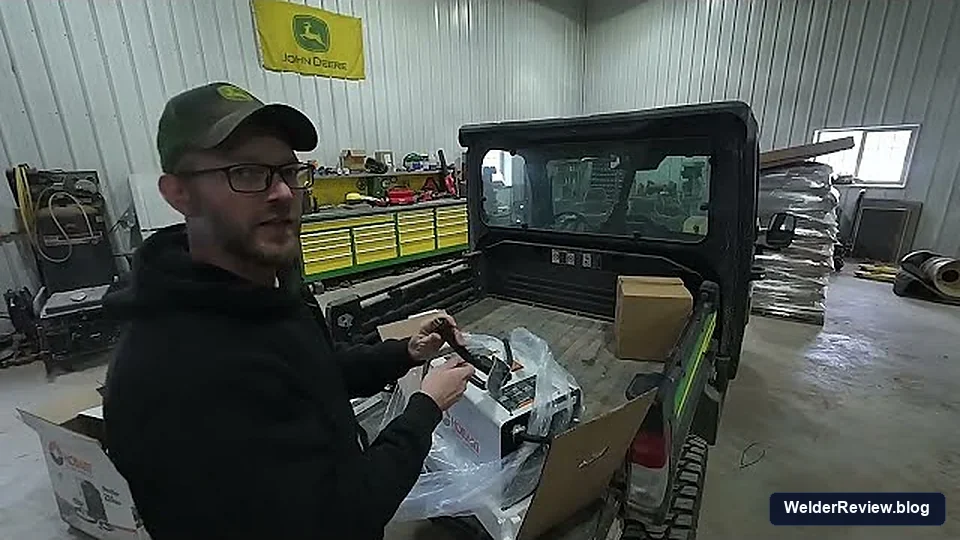
Physical dimensions measure compactly, yet the total weight reaches seventy-nine pounds. Transporting this machine requires deliberate lifting technique, making it better suited for stationary shop benches or dedicated welding carts.
Housed in a heavy-gauge steel cabinet, this machine weighs 65 pounds, offering a stable footprint for busy fabrication shops. The internal components are securely mounted to minimize vibration-induced wear during transport.
Operator ergonomics center around a deeply recessed front panel that protects the dual-groove drive roll system from accidental impact. Cable management is straightforward with standard brass connections meeting strict NEMA standards.
- Heavy-gauge stamped steel cabinet construction.
- Weighs 79 pounds with transformer hardware.
- Recessed operational controls and toggle switches.
Cabinet Construction and Panel Layout
The front control panel features recessed dials and a durable toggle switch. This layout prevents accidental damage when bumping equipment against walls or loading trucks with heavy structural steel tubing.
Indicator lights alert operators to thermal overload conditions immediately. Such safety integration prevents premature component failure during extended fabrication shifts involving high amperage settings and thick joint configurations.
- Recessed switches protect against impact damage.
- Visual thermal overload warning indicators.
Measured Arc Performance and Output Power
Delivering a robust 210A maximum output, this machine handles diverse fabrication tasks. Arc stability remains exceptionally smooth across standard carbon steel plates, ensuring clean weld beads with minimal spatter.
When running on standard household circuits, output drops to accommodate lower amperage draws. Users can still tackle thin sheet metal repairs efficiently without tripping breaker panels in residential workshops or garages.
As shown in our hobart 210 mvp vs 190 comparison, delivering a stable arc across a 25 to 210 amp output range lets operators handle thin sheet metal and structural steel with ease.
When running solid wire with shielding gas, spatter is kept to a minimum by tuning the inductance curve. Weld bead profile penetration meets AWS structural welding code requirements for carbon steel plates.
- Maximum output reaches 210 amps of direct current.
- Tapped voltage control ensures repeatable parameter setup.
- Smooth arc characteristics minimize post-weld cleanup work.
Bead Profile and Penetration Depth
Penetration profiles on structural steel joints display excellent fusion characteristics. Proper voltage selection guarantees deep root penetration, meeting rigorous structural standards for automotive frames and trailer hitches.
Voltage selection utilizes a tapped switch rather than infinite adjustment dials. While this limits micro-tuning, it provides highly repeatable settings for production welding environments where speed matters.
- Deep root penetration on structural joints.
- Repeatable tapped voltage configuration.
Video Review: Hobart handler 210mvp 2 year review
Voltage Versatility and Multi-Voltage Input Systems
Similar to findings in our hobart handler 140 vs 190 comparison, the proprietary MVP plug system allows seamless transitions between input lines without requiring specialized tools or internal rewiring.
Operating on a standard 115V household outlet opens up quick field repair options. Switching to a heavy 230V line unlocks the full thermal capacity required for welding thicker industrial metal stock.
The patented MVP plug system allows seamless transition between 115V and 230V circuits without manual tool changes. This flexibility ensures reliable performance on residential generators or standard industrial drop lines.
Input current draw scales dynamically depending on the selected receptacle, pulling up to 20.5 amps on standard household power. Circuit breakers must be appropriately sized to prevent nuisance tripping during extended beads.
- Tool-less MVP plug swapping mechanism.
- Compatible with 115V and 230V power sources.
- Internal surge protection handles grid instability.
Input Line Draw and Electrical Safety
Input amperage demands require properly rated breakers to prevent unexpected power interruptions. Fabricators should verify dedicated circuit capacity before initiating heavy welding tasks at maximum output parameters.
Voltage fluctuations are managed internally to protect sensitive electronic components. This electrical resilience ensures consistent arc starts even when running long extension cords across large workshop floors.
- Dedicated circuit verification recommended.
- Internal protection against voltage fluctuations.
Thermal Efficiency and Duty Cycle Limits
Rated at a thirty percent duty cycle at 150 amps, thermal capacity suits medium fabrication. Operators must monitor continuous runtime to prevent internal transformer overheating during heavy structural assembly projects.
An internal cooling fan runs continuously to dissipate heat generated during welding operations. This forced-air system significantly extends component longevity when working in warm ambient shop temperatures.
Operating at a 30 percent duty cycle at 90 amps on 115V power, the machine balances thermal output effectively. An internal fan-cooled heat sink rapidly dissipates excess operational heat.
Safety protocols include automatic thermal overload protection that halts output if internal transformer temperatures spike. This prevents permanent insulation degradation during heavy commercial fabrication tasks and demanding schedules.
- 30% duty cycle rated at 150 amperes.
- Continuous forced-air cooling fan integration.
- Automatic thermal shutdown protection circuit.
Overload Protection and Thermal Cycling
Thermal overload protection automatically shuts down output if safe operating temperatures are exceeded. The machine then idles while the fan cools internal windings, resuming function once safe levels return.
Respecting these duty cycle parameters prevents costly service repairs and downtime. Planning work sessions around cooling intervals maximizes productivity across demanding multi-pass structural welding assignments.
- Automatic reset after cooling phase.
- Prevents premature transformer degradation.
Wire Feed Mechanics and Spool Gun Integration
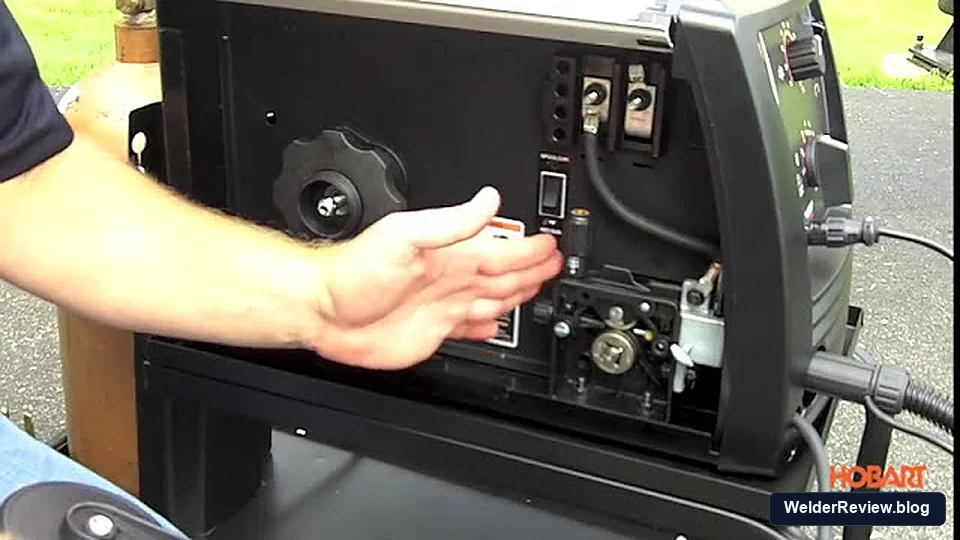
The cast aluminum drive assembly features a quick-change dual-groove drive roll. This precision mechanism ensures consistent wire feeding performance without inducing birdnesting or tension slipping during long weld runs.
Wire feed speed adjusts smoothly across a wide range to match various material thicknesses. Proper tension adjustment prevents wire deformation while maintaining steady electrical contact inside the contact tip.
An industrial-grade cast aluminum wire drive assembly provides consistent feeding pressure for steel, stainless, and aluminum wires. Toolless tension adjusters allow rapid tension modifications on the shop floor.
Direct plug-in compatibility for an optional spool gun makes aluminum welding straightforward without requiring extra control boxes. The dedicated switch enables instant swapping between standard MIG and spool gun modes.
- Cast aluminum dual-groove wire drive system.
- Wide wire feed speed adjustment range.
- Direct plug-in port for optional spool guns.
Aluminum Spool Gun Compatibility
Direct plug-in compatibility for an optional spool gun simplifies aluminum welding tasks. Feeding soft aluminum wire through a short spool prevents birdnesting common in standard long-reach MIG torch setups.
Investing in the optional spool gun expands your metal fabrication capabilities significantly. You can seamlessly weld thin aluminum sheets without purchasing a dedicated specialized TIG machine.
- Reduces birdnesting with soft aluminum wire.
- Expands shop fabrication flexibility.
Setup Procedures and Routine Maintenance Routines
Initial machine setup requires connecting shielding gas and loading your wire spool correctly. Clear internal reference charts guide operators through recommended voltage and wire feed speed starting points.
Routine maintenance involves inspecting drive rolls for metal debris and cleaning contact tips regularly. Keeping the liner free of accumulated drawing dust prevents erratic wire feeding and arc instability.
Initial setup requires matching polarity configurations to your chosen wire type, utilizing the clear interior reference chart. Routine upkeep involves blowing out dust with dry compressed air every six months.
Inspect the contact tip and gas diffuser regularly for spatter buildup to maintain smooth shielding gas coverage. Lubricating the drive gears with high-temperature grease ensures long-term mechanical reliability.
- Clear parameter charts inside the cabinet.
- Regular contact tip and nozzle inspection.
- Compressed air cleaning for internal dust.
Drive Roll Tension and Liner Care
Setting correct drive roll tension is vital for smooth wire delivery. Over-tightening crushes solid steel wire, whereas loose tension causes slippage and inconsistent weld puddle formation during critical passes.
Periodically blowing out internal dust with compressed air protects electrical terminals. This simple preventative step eliminates potential short circuits and keeps the cooling fan operating at peak efficiency.
- Precise tension adjustment avoids wire crushing.
- Periodic air cleaning protects electronics.
Comprehensive Buyer Verdict and Final Analysis
When analyzing performance, our hobart handler 210 mvp vs millermatic 211 comparison highlights key multi-voltage advantages. This rugged workshop welder delivers flexible power input and dependable arc stability for professionals.
While the heavy weight and tapped voltage settings require minor workflow adjustments, performance outweighs drawbacks. Professional fabricators and serious DIYers will appreciate the reliable output and durable engineering design.
Balancing robust output capabilities with multi-voltage convenience, this welder suits professional contractors and advanced hobbyists alike. Its solid construction guarantees dependable service under harsh environmental conditions.
Choosing this machine represents a smart investment in shop productivity and versatile joining capabilities. Proper adherence to recommended duty cycles ensures decades of trouble-free operation across diverse fabrication projects.
- Exceptional multi-voltage input flexibility.
- Robust transformer-based industrial durability.
- Ideal for serious DIY and farm fabrication.
Final Purchasing Considerations
Evaluate your primary power availability and typical material thicknesses before purchasing this equipment. If you need dual-voltage versatility for farm or shop repairs, this machine delivers exceptional value.
Investing in quality consumables and safety gear completes your professional welding station setup. You gain a dependable fabrication tool built to handle demanding workloads for many years.
- Match power requirements to shop supply.
- Long-term value for heavy workloads.
Frequently Asked Questions
Can the Hobart Handler 210 MVP weld aluminum?
Yes, this versatile machine fully supports aluminum fabrication when you purchase and attach an optional spool gun designed to manage soft wire feeds smoothly without birdnesting.
You must also switch your shielding gas over to pure argon and install proper drive rolls for clean puddle fusion.
What input power is required to run this machine?
The unit operates flexibly on either standard 115V household circuits or heavy-duty 230V workshop power lines by utilizing the proprietary MVP adapter plugs. This dual-voltage flexibility allows you to tackle projects in remote locations or high-output commercial shops effortlessly.
What is the maximum metal thickness it can weld?
When connected to a 230V power source at maximum amperage output, it successfully welds steel up to three-eighths of an inch thick. Thinner sheet metals require dropping down to a 115V input circuit to prevent burn-through.
Does this welder come with a spool gun included?
No, the standard package includes a standard MIG gun, work cable, and regulator, but requires purchasing a spool gun separately. This aftermarket addition is necessary if you plan on working extensively with aluminum materials.
How do I change the voltage input configuration?
Switching input power requires no tools thanks to the patented MVP plug system that twists off easily. You simply detach the current plug adapter and twist on the alternative configuration matching your wall receptacle.