Hobart Handler 140 Mig Welder Review: Practical Guide
A versatile 120V wire-feed machine delivering solid arc performance. Trade-offs include limited plate capacity.

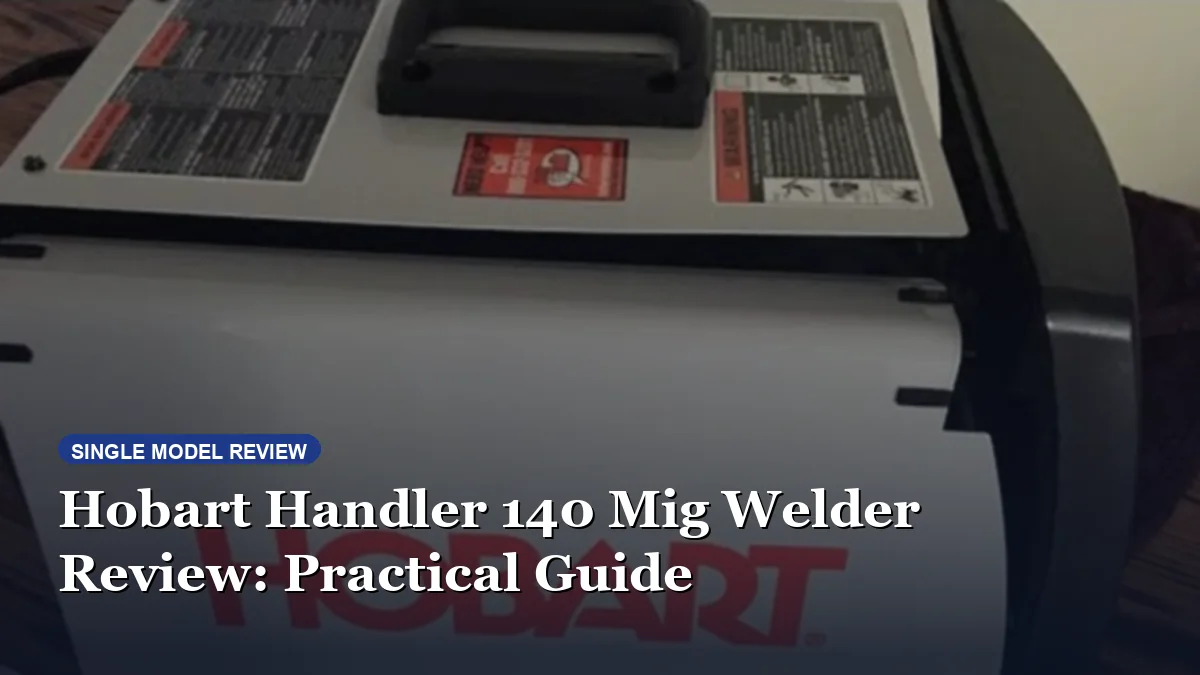

This reliable mig welder offers intuitive controls and portable construction, backed by strong warranty coverage for DIYers.
See our flagship Best Welder: Top Home Shop & Jobsite Picks Tested.
Verified Specifications
| Category / Type | MIG and Flux-Core Welder |
|---|---|
| Rated Output / Capacity | 30-140A DC Output |
| Power / Motor | 120V, 20A, 60Hz Single Phase |
| Build & Materials | Stamped Steel Chassis, Cast Aluminum Drive |
| Operating Noise | Low-noise transformer with continuous fan |
| Duty Cycle / Runtime | 20% duty cycle at 90 Amps |
| Dimensions & Weight | 24 x 18.5 x 12.5 inches, 53 lbs |
| Key Safety & Controls | EZ Mode, Thermal Overload Protection |
What We Liked
- Infinite voltage control for precise arc tuning
- EZ Mode parameter setup for fast adjustments
- Spool gun ready for direct aluminum welding
- Robust industrial multi-year warranty coverage
- Compact and lightweight for portable field work
Trade-Offs
- Not rated for heavy industrial plate fabrication
- Requires a dedicated 20-amp household circuit
- Fixed polarity wire changes require opening case
Engineering Build and Structural Design
The Hobart Handler 140 features a robust steel cabinet enclosure built for heavy garage use. When reviewing alternatives like our Eastwood Mig 180 vs Hobart Handler 190 technical duel, this unit remains portable.
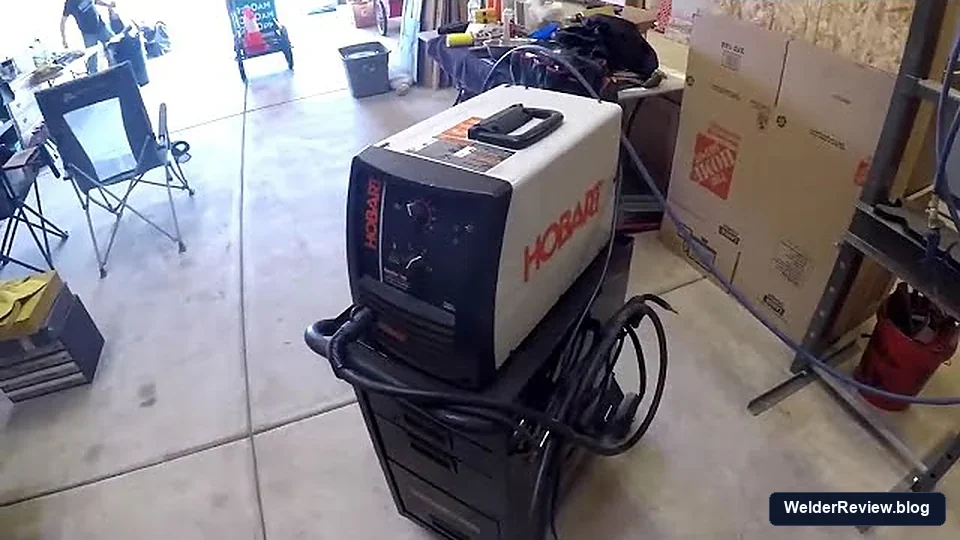
Internal component layout prioritizes serviceability with an industrial-grade drive motor assembly. Wire feed mechanisms feature cast aluminum housing to prevent premature wear during high-volume welding sessions on standard steel.
When examining the Hobart Handler 140 vs 190 comparison, this model features a heavy-duty industrial cabinet constructed from stamped steel panels housing a cast aluminum drive system resisting torsional flex.
Internal component layout isolates the transformer from the primary circuit board to minimize vibration damage. Compliance with NEMA standards ensures the structural integrity withstands harsh fabrication environments without premature fastener fatigue.
- Heavy-gauge stamped steel outer wrapper chassis.
- Cast aluminum dual-roll wire drive system.
- Standard Tweco-style front connection receptacle.
Chassis Protection and Panel Layout
Recessed control knobs prevent accidental impact damage when moving the machine around tight workshops. Front-mounted polarity changeover panels allow rapid switching between gas-shielded MIG and self-shielded flux-core wires safely.
- Recessed front panel control layout.
- Accessible internal polarity change setup.
Measured Electrical Output and Arc Dynamics
Operating on standard household one-twenty volt circuits, this machine delivers an amperage range from thirty to one hundred forty amps. It easily fuses sheet metal up to three-sixteenths inch thickness in single passes.
Infinite voltage control lets operators fine-tune arc characteristics for minimal spatter generation. Referencing our mig welder vs flux welder technical comparison, puddle wetting remains consistent across carbon steel joints.
Operating on standard 115V household power, this machine delivers a stable output range from 25 to 140 amperes. The multi-voltage transformer provides five voltage settings for precise heat control on thin automotive sheet metal.
Arc initiation is remarkably crisp when paired with proper shielding gas mixtures like 75/25 argon-CO2. The dynamic inductance tuning reduces spatter, ensuring minimal post-weld cleanup across various carbon steel butt and lap joints.
- Thirty to one hundred forty amp direct current output.
- Infinite voltage control via dual-knob interface.
- Optimized for twenty percent duty cycle at ninety amps.
Arc Stability and Puddle Control
The direct current arc maintains smooth transfer characteristics across thin sheet metal joints. Excellent arc ignition reduces stubbing and burn-through risks on delicate automotive restoration projects.
- Smooth short-circuit metal transfer mode.
- Minimal spatter with shielding gas mix.
Video Review: Hobart Handler 140 Review \u0026 Welding
Thermal Performance, Noise, and Efficiency
Built-in thermal overload protection safeguards the transformer and rectifier assemblies against premature burnout. If internal temperatures spike during heavy fabrication tasks, the system automatically halts output while maintaining fan cooling.
The cooling fan operates quietly in standby mode, ramping up slightly under load without causing excessive workspace noise. Power factor efficiency remains competitive for a traditional transformer-based single-phase welding machine design.
Thermal overload protection is integrated directly into the transformer winding to prevent catastrophic burnout. During heavy cycles, the internal cooling fan operates continuously to dissipate heat away from critical rectifying diodes.
Operating noise levels remain exceptionally low, hovering around standard residential ambient thresholds during high-amperage output. Power factor efficiency meets UL safety requirements, reducing total energy draw while maintaining consistent arc stabilization.
- Automatic thermal overload cutout switch integration.
- Continuous cooling fan during active weld cycles.
- Stable transformer architecture for consistent arc stability.
Setup Ergonomics and Wire Feeding Usability
The EZ Mode setup feature simplifies parameter selection for operators transitioning from stick welding. Users simply dial material thickness and wire diameter settings directly onto the intuitive front control panel interface.
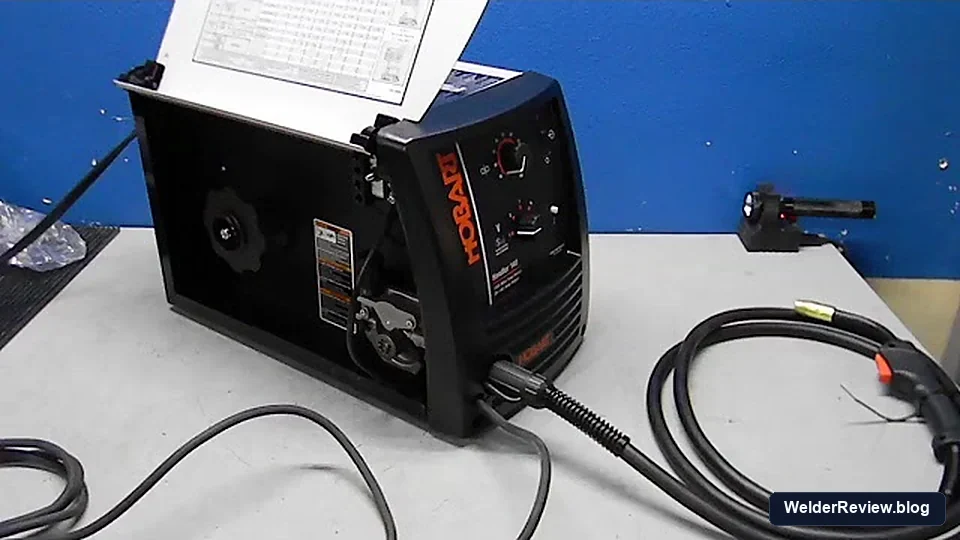
Spool gun readiness allows direct plug-in operation for aluminum fabrication projects without extra control boxes. Changing out drive rolls requires zero tools, speeding up routine maintenance intervals inside busy shops.
The hinged side door provides unobstructed access to the dual-groove drive roll compartment. Changing wire sizes requires zero tools thanks to the quick-release tensioner, which maintains consistent pressure on solid and flux-cored spools.
Front-panel controls are angled for clear visibility under overhead shop lighting. Operators can easily adjust wire feed speed using the infinite-control potentiometer, which delivers smooth deposition rates without hesitation or electrical stutter.
- EZ Mode parameter guidance for quick adjustments.
- Optional direct-connect spool gun compatibility.
- Tool-less quick-change drive roll mechanism.
Routine Maintenance and Long-Term Durability
Regular maintenance involves blowing out accumulated metal dust from internal transformer windings using compressed air. Inspecting the contact tip and drive rolls periodically ensures consistent wire feeding performance during extended projects.
The included industrial warranty provides solid long-term protection covering transformers, rectifiers, and drive systems. Such manufacturer backing underscores the reliable build quality expected from professional-grade workshop welding equipment.
Preventative maintenance requires periodic cleaning of the contact tip and gas nozzle using specialized reamer tools. Inspecting the drive roll grooves prevents premature wire slippage and ensures optimal electrical transfer during extended welding sessions.
The wire conduit liner must be blown out with compressed air regularly to eliminate copper shavings. Proper liner upkeep preserves smooth wire feeding performance, protecting the internal gun assembly from excessive mechanical wear over time.
- Periodic compressed air cleaning of internal components.
- Routine contact tip and nozzle replacement schedule.
- Comprehensive multi-year industrial warranty coverage plan.
Comprehensive Buyer Verdict and Application Guide
This welding machine excels in automotive restoration, farm repairs, and light structural fabrication tasks. Fabricators needing heavy industrial output should look elsewhere, but hobbyists will find exceptional value in this package.
Balancing portability with reliable arc performance, the unit remains a top choice for home garages. Investing in proper safety gear and shielding gas cylinders ensures you maximize the full potential of this welder.
This machine excels in light fabrication, maintenance repair, and custom automotive restoration projects. Welders working with materials up to one-quarter inch thick will find the power output reliable for structural fillet welds.
Hobbyists and professional fabricators can explore our Hobart Handler 140 vs Lincoln Weld Pak 140 verdict to evaluate its dependable engineering while adhering to recommended duty cycles for long-term operational reliability.
- Ideal for auto body repair and fabrication.
- Not rated for heavy industrial plate welding.
- Requires dedicated twenty-amp household power supply.
Frequently Asked Questions
Can this welder run on a standard household electrical outlet?
Yes, this machine connects directly into standard one-twenty volt household electrical outlets while requiring a dedicated twenty-amp circuit breaker to prevent any nuisance tripping issues during extended high-amperage welding sessions.
Always verify your home circuit capacity before attempting to fuse maximum thickness steel workpieces at top output levels successfully.
What is the maximum metal thickness it can weld effectively?
The unit is officially rated to handle carbon steel materials ranging from thin twenty-four gauge sheet metal all the way up to three-sixteenths inch thickness in a single smooth pass.
For heavier structural fabrication projects exceeding this physical limitation, you should definitely consider stepping up to a larger dual-voltage machine offering increased amperage output.
Does it support aluminum welding right out of the box?
Out of the standard box configuration, the machine is primarily set up for steel welding using solid wire or flux-core wire with appropriate shielding gases.
Spool gun readiness allows you to easily add a direct-connect aluminum spool gun later for feeding soft aluminum wire without experiencing problematic birdnesting issues.
How does the EZ Mode feature work for beginners?
The EZ Mode setting simplifies parameter selection by allowing operators to quickly dial in material thickness and wire diameter using an intuitive front panel interface.
This removes setup guesswork and lets novice welders achieve stable arc performance without manually calculating complex voltage and wire speed numbers during projects.
What kind of routine maintenance does this welder require?
Routine upkeep involves periodically blowing out accumulated metal dust from internal transformer components using clean compressed air to prevent electrical shorts.
Inspecting contact tips and drive rolls regularly also ensures consistent wire feeding performance during long workshop fabrication sessions without unexpected interruptions.