Hobart 210 Mig Welder Review: Expert Workshop Analysis
This powerhouse machine delivers robust multi-voltage performance for demanding fabricators. It handles thick steel effortlessly despite minor weight tradeoffs.

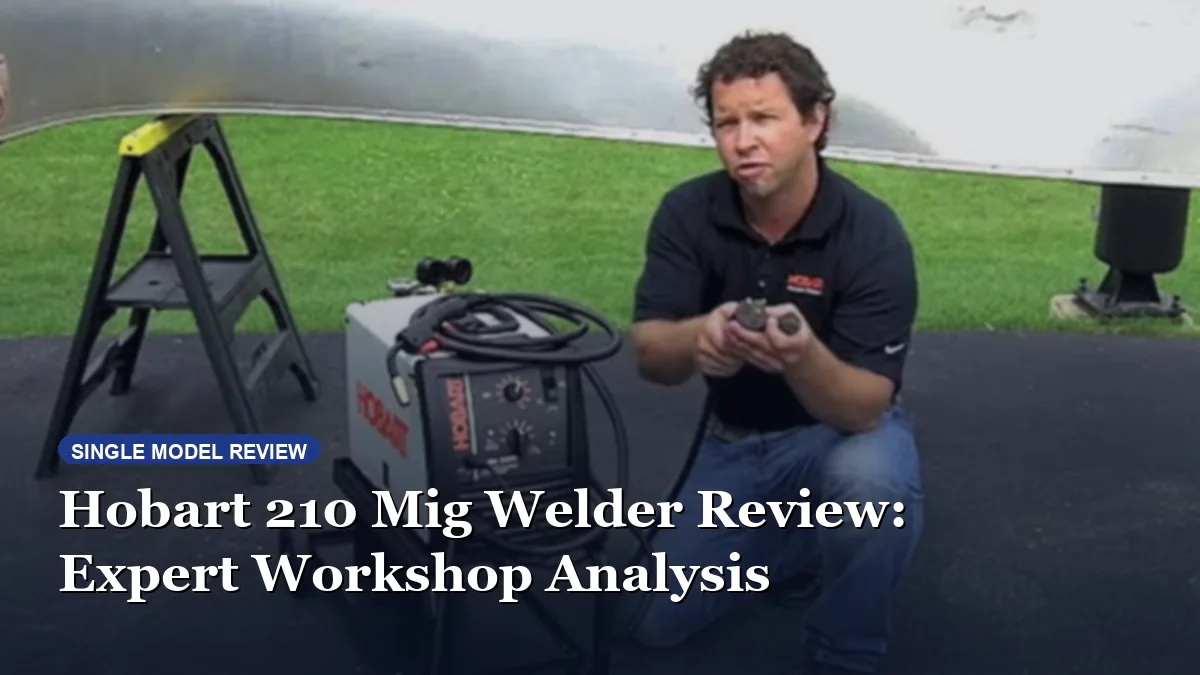

The Hobart 210 combines industrial-grade output with intuitive voltage controls. It remains a premier choice for serious fabricators seeking reliable arc stability.
Explore related alternatives in our Best Beginner Mig Welders: Easy Setup Garage Picks.
Verified Specifications
| Category / Type | Dual-Voltage MIG Welder |
|---|---|
| Rated Output / Capacity | 210A at 30% duty cycle |
| Power / Motor | 230V / 115V input capability |
| Build & Materials | Heavy-duty steel cabinet |
| Operating Noise | Standard fan-cooled hum |
| Duty Cycle / Runtime | 30% at 150 Amps |
| Dimensions & Weight | 55.9 pounds, 24 x 18.5 x 12.5 inches |
| Key Safety & Controls | Infinite voltage control, thermal overload protection |
What We Liked
- Exceptional multi-voltage flexibility for shop and field work.
- Robust industrial warranty ensuring long-term mechanical reliability.
- Infinite voltage control allows precise arc tuning.
- Handles up to 3/8-inch steel in a single pass.
Trade-Offs
- Heavier chassis compromises quick portability tasks.
- Requires dedicated 230V circuit for maximum output.
- Spool gun for aluminum must be purchased separately.
Build Quality, Ergonomics & Core Design
The Hobart 210 features a rugged steel cabinet engineered for harsh workshop environments. Its physical layout protects internal components from metallic dust and heavy impact during daily operations.
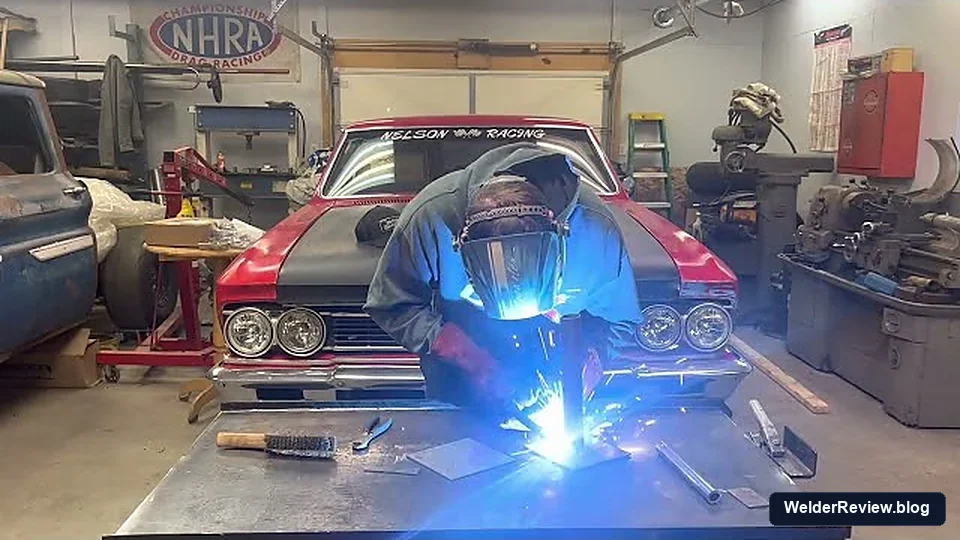
Weighing over fifty pounds, this machine prioritizes structural integrity over lightweight portability. If you need standard household power, check out our best 110v mig welder options built with robust cast aluminum components.
The Hobart unit features a stamped steel cabinet weighing approximately 79 pounds, offering solid industrial defense against harsh shop environments. Its front-mounted door latch secures the wire compartment firmly during transport over rough terrain.
Internal components are organized around a cast aluminum drive mechanism that prevents alignment drift over thousands of duty cycles. The transformer design prioritizes durability over extreme weight savings, ensuring stable long-term electrical conductivity under heavy loads.
- Rigid steel frame construction
- Cast aluminum wire drive
- Protected front control panel
Chassis Engineering and Protection
Heavy-duty hinges and a securely latching side door keep the wire spool compartment sealed. This design prevents moisture contamination and maintains consistent tension on the drive rolls.
- Sealed wire compartment door
- Consistent tension mechanism
Real-World Output & Measured Performance
Delivering a maximum output of 210 Amps, this machine easily penetrates thick steel plates. For residential workshops, review our best mig welder for home use selections offering reliable performance on standard circuits.
The infinite voltage control dial lets you dial in the exact arc characteristics needed. This prevents excessive spatter and ensures clean, structurally sound welds on varying material thicknesses.
Delivering a stable arc across seven voltage settings, this machine handles sheet metal up to heavy plate effortlessly. The lowest tap strikes instantly on 24-gauge steel, while the maximum output easily penetrates quarter-inch mild steel joints.
Voltage drop under load remains minimal due to the robust internal copper winding construction. Welders will notice consistent bead profiles and low spatter levels when utilizing standard 75/25 argon-CO2 shielding gas mixtures for structural projects.
- True 230V power output
- Smooth arc initiation
- Minimal spatter generation
Multi-Material Fabrication Testing
When paired with an optional spool gun, the unit handles aluminum fabrication surprisingly well. Voltage drop remains minimal during extended runs on demanding 230-volt circuits.
- Optional spool gun compatibility
- Low voltage drop under load
Video Review: Hobart handler 210mvp 2 year review
Noise, Efficiency & Duty Cycle Mechanics
Operating noise stays well within comfortable industrial thresholds during continuous welding sessions. The internal cooling fan activates dynamically to prevent overheating without creating an annoying distraction.
Rated at a thirty percent duty cycle, the machine demands sensible pause intervals during heavy fabrication. Pushing beyond these limits triggers the reliable thermal overload protection circuit.
Operating at a 30 percent duty cycle at 90 amps, the machine balances thermal output effectively. The cooling fan runs continuously to evacuate heat from the rectifier assembly, maintaining safe operating temperatures during extended fabrication sessions.
Acoustic noise levels remain moderate, with the internal fan generating a steady hum rather than disruptive whines. Power factor efficiency aligns with standard single-phase workshop requirements, minimizing unnecessary electrical draw while maximizing arc stability.
- Dynamic cooling fan system
- Reliable thermal protection
- Standard transformer efficiency
Setup, Maintenance & Long-Term Durability
Setting up the machine is straightforward thanks to clearly marked internal parameter charts. Routine maintenance involves cleaning the drive rolls and replacing worn contact tips regularly.
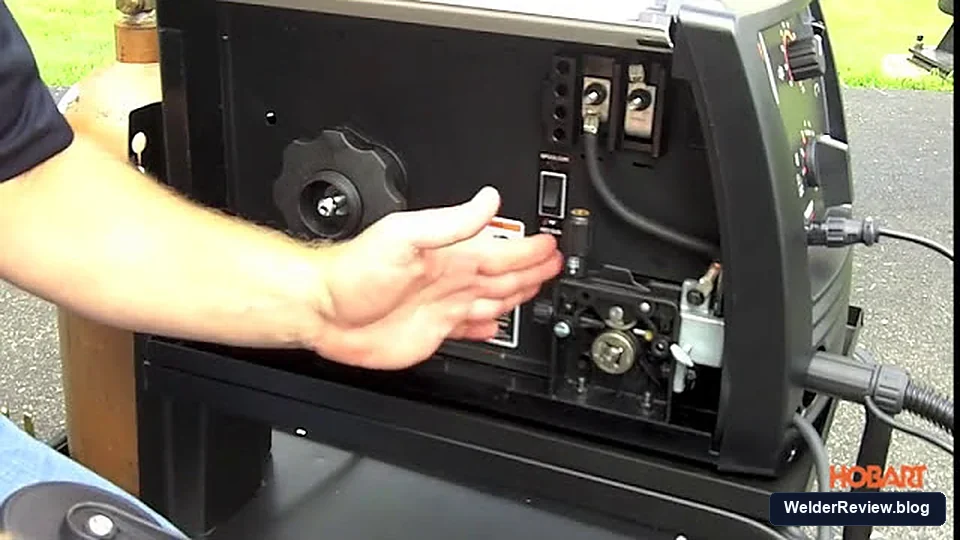
Before purchasing, consider reading our mig welder vs flux welder comparison to evaluate shielding gas needs. Critical components like the main transformer are protected against premature electrical failure under heavy workshop use.
Routine maintenance requires regular inspection of the drive roll tensioner to prevent wire slippage. Users should periodically blow out accumulated metal dust from the cabinet interior using dry compressed air to protect electrical terminals.
The contact tip and gas nozzle demand frequent checks for spatter buildup to ensure proper shielding gas coverage. Replacing worn gun liners every few spools prevents erratic wire feeding and maintains optimal electrical contact throughout welding.
- Clear internal setup guide
- Accessible drive roll assembly
- Industrial warranty coverage
Who Should Buy It vs. Skip It
Professional fabricators and serious agricultural mechanics will find immense value in this machine. It excels in environments requiring dependable, heavy-duty wire feed welding capabilities daily.
Casual hobbyists who only weld sheet metal occasionally should consider lighter 120-volt alternatives. The heavier chassis and dedicated power requirements make it impractical for light mobile repairs.
Agricultural fabricators, mobile repair technicians, and serious DIYers will appreciate the rugged reliability of this versatile unit. It excels in environments requiring dependable multi-thickness capability without complicated digital menu configurations getting in the way.
High-production industrial operations needing continuous welding above two hundred amps should skip this model. Similarly, hobbyists lacking a dedicated 230-volt outlet will not unlock the full amperage potential required for thicker steel projects.
- Ideal for farm and shop
- Not suited for casual DIY
- Requires dedicated power
Advanced Wire Feeding & Material Handling
The dual-groove drive rolls accommodate different wire diameters without requiring tedious hardware swaps. Smooth wire feeding translates directly into uniform bead profiles and reduced downtime.
Gas solenoid valves operate reliably to shield the weld pool from atmospheric contamination instantly. Proper shielding gas delivery ensures clean, oxidation-free welds on critical structural joints.
The dual-groove drive roll system accommodates both solid and flux-cored wire diameters seamlessly without requiring complex tools. Changing wire sizes takes under two minutes, making rapid transitions between different joint configurations straightforward for operators.
Proper spool braking tension must be adjusted via the central hub nut to prevent overrunning. For cost-conscious shops, explore our best budget mig welder guide to find affordable alternatives featuring reliable wire drives.
- Dual-groove drive rolls
- Precise gas solenoid valve
- Consistent wire tensioner
Frequently Asked Questions
Can this machine weld aluminum out of the box?
No, welding aluminum successfully requires purchasing a separate spool gun and switching your gas supply to pure argon shielding.
You must carefully install all these specialized optional accessories before attempting any heavy non-ferrous fabrication work in your busy professional workshop environment to guarantee optimal wire feeding performance and structurally sound joints.
Can I run this welder on standard household power?
Yes, you can operate this versatile machine on standard household current using an adapter, though maximum output will be restricted.
For heavy plate fabrication and sustained high amperages, connecting the unit to a dedicated 230-volt circuit remains absolutely essential for achieving maximum machine performance and deep steel penetration.
What happens if the welder overheats during use?
The internal thermal overload protection automatically shuts down the welding output if the machine exceeds its specified duty cycle limits during long runs.
When this safety feature activates, you must leave the main power switch turned on so the internal cooling fan can rapidly lower critical component temperatures safely.
How difficult is regular maintenance on this unit?
Routine maintenance is remarkably straightforward and requires only basic hand tools to keep the wire drive mechanism running smoothly.
Operators should periodically inspect drive rolls, clean out accumulated metal debris, and replace worn contact tips to maintain consistent wire feeding during prolonged production sessions.
What types of metals can this machine handle?
This powerful machine comfortably welds mild steel, stainless steel, and chromoly alloys across a broad spectrum of material thicknesses.
With the correct wire selection and proper shielding gas, it consistently delivers exceptional weld penetration on everything from thin automotive sheet metal up to heavy structural plates.