Hobart 140 Welder Review: Technical Performance Guide
The Hobart Handler 140EZ delivers dependable 120V arc performance with simplified controls, though it remains limited to light-gauge metal fabrication.

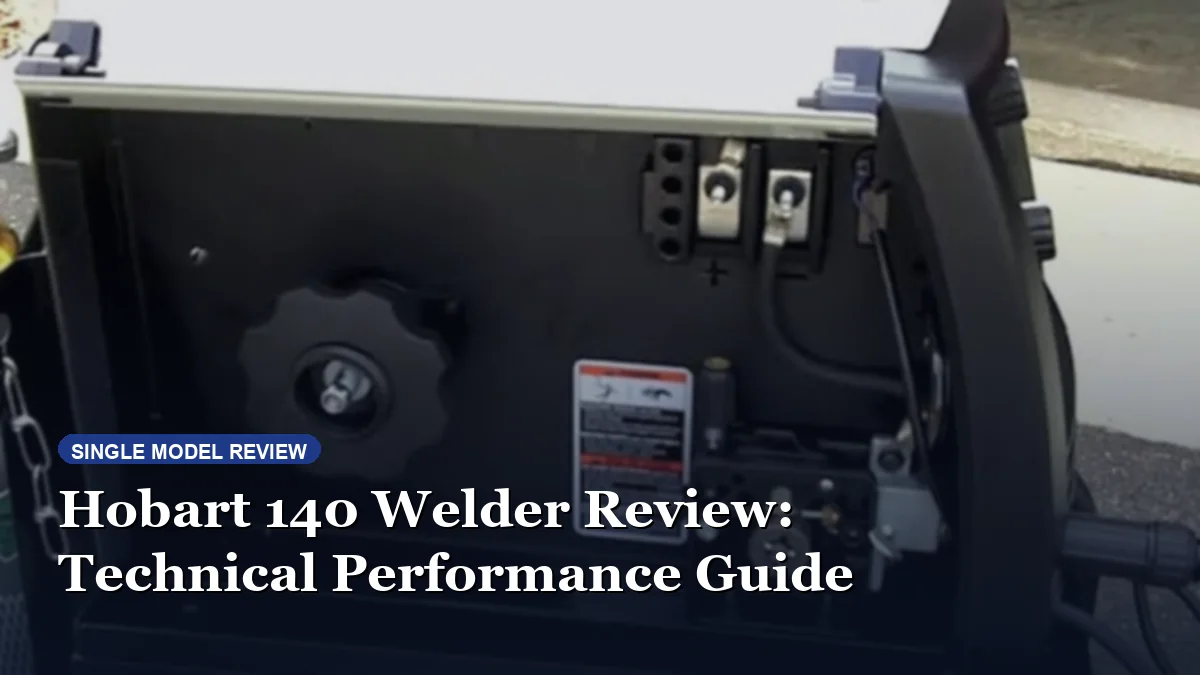

This machine offers exceptional wire-feeding reliability and user-friendly setup for hobbyists, but heavy industrial fabricators will require higher-voltage equipment.
Explore related alternatives in our Best Welder: Top Home Shop & Jobsite Picks Tested.
Verified Specifications
| Category / Type | 120V MIG and Flux-Core Welder |
|---|---|
| Rated Output / Capacity | 30A to 140A DC Output |
| Power / Motor | 115V / 120V Input Power |
| Build & Materials | Heavy-duty steel cabinet enclosure |
| Operating Noise | Standard transformer hum with cooling fan |
| Duty Cycle / Runtime | 20% duty cycle at 90 Amps |
| Dimensions & Weight | 24 x 18.5 x 12.5 inches, 53 lbs |
| Key Safety & Controls | Thermal overload protection and EZ Mode |
What We Liked
- Simple EZ Mode parameter selection
- Robust industrial warranty protection
- Infinite voltage control adjustments
- Spool gun ready for aluminum
- Compact and portable steel cabinet
Trade-Offs
- Limited to 3/16-inch maximum thickness
- Requires optional spool gun for aluminum
- 20% duty cycle restricts long continuous runs
Engineering Build Quality and Chassis Architecture
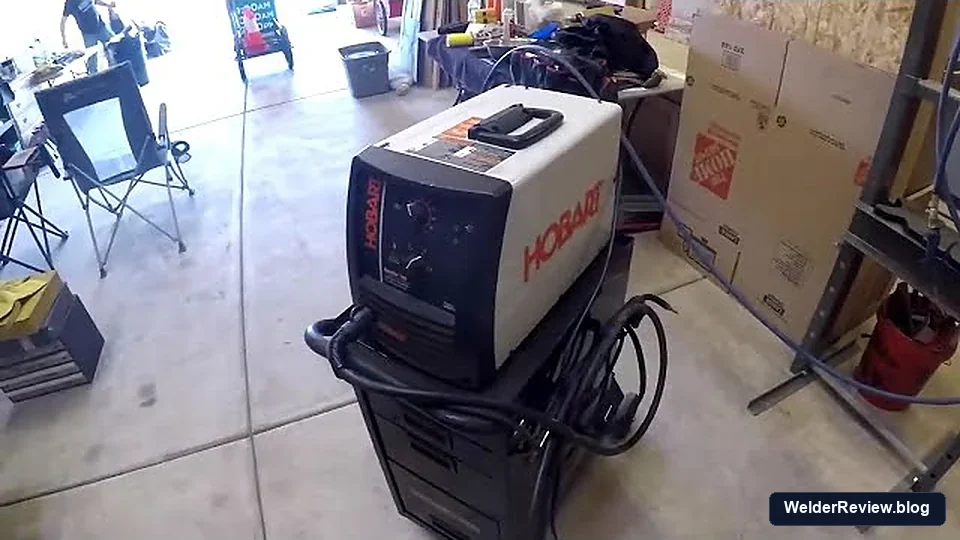
Highlighted in our Hobart Handler 140 vs 190 analysis, the machine features a robust steel cabinet architecture designed to withstand harsh shop environments and frequent mobile transport.
Weighing roughly fifty-three pounds, the machine balances structural rigidity with manageable portability, allowing solo operators to load it into service trucks without physical strain.
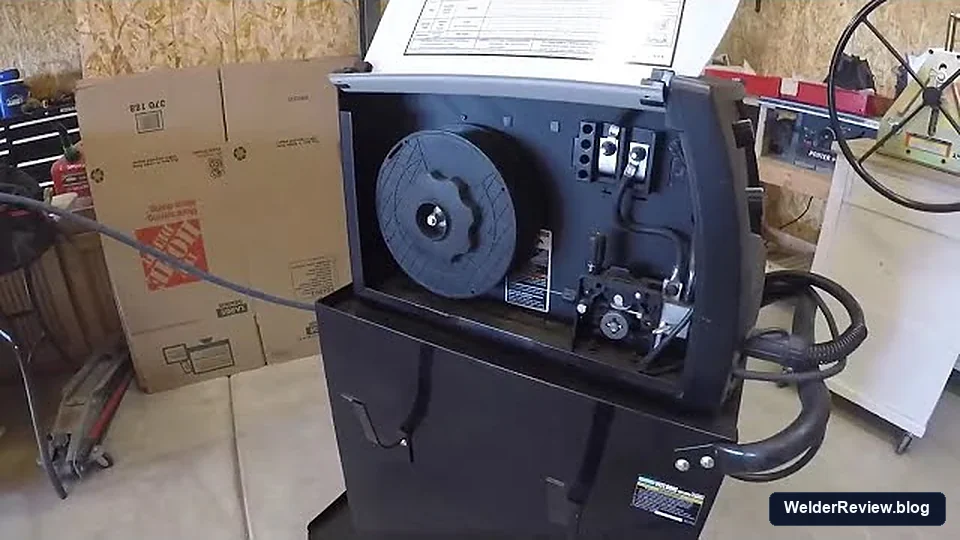
Internal components are housed securely behind a heavy-duty door mechanism that shields the wire feed drive system from airborne metal debris and workshop contaminants.
The machine utilizes a heavy-gauge stamped steel wrapper bolted directly to a rigid internal frame. This industrial chassis dampens mechanical vibrations while protecting sensitive internal electronics from harsh jobsite impacts and corrosive workshop environments.
Internal component layout features an industrial-grade cast aluminum drive mechanism rather than cheap plastic alternatives. Dual-groove drive rolls ensure consistent wire feeding pressure without slipping, maintaining arc stability during extended fabrication sessions across varied conditions.
Ventilation pathways are strategically engineered to direct cooling airflow away from the main transformer windings. This targeted thermal management prevents dust accumulation on critical circuit boards while extending the operational lifespan of the entire unit.
- Heavy-gauge steel outer housing protects internal transformers
- Compact footprint fits easily on standard welding carts
- Corrosion-resistant paint finish withstands garage humidity
Drive System and Wire Feed Mechanics
The aluminum casting drive assembly provides positive wire feeding consistency, reducing birdnesting risks during prolonged welding sessions with mild steel or aluminum filler wire.
Quick-release tension levers simplify spool changes, letting operators swap 4-inch or 8-inch wire spools rapidly without requiring specialized hand tools or complicated calibration procedures.
- Cast aluminum feed mechanism for long-term durability
- Tool-less quick tension adjustment hub
Real-World Arc Output and Material Penetration
Delivering an amperage range between thirty and one hundred forty amps, this unit handles sheet metal down to twenty-four gauge alongside structural sections up to three-sixteenths inch thick.
When configured for flux-core operation, the machine produces deep root penetration on uncleaned carbon steel, making it ideal for outdoor repairs and farm maintenance applications.
As detailed in our Hobart Handler 140 vs Lincoln Weld Pak 140 guide, shielding gas setup for solid wire MIG welding delivers exceptionally clean beads on autobody panels with minimal cleanup.
Operating on standard household power, the system delivers a smooth arc optimized for thin sheet metal and light auto-body repairs. Voltage tuning steps allow precise heat input adjustments to prevent burn-through on delicate automotive steel panels.
When paired with shielding gas, short-circuit transfer dynamics produce minimal spatter and clean weld beads. Maximum material penetration reaches quarter-inch steel when utilizing appropriate joint preparation techniques and multi-pass welding strategies in professional settings.
Flux-cored wire performance excels outdoors where ambient wind disrupts shielding gas coverage. The resulting weld profile exhibits deep penetration characteristics ideal for structural repairs, farm equipment maintenance, and heavy-duty general utility fabrication tasks.
- Handles mild steel from 24 gauge to 3/16 inch
- Excellent arc stability on standard 120V power
- Smooth transition between gas and gasless modes
Multi-Material Capability and Performance
Stainless steel fabrication requires careful selection of proper shielding gases and matching filler wires to prevent carbide precipitation and maintain corrosion resistance across joints.
Aluminum welding demands an optional spool gun setup to eliminate soft wire feeding issues through the standard ten-foot MIG gun liner assembly.
- Supports stainless steel welding with correct gas mix
- Optional spool gun enables aluminum fabrication
Video Review: Hobart Handler 140 Review \u0026 Welding
Electrical Efficiency, Duty Cycle, and Thermal Performance
Ranked highly in our best welder reviews, this unit operates on standard one hundred twenty volt household circuits, drawing significant input amperage under maximum load conditions while maintaining stable arc characteristics.
The integrated thermal overload protection system automatically shuts down output if internal transformers exceed safe operating temperatures during extended heavy-duty welding cycles.
Built-in cooling fans pull ambient air across critical rectifiers and stabilizers, ensuring rapid recovery times once the thermal switch resets automatically after cooling down.
The unit operates on a conventional 115V circuit, drawing maximum amperage under heavy loads while maintaining stable arc characteristics. Circuit protection requirements mandate a dedicated twenty-amp breaker to prevent nuisance tripping during prolonged fabrication cycles.
Rated at a 20 percent duty cycle at ninety amps, the internal thermal overload protection automatically interrupts output if safe operating temperatures are exceeded. This mechanism prevents catastrophic transformer burnout during intensive workshop fabrication tasks.
Power factor efficiency remains relatively high for a transformer-based machine, minimizing electrical waste during standard operation. Operators must allow adequate cooling intervals after heavy utilization to maintain optimal internal component health and longevity.
- Standard 115V/120V wall plug compatibility
- Automatic thermal overload safety cut-off switch
- High-velocity cooling fan for rapid heat dissipation
Setup, Controls, and Ergonomic Usability Features
The revolutionary EZ Mode simplifies parameter selection by utilizing a streamlined dual-turn control knob that eliminates complex voltage charts for novice operators.
Experienced fabricators can bypass preset modes entirely, utilizing the infinite voltage control to fine-tune arc dynamics for specific joint configurations and plate thicknesses.
Front-mounted polarity change panels allow quick transitions between solid wire gas shielding and self-shielded flux-core operations without opening internal cabinets.
The front control panel features a straightforward tapping voltage control system that simplifies parameter selection for beginners and professionals alike. Clearly marked reference charts mounted inside the wire compartment guide appropriate settings.
Wire feed speed adjustment is infinitely variable, allowing fine-tuning of deposition rates to match specific joint configurations and material thicknesses. Ergonomic knobs provide positive tactile feedback even when operators wear heavy welding gloves.
Polarity reversal is handled internally through accessible brass terminals, enabling fast switches between solid wire gas shielding and self-shielded flux-cored setups. This thoughtful design minimizes downtime during complex multi-process project workflows.
- EZ Mode simplifies beginner parameter setup
- Infinite voltage control for precise arc tuning
- Convenient front-panel polarity change station
Routine Maintenance, Consumables, and Long-Term Durability
Regular maintenance involves cleaning the drive roll grooves, inspecting contact tips for wear, and blowing out accumulated metal dust from internal electrical compartments.
When evaluating competing entry-level systems in our Hobart 140 vs Lincoln 140 comparison, Hobart supports this machine with a robust five-year industrial warranty protecting major transformers.
Consumable components like nozzles, diffusers, and contact tips are standard-sized replacements readily available at local welding supply stores and online distributors.
Regular upkeep requires inspecting the contact tip and gas nozzle for spatter buildup to ensure unobstructed shielding gas coverage. Using anti-spatter gel significantly extends consumable lifespan during high-amperage welding sessions.
Drive rolls should be cleaned periodically with a wire brush to remove metallic shavings that cause erratic wire feeding issues. Maintaining proper tension on the spool hub prevents bird-nesting complications inside the cabinet.
Annual servicing should include blowing out accumulated conductive dust from electrical components using compressed air at low pressure. This preventive measure stops short circuits and maintains optimal electrical efficiency over years of service.
- Easy access to drive rolls and consumable tips
- Industry-backed multi-tier industrial warranty coverage
- Standardized replacement parts for easy sourcing
Definitive Verdict: Who Should Buy and Who Should Skip
Weekend warriors, automotive restoration hobbyists, and mobile repair technicians will find this machine delivers exceptional value, reliability, and ease of use.
Professional structural fabricators requiring continuous heavy-plate welding above three-sixteenths inch should skip this model in favor of larger dual-voltage multi-process systems.
Careful assessment of daily power availability and maximum material thickness ensures you select the right machine for your specific fabrication workshop requirements.
Hobbyists, automotive restorers, and DIY fabricators will find this welder perfectly suited for light-duty sheet metal and repair projects. Its reliable arc characteristics and portable footprint make it an essential workshop asset.
Professional structural fabricators needing continuous high-amperage output should skip this model in favor of industrial multi-process systems powered by dual-voltage inputs. The limited duty cycle restricts heavy production throughput capabilities.
Anyone seeking a dedicated machine for thick structural steel fabrication will outgrow its capabilities rapidly. However, for household repairs and creative metal art, this unit remains a benchmark choice in its class.
- Ideal for DIYers, farms, and auto body repair
- Not recommended for heavy industrial plate welding
- Requires dedicated 20A household circuit for max output
Frequently Asked Questions
Can this machine weld aluminum right out of the box without extra accessories?
No, aluminum welding requires an optional spool gun attachment to prevent soft wire feeding failures, because aluminum wire lacks the column strength needed to push through standard ten-foot MIG liners.
Purchasing this separate spool gun ensures highly reliable wire delivery and clean aluminum welds across various automotive or marine fabrication projects.
What maximum material thickness can this hundred twenty volt welder penetrate effectively in a single pass?
This compact welding machine is rated to handle mild steel up to three-sixteenths inch thick when properly configured with flux-core wire or solid wire under shielding gas.
For heavier structural plates, beveling edges and multi-pass techniques are mandatory to achieve full structural penetration and sound weld integrity.
How does the EZ Mode simplify the setup process for beginner welding operators?
The simplified EZ Mode eliminates complex voltage calculation charts by allowing users to adjust parameters quickly using a streamlined dual-turn control knob interface.
This intuitive design feature reduces setup guesswork, letting newcomers focus entirely on torch angle, travel speed, and proper gun manipulation techniques.
Can I operate this Hobart MIG machine using a standard household electrical circuit?
Yes, you can plug this unit into a standard one hundred twenty volt household outlet, provided the circuit breaker is rated for twenty amps to handle peak current draws.
Running the machine on undersized extension cords will cause voltage drops and unstable arc performance during extended welding sessions.
What kind of warranty protection does Hobart provide for this specific welding model?
Hobart backs this equipment with an industrial warranty featuring five-year coverage on main transformers, stabilizers, and rectifiers for peace of mind.
Additionally, internal drive systems receive three years of protection, while the included MIG torch gun is covered against manufacturing defects for one full year.