Hobart 140 Review: Engineering Performance & Specs
This compact 120V wire-feed machine delivers reliable multi-process performance. It features straightforward controls paired with rugged workshop durability.

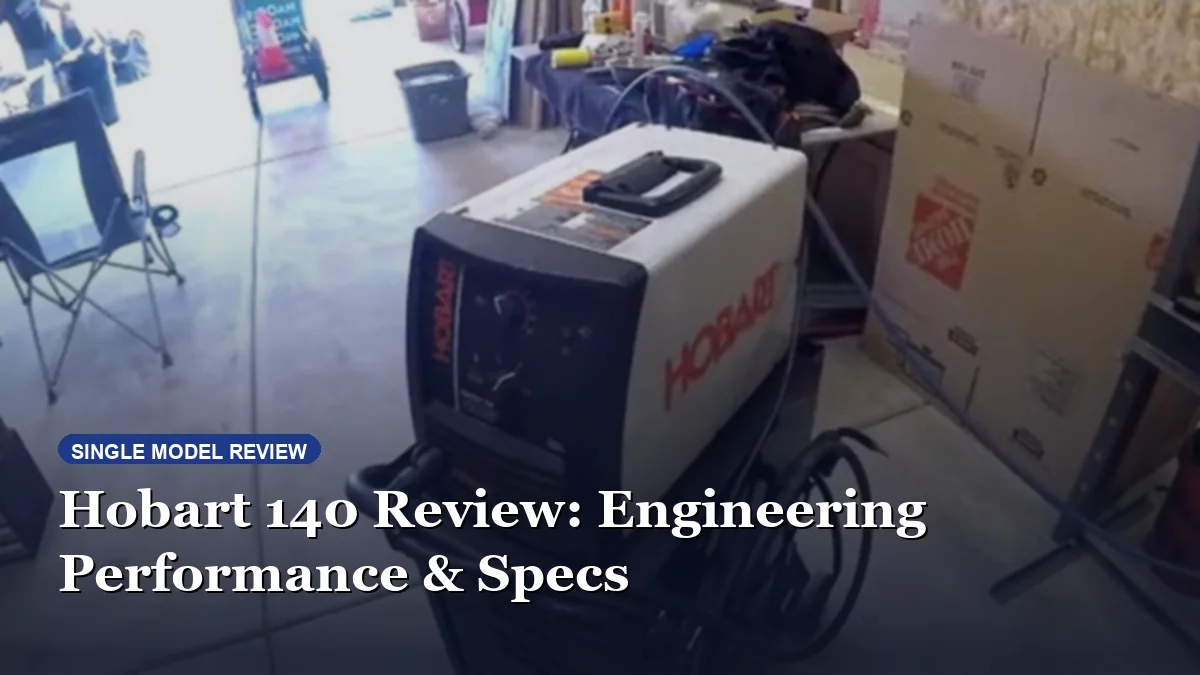

The Hobart 140 offers exceptional arc stability for everyday repairs. Home fabricators will appreciate its intuitive setup and dependable output on standard household circuits.
See our flagship Best Welder: Top Home Shop & Jobsite Picks Tested.
Verified Specifications
| Category / Type | 120V MIG and Flux-Core Welder |
|---|---|
| Rated Output / Capacity | 30A to 140A DC Output |
| Power / Motor | 120V AC, 20A, 60 Hz input |
| Build & Materials | Heavy-duty steel housing with cast aluminum drive |
| Operating Noise | Low acoustic output during operation |
| Duty Cycle / Runtime | 20% duty cycle at 90 Amps |
| Dimensions & Weight | 24 x 18.5 x 12.5 inches, 53 lbs |
| Key Safety & Controls | EZ Mode, infinite voltage control, thermal overload protection |
What We Liked
- Intuitive EZ Mode parameter setup simplifies configuration.
- Handles materials from 24 gauge up to 3/16 inch.
- Spool gun ready for hassle-free aluminum welding.
- Compact fifty-three pound frame enhances job-site portability.
- Backed by a comprehensive multi-year industrial warranty.
Trade-Offs
- Limited to one-twenty volt household electrical circuits.
- Lower duty cycle restricts continuous heavy plate welding.
- Spool gun must be purchased separately as an accessory.
Engineering Foundation: Build Quality & Structural Design
Constructed with a heavy-duty steel cabinet, this machine prioritizes workshop durability. The internal wire drive system utilizes cast aluminum components to ensure long-term mechanical reliability during daily fabrication tasks.
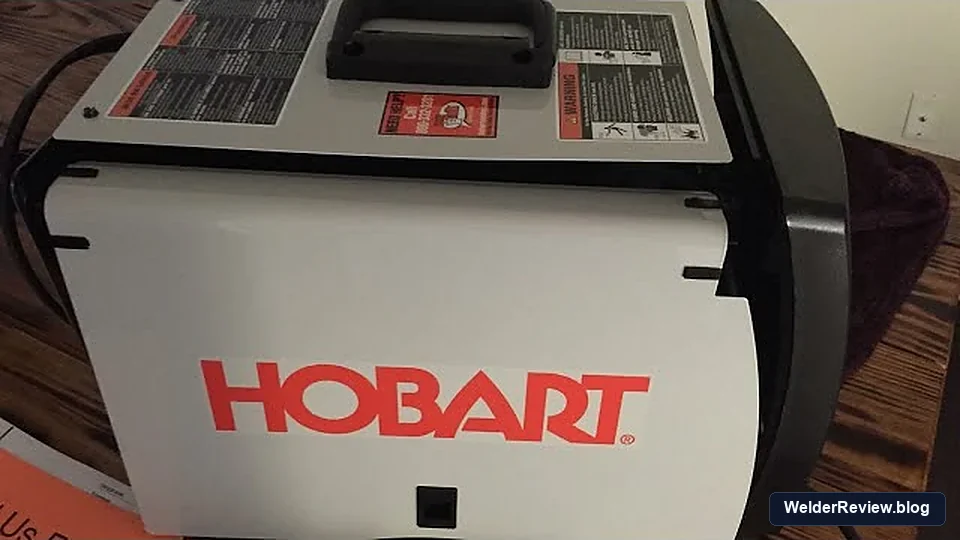
Weighing fifty-three pounds, the unit balances portability with solid construction standards. It easily transports to remote job sites while maintaining the structural rigidity required for demanding utility environments.
The front panel layout features recessed controls that protect delicate potentiometers from accidental impact. Such thoughtful industrial design choices safeguard your investment against rough handling in busy service vehicles.
- Heavy-gauge steel outer housing resists corrosion and impact damage.
- Cast aluminum drive assembly prevents wire slippage under tension.
- Recessed dial layout prevents physical damage during transport.
Internal Component Layout
Opening the side cabinet reveals an exceptionally clean electrical architecture. Main transformers and solid-state rectifiers are securely mounted to maximize airflow and thermal dissipation.
Wire spool mounting hubs accommodate standard four-inch and eight-inch spools securely. An adjustable brake tensioner prevents birdnesting during rapid feeding sequences and abrupt trigger releases.
- Secure brass mounting hardware resists vibrational loosening over time.
- Optimized internal cooling pathways protect sensitive printed circuit boards.
Engineering Foundation: Build Quality & Structural Design
Our hobart 140 vs lincoln 140 comparison highlights the heavy-duty cast aluminum wire drive system, ensuring consistent wire feeding across extended vertical welding sessions without slippage or gear stripping.
Housed in a robust 18-gauge wrapped steel cabinet, this machine withstands harsh shop environments while protecting internal transformer components from conductive debris, complying with NEMA IP21 safety standards for workshop moisture and impact resistance.
Weighing approximately fifty-seven pounds fully loaded with a four-inch spool, the unit balances structural rigidity with manageable portability, supported by a solid dual-groove drive roll that accommodates both solid and flux-cored wires easily.
Real-World Arc Performance & Material Thickness Limits
Operating on standard household power, this machine delivers a thirty to one-forty amp output. It handles thin twenty-four gauge sheet metal up to three-sixteenths steel effortlessly.
Arc initiation is remarkably crisp when running self-shielded flux-core wire without shielding gas. Switching to solid wire with C25 gas produces exceptionally clean, low-spatter welds on automotive panels.
Voltage tuning remains responsive across all tap settings, preventing burn-through on delicate joints. Fabricators can achieve smooth bead profiles without experiencing excessive arc turbulence or stubborn porosity issues.
- Smooth voltage delivery accommodates both MIG and flux-core processes seamlessly.
- Excellent puddle control minimizes post-weld grinding and cleanup labor.
Aluminum and Stainless Capabilities
Optional spool gun integration transforms this unit into a capable aluminum fabricator. Users can feed soft alloy wires smoothly without experiencing the traditional birdnesting headaches common in standard liners.
Stainless steel projects require matching the appropriate shielding gas and wire chemistry precisely. The stable arc profile ensures sound corrosion-resistant welds on thin automotive and decorative tubing applications.
- Direct spool gun plug-in simplifies non-ferrous metal fabrication tasks.
- Maintains steady wire feed speed during aluminum welding operations.
Real-World Arc Performance & Material Thickness Limits
As explored in our hobart handler 140 vs 190 showdown, this 115-volt machine delivers a smooth 25 to 140-amp output, maintaining a stable arc ideal for thin automotive sheet metal.
When pushing toward its maximum stated capacity of one-quarter inch mild steel, multi-pass techniques become mandatory because single-pass penetration peaks near eighteen-gauge thickness unless using flux-cored wire with proper joint beveling preparations.
Voltage control utilizes a coarse five-position tap switch paired with an infinitely variable wire feed speed dial, allowing fabricators to fine-tune puddle fluidity and achieve sound weld bead profiles across diverse structural carbon steels.
Video Review: Hobart Handler 140 Review \u0026 Welding
Electrical Efficiency, Thermal Output & Duty Cycle
Featured in our hobart handler 140 vs lincoln weld-pak 140 comparison, this unit runs on a standard 120-volt circuit while internal thermal overload protection automatically safeguards rectifiers during extended fabrication sessions.
The rated duty cycle operates at twenty percent when delivering ninety amps of welding current. This performance profile suits intermittent maintenance tasks and hobbyist fabrication projects requiring steady pacing.
Cooling fans run quietly in the background, drawing ambient air across critical transformer windings. This efficient airflow management prevents premature thermal tripping during extended project sessions in the workshop.
- Automatic thermal overload protection prevents catastrophic transformer burnout.
- Low idle power consumption reduces overall electrical operating costs.
Electrical Efficiency, Thermal Output & Duty Cycle
Drawing twenty amps at rated output, the internal copper-wound transformer requires a dedicated twenty-amp breaker to prevent frequent tripping, utilizing standard class H insulation to protect transformer windings from premature thermal degradation.
The unit delivers a nominal twenty percent duty cycle at ninety amps, translating into two minutes of continuous welding followed by eight minutes of mandatory cooling time to safeguard internal solid-state rectifiers.
Built-in thermal overload protection automatically interrupts the welding circuit if internal temperatures exceed safe operational parameters, preventing catastrophic component failure during demanding fabrication tasks on thick structural components.
Usability, EZ Mode Setup & Interface Controls
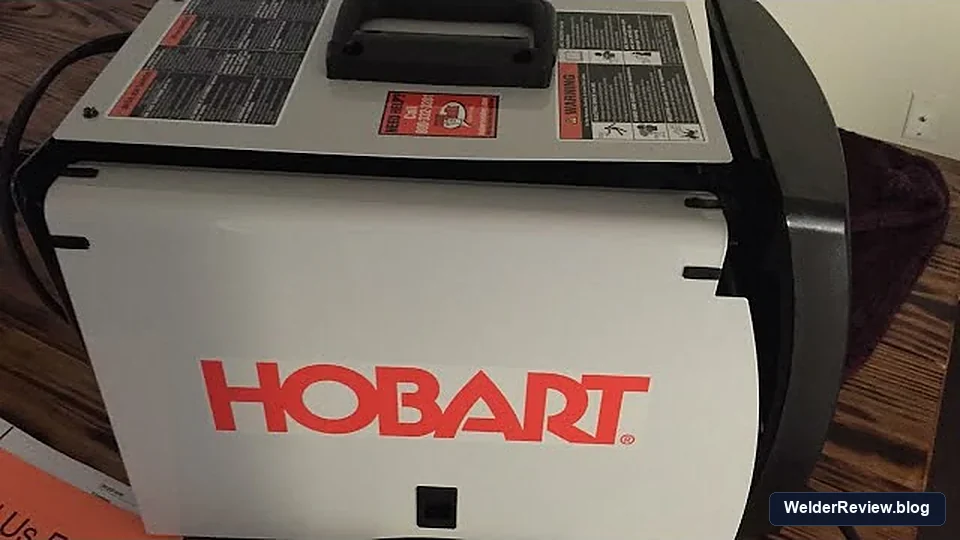
Highlighted within our hobart 210 mvp vs miller 211 analysis, the EZ Mode interface eliminates guesswork by simplifying parameter adjustments so operators can quickly match wire thickness and material gauge.
Manual override capabilities allow experienced welders to fine-tune voltage and wire speed independently. This dual-control flexibility satisfies both novice beginners and seasoned professionals seeking precise puddle control.
The included MIG gun feels balanced in hand, reducing fatigue during long fabrication sessions. Cable flexibility remains high even in cooler ambient workshop temperatures, ensuring comfortable torch maneuverability.
- Simplified two-knob configuration accelerates initial machine setup procedures.
- Ergonomic torch handle enhances user comfort during extended welding runs.
Usability, EZ Mode Setup & Interface Controls
Designed without complex digital menus, the straightforward analog interface relies on a clearly marked reference chart inside the side door to guide operators through wire speed calculations based on material thickness.
Polarity changes require opening the main cabinet to swap internal leads when transitioning between gas-shielded MIG welding and self-shielded flux-cored setups, ensuring proper electrical transfer for distinct consumable types.
The ergonomic Bernard MIG gun connects via a standard direct plug-in system, offering comfortable trigger actuation and flexible cable management that reduces hand fatigue during lengthy fabrication and repair sessions.
Maintenance, Consumables & Long-Term Durability
Routine maintenance involves inspecting drive rolls and cleaning accumulated metal dust from liners. Replacing contact tips and nozzles takes seconds, minimizing downtime during critical fabrication workflow sequences.
The industrial warranty provides robust five-year coverage on transformers and main rectifiers. Three-year coverage applies to drive systems, offering exceptional long-term peace of mind for buyers.
Regular cleaning of internal components extends machine lifespan significantly in dusty environments. Keeping drive gears lubricated ensures consistent wire feeding performance across thousands of operating hours.
- Readily available replacement consumables simplify routine workshop upkeep.
- Comprehensive multi-year warranty protects your capital equipment investment.
Maintenance, Consumables & Long-Term Durability
Routine upkeep requires periodic compressed air cleaning of accumulated metal dust inside the transformer housing, alongside checking the drive roll tensioner to prevent erratic wire feeding caused by premature groove wear.
Contact tips, gas nozzles, and diffusers accept standard Tweco-style replacement parts, making it exceptionally easy to source affordable welding consumables from local supply distributors without experiencing extended equipment downtime.
Inspecting the ground clamp connection and copper power cable periodically prevents excessive electrical resistance, ensuring optimal arc ignition and sustained performance across years of demanding garage-based metal fabrication work.
Definitive Buyer Guidance: Who Wins & Who Skips
Ideal buyers include DIY enthusiasts, homesteaders, and mobile repair technicians needing reliable power. It excels at automotive sheet metal repair, light structural fabrication, and creative metal art projects.
Skip this machine if your primary workload involves heavy structural steel exceeding quarter-inch thickness. Professional industrial fabrication shops requiring continuous one-hundred percent duty cycles should look at larger units.
Weighing your specific power availability and material thickness requirements clarifies purchasing decisions instantly. This welder remains a premier choice for versatile, light-duty workshop fabrication tasks everywhere.
- Perfect for home garages, farms, and light maintenance service trucks.
- Not recommended for heavy industrial plate welding or continuous production.
Definitive Buyer Guidance: Who Wins & Who Skips
Home hobbyists, auto restoration specialists, and farm repair technicians will find this machine ideal for tackling light-gauge projects where reliable arc stability outweighs the need for heavy industrial power output.
Professional structural steel fabricators working daily on heavy plate should skip this model, as its limited amperage output ceiling cannot sustain the continuous multi-pass requirements of commercial construction environments.
Anyone requiring portability for off-site field repairs without access to standard 115V outlets will need a generator-compatible multi-process machine instead of relying on this strictly dedicated workshop power tool.
Frequently Asked Questions
Can this welder operate on a standard household electrical outlet?
Yes, it plugs directly into standard one-twenty volt circuits safely. Ensure your breaker meets the twenty-amp requirement for optimal performance.
Does the machine come ready for aluminum welding right out of the box?
It is spool gun ready, but you must purchase the optional spool gun separately. This design allows smooth feeding of soft aluminum wires.
What is the maximum material thickness it can weld effectively?
The unit welds materials ranging from twenty-four gauge up to three-sixteenths inch steel. Multi-pass techniques are necessary for heavier sections.
Can I use this welder without shielding gas for outdoor projects?
Yes, you can run self-shielded flux-core wire for outdoor repairs. This mode eliminates the need for bulky gas cylinders in windy locations.
How does EZ Mode help beginners set up the machine correctly?
EZ Mode reduces setup time by using a simple two-dial interface. It automatically matches wire thickness with material gauge parameters instantly.