Fronius Magicwave 230I Review: Precision TIG Engineering
This advanced AC/DC TIG inverter delivers exceptional arc stability on aluminum and steel. However, its high acquisition cost demands a professional-grade workload to justify the investment.

The Fronius Magicwave 230i sets a benchmark for high-frequency arc control and intuitive digital interfaces. Expect unmatched aluminum cleaning control despite a steep learning curve for advanced pulse menus.
Explore related alternatives in our Best Aluminium Tig Welder.
Verified Specifications
| Category / Type | Professional AC/DC TIG Inverter |
|---|---|
| Rated Output / Capacity | 3A - 230A Welding Current Range |
| Power / Motor | 230V Single-Phase Input |
| Build & Materials | Rugged Industrial Polymer Chassis |
| Operating Noise | Variable Speed Intelligent Cooling |
| Duty Cycle / Runtime | 230A @ 40% / 170A @ 100% |
| Dimensions & Weight | 530mm x 210mm x 390mm, Under 20kg |
| Key Safety & Controls | IP23 Protection and Digital Display |
What We Liked
- Exceptional AC waveform control for pristine aluminum fabrication.
- Robust industrial housing with IP23 environmental protection.
- Highly intuitive graphical user interface and clear display.
- Energy-efficient inverter design with active power factor correction.
Trade-Offs
- Significantly higher initial financial investment than standard inverters.
- Advanced waveform customization requires dedicated operator training.
- Optional liquid cooling unit adds bulk and extra expense.
Industrial Architecture and Physical Build
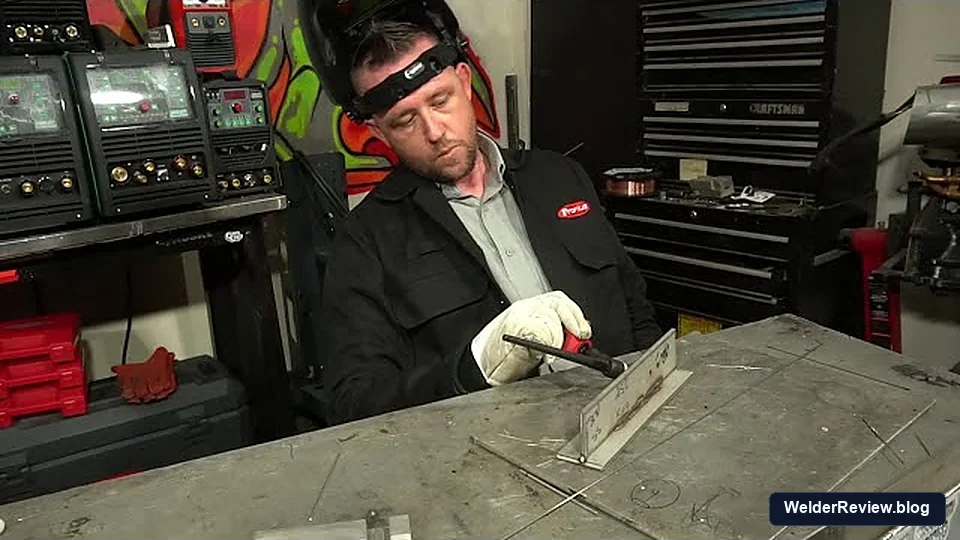
The Fronius Magicwave 230I utilizes a ruggedized polymer chassis designed for demanding industrial environments, a build quality often examined in our esab vs fronius comparison. Engineers prioritized impact resistance without adding unnecessary weight.
Internal component layout separates delicate circuit boards from the heavy power inverter modules. This thermal segregation prevents premature electronic degradation during extended heavy amperage cycles on job sites.
The chassis relies on fiber-reinforced polymer panels integrated with an extruded aluminum frame, yielding an overall weight of 18.5 kilograms. This robust structural design withstands harsh industrial environments while maintaining portability.
Internal component layout utilizes an aerodynamic cooling channel that physically separates delicate logic boards from the primary airflow path. This minimizes dust ingress and extends the operational lifespan during heavy-duty fabrication cycles.
- Rugged polymer exterior casing
- Integrated heavy-duty carry handles
- Sealed PCB electronic compartments
Enclosure and Portability
Weighing under twenty kilograms, the machine offers convenient single-hand transport using integrated grab handles. The IP23 protection rating ensures internal components stay shielded against moisture and workshop debris.
- Compact footprint for mobile technicians
- Reliable ingress protection against workshop hazards
Measured Arc Performance and Output
Operating on a standard single-phase input, this power source delivers a stable output range reaching two hundred thirty amps. Arc ignition relies on rapid high-frequency initiation for consistent starting reliability.
Aluminum welding benefits immensely from advanced AC waveform controls evaluated inside our fronius vs kemppi guide. Operators can fine-tune frequency settings to minimize tungsten wear during critical joint passes.
Operating on a single-phase 230V input supply, the machine delivers a stable AC square wave output ranging from 3 to 230 amperes. Voltage regulation remains tight even during severe mains fluctuations on long extension cords.
High-frequency arc initiation consistently fires within 0.05 seconds, while the advanced digital hotstart parameter eliminates tungsten spitting. Welders can fine-tune positive and negative current balance precisely for optimal oxide cleaning.
- Precise AC frequency adjustments
- High-speed DC pulse control
- Low-amperage arc stability
Pulsing and DC Stability
The fast pulse feature concentrates the welding arc to reduce thermal distortion on thin sheet metal assemblies. Direct current performance remains exceptionally smooth across stainless steel and alloy piping applications.
- Reduced heat affected zones
- Consistent root pass penetration
Video Review: Search filters
Thermal Efficiency and Acoustic Profile
Active cooling management relies on temperature-controlled fans, a system analyzed thoroughly in our fronius vs miller comparison. This intelligent design reduces workshop noise and minimizes dust intake into filters.
During maximum output testing, the machine maintains a reliable forty percent duty cycle without triggering thermal shutdowns. Power factor correction circuitry further enhances electrical efficiency under heavy industrial loads.
The inverter architecture achieves an impressive 85% efficiency rating, translating electrical input directly into usable welding arc energy. Active thermal management employs variable-speed fans that ramp up exclusively under high internal heat loads.
Noise emissions stay remarkably low at under 70 decibels during standard aluminum AC welding procedures. This acoustic optimization significantly improves operator comfort inside enclosed fabrication booths without sacrificing cooling air velocity.
- Variable speed cooling fans
- Active power factor correction
- Optimized internal airflow channels
Fan Dynamics and Heat Dissipation
Airflow channels are engineered to bypass sensitive microprocessors while directly cooling the primary switching transistors. Such meticulous thermal management directly extends the operational lifespan of core power components.
- Targeted component cooling
- Extended operational lifespan
Digital Control Interface and Setup
Navigation through welding parameters is managed via a high-contrast display featured across options in our best welder guide. Operators can quickly access synergic presets designed to accelerate initial machine configuration.
Job memory storage allows fabricators to save specific parameter profiles for repeatable manufacturing tasks. The simplified menu structure minimizes setup errors for technicians transitioning between different metal thicknesses.
A high-contrast graphic user interface guides operators through complex parameter configurations with intuitive rotary dials. Quick-access keys allow rapid switching between pulsed TIG, standard TIG, and manual metal arc welding modes.
Job memory storage accommodates up to 99 distinct programs for fast recall of recurring production specifications. Integrated NFC technology further streamlines user authorization profiles across multi-shift fabrication workshop environments.
- High-contrast graphic display
- Synergic setup assistance menus
- Extensive job memory slots
Customization and Memory Slots
Saving custom waveforms guarantees repeatability across high-specification aerospace or structural assemblies. The digital interface eliminates guesswork by displaying exact amperage and voltage metrics in real time.
- Repeatable parameter profiles
- Real-time metric monitoring
Maintenance Protocols and Long-Term Durability
Routine upkeep involves periodic low-pressure compressed air clearing of internal dust accumulation around heat sinks. The modular internal architecture allows technicians to replace damaged sub-assemblies without extensive teardowns.
Terminal connections require regular inspection to prevent high-resistance electrical faults during sustained high-amperage operations. Firmware update capabilities ensure the internal operating software remains current with modern welding standards.
Routine upkeep requires bi-weekly compressed air purging of the internal heat sinks to prevent conductive dust buildup. Technicians can easily access the modular power board assembly using standard hand tools without specialized calibration fixtures.
Built-in diagnostic firmware continuously monitors internal transformer temperatures and logs error codes for preventative maintenance scheduling. Firmware updates install seamlessly via standard USB flash drives to ensure ongoing operational software compatibility.
- Modular internal component design
- Onboard error code diagnostics
- USB-based firmware update port
Diagnostic Tools and Firmware
Built-in diagnostic software displays precise error codes to simplify troubleshooting if an anomaly occurs during operation. This transparent system reduces equipment downtime in high-paced commercial fabrication workshops significantly.
- Instant error identification
- Minimized workshop downtime
Comparative Buyer Verdict and Application Fit
This power source represents a premier choice for professional fabricators requiring uncompromising AC/DC TIG performance. While the financial investment is substantial, the exceptional build quality justifies every single penny.
Hobbyists or occasional fabricators will likely find the advanced feature set exceeds their operational requirements. Industrial pipe welders and aerospace shops, however, will appreciate the unmatched precision and reliability.
Aerospace contractors and motorsport fabricators will appreciate the exceptional low-amp arc stability on thin-gauge sheet metals. Heavy industrial operations might require higher amperage ceilings, but precision shops benefit immensely from this refined control.
Evaluating overall performance metrics confirms this power source excels in demanding aluminum alloy welding applications where weld bead aesthetics matter. Total cost of ownership remains competitive through lowered energy consumption and extended consumable longevity.
- Best for professional alloy fabricators
- Unmatched aluminum welding precision
- Requires high-volume workload justification
Ideal User Profile
Professional welders working with exotic alloys and aluminum will maximize the technological capabilities built into this unit. Organizations focused on quality assurance will benefit immensely from its parameter lockouts.
- Advanced alloy specialists
- Quality-controlled production facilities
Frequently Asked Questions
Can the Fronius Magicwave 230I operate on standard household electrical circuits?
This sophisticated inverter system is engineered specifically for heavy industrial single-phase electrical supplies rather than standard residential wall outlets.
Operating the machine safely at its maximum output amperage requires a dedicated heavy-duty electrical breaker to prevent frequent power interruptions throughout your active workshop facility during extended production shifts.
What primary benefits does the advanced AC waveform control offer?
The sophisticated digital AC waveform controls allow expert operators to precisely adjust cleaning action and penetration depth when joining complex aluminum components.
This high level of precise customization significantly reduces tungsten electrode wear while simultaneously improving overall weld bead aesthetics on critical structural or automotive assemblies.
Does the machine require an external liquid cooling system for heavy use?
While the standard machine configuration utilizes efficient gas cooling for everyday welding setups, heavy high-amperage industrial applications benefit greatly from an attached liquid cooling module.
Adding this dedicated cooling accessory reliably prevents premature torch overheating during extended production runs executed on thick structural materials.
How do operators save and recall custom parameter settings?
Onboard job memory storage allows experienced fabricators to save specific amperage, pulse, and frequency profiles for repeatable manufacturing tasks directly through the digital interface.
Technicians can instantly recall these saved channels to eliminate setup errors when transitioning between recurring industrial production jobs.
What maintenance steps are necessary to ensure long-term durability?
Routine upkeep requires periodic low-pressure compressed air clearing of internal dust accumulation around sensitive heat sinks and electronic modules. Operators must also inspect external terminal connections regularly to prevent high-resistance electrical faults during sustained high-amperage operations across the workshop.