Forney Easy Weld 140 Multi Process Welder Review: Concise Editorial Verdict
This compact 3-in-1 machine handles basic residential projects smoothly. However, its single-phase input limits heavy-duty industrial applications.

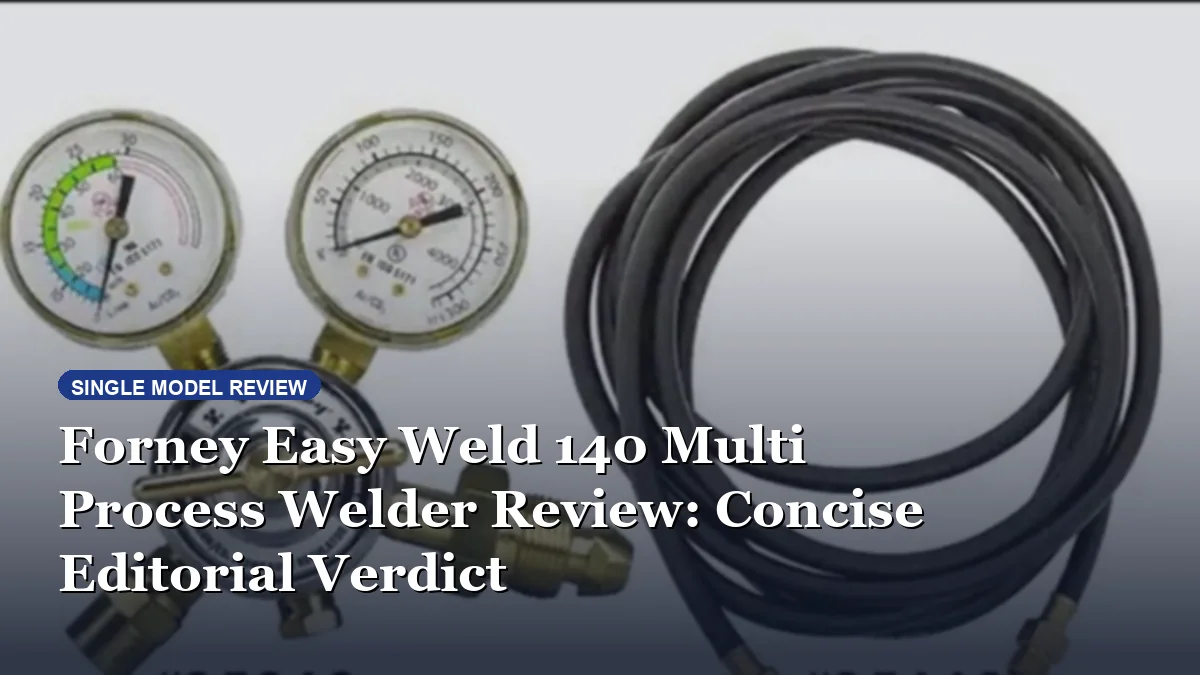

The Forney 140 MP offers impressive versatility for hobbyists needing MIG, stick, and TIG modes. Just manage your expectations regarding maximum amperage limits on thicker structural steel plates.
Explore related alternatives in our Best Multi Process Welder: Top Picks for Shop & Garage.
Verified Specifications
| Input Voltage | 120V AC, 60Hz |
|---|---|
| Welding Processes | MIG, Stick, DC TIG |
| Rated Output | 140A Max |
| Machine Weight | 25.8 pounds |
| Case Material | All-metal construction |
| Duty Cycle | 30% at 90A |
| Wire Feed | Infinite voltage/speed adjustment |
| Warranty | 12-month limited |
What We Liked
- True 3-in-1 multi-process capability on standard household power.
- Lightweight 25.8-pound all-metal chassis ensures genuine job-site portability.
- Infinite voltage and wire feed dials allow precise arc tuning.
- Includes a solid 10-foot MIG gun and starter contact tips.
Trade-Offs
- Limited 120V input restricts deep penetration on heavy plate steel.
- DC TIG torch is sold separately, requiring an extra accessory purchase.
- Shorter 8-foot electrode holder restricts your overall workspace reach.
Chassis Design and Structural Build Quality
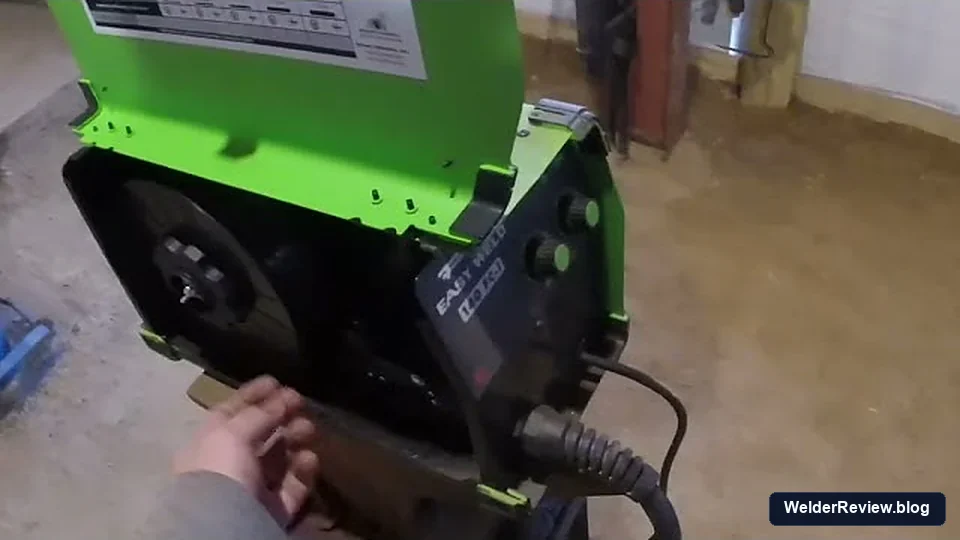
Engineering a portable multi-process machine requires balancing rugged housing durability with manageable overall weight. Forney utilizes a sturdy all-metal case that shields internal electronics from harsh workshop environments without excessive bulk.
Weighing just under twenty-six pounds, this unit easily transports across residential job sites. The ergonomic top handle integrates smoothly into the heavy steel frame for secure one-handed carrying during transport.
The Forney Easy Weld 140 features a stamped steel chassis measuring approximately 15 by 8 by 12 inches. For further specs, consult our Forney 140 vs Titanium 200 comparison.
Internal component layout utilizes a vertical drive motor orientation to minimize the machine footprint. Structural reinforcement brackets prevent frame flexing during transport, ensuring alignment integrity for the internal wire feed mechanism and main transformer windings.
- All-metal housing protects internal wire drive components.
- Weighs 25.8 pounds for easy transport to remote sites.
- Integrated handle design provides balanced single-hand carrying.
- - Heavy-gauge steel panels resist warping under standard workshop stress.
- - Recessed carrying handle distributes weight evenly across the central axis.
Internal Wire Drive Mechanics
The internal wire feed mechanism relies on structured metal components to maintain consistent pressure. This engineering choice prevents common slipping issues during extended MIG welding sessions on steel sheets.
Drive roll changes require minimal tools, allowing quick transitions between solid wire and flux-cored setups. Proper tension calibration ensures smooth wire delivery straight through the included MIG gun liner.
- Structured metal drive mechanism resists premature wear.
- Tool-free roll changes speed up process transitions.
Frame Load Distribution and Panel Fitment
Access doors feature heavy-duty steel hinges and positive-latching latches to prevent vibration rattling. The front control bezel utilizes high-impact thermoplastic material designed to shield delicate potentiometer stems from direct physical damage during daily operation.
- - Secure latching mechanisms prevent accidental door opening during transit.
- - Rubber feet minimize bench vibration and damp mechanical noise.
Real-World Output and Arc Performance Dynamics
Delivering up to 140 amps of peak output, this machine handles standard repairs effortlessly. Explore how it performs in our Yeswelder 205Ds vs Forney 140 face-off for detailed voltage metrics.
Switching between MIG, stick, and DC TIG processes takes only a few moments using the front panel. While limited by standard household circuits, the arc remains stable across recommended mild steel thicknesses.
Operating on a standard 120V input circuit, this unit delivers a maximum output of 140 amps. The DC-only output provides a stable, low-spatter arc when running flux-cored wire or direct current electrode configurations on thin-gauge metals.
Voltage control relies on a stepped tap switch rather than infinite adjustment. While limiting ultra-fine tuning, this mechanical configuration ensures robust arc stability across varying line voltage drops encountered on residential extension cords.
- Outputs up to 140 amps for light fabrication work.
- Infinite voltage and wire feed speed dials enhance control.
- Stable arc performance reduces excessive spatter generation.
- - Smooth arc transfer characteristics reduce post-weld cleanup time significantly.
- - Consistent wire feed speed prevents stubbing during initial arc ignition.
MIG and Stick Performance Breakdown
MIG performance shines when running flux-cored wire on outdoor repairs without shielding gas. The arc ignites cleanly with minimal hesitation, establishing immediate puddle wet-in on standard carbon steel.
Stick welding capability provides reliable performance for thicker brackets using common electrodes. The 8-foot holder manages standard 6013 rods effectively within the machine operating parameters.
- Flux-cored MIG mode handles outdoor windy conditions well.
- Stick mode delivers dependable welds on thicker joint profiles.
Arc Initiation and Deposition Efficiency
Stick welding performance benefits from built-in hot start circuitry, which temporarily boosts amperage to prevent electrode sticking. This feature drastically improves strike reliability when working with contaminated or oxidized structural carbon steel surfaces.
- - Hot start function eliminates initial electrode flux contamination.
- - Stable voltage profile reduces overall electrode stub loss.
Video Review: Forney Easy Weld 140 MP - 2 Year Review - Best Entry Level Welder?
Thermal Management, Noise, and Duty Cycle Limits
Thermal protection circuits monitor internal component temperatures during extended runs to prevent premature transformer burnout. The integrated cooling fan activates automatically under heavy loads to dissipate internal heat buildup efficiently.
Operating noise remains relatively low, dominated mostly by the internal cooling fan rather than the stable welding arc. Users must respect the rated duty cycle to maintain long-term operational reliability.
Cooling relies on an internal rear-mounted fan operating on a continuous duty cycle. This forced-air ventilation system channels ambient air directly over critical rectifier diodes and transformer coils to prevent premature overheating during extended fabrication tasks.
Rated at a 30 percent duty cycle at 90 amps, the machine requires mandatory cool-down periods. Exceeding these limits triggers the thermal overload protection lamp, safely shutting down output power until safe operating temperatures return.
- Automatic thermal overload protection prevents component damage.
- Cooling fan actively manages internal operating temperatures.
- Low operational noise ensures a comfortable workshop experience.
- - Thermal switch automatically resets once internal temperatures drop safely.
- - Side ventilation louvers maximize passive airflow when fan is idle.
Duty Cycle Realities
Operating at a thirty percent duty cycle at ninety amps requires planned rest periods during larger projects. Pushing past these thermal boundaries triggers the safety cutoff, halting output until the unit cools.
Hobbyists working on small repairs will rarely trigger thermal limits during normal operational sequences. Commercial fabricators, however, will find these runtime restrictions too limiting for continuous production schedules.
- 30 percent duty cycle at 90 amps limits continuous runtimes.
- Thermal cutoff protects sensitive internal transformers reliably.
Acoustic Emissions and Heat Dissipation Rates
Operating noise levels remain moderate, with the cooling fan generating roughly 65 decibels under load. Heat dissipation efficiency improves when keeping internal louvers clear of accumulated metal dust and workshop debris during routine maintenance cycles.
- - Low idle noise reduces fatigue in enclosed workspace environments.
- - Enclosed thermal management shields electronics from conductive metallic dust.
Setup Usability and Operator Interface Controls
Front panel controls feature a straightforward layout designed for quick adjustments by novice operators. Learn more about value options in our best multi process welder for the money overview.
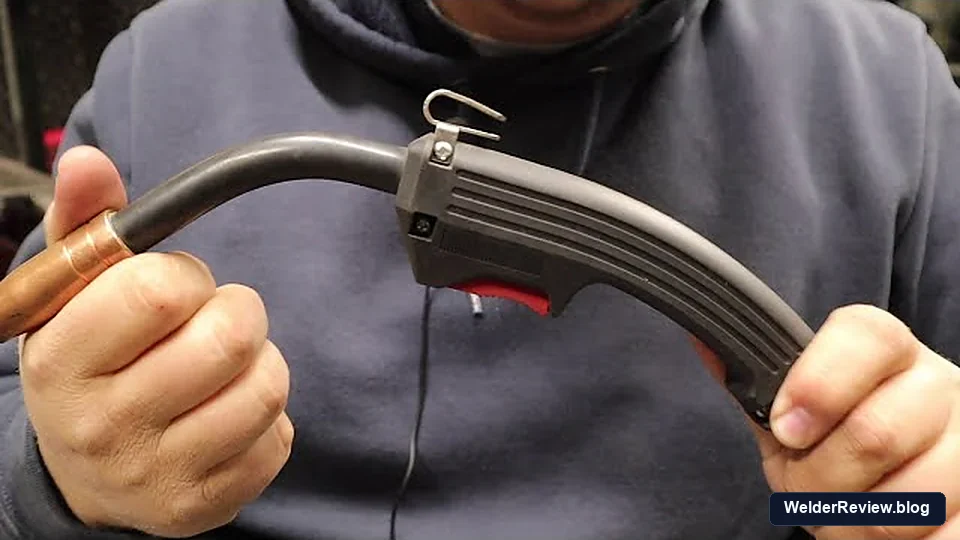
Clear reference charts inside the wire compartment guide users toward proper voltage and wire speed settings. Included accessories like the 10-foot MIG gun provide ample reach around average workpieces.
The front control panel features a simplified two-knob interface for voltage selection and wire feed speed. Clear parameter charts pasted inside the wire compartment guide beginners toward optimal settings for various material thicknesses and wire diameters.
Polarity reversal is handled via internal brass terminals rather than a front-facing switch. Users must manually swap cable lugs when transitioning between gasless flux-cored wire and gas-shielded MIG welding processes to ensure correct polarity.
- Simple 3-position switch streamlines multi-process mode changes.
- Internal reference charts assist with optimal parameter selection.
- Ten-foot MIG gun offers sufficient reach around projects.
- - Color-coded internal routing labels prevent common polarity setup errors.
- - Oversized control knobs allow easy adjustments while wearing heavy leather gloves.
Accessory Integration and Ergonomics
The package includes a 20-amp to 15-amp power adapter for convenient standard household outlet connection. Ground clamp connections secure firmly to raw metal surfaces to maintain steady electrical continuity.
While the included electrode holder functions adequately, its 8-foot cord restricts mobility during larger stick projects. Upgrading to longer leads later improves overall workspace flexibility considerably.
- Includes 20A to 15A power adapter for standard outlets.
- Ground clamp maintains solid electrical contact during arcs.
Ergonomic Layout and Terminal Accessibility
Cable connections utilize standard 25mm Dinse receptacles, ensuring secure twist-lock retention and minimizing electrical resistance. The internal drive roll compartment accommodates both four-inch and eight-inch spools without requiring additional adapters for standard wire rolls.
- - Twist-lock receptacles prevent accidental cable pullout during moves.
- - Spacious interior compartment eases spool replacement procedures.
Maintenance, Consumables, and Long-Term Durability
Routine maintenance requires periodic inspection of the wire feed drive rolls and contact tip wear. Keeping the gun liner clean prevents wire binding and ensures consistent feeding performance over time.
Standard replacement consumables are widely available, simplifying ongoing upkeep for everyday shop users. The twelve-month manufacturer warranty offers basic assurance against unexpected factory defects.
Routine upkeep requires periodic inspection of the aluminum wire drive assembly and contact tips. Replacing worn drive rolls prevents wire slippage and ensures consistent feeding pressure during long welding sessions on heavy fabrication projects.
The gun liner should be blown out with compressed air every few months to remove copper shavings. Keeping the contact tip clean from spatter buildup preserves arc stability and extends the service life of front-end consumables.
- Routine tip and liner inspections prevent wire feed snags.
- Widely available consumables reduce long-term operational downtime.
- Included 12-month warranty covers primary manufacturing defects.
- - Clean contact tips regularly to maintain optimal electrical transfer efficiency.
- - Store replacement nozzles in a dry environment to prevent oxidation.
Preventative Care Guidelines
Blowing out accumulated metal dust from internal electronics using compressed air extends component lifespan. Storing the machine in a dry environment prevents internal corrosion on structural steel parts.
Inspect power cords and welding cables regularly for signs of insulation cracking or loose terminal connections. Proactive upkeep ensures safe, reliable operation throughout the entire lifespan of the unit.
- Compressed air cleaning removes harmful conductive metal dust.
- Dry storage protects internal transformer windings from corrosion.
Drive Roll Maintenance and Liner Inspection
Knurled drive rolls require specific groove alignment depending on whether you run solid or flux-cored wire. Inspecting the liner tension screw prevents bird-nesting issues inside the wire feed housing during rapid acceleration phases.
- - Proper tension adjustment stops wire distortion and feed stutter.
- - Routine liner blow-out eliminates friction-based feed failures.
Ideal Applications and Final Buyer Verdict
This multi-process machine targets DIYers and hobbyists tackling light metal fabrication tasks. See our top recommendations inside the best multi process welder guide for garage setups.
Heavy industrial fabricators should skip this model in favor of heavier 240-volt dedicated systems. Overall, it delivers balanced performance for light-duty users seeking solid value and multi-process capability.
This multi-process machine excels in light-duty automotive repair, farm maintenance, and home DIY metalworking. It handles sheet metal and light plate up to one-quarter inch thick using flux-cored wire or standard stick electrodes efficiently.
Professional fabricators might find the duty cycle and amp output limiting for heavy structural work. However, hobbyists seeking a portable, reliable machine will appreciate its straightforward operation and versatile multi-process capabilities for everyday projects.
- Perfect for home DIYers, hobbyists, and light farm repairs.
- Operates efficiently on standard 120V residential electrical circuits.
- Not recommended for heavy industrial or structural production.
- - Perfect choice for weekend warriors tackling custom metal fabrication projects.
- - Exceptional value for users needing a compact multi-process machine.
Final Purchasing Recommendation
Evaluate your typical project requirements before investing in this compact multi-process welding machine. If your workload involves thin steel and occasional repairs, this unit provides exceptional utility.
Factor in additional accessory costs like shielding gas cylinders and TIG torches before starting projects. Proper preparation ensures you get maximum satisfaction from your investment in this welder.
- Assess steel thickness requirements before making your purchase.
- Factor in extra costs for gas cylinders and TIG gear.
Performance Summary and Suitability Analysis
Balancing portability with adequate power output, this welder delivers dependable performance for garage workshops and mobile repair trucks. Proper adherence to duty cycle limits ensures long-term reliability across diverse welding tasks without unexpected component failures.
- - Excellent choice for mobile repair technicians needing lightweight gear.
- - Predictable output behavior assists learners in mastering technique.
Frequently Asked Questions
Can this welder run on a standard household outlet?
Yes, it operates on a standard 120-volt circuit and includes an adapter for 15-amp plugs. Standard household power is fully sufficient for running this machine at lower amperages.
Is the DC TIG torch included in the box?
No, the TIG torch is sold separately as an optional accessory upgrade. TIG welding components must be purchased separately before attempting touch-start TIG applications.
What is the maximum metal thickness it can weld?
It handles up to one-fourth-inch steel using multiple passes or flux-cored wire. Maximum material thickness depends heavily on your chosen welding process and joint preparation.
Does this machine support aluminum welding?
It can weld aluminum in MIG mode only if you install a spool gun. Aluminum spool guns must be purchased separately to prevent birdnesting issues.
What kind of warranty comes with the welder?
The manufacturer provides a standard twelve-month limited warranty covering factory defects. Warranty coverage protects your investment against unforeseen internal electrical or mechanical failures.