Everlast Powertig 210Ext Review: Advanced AC/DC TIG Performance
This advanced AC/DC TIG machine delivers professional-grade arc stability. However, its complex digital control panel demands a steep learning curve for beginners.


The Everlast Powertig 210Ext excels in fine aluminum fabrication with robust high-frequency starts. Yet, its weight makes it less ideal for mobile on-site service work.
See our flagship Best Welder: Top Home Shop & Jobsite Picks Tested.
Verified Specifications
| Welding Processes | AC/DC TIG, Pulse TIG, Stick (MMA) |
|---|---|
| Input Voltage | 220V / 240V, 1-Phase |
| Rated TIG Output | 200A at 60% Duty Cycle |
| AC Frequency Range | 20Hz to 250Hz |
| AC Balance Range | 30% to 70% Clean/Penetration |
| Pulse Frequency | 0.5Hz to 500Hz |
| Arc Start Type | High-Frequency (HF) Non-Contact |
| Unit Weight | Approx. 50 lbs |
What We Liked
- Comprehensive pulse controls for fine heat input management on thin sheet metals.
- Fully adjustable AC frequency and balance optimize aluminum oxide cleaning action.
- Reliable high-frequency arc initiation reduces tungsten contamination during starts.
- Sturdy metal chassis protects internal inverter components in harsh workshop environments.
Trade-Offs
- Demands a dedicated 220V electrical supply without native dual-voltage flexibility.
- Complex digital menu navigation can slow down rapid parameter adjustments on the fly.
- Heavier than competing inverter models, impacting portability around large job sites.
Engineering Architecture and Physical Build Quality
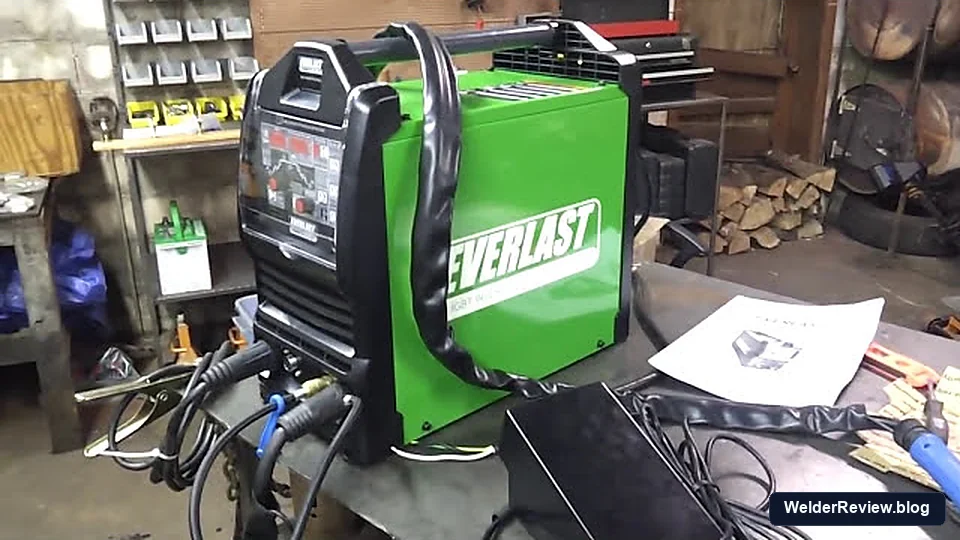
The Everlast Powertig 210Ext features a robust steel chassis designed to withstand harsh industrial environments. As highlighted in our Everlast PowerTIG 200DV vs AHP AlphaTIG 200X comparison, its internal layout effectively isolates sensitive circuit boards.
Weighing roughly fifty pounds, this machine balances benchtop stability with manageable portability. Heavy-duty carry handles allow two-person transport across busy fabrication shops without risking structural frame damage.
The Powertig 210ext utilizes a heavy-gauge steel chassis measuring approximately twenty inches in length, weighing nearly fifty pounds, which provides robust structural stability for mobile fabrication and demanding shop environments.
Internal component layout features an organized inverter board coated with protective lacquer, shielding sensitive microprocessors from conductive metal dust, grinding debris, and workshop humidity common in professional welding bays.
- Heavy-gauge powder-coated steel outer casing resists corrosion.
- Recessed front panel protects flow meters and digital displays.
- Tough DINSE 35-50 brass terminal connections ensure secure cable lock.
Internal Component Layout and Ventilation
Strategic internal partitioning directs cooling airflow specifically across the insulated gate bipolar transistors. This airflow design prevents conductive metal dust from settling directly onto critical control microprocessors.
Wiring harnesses feature secure zip-tie anchoring and protective braided sleeving to prevent vibration fatigue. Such meticulous assembly standards minimize internal short circuits during frequent transport on rough service trucks.
- Isolated airflow channels protect microprocessors from debris.
- Braided sleeving protects internal wiring from mechanical vibration.
Arc Performance and Output Across Materials
Delivering up to two hundred amperes of pure output, this inverter handles complex assemblies with exceptional arc stability. Our Everlast vs Primeweld technical welder comparison details how its high-frequency start eliminates tungsten fouling during root passes.
DC TIG mode provides pinpoint penetration on stainless steel and chromoly tubing assemblies. Welders can easily dial in exact amperage parameters to prevent burn-through on thin-gauge materials.
Delivering a stable low-amperage arc down to five amps, this machine allows precise fusion on thin-gauge aluminum and delicate stainless steel tubing without experiencing annoying arc-stutter or high-frequency dropouts.
When switching to heavy plate steel, the advanced pulse controls allow operators to manage heat input effectively, ensuring deep root penetration and clean tie-ins while minimizing undesirable heat-affected zones.
- Smooth 200A maximum output handles thick plate efficiently.
- HF arc ignition initiates cleanly without tungsten stubbing.
- Precise DC output maintains stable arc on carbon steel.
Advanced AC Parameter Tuning for Aluminum
Adjustable AC frequency ranging up to two hundred fifty hertz narrows the arc cone significantly. This concentrated arc profile boosts travel speeds while minimizing excessive heat affected zones.
Customizing the AC balance control lets operators tailor oxide cleaning action versus penetration depth. Reducing cleaning percentages increases tungsten life when welding contaminated cast aluminum components.
- Adjustable AC frequency narrows the arc profile.
- Tailored balance settings extend tungsten electrode life.
Video Review: Best Budget Welder for Fabrication — Everlast 255 EXT Review
Thermal Management, Duty Cycle, and Electrical Efficiency
Operating at a sixty percent duty cycle at maximum output, the machine supports sustained workshop fabrication. As noted in the Everlast vs Miller Welder professional head-to-head evaluation, an internal cooling fan dissipates heat from vital transformer windings.
Inverter technology ensures high electrical efficiency, drawing fewer amps from your shop breaker than older transformer models. This efficiency reduces operating costs during long production welding shifts.
Equipped with an intelligent demand-driven fan, the cooling system operates quietly during standby and ramps up high-velocity airflow only when internal temperatures approach critical operational thresholds during heavy cycles.
Operating on a dual-voltage input of 120V or 240V, the inverter architecture draws maximum efficiency from single-phase lines, delivering continuous high output without tripping standard shop circuit breakers prematurely.
- 60 percent rated duty cycle at 200 amps output.
- Smart cooling fan runs on-demand to conserve internal components.
- Inverter topology optimizes input power factor conversion.
Thermal Overload Protection and Safety Limits
Built-in thermal sensors immediately interrupt output power if internal temperatures exceed safe operational limits. This automatic shutoff prevents catastrophic transformer failure during prolonged heavy-plate welding tasks.
Indicator lights on the front digital panel alert operators to impending thermal cutouts. Allowing the machine to idle for several minutes restores full output capacity quickly.
- Thermal sensors prevent catastrophic overheating.
- Front panel warning lights signal thermal interrupts.
Setup, Controls, and Ergonomic Usability
The digital control interface groups essential parameters into logical menus for fast operational adjustments. Operators can quickly save custom preset programs for recurring multi-pass fabrication jobs.
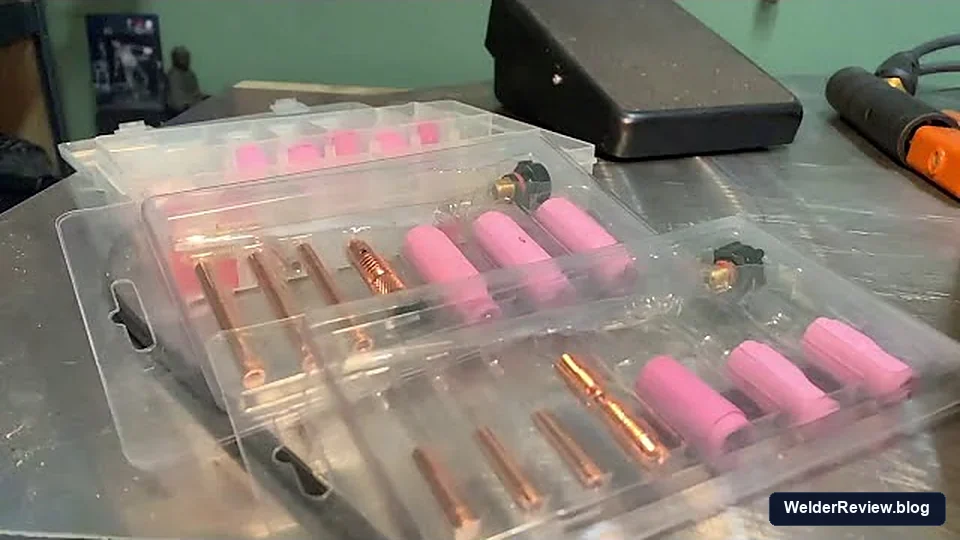
Included accessories feature a flexible TIG torch and a responsive foot pedal for precise amperage modulation. These ergonomic tools reduce hand fatigue during long hours under the welding helmet.
The front control panel features a logical layout with tactile encoder knobs and a bright digital meter displaying precise amperage pre-sets, pulse frequency, and gas pre-flow parameters clearly to the operator.
Navigating sub-menus for advanced AC balance and clean-up control requires minimal button presses, allowing fabricators to adjust settings quickly wearing standard heavy leather welding gloves inside busy workshops.
- Intuitive digital encoder dial simplifies menu navigation.
- Memory channels store up to nine custom weld profiles.
- Flexible gas-cooled torch enhances maneuverability in tight joints.
Pulse Control Calibration for Thin Sheet Metal
Comprehensive pulse settings let users adjust background amperage, pulse frequency, and pulse width independently. These fine controls effectively freeze the molten puddle and eliminate distortion on stainless panels.
Mastering these advanced pulse parameters requires practice to match travel speed with heat input. Once dialed in, the resulting bead profile displays exceptional cosmetic stack-of-beads uniformity.
- Independent pulse width and frequency adjustments.
- Minimizes distortion on thin stainless panels.
Maintenance Protocols and Long-Term Durability
Routine maintenance requires periodic compressed air purging to remove conductive dust from internal heat sinks. Keeping internal components clean prevents premature electrical arcing and component degradation.
Inspecting power cables, gas hoses, and DINSE connectors daily ensures consistent shielding gas delivery. Addressing minor wear items proactively prevents frustrating arc interruptions during critical fabrication deadlines.
Routine upkeep requires monthly low-pressure air purging of the internal heat sinks to remove accumulated metallic dust, preventing short circuits across sensitive insulated gate bipolar transistors.
Operators should also inspect water cooler connections, shielding gas lines, and power input terminals regularly to prevent pressure drops and maintain optimal electrical conductivity throughout prolonged fabrication projects.
- Blow out accumulated metal dust monthly using dry air.
- Inspect torch collets and ceramic cups for cracking.
- Verify ground clamp integrity to eliminate electrical resistance.
Consumable Wear Inspection and Torch Care
Regularly checking tungsten electrodes for splitting or contamination guarantees a sharp, focused arc cone. Proper grinding techniques preserve electrode life and prevent wandering arcs on aluminum.
Replacing worn O-rings inside the torch back cap prevents air leaks that cause porosity. Maintaining gas lens screens ensures smooth laminar shielding gas coverage over the weld pool.
- Grind tungsten electrodes longitudinally for stable arcs.
- Replace worn torch O-rings to prevent gas porosity.
Comparative Verdict: Ideal Buyers Versus Those Who Should Skip
Professional fabricators and advanced hobbyists working extensively with aluminum will appreciate this machine's deep parameter control. Its robust power output handles structural joints and intricate sheet metal work equally well.
Casual DIYers needing a simple 110V plug-and-play machine should look elsewhere due to setup complexity. This unit demands a dedicated 220V circuit and mechanical familiarity with advanced TIG settings.
Professional mobile fabricators and motorsports enthusiasts building custom roll cages will find exceptional value here, appreciating the comprehensive pulse tig capabilities and reliable high-frequency arc starting features.
Conversely, high-production structural steel contractors needing continuous hundred-percent duty cycles should skip this unit and invest in heavier, three-phase industrial machines designed for uninterrupted manufacturing workloads.
- Best for professional aluminum fabricators and advanced welding hobbyists.
- Requires dedicated 220V shop power infrastructure.
- Advanced digital controls demand mechanical welding experience.
Final Purchasing Recommendation and Summary
The Everlast Powertig 210Ext remains a formidable tool for precision metalworkers. Reviewing our Everlast 210Ext vs Lincoln Square Wave 200 comparison reveals how this machine handles delicate aluminum joints with laboratory-grade arc control.
Evaluate your workshop electrical capacity and daily project requirements before committing to this specialized inverter. When matched with appropriate tasks, it delivers dependable, high-quality welds consistently.
- Delivers laboratory-grade arc control for specialists.
- Match electrical requirements before workshop installation.
Frequently Asked Questions
Can this welder operate on standard household 110V power outlets?
No, this unit requires a dedicated 220V/240V input supply to deliver its full 200-amp output capacity safely. Attempting to run it on lower household voltage will trip circuit breakers instantly.
Does the machine include high-frequency start capabilities for clean aluminum welding?
Yes, it features non-contact high-frequency arc initiation that prevents tungsten contamination during critical aluminum starts. This eliminates the need for messy scratch-start techniques on delicate non-ferrous joints.
What is the maximum thickness this machine can weld efficiently in AC mode?
It easily handles aluminum plates up to three-eighths of an inch thick using preheating for larger joint configurations. For thinner sheet metal, its advanced pulse controls prevent burn-through effectively.
Can I use a standard spool gun with this specific TIG inverter model?
No, this is a dedicated TIG and Stick machine rather than a MIG unit, so spool guns are incompatible. However, its TIG AC pulse functions handle aluminum sheet exceptionally well.
How do I store and protect the digital control panel from workshop damage?
Keep the protective clear cover closed when adjusting parameters in dusty environments to shield switches. Regularly wipe down the overlay with a dry cloth to prevent moisture accumulation.