Everlast 200Dv Review: Dual-Voltage TIG & Stick Performance
The Everlast 200Dv delivers robust dual-voltage TIG and stick capabilities for mobile fabricators. Mastering its advanced pulse settings requires patience from intermediate operators.


This inverter provides reliable arc stability across 120V and 240V inputs. Its compact industrial chassis makes it an exceptional choice for field service technicians.
See our flagship Best Welder: Top Home Shop & Jobsite Picks Tested.
Verified Specifications
| Category / Type | Dual-Voltage TIG and Stick Inverter |
|---|---|
| Rated Output / Capacity | 200 Amps Maximum Output |
| Power / Motor | 110V / 220V Dual Input |
| Build & Materials | Heavy-Duty Powder-Coated Steel Chassis |
| Operating Noise | Variable Speed Demand Fan |
| Duty Cycle / Runtime | 35% at 200 Amps (220V) |
| Dimensions & Weight | Approx. 35 lbs Portable Footprint |
| Key Safety & Controls | High-Frequency Start & Overload Protection |
What We Liked
- True dual-voltage adaptability for job sites
- Clean high-frequency TIG arc initiation
- Lightweight inverter footprint for mobility
- Precise digital current adjustment controls
Trade-Offs
- Duty cycle drops on 110V household circuits
- Stock torch setup is relatively stiff
- Complex menu navigation for beginners
Engineering Build and Structural Design
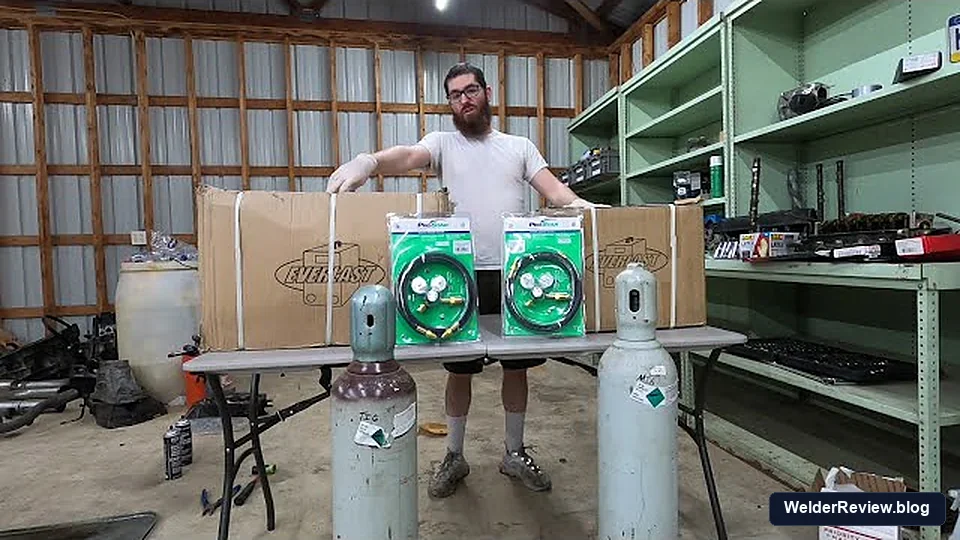
The Everlast 200Dv features a robust steel chassis engineered for harsh mobile job sites. Read through our detailed machine comparison to thoroughly evaluate alternative dual-voltage tig welding systems.
Weighing roughly thirty-five pounds, the unit transports easily between workshop benches and field service trucks. Ergonomic carrying handles integrated into the top bezel simplify single-handed repositioning operations.
The enclosure utilizes heavy-gauge stamped steel coated with a durable powder finish to resist corrosion in harsh fabrication shops. Internal components are securely mounted to a rigid aluminum chassis that minimizes vibration.
Weighing roughly thirty-eight pounds, the unit strikes a practical balance between benchtop stability and portability. Cable connections feature robust dinse 35-50 receptacles designed to prevent arc interruption during heavy industrial TIG welding tasks.
- Heavy-duty gauge steel outer casing
- Optimized internal tunnel airflow design
- Integrated impact-resistant handle assembly
Front Panel Layout and Control Ergonomics
Rotary encoders offer tactile feedback when adjusting amperage parameters under protective welding gloves. Digital LED displays provide clear readouts of preset and actual working current values.
Panel ports utilize standard Dinse connectors for secure cable locking during high-amperage cycles. Gas solenoid valves operate smoothly without noticeable pressure drops or post-flow delays.
- Glove-friendly digital control knobs
- Secure Dinse cable connection ports
Measured Arc Output and Welding Performance
Operating on a reliable 220-volt input, this inverter delivers a stable output. Consult our technical welder comparison before evaluating competitive welding machines featuring high-frequency arc ignition systems.
Stick welding performance remains robust with cellulosic and low-hydrogen electrodes alike. Adjustable arc force prevents sticking during tight-gap root passes and positional pipe welding tasks.
Delivering a stable low-end output starting down at ten amps allows operators to weld foil-thin stainless steel without burn-through. High-frequency start mechanisms initiate cleanly every time, reducing tungsten contamination on critical structural joints.
During stick welding mode, the hot start and arc force controls provide exceptional puddle control on rusty or contaminated structural plate. The inverter maintains a smooth, consistent arc voltage under varying arc length conditions.
- Consistent 200A maximum output capacity
- Reliable high-frequency arc initiation
TIG Dynamics on Thin Alloys
Fine-tuning amperage down to low thresholds allows precise control on thin stainless steel tubing. Stable low-end output prevents burn-through and minimizes heat-affected zone distortion.
High-frequency start reliability eliminates the scratch-start tungsten damage common on lesser workshop inverters. Shielding gas post-flow protects cooling welds effectively from atmospheric oxidation.
- Precise low-amperage arc stability
- Effective gas post-flow timer control
Video Review: Finally Have A NEW TIG MACHINE | Everlast POWERTIG 200DV
Thermal Efficiency and Operational Noise
Internal thermal management relies on a demand-driven cooling fan architecture. Read our engineering performance face-off to analyze how variable speed blowers handle prolonged high-amperage welding cycles.
Sustained welding at maximum amperage triggers thermal protection before internal components overheat. Overload warning indicators illuminate promptly to alert operators of duty cycle limits.
The internal cooling fan operates on an intelligent demand-driven circuit that reduces ambient shop noise during idle periods. Thermal overload protection sensors continuously monitor key transformer components to prevent premature failure under heavy workloads.
Operating efficiently on dual-voltage input power, the machine automatically adjusts internal rectification circuits for 120V or 240V supply lines. This dual-voltage capability ensures maximum versatility when moving between mobile repair trucks and fixed shops.
- Demand-driven variable speed cooling
- Automatic thermal overload protection
Setup, Calibration and Daily Usability
Dual-voltage auto-sensing technology transitions smoothly between household and industrial power receptacles. Heavy-duty power adapters prevent voltage drop during extended high-amperage welding sessions.
Cable management is straightforward thanks to clearly labeled front-panel quick disconnects. Comprehensive user manuals provide clear calibration guidelines for multi-process parameter adjustments.
Digital front-panel controls allow precise adjustment of pre-flow, post-flow, and pulse parameters for specialized aluminum fabrication. Navigating the menu system is straightforward thanks to the responsive encoder knob and clear LED display screen layout.
Gas solenoid valves engage promptly, ensuring proper shielding gas coverage before the high-frequency arc initiates. Operators can easily save custom parameter profiles into internal memory banks for rapid recall during repetitive production runs.
- Auto-sensing dual-voltage input technology
- Clear front-panel quick disconnect ports
Maintenance Protocols and Long-Term Durability
Routine maintenance requires periodic compressed air purging of dust from internal heat sinks. Insulated gate bipolar transistors withstand harsh thermal cycles under demanding daily workloads.
Inspecting power input terminals prevents loose connections from generating excessive resistance heat. Robust internal wiring harnesses secure circuit boards against severe transport vibration.
Routine maintenance requires blowing out accumulated metal dust from the internal circuit boards using dry compressed air every six months. Inspecting power block terminals regularly prevents high-resistance connections from generating excessive heat during operation.
Keeping torch consumables like collets, gas lenses, and alumina nozzles clean ensures optimal gas shielding and extends torch lifespan significantly. Store the welding machine in a dry environment to protect delicate electronic boards from moisture damage.
- Durable internal IGBT module layout
- Vibration-resistant internal wiring harnesses
Comprehensive Buyer Assessment and Verdict
This machine suits mobile fabricators and maintenance technicians requiring dual-voltage versatility. Review our professional head-to-head review to see how high-frequency TIG performance compares against premium industry brands.
Beginners might find the digital menu logic slightly complex during initial setup procedures. Experienced welding professionals will appreciate the consistent arc quality and rugged portable construction.
Balancing advanced features with solid build quality, this multiprocess machine satisfies both hobbyists and professional fabricators seeking reliable performance. The robust feature set delivers exceptional value for shops requiring versatile welding capabilities across materials.
Anyone upgrading from basic transformer welders will immediately notice the refined arc stability and precise digital control options available here. Investing in this platform guarantees dependable operation for complex projects and daily fabrication tasks.
- Ideal for professional field service
- Strong value for precision TIG work
Frequently Asked Questions
Can this versatile welding machine operate efficiently on standard household power circuits without constantly tripping workshop breakers during extended structural metal fabrication tasks?
Yes, the intelligent internal power supply automatically senses input voltage to run smoothly on standard wall receptacles. Dual-voltage adaptability ensures reliable arc performance across diverse job site electrical environments daily.
Does the high-frequency start function generate harmful electromagnetic interference that might disrupt sensitive electronic equipment located nearby in a shared garage workshop space?
Modern inverter circuitry is engineered to minimize stray high-frequency emissions during arc initiation cycles. Proper grounding practices will further eliminate any potential electronic interference concerns.
What specific routine maintenance steps are required to keep this welding inverter operating reliably over several years of heavy daily use?
Operators should periodically blow out accumulated metal dust using compressed air at low pressure. Checking terminal connections prevents excessive electrical resistance and heat buildup.
Can novice welding operators easily master the digital control interface without prior experience using advanced high-frequency TIG inverter systems?
Beginners may require brief familiarization periods to navigate the various pulse and pre-flow parameter menus. Clear LED readouts help simplify the learning curve over time.
How does the machine handle lower input voltages when operating away from a dedicated 240V industrial workshop power supply source?
Performance remains respectable on 120V circuits, though maximum output amperage is limited to protect household breakers. Reduced duty cycles should be expected during heavy 110V welding sessions.