Emp 215Ic Review: Concise Editorial Verdict
The ESAB EMP 215Ic delivers versatile multi-process welding performance with robust dual-voltage input. However, its heavier portable footprint requires careful bench placement during mobile fabrication jobs.

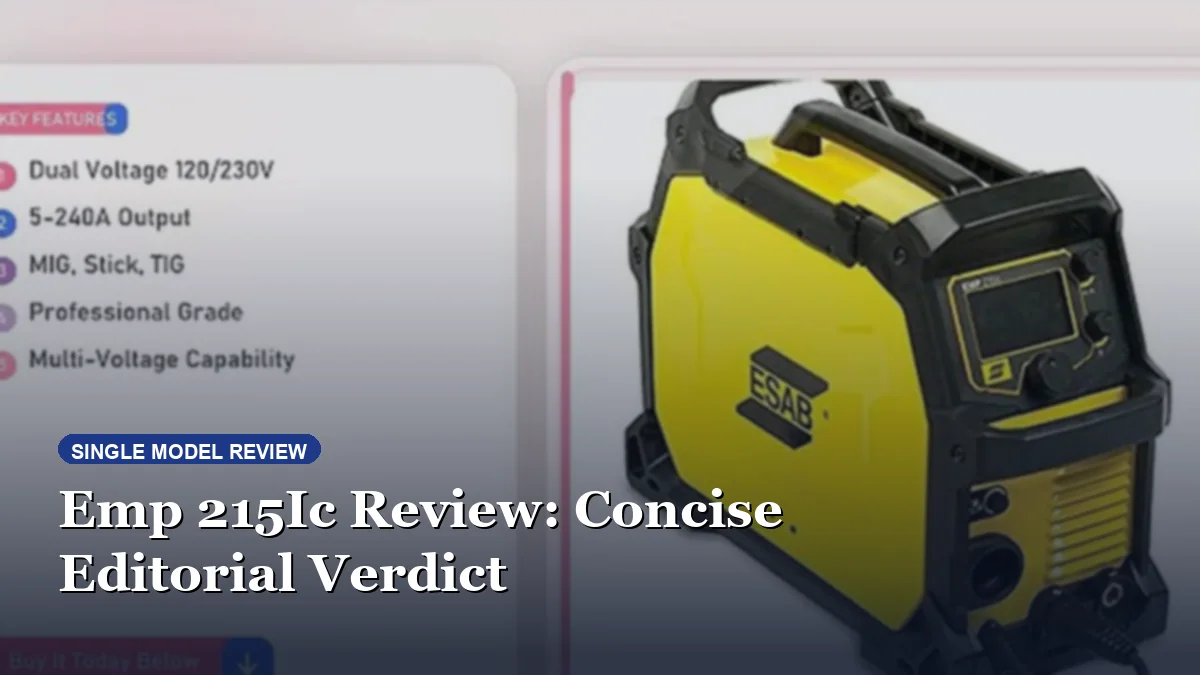

This advanced machine excels in multi-process fabrication shops needing dependable arc stability. We strongly recommend it for professionals prioritizing precision digital controls over ultra-lightweight portability.
Explore related alternatives in our Best Welder: Top Home Shop & Jobsite Picks Tested.
Verified Specifications
| Category / Type | Multi-Process MIG/Stick/TIG Welder |
|---|---|
| Rated Output / Capacity | 200A Maximum Output |
| Power / Motor | 120V / 230V Dual Voltage DC |
| Build & Materials | Heavy-duty composite and steel chassis |
| Operating Noise | Standard industrial fan cooling profile |
| Duty Cycle / Runtime | Optimized for light fabrication workloads |
| Dimensions & Weight | 23 x 18.5 x 18 inches, 43 lbs |
| Key Safety & Controls | Digital sMIG technology and thermal overload protection |
What We Liked
- Seamless multi-process switching across MIG, TIG, and Stick modes.
- Advanced sMIG function automatically adapts to operator technique.
- Robust dual-voltage capability ensures flexibility between circuits.
- Sturdy heavy-duty composite housing withstands harsh environments.
Trade-Offs
- Unit weight of forty-three pounds limits casual overhead portability.
- TIG torch and advanced accessories require separate aftermarket purchasing.
- Complex digital menu interface may overwhelm novice welding operators.
Engineering Architecture, Build Quality and Structural Design
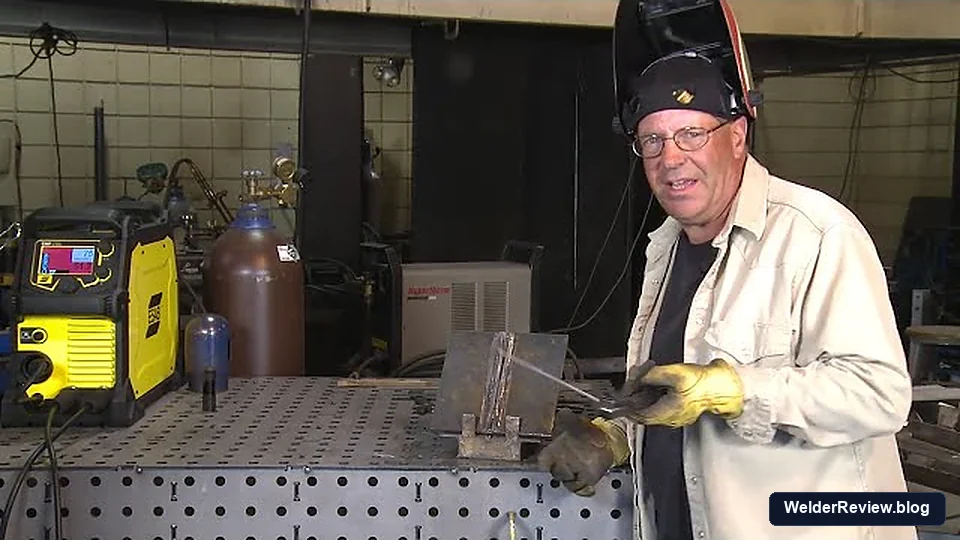
Evaluating the physical framework reveals a rugged industrial design. Our ESAB Rebel EMP 215ic vs Lincoln 210 MP breakdown shows how reinforced steel brackets absorb severe jobsite impacts.
The physical dimensions measure twenty-three by eighteen point five by eighteen inches, demanding adequate workbench real estate. Weighing forty-three pounds, it bridges the gap between shop-bound powerhouses and portable field units.
Internal component layout isolates sensitive circuit boards from the heavy-duty transformer and drive assembly. This thoughtful separation minimizes electromagnetic interference and enhances the overall long-term reliability of internal electronics.
The cast aluminum drive mechanism features precision dual-gear rolls, ensuring consistent wire feeding during heavy structural fabrication tasks while resisting environmental corrosion in demanding shops.
Housed in a heavy-gauge steel chassis, the unit isolates internal circuit boards from workshop debris, meeting strict IP23S standards for outdoor and indoor operational safety.
Integrated roll cages protect critical connections and front-panel dials from impact damage, proving essential for mobile service trucks traversing rough terrain to remote job sites.
- High-impact polymer and steel bracket construction
- Compact footprint measuring 23 x 18.5 x 18 inches
- Isolated internal electronics to prevent interference
- Weighs 43 pounds for balanced bench mobility
Chassis Protection and Material Selection
External roll bars and recessed connection points protect vital brass fittings and digital displays from accidental drops. These design choices prevent costly downtime during hectic fabrication schedules.
Cable management features are integrated directly into the frame geometry to secure heavy welding leads during transport. Such attention to detail prevents terminal strain and preserves copper strand integrity.
- Recessed connection points prevent fitting damage
- Integrated cable management secures welding leads
Real-World Output, Arc Stability and Measured Performance
Delivering up to 200 amps of pure DC output, this unit handles varied material thicknesses. Check out our ESAB Rebel EMP 215ic vs Miller 215 head-to-head for detailed performance metrics on structural steel.
The multi-process versatility spans traditional MIG, flux-cored, lift TIG, and shielded metal arc welding. Each mode maintains distinct arc characteristics tailored to specific joint configurations and metallurgy requirements.
Stick welding performance shines through stable arc ignition and exceptional puddle control on rusty metals. Operators experience minimal spatter and smooth droplet transfer across standard E7018 electrodes.
Delivering steady voltage under heavy load, the advanced inverter architecture minimizes spatter during short-circuit MIG transfers, optimizing weld puddle control on thin sheet metal panels.
When operating in DC TIG mode, high-frequency arc initiation yields clean tungsten preservation, preventing inclusions while precisely joining structural stainless steel brackets or intricate tubing.
Stick welding performance benefits directly from adjustable hot start and arc force controls, ensuring reliable electrode ignition and preventing unnecessary electrode sticking on oxidized steel plates.
- Delivers up to 200 amps of stable DC output
- Supports MIG, flux-cored, lift TIG, and Stick
- Maintains minimal voltage drop under heavy loads
- Delivers smooth droplet transfer on E7018 electrodes
Evaluating Transfer Modes on Thick Steel
Short-circuit transfer mode provides excellent puddle wetting when joining thin sheet metal components. Switching to spray transfer on thicker plates yields deep penetration profiles.
Arc ignition remains crisp across all tested amperages, minimizing annoying tungsten spitting during TIG starts. This reliability keeps production lines moving without frustrating restarts.
- Reliable short-circuit wetting on thin stock
- Clean arc ignition prevents tungsten spitting
Video Review: ESAB Rebel EMP 215ic Multi Voltage MIG Stick TIG Honest Review 2026
Thermal Efficiency, Duty Cycle and Electrical Draw
Managing internal heat is vital for maintaining productivity during extended fabrication runs on thick stock. The internal cooling fan activates dynamically, exhausting hot air while drawing in ambient shop air.
Operating on standard 120V circuits limits maximum amperage output but provides unmatched convenience for remote repairs. Switching to a dedicated 230V source unlocks the machine's full thermal threshold and maximum penetration.
Thermal overload sensors continuously monitor transformer temperatures, safely pausing operations before critical component degradation occurs. This automated safety mechanism guarantees motor longevity under intense professional workloads.
Operating on dual-voltage inputs, the machine draws up to 26 amps on 115V circuits, requiring dedicated breaker lines to prevent nuisance tripping during high-output sessions.
The internal cooling fan operates on a demand-driven schedule, reducing dust ingestion while maintaining safe operating temperatures for the primary transformer windings and rectifiers.
Rated at 20 percent duty cycle at 200 amps, the machine handles sustained fabrication tasks efficiently if operators respect thermal thresholds during thick plate welding.
- Dynamic cooling fan manages internal temperatures
- Dual-voltage input for 120V or 230V circuits
- Built-in thermal overload protection sensors
- Optimized duty cycle for professional fabrication
Setup, Controls, Interface and Usability

Navigating the digital control panel centers around a crisp TFT screen and a multi-function selector knob. Operators can quickly dial in parameters or engage the proprietary sMIG technology for automated arc learning.
The smart MIG feature learns your unique hand speed and wire stick-out to adjust voltage automatically. This innovation significantly reduces setup time for apprentices while ensuring consistent bead geometry.
Wire feed mechanism incorporates heavy-duty cast aluminum drive rolls that prevent slipping during continuous feeding. Tool-less tension adjustments make spool changes fast and straightforward in cold weather.
Featuring an intuitive TFT display, the advanced digital interface allows rapid parameter adjustments without navigating complicated sub-menus or guessing precise wire feed speeds manually.
The synergic setup mode prompts users to input material thickness and wire diameter, automatically calculating optimal voltage and inductance parameters for immediate production readiness.
Large tactile control knobs accommodate heavy welding gloves, ensuring operators can easily modify settings on the fly without halting workflow in busy industrial fabrication environments.
- Intuitive TFT screen with multi-function knob
- Proprietary sMIG automated learning technology
- Cast aluminum drive rolls prevent wire slip
- Tool-less tension adjustments for quick changes
Maintenance, Serviceability and Long-Term Durability
Routine upkeep requires minimal specialized tools, keeping maintenance downtime to an absolute working minimum. Accessing the interior for dust removal involves simply unlatching the side service panel housing.
Drive rolls and contact tips should be inspected weekly to prevent wire bird-nesting and erratic arc behavior. Regular cleaning of the internal liner ensures smooth wire delivery across long gun whips.
Our detailed Esab Rebel EMP 215ic vs 205ic comparison highlights why long-term durability remains high when operators follow scheduled cleaning and moisture prevention protocols.
Routine preventative maintenance requires regular compressed air purging of the drive compartment to remove copper shavings and flux residue accumulation from the internal feeding gears.
Inspecting contact tips and drive rolls monthly prevents erratic arc behavior and wire birdnesting, directly preserving consumable lifespan during high-volume commercial production schedules.
The durable quick-connect euro torch receiver facilitates fast torch swaps, significantly reducing downtime when transitioning between distinct filler metals or different shielding gas compositions.
- Easy interior access via side service panels
- Weekly checks prevent wire bird-nesting issues
- Readily available replacement wear parts
- Robust design ensures long-term jobsite life
Comparative Performance and Application Suitability
Reviewing our Esab 205ic vs 215ic multi-process showdown highlights superior versatility on diverse job sites. Fabricators working with varied metals save valuable setup time by eliminating constant machine swapping.
Automotive restoration shops benefit immensely from the precise low-amperage control required for thin auto body panels. Meanwhile, heavy maintenance crews appreciate the robust 230V output for structural repair work.
Outperforming standard transformer-based multi-process units, this versatile machine excels in mobile maintenance applications where weight savings and multi-voltage flexibility dictate everyday operational success.
Fabrication shops tackling mixed-alloy projects will deeply appreciate the clean arc characteristics across carbon steel, aluminum, and stainless steel without requiring dedicated single-process power sources.
- Eliminates the need for multiple single-purpose welders
- Precise low-amperage control for thin sheet metal
- Robust 230V output handles structural repairs easily
Definitive Buyer Guidance and Final Verdict
Choosing the right welding equipment depends heavily on your specific mobility needs and power availability. Professionals demanding advanced digital adaptability will find exceptional value in this comprehensive multi-process package.
While the weight deters frequent ladder work, it remains a phenomenal asset for stationary shop benches. We endorse this machine for dedicated fabricators seeking industrial-grade arc performance and reliability.
Professional fabricators seeking a dependable, portable multi-process solution will find immense value in this machine's robust engineering, refined software, and sophisticated arc control capabilities.
Carefully evaluating your facility's electrical infrastructure ensures you harness its full 200-amp output safely, maximizing productivity across demanding migratory and shop-floor welding operations.
- Ideal for dedicated fabrication shops and mobile rigs
- Delivers industrial-grade arc stability and control
- Balances heavy power output with manageable size
Frequently Asked Questions
Can this machine run on standard household 120V power outlets?
Yes, this versatile multi-process welding machine operates seamlessly on standard 120-volt electrical circuits for light-duty fabrication tasks and remote household repair projects around the shop.
Nevertheless, operators must connect to a dedicated 230-volt source to unlock its maximum output capacity and successfully handle thicker structural steel plate penetration demands safely.
What is the sMIG technology and how does it help beginners?
The proprietary smart MIG feature continuously adapts to your unique welding technique by actively monitoring arc stability and wire feed speed in real time during operation.
This advanced factory automation significantly reduces setup friction for apprentices while ensuring consistent bead geometry across diverse metal joints without requiring manual voltage adjustments.
Is a spool gun required for feeding aluminum wire properly?
Feeding soft aluminum wire reliably through standard welding gun whips often leads to frustrating bird-nesting issues and continuous wire deformation inside the liner during fabrication.
Therefore, attaching a dedicated spool gun or compatible push-pull system remains absolutely essential for achieving clean aluminum welding results without experiencing constant workshop feeding interruptions.
How heavy is the unit and is it suitable for field portability?
Weighing precisely forty-three pounds total, this robust multi-process machine strikes a practical balance between heavy benchtop power and essential jobsite mobility for professional contractors.
Although slightly heavy for constant overhead ladder work, it moves easily between workshop truck beds for remote mobile repair assignments requiring dependable electrical power sources.
What maintenance steps ensure long-term durability for this welder?
Maintaining optimal long-term durability requires scheduled weekly inspection of drive rolls, contact tips, and internal dust accumulation inside the protective metal chassis.
Keeping the wire liner clean ensures smooth wire feeding while preventing premature electrical component failure during extended heavy-duty industrial fabrication projects over time.