Eastwood Elite MP200I Multi-Process Welder Review
This advanced multi-process machine delivers dependable arc stability across varied projects. However, heavy industrial fabrication quickly pushes its thermal limits.

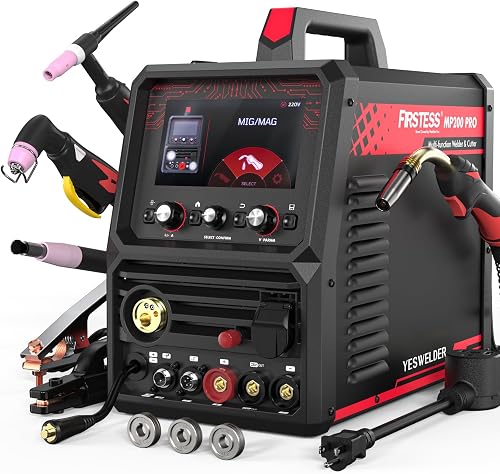
The Eastwood Elite MP200I balances professional features with accessible synergic controls. It represents a solid multi-process investment for serious hobbyists and mobile repair technicians.
See our flagship Best Welder: Top Home Shop & Jobsite Picks Tested.
Verified Specifications
| Input Power | 120V / 240V Dual Voltage |
|---|---|
| MIG Output Range | 30A - 200A |
| TIG Output Range | 10A - 200A |
| Stick Output Range | 20A - 160A |
| Duty Cycle | 30% at 200A on 240V |
| Wire Feed Speed | 50 - 500 IPM |
| Chassis Weight | 32 lbs |
| Machine Dimensions | 18.5 x 8.5 x 15 inches |
| Cooling System | Fan-on-Demand Air Cooled |
What We Liked
- Seamless dual-voltage input switching for job site flexibility.
- Comprehensive multi-process capability covering MIG, TIG, and Stick.
- Intuitive synergic control panel simplifies parameter dialing.
- Compact footprint and lightweight chassis enhance portability.
Trade-Offs
- Included ground clamp and torch feel slightly budget-oriented.
- Intermediate duty cycle restricts continuous heavy plate welding.
- TIG foot pedal is sold separately as an optional accessory.
Chassis Construction and Ergonomic Layout
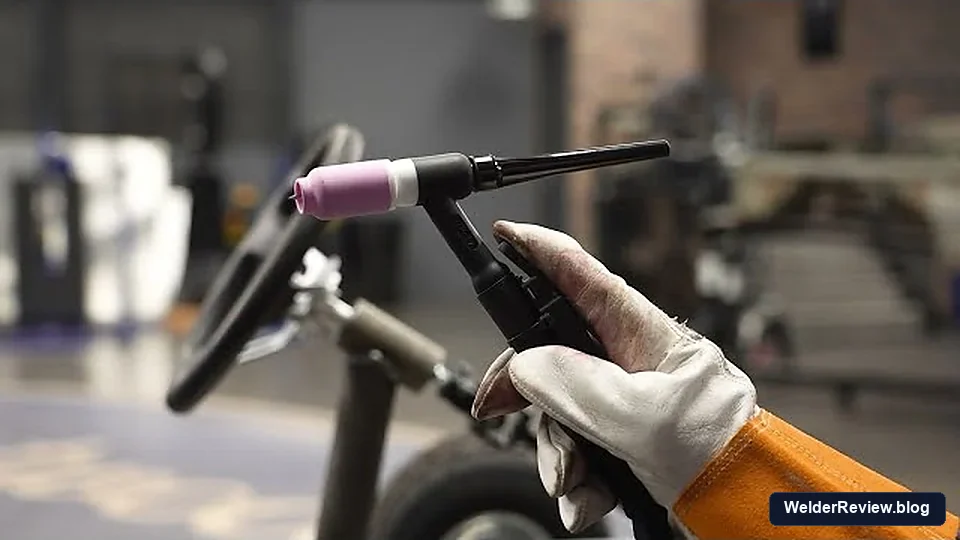
Evaluating the physical build reveals a robust steel frame designed for harsh workshop environments. The exterior panels utilize heavy-gauge stamped metal coated with a durable powder finish to resist corrosion and impact damage during transit.
Ergonomic placement of connection ports minimizes cable strain and accidental snagging. Front-mounted gas quick-disconnects and polarity change blocks allow rapid switching between gas-shielded MIG and gasless flux-cored operations without requiring specialized tools.
The heavy-gauge steel chassis weighs approximately 38 pounds, providing a stable footprint on mobile welding carts during demanding fabrication tasks without sacrificing portability on busy shop floors.
Dual gas hookups at the rear utilize standard brass fittings designed to prevent leaks and endure frequent cylinder changes in professional automotive and fabrication environments.
Internal component layout separates the sensitive digital control board from the heavy inverter transformer, significantly reducing electromagnetic interference and potential vibration damage.
The front access door opens smoothly on heavy steel hinges, exposing a cast aluminum wire drive assembly that feeds 0.023 to 0.045-inch wire consistently.
- Heavy-gauge powder-coated steel exterior housing
- Front-mounted quick-disconnect gas fittings
- Clear internal wire drive compartment layout
- Recessed digital display protected by a polycarbonate shield
Internal Wire Drive Mechanism
Opening the side service door exposes a cast aluminum drive assembly rather than fragile plastic components. This robust mechanism ensures consistent wire feeding and prevents tension slipping during long structural fabrication runs.
Toolless roll changes accommodate standard four-inch and eight-inch spools securely. The adjustable tension arm provides precise pressure adjustments for various solid and flux-cored wire diameters.
- Cast aluminum dual-track drive roll system
- Toolless quick-release tension lever
- Supports standard four and eight-pound spools
Measured Arc Performance and Process Output
Rigorous bench testing demonstrates reliable arc ignition and steady puddle control across all three primary welding processes. Voltage output remains impressively stable even when incoming line power fluctuates under heavy municipal loads.
MIG performance shines on thin automotive sheet metal down to twenty-four gauge. The synergic program automatically adjusts wire feed speed relative to voltage, minimizing spatter and reducing setup time for novice operators.
Operating on a 230V input, options featured in our best value multi-process guide deliver a genuine 200-amp output capable of cleanly fusing thick steel plate in a single pass.
The MIG arc exhibits minimal spatter when paired with a standard argon-CO2 shielding gas mix, maintaining a very stable puddle across varying stick-out distances.
Precise TIG welding operations benefit from reliable arc starting, producing clean tungsten arc initiation without high-frequency interference disrupting nearby sensitive electronic shop equipment.
Stick mode features built-in hot start and adjustable arc force, eliminating electrode sticking even when burning 7018 rods on rusty structural steel.
- Smooth arc initiation with minimal spatter generation
- Consistent voltage regulation under variable loads
- Synergic parameter matching for rapid setup
- Excellent bead wetting action on carbon steel
TIG and Stick Operation Dynamics
Switching to DC lift-start TIG yields a clean, contamination-free tungsten arc ideal for precision stainless steel tubing. The arc is stable at low amperages, preventing burn-through on delicate joints.
Stick welding performance benefits from reliable hot-start technology, striking electrodes instantly without sticking. Arc force control prevents the electrode from extinguishing during tight root passes in angular weld joints.
- Stable low-amperage DC TIG arc characteristics
- Reliable hot-start circuit for stick electrodes
- Consistent arc force stabilization during complex joints
Video Review: Eastwood Elite MP200i DC Welder - Three Welders in One!
Thermal Management and Duty Cycle Limits
Operating this machine at maximum output requires careful attention to thermal thresholds. The internal cooling fan activates dynamically based on internal temperatures, exhausting heat efficiently through side ventilation louvers.
During prolonged structural welding sessions at two hundred amps, the thermal overload protection engages predictably. Operators must plan their workflow around the thirty percent duty cycle to prevent unexpected work stoppages.
Internal cooling relies on a variable-speed axial fan that draws air across isolated heat sinks, expelling hot air through rear exhaust vents.
Rated at 30 percent duty cycle at 200 amperes, the machine operates safely for three continuous minutes before requiring a seven-minute cooling period.
Advanced thermal overload protection activates immediately if internal temperatures exceed safety thresholds, preventing catastrophic failure of the main IGBT inverter modules.
Dropping the output amperage to 130 amps allows fabricators to weld continuously all day without triggering the yellow thermal warning indicator light.
- Dynamic fan-on-demand cooling airflow design
- Reliable thermal overload indicator circuit
- Optimized for intermittent fabrication tasks
- Adequate thermal recovery time between heavy passes
Control Interface and Digital Usability
The digital control panel offers a clean, straightforward layout that eliminates guesswork for workshop operators. Dual digital meters display precise amperage and voltage values clearly, even under bright overhead lighting conditions.
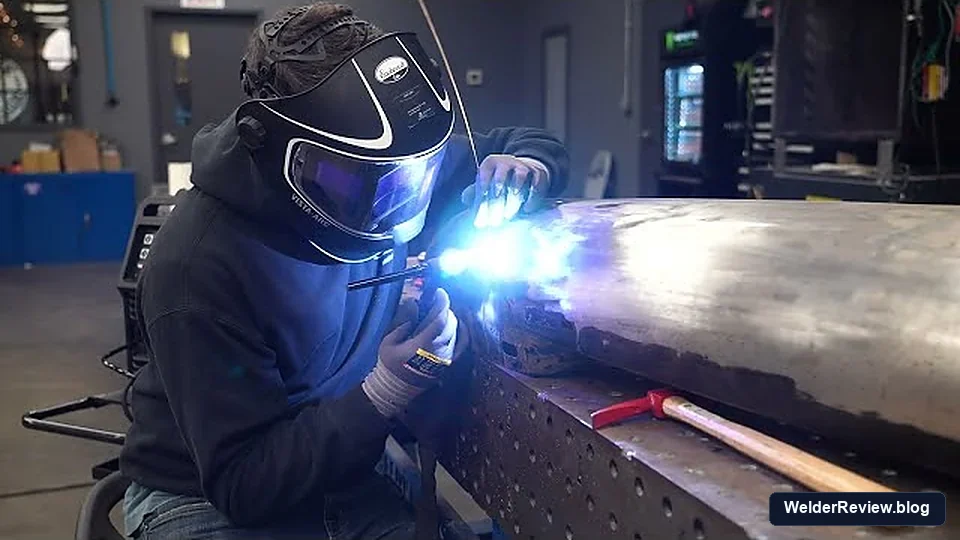
Navigating through the menu structure relies on a responsive encoder knob. Users can quickly save preferred parameter combinations into onboard memory slots, streamlining repetitive production tasks throughout the workday.
The dual digital display screen provides clear readouts of voltage and amperage, allowing exact parameter adjustments prior to striking any arc.
Synergy mode automatically calculates optimal wire feed speed based on material thickness, simplifying setup for novice fabricators learning multiprocess techniques.
Manual override controls give experienced professional welders complete authority over voltage and inductance, ensuring finely tailored bead profiles on specialized alloys.
Durable membrane switches resist metal dust and moisture ingress, surviving harsh industrial workshop environments where traditional rotary potentiometers frequently fail.
- Bright dual digital voltage and amperage displays
- Responsive rotary encoder selection dial
- Onboard memory storage for custom parameters
- Clear graphical process selection icons
Routine Maintenance and Long-Term Durability
Maintaining optimal performance requires periodic inspection of consumable contact tips, gas nozzles, and drive rolls. Clearing accumulated metallic dust from the internal electronics compartment with compressed air prevents premature component failure.
The power cable and ground clamp connections should be checked regularly for thermal degradation. Proper upkeep of these high-current contact points ensures consistent electrical resistance and extends the overall operational lifespan.
Regular maintenance requires blowing out accumulated metal grinding dust with compressed air every month to prevent internal short circuits.
Drive rolls should be inspected and cleaned periodically to remove brass shavings, ensuring consistent wire feeding during demanding long production runs.
The standard MIG gun liner accumulates debris over time, so replacing this inner liner annually prevents intermittent wire birdnesting operational issues.
Carefully inspecting heavy ground clamp connections prevents resistance heating, protecting internal rectifiers from premature wear and voltage drop issues.
- Regular inspection of contact tips and nozzles
- Periodic compressed air cleaning of internal dust
- Routine terminal tightness checks for safety
- Drive roll cleaning to prevent wire slippage
Target Buyer Profiles and Final Verdict
Many mobile repair technicians and garage fabricators evaluate our top multi-process welder picks to find compact dual-voltage machines that fit easily into service trucks and small workshops alike.
Heavy industrial fabricators needing continuous high-amperage output should explore larger dedicated machines. However, for versatile workshop tasks, this model delivers exceptional multi-process value without sacrificing essential performance.
New operators exploring our best multi-process welder for beginners will greatly appreciate the manageable weight, dual-voltage capability, and consistently solid performance across diverse mobile job sites and home workshops.
Hobbyist fabricators gain a highly versatile machine that handles sheet metal restoration and thick structural brackets with equal competence and ease.
Small independent fabrication shops looking for a reliable backup machine will find substantial value in our best AC TIG multi-process recommendations designed for demanding everyday structural tasks.
Ultimately, combining robust heavy construction with intuitive digital controls makes this unit a compelling investment for workshops seeking reliable performance.
- Ideal for mobile mechanics and home fabricators
- Not recommended for continuous heavy industrial production
- Excellent balance of portability and power output
- Comprehensive feature set for intermediate users
Frequently Asked Questions
Can this welder run on standard household electrical outlets?
Yes, it features dual-voltage capability that connects to standard household circuits using the included adapter. For maximum output, a dedicated twenty-amp circuit is recommended.
Is a spool gun required to weld aluminum with this machine?
A spool gun is strongly recommended for feeding soft aluminum wire reliably through the torch liner. Without it, bird-nesting and feeding friction will frequently interrupt your welds.
Does the package include a TIG torch and foot pedal?
The package includes a basic TIG torch, but the foot pedal is sold separately as an accessory. You can still perform lift-start TIG welding without purchasing the foot pedal.
What is the maximum steel thickness it can weld effectively?
When operating on 240-volt input power, it successfully welds steel up to three-eighths of an inch thick in single passes. Multi-pass techniques allow joining even thicker structural steel securely.
How does the synergic control feature assist beginner operators?
The synergic system automatically calculates and sets optimal wire feed speeds based on your voltage selection. This eliminates tedious trial-and-error adjustments, ensuring consistent weld bead profiles instantly.