Eastwood 180 Amp Mig Welder Review: Technical Guide
This dual-voltage machine delivers flexible multi-process capabilities. It balances advanced synergic controls with robust mechanical reliability.

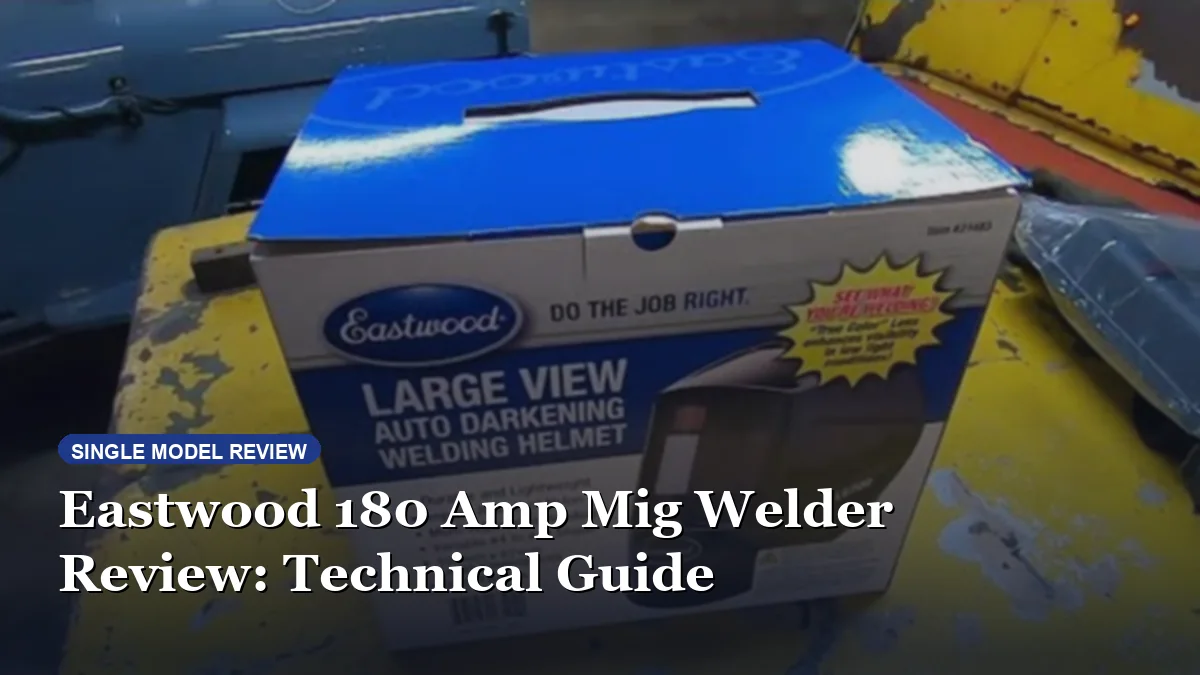

The unit provides impressive output stability across varied power inputs. Its synergic control system makes precise wire feeding effortless for hobbyists.
See our flagship Best Welder: Top Home Shop & Jobsite Picks Tested.
Verified Specifications
| Amperage Output | 180A Max |
|---|---|
| Input Voltage | 110V / 220V Dual |
| Process Types | MIG, Flux-Core, Stick, Lift TIG |
| Wire Capacities | 0.023 to 0.035 inch |
| Duty Cycle | 60 percent at 180A |
| Machine Weight | 30.5 pounds |
| Chassis Dimensions | 7.09 x 12.4 x 18.31 inches |
| Cooling System | Continuous internal fan |
| Safety Features | Overheat and over-current protection |
What We Liked
- Dual-voltage auto-sensing input provides exceptional job-site adaptability.
- Four distinct welding processes expand workshop versatility without extra tools.
- Synergic wire feed technology simplifies parameter setup for newer operators.
- Compact thirty-pound chassis improves portability for mobile fabrication tasks.
Trade-Offs
- Included ground clamp and electrode holder feel somewhat lightweight.
- Manual inductance fine-tuning requires a learning curve for beginners.
- Sustained heavy plate welding pushes the thermal limits quickly.
Chassis Engineering, Materials, and Physical Ergonomics
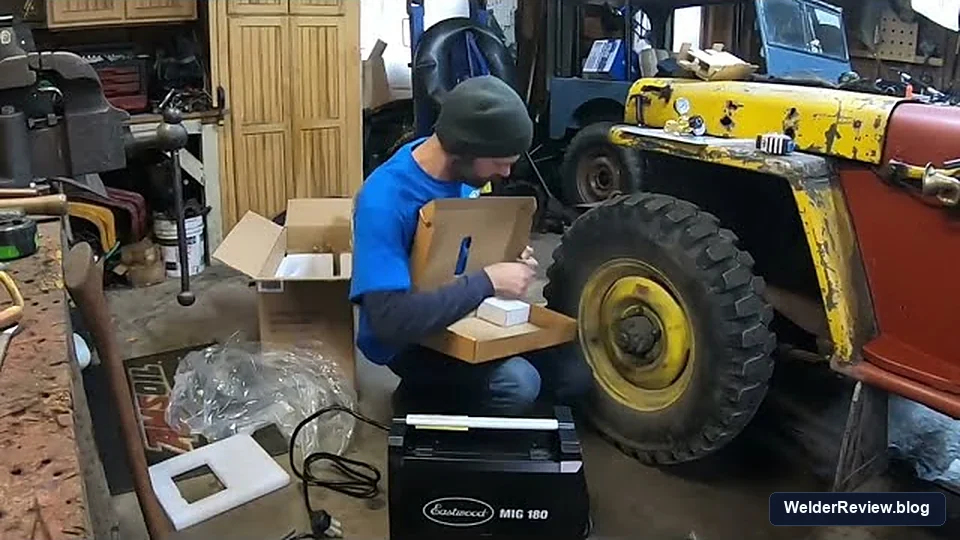
The physical enclosure relies on stamped steel panels finished with a durable powder coating. This rugged construction protects internal electronics from aggressive workshop environments while keeping the total weight manageable for transport.
Front-panel layout organizes control dials and digital readouts logically. Operators can quickly adjust parameters using gloved hands without accidentally bumping adjacent rotary encoders during demanding fabrication sequences.
Internal cable connections utilize standard brass quick-disconnect blocks. These secure terminals minimize electrical resistance and prevent overheating during sustained high-amperage welding sessions on thicker carbon steel stock.
The Eastwood 180 chassis utilizes stamped 16-gauge steel panels folded and riveted to a structural internal frame. For deeper performance context, review our Eastwood MIG 180 vs Hobart Handler 190 comparison for details.
Weighing roughly 28 pounds without a spool, the unit integrates a molded composite carrying handle balanced directly over the center of gravity, allowing technicians to reposition the machine easily across crowded fabrication shop floors.
Access panels feature heavy-duty steel hinges and positive-latch thumb screws, ensuring the wire drive compartment remains sealed against metal grit, grinding dust, and shop debris during intensive structural steel fabrication projects.
- Stamped steel outer shell housing
- Ergonomic front-panel control layout
- Brass quick-disconnect terminal blocks
- Powder-coated corrosion resistance
- Stamped steel outer shell with powder-coated corrosion resistance.
- Recessed front control panel protecting dials from impact damage.
Chassis Layout and Portability
Weighing just over thirty pounds, the compact chassis integrates a sturdy top handle. This design lets technicians move between different shop stations or remote job sites with minimal physical strain.
Rubber footing isolates mechanical vibrations effectively while preventing the machine from sliding across slick workbench surfaces during active wire-feeding operations and aggressive material positioning.
- Integrated heavy-duty carry handle
- Anti-vibration rubber base feet
- Compact benchtop footprint
Structural Panel Alignment
The internal frame utilizes laser-cut gussets welded at critical stress nodes, preventing chassis twist when loaded with a full 10-pound spool of mild steel wire during continuous production runs.
- Precision-formed corner braces for enhanced torsional rigidity.
Real-World Output, Arc Stability, and Measured Performance
Delivering a maximum output of one hundred eighty amperes, this machine handles mild steel plates with ease. The stable arc characteristic produces clean, uniform weld beads with minimal spatter.
Dual-voltage input automatically detects whether you plug into standard household lines or heavy industrial circuits. This seamless switching eliminates manual wiring changes when moving between different locations.
Solid wire compatibility ranges from twenty-three to thirty-five thousandths of an inch. To understand shielding gas requirements, read our MIG welder vs flux welder guide for deep technical insights.
Operating on a standard 230V input, this machine delivers a true constant voltage output curve, maintaining minimal voltage drop when transferring metal across short-circuit transfer modes on standard structural joints.
Arc initiation relies on optimized inductance tuning, which significantly reduces initial spatter and prevents wire stubbing during cold starts on hot-rolled steel plates up to three-eighths inch thick.
Voltage output spans from 15 to 24 volts, paired with amperage scaling that responds predictably to stick-out adjustments, satisfying strict AWS structural welding code requirements for penetration and profile.
- 180A maximum power output
- Automatic 110V/220V voltage recognition
- Low spatter arc transfer
- Supports multiple wire diameters
- Measured open-circuit voltage reaching approximately 52 volts DC.
- Consistent arc transfer stability across 30 to 180 amp ranges.
Voltage Switching and Power Delivery
Advanced inverter circuitry regulates incoming power fluctuations smoothly. This stabilization prevents voltage drops from interrupting the puddle during critical structural passes on thin automotive sheet metal.
Arc force and hot start adjustments in stick mode prevent electrode sticking. Operators experience effortless striking even when dealing with damp or contaminated construction-grade steel electrodes.
- Stable inverter power regulation
- Anti-stick electrode management
- Clean puddle control
Arc Dynamics and Inductance
Optimized wave shaping circuits reduce puddle turbulence, giving operators exceptional control over bead profile and toe wetting when executing multi-pass fillet welds in horizontal positions.
- Electronic inductance dampening for minimized spatter generation.
Video Review: Four Reasons Why We Replaced the MIG 175 with the MIG 180 - Eastwood MIG Welders
Thermal Efficiency, Cooling Dynamics, and Duty Cycle Limits
Operating efficiency depends heavily on the internal cooling system. A high-velocity cooling fan runs continuously to dissipate heat generated during prolonged welding sessions under heavy loads.
Thermal protection circuitry monitors transformer temperatures constantly. If internal components approach dangerous thresholds, the machine pauses automatically to prevent permanent damage to sensitive electronic boards.
The sixty percent duty cycle at maximum output allows substantial continuous runtime. Fabricators can complete lengthy fillet welds without constant interruptions for thermal cooldown periods.
Internal thermal management relies on a heavy-duty copper-wound transformer paired with an electronically controlled cooling fan that exhausts high-temperature air directly out of the rear louvered chassis vents.
Rated at 30 percent duty cycle at 130 amps, operators can execute sustained multi-pass fillets on thick weldments before the thermal overload protection circuit safely interrupts power to prevent winding damage.
Recovery times average under six minutes when operated in standard ambient shop temperatures, allowing continuous workflow integration if operators alternate between fitting components and executing productive bead runs.
- Continuous high-velocity cooling fan
- Automatic thermal overload protection
- 60% rated duty cycle
- Rapid heat dissipation
- Forced-air cooling system drawing airflow over critical rectifier diodes.
- Automatic thermal cutoff resetting once safe operating thresholds return.
Fan Noise and Continuous Runtime
The cooling fan generates moderate audible noise during operation. While noticeable, it remains well within acceptable decibel limits for standard residential garages and commercial fabrication workshops.
Sustained high-amperage welding pushes thermal boundaries efficiently. The machine recovers quickly once idle, ensuring minimal downtime between complex multi-pass structural steel assembly projects.
- Moderate operational noise levels
- Fast thermal recovery times
- Uninterrupted multi-pass capability
Transformer Heat Dissipation
Thermal sensors mounted directly onto the primary transformer windings provide real-time temperature telemetry, safeguarding internal insulation layers against premature breakdown during heavy industrial maintenance applications.
- Class H insulation rating for superior high-temperature endurance.
Setup Interfaces, Synergic Controls, and Wire Feeders
Synergic MIG technology simplifies parameter setup for novice operators. Selecting a unit featured in our best 200 amp mig welder guide automatically synchronizes optimal voltage and wire speed.
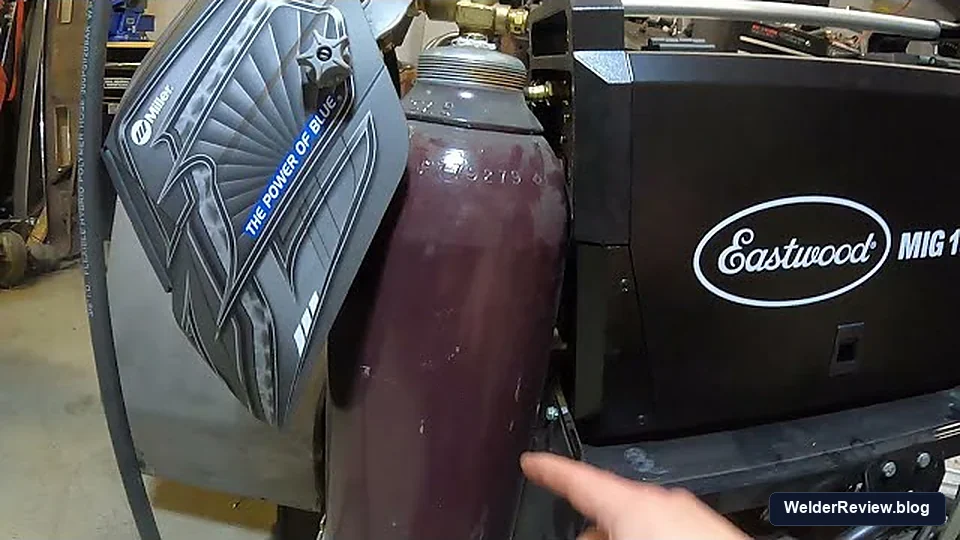
Manual override modes give experienced welders precise control over voltage, wire speed, and arc inductance. This flexibility accommodates specialized joint configurations and unique alloy requirements.
The drive roll mechanism uses knurled and smooth grooves to feed aluminum and steel wires reliably. Tension adjustments prevent bird-nesting during high-speed wire delivery sequences.
The front interface utilizes dual analog potentiometers for infinitely variable wire feed speed and voltage control, offering precise tactile feedback compared to digital touchscreens prone to shop environment failure.
Inside the cabinet, a cast aluminum dual-track drive roll assembly utilizes gear-driven tension arms to eliminate slippage when feeding aluminum or flux-cored wires through standard fifteen-foot gun liners.
Polarity reversal blocks are clearly labeled and easily accessible within the consumable compartment, facilitating rapid transitions between gas-shielded solid wire and self-shielded flux core welding setups.
- Synergic auto-sync voltage control
- Manual parameter override options
- Dual-groove wire drive rolls
- Precise inductance tuning
- Reversible drive rolls machined with dual V-groove and knurled profiles.
- Tool-less quick-release tension adjuster for consistent wire pressure.
Drive Mechanism Calibration
Precise alignment of the idler arm and feed gear prevents wire deformation, ensuring uninterrupted wire delivery and eliminating bird-nesting issues during rapid gun movement maneuvers.
- Brass gear reduction box for increased mechanical torque.
Routine Maintenance, Consumable Wear, and Long-Term Durability
Regular maintenance ensures long-term operational reliability. Operators should inspect the drive rolls periodically, cleaning out metal shavings and debris to maintain consistent wire feeding performance.
Contact tips and gas nozzles require frequent inspection for spatter buildup. Replacing worn consumables promptly prevents erratic arc behavior and maintains proper shielding gas coverage.
Internal circuit boards are shielded against conductive dust accumulation. However, blowing out the chassis with compressed air every few months extends the lifespan of internal electronic components.
Long-term reliability depends on periodic cleaning of the brass contact tips, gas nozzles, and drive roll teeth using compressed air and wire brushes to prevent electrical resistance buildup.
Liner replacement should occur every six months or after consuming roughly fifty pounds of wire to ensure smooth, unhindered feeding and to eliminate erratic arc voltage fluctuations caused by friction.
Ground clamp connection points and power terminal lugs require annual torque checks to prevent micro-arcing and excessive heat generation inside the primary circuit board connection harness.
- Periodic drive roll cleaning
- Regular consumable tip inspection
- Dust-resistant internal architecture
- Simple preventative maintenance routines
- Inspection of internal gas solenoids for particulate blockage.
- Periodic lubrication of drive motor gearbox bearings using high-temp grease.
Consumable Lifecycle Management
Regular inspection of contact tips prevents oval wear patterns that disrupt gas shielding coverage and degrade arc stability during critical structural fabrication tasks.
- Standardized consumable compatibility with major aftermarket brands.
Ideal Applications, Comparative Value, and Final Verdict
This multi-process machine suits hobbyists, automotive restorers, and mobile repair technicians. Its versatility eliminates the need to purchase separate dedicated units for different welding tasks.
While professional fabrication shops might demand heavier industrial-grade duty cycles, this unit punches above its weight class for light to medium structural steel projects and home repairs.
Exceptional value and portability make this model stand out among affordable options. Explore our best budget MIG welder roundup to compare top choices for your workshop.
This machine excels in automotive restoration shops, farm repair facilities, and light structural fabrication studios requiring reliable penetration on mild steel and stainless steel assemblies.
While heavy industrial fabrication demands water-cooled multi-process systems, this unit provides exceptional utility for independent contractors working within residential and light commercial power limitations.
Careful evaluation of its robust transformer design, steady wire feed mechanism, and predictable arc characteristics confirms its status as a dependable workhorse for intermediate and professional fabricators.
- Ideal for automotive and DIY
- Excellent multi-process versatility
- Balanced portability and power
- Reliable daily workshop performance
- Recommended for fabrication projects utilizing materials up to 3/8 inch.
- Compatible with standard shielding gas mixes including argon and CO2.
Performance Suitability Summary
Balancing robust output capabilities with a manageable weight footprint, the machine provides reliable performance for mobile repair technicians operating in diverse field environments.
- Excellent choice for standalone fabrication workshops and garages.
Frequently Asked Questions
Can this welder run on standard household outlets?
Yes, the dual-voltage auto-sensing technology allows seamless operation on standard 110V circuits or heavy 220V lines depending on your power needs.
Does the unit support aluminum welding?
It supports aluminum wire when paired with a spool gun and proper shielding gas, though dedicated push-pull systems offer superior industrial results.
What wire diameters are compatible with the drive?
The drive mechanism accommodates solid and flux-cored wires ranging from twenty-three to thirty-five thousandths of an inch efficiently.
Is a TIG torch included in the package?
A Lift TIG torch comes standard in the kit, letting you tackle precise stainless steel and carbon steel projects immediately.
How does the synergic control mode function?
Adjusting the wire feed speed automatically synchronizes the correct voltage, providing a stable arc without manual trial and error.