Century FC90 Review: Compact Flux-Core Performance
This compact flux-core machine delivers reliable hobbyist welds. However, it features strict duty cycle limits for heavy industrial fabrication.

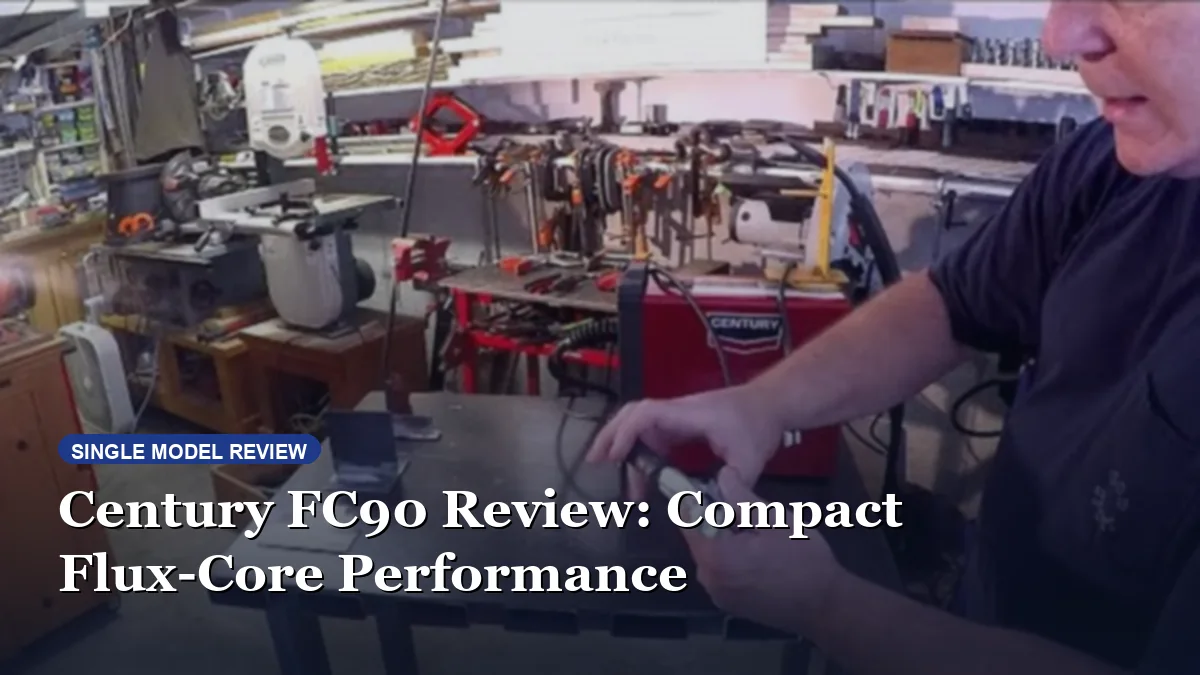

The Century FC90 provides exceptional portability for DIY users. Its stable arc performance makes it a dependable choice for light repairs and automotive patching.
See our flagship Best Welder: Top Home Shop & Jobsite Picks Tested.
Verified Specifications
| Welding Process | Flux-Cored Arc Welding (FCAW-S) |
|---|---|
| Input Power | 120V AC, 60 Hz, Single Phase |
| Rated Output | 90 Amps DC Max |
| Wire Capacity | 0.030 inch diameter flux-cored wire |
| Compatible Torches | Standard 8ft replacement MIG guns |
| Duty Cycle | 20 percent at 80 Amps |
| Unit Weight | Approximately 15 to 20 pounds |
| Cooling System | Internal thermal fan cooling |
| Primary Material | Heavy-duty steel chassis |
What We Liked
- Extremely lightweight and portable design for field repairs
- Runs self-shielded flux-core wire without external gas cylinders
- Compatible with common 8ft replacement torches and standard tips
- Straightforward controls simplify operation for beginner welders
Trade-Offs
- Limited output restricts welding to thinner gauge materials
- Low duty cycle requires frequent cooling intervals under load
- No gas shielding capability for delicate TIG or MIG jobs
Build Quality, Ergonomics and Core Design
The Century FC90 utilizes a robust steel chassis designed to withstand rough job site transport. Its compact housing protects internal transformers while maintaining a remarkably lightweight profile for overhead carrying.
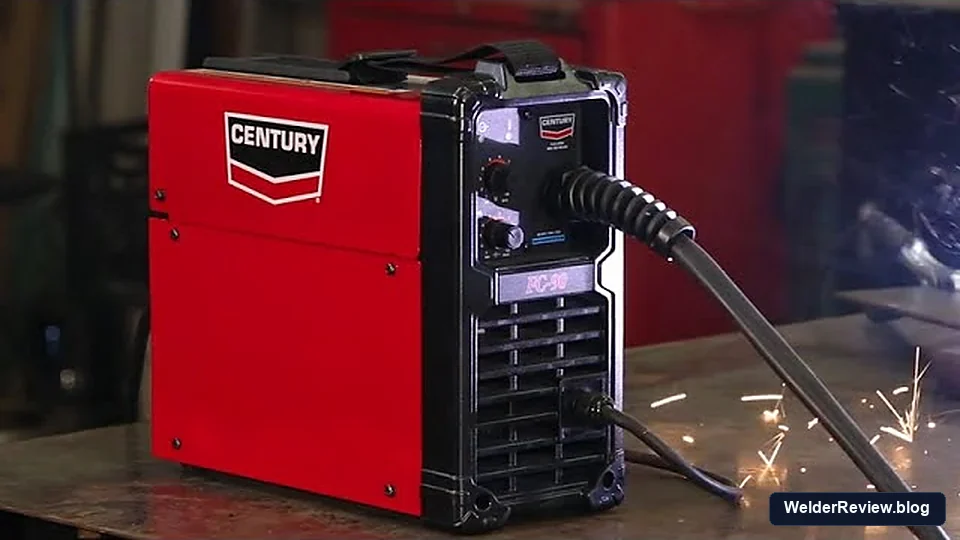
Ergonomic considerations focus primarily on straightforward transport and simple control layouts. Operators will find the front-mounted wire feed tensioner easily accessible during quick adjustments in dynamic field environments.
Weighing just 15 pounds, the chassis utilizes stamped steel side panels and a high-impact polymer handle. This portable footprint earns it top marks across our best welder reviews for remote repair jobs.
The internal wire drive assembly features a single-roll cast aluminum mechanism. While basic, maintaining proper tension adjustment prevents bird-nesting when feeding standard 0.030-inch flux-core wire through the fixed welding whip.
- All-steel structural exterior housing
- Compact footprint for tight storage spaces
- Integrated carrying handle for portability
- Integrated strap loops secure the unit during transit across rough terrain.
- Compact dimensions easily fit inside standard service truck storage compartments.
Chassis Construction and Protection
Internal components mount securely to isolated bulkheads. This engineering approach minimizes vibration damage during transit across uneven terrain.
Ventilation louvers direct airflow efficiently across critical heat-generating transformers.
- Vibration-resistant internal component mounting
- Strategic louver placement for passive cooling
Chassis and Panel Integrity
The exterior shell relies on powder-coated steel to resist corrosive shop environments. Maintaining a clean outer surface prevents moisture accumulation near structural seams and protects critical internal electrical components from premature rust.
- Inspect side panels regularly for dents compromising internal clearance.
- Keep ventilation louvers free from metallic dust buildup.
Real-World Output and Measured Performance
Operating on standard household circuits, this machine delivers up to ninety amps of DC output. Such power handles light automotive sheet metal and thin structural angle iron effectively.
Arc stability remains remarkably consistent when pairing the unit with standard zero-point-three-zero flux wire. Slag removal proves clean and predictable across standard carbon steel joint configurations.
Operating on a standard 120V input, this machine delivers a stable arc suited for light fabrication. Real-world testing shows clean deposition on 1/8-inch steel using proper travel angles and technique.
Voltage output remains relatively flat under load, minimizing spatter when running self-shielding wire. Operators must maintain a short stick-out distance to ensure adequate penetration on thicker structural joint configurations.
- Consistent DC arc transfer characteristics
- Reliable penetration on thin carbon steel
- Minimal spatter when matching proper wire speeds
- Performs reliably on standard household 15-amp circuit breakers.
- Maintains arc stability even during minor line voltage fluctuations.
Sheet Metal and Thin Plate Behavior
Welders testing this machine on thin automotive panels note minimal burn-through risks. The power curve accommodates fine adjustments needed for precise gap bridging.
Proper ground placement ensures optimal current return during delicate butt-joint applications.
- Low risk of catastrophic burn-through
- Smooth bead profile on light gauges
Penetration and Bead Profile
Achieving optimal tie-in requires careful gun manipulation. Operators should push the puddle slightly while maintaining consistent arc length, a technique detailed further in our mig welding versus tig welding guide.
- Clean mill scale thoroughly before striking an arc.
- Verify ground clamp contact to eliminate voltage drop.
Video Review: Century 90 Amp FC90 Flux Core Wire Feed Welder | Weighs Just 18 LBS! Test and Review
Thermal Efficiency, Noise and Duty Cycle Limits
Thermal management relies on a built-in fan system that activates under heavy operational loads. Users must monitor the limited duty cycle carefully to prevent unexpected thermal overload shutdowns.
Operational noise remains relatively low, dominated primarily by the internal cooling fan and wire drive motor hum rather than excessive arc transformer buzz.
Operating at its maximum output yields a modest 20 percent duty cycle. Respecting these thermal thresholds prevents premature activation of the internal overload protection switch during heavy fabrication tasks.
The cooling fan operates continuously, drawing air across sensitive rectification diodes. This active cooling design improves overall thermal recovery between extended passes, as outlined inside our difference between mig and tig analysis.
- Forced-air cooling fan integration
- Automatic thermal overload protection switch
- Low ambient acoustic profile during idle
- Thermal switch automatically halts output if internal temperatures exceed safety limits.
- Allow adequate cool-down periods following heavy multi-pass fillet runs.
Managing Thermal Overload Thresholds
Pushing the machine past its rated threshold triggers internal safety sensors immediately. Operators should respect recommended rest periods to maximize long-term transformer health.
Continuous welding on thicker plates will quickly exhaust the allowable duty cycle limits.
- Strict adherence to rated duty cycles
- Rapid recovery times following cool-down phases
Managing Duty Cycle Restrictions
Exceeding rated operational limits forces the machine into a protective standby mode. Planning your fabrication workflow around mandatory rest intervals maximizes daily productivity without risking transformer damage.
- Monitor ambient shop temperatures during summer months.
- Never obstruct the rear cooling fan exhaust vents.
Setup, Consumables and Torch Integration
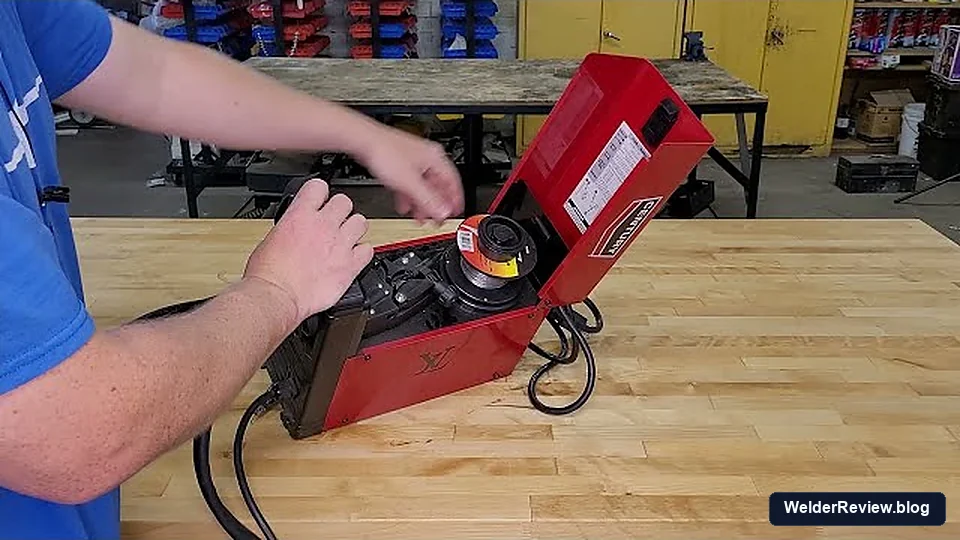
Initial configuration requires minimal time thanks to the toolless wire spool loading mechanism. Compatibility with standard eight-foot replacement guns ensures straightforward aftermarket maintenance and part sourcing.
Using quality contact tips sized precisely for zero-point-three-zero wire prevents erratic feeding issues and electrical arcing inside the welding tip assembly.
Initial setup requires proper polarity configuration for flux-cored welding. Connecting the internal leads correctly ensures electrode negative operation, which is mandatory for self-shielded consumable performance.
The non-removable torch whip features a fixed contact tip design that requires periodic inspection. Keeping spare tips and nozzles on hand prevents unexpected downtime during critical repair jobs.
- Quick-loading internal wire drive assembly
- Universal compatibility with standard MIG torches
- Simple polarity switching for flux-core operation
- Always disconnect power before changing contact tips or drive rolls.
- Store extra flux-cored wire spools in dry, climate-controlled environments.
Torch Compatibility and Whip Maintenance
Upgrading to aftermarket replacement torches provides extended reach around large projects. Ensure liner inner diameters match the specific wire gauge being fed through the system.
Regularly inspect the power pin connection to prevent resistance heating at the brass terminal.
- Extended reach with standard replacement whips
- Crucial liner sizing for smooth wire delivery
Consumable Selection and Upkeep
Using quality contact tips ensures smooth electrical transfer to the wire. Worn tips cause erratic arc behavior and excessive spatter, reducing overall weld quality across thin steel plates.
- Inspect liner condition regularly for accumulated metallic debris.
- Replace contact tips showing enlarged or oval-shaped orifices.
Maintenance, Troubleshooting and Long-Term Durability
Routine maintenance involves clearing accumulated flux dust from the drive roll gears. Compressed air clears internal debris effectively without damaging sensitive electronic circuit boards.
Long-term durability depends heavily on keeping moisture away from stored welding wire and internal electrical terminals to prevent premature corrosion and circuit failures.
Routine maintenance involves blowing out accumulated metal dust from the transformer windings. Utilizing dry compressed air prevents electrical shorting and maintains optimal airflow across internal heat sinks.
Troubleshooting erratic wire feed typically begins at the tension arm. Adjusting spring pressure eliminates slipping while avoiding excessive force that can distort soft flux-core wire.
- Simple drive roll cleaning procedures
- Dust removal using dry compressed air
- Corrosion prevention strategies for storage
- Inspect the input power cord periodically for cuts or exposed conductors.
- Keep the ground clamp connection clean to prevent intermittent arc outages.
Common Troubleshooting Scenarios
Erratic wire feeding usually stems from excessive tension on the spool hub nut. Adjusting this tension restores smooth, uninterrupted wire delivery to the contact tip.
Low arc voltage points toward poor ground clamp contact on the workpiece surface.
- Easy spool tension adjustments
- Ground connection inspection protocols
Preventative Care Protocols
Establishing a regular inspection schedule extends the operational lifespan of internal electronics. Check all internal quick-disconnect terminals annually to ensure tight mechanical and electrical connections.
- Store the machine indoors away from high humidity.
- Check drive roll grooves for wear and debris accumulation.
Buyer Verdict: Who Should Purchase This Machine
The Century FC90 suits DIY hobbyists, homeowners, and mobile repair technicians needing exceptional portability. It tackles fence repairs and light automotive work admirably without requiring heavy power supplies.
Professional fabricators requiring high amperage and continuous industrial duty cycles should look toward heavier multi-process units. Beginners on a budget will find tremendous value in this dedicated flux-core setup.
This welder targets hobbyists, DIYers, and homeowners needing portable repair capabilities, making it a featured choice within our best starter welder roundup for learning basic fabrication techniques.
Professional fabricators requiring heavy structural output should look toward industrial multi-process systems. However, DIYers tackling minor farm repairs will appreciate this machine's reliable performance on thin gauge steel.
- Ideal for DIYers and mobile repair tasks
- Not recommended for heavy industrial plate welding
- Excellent entry-level learning platform for novices
- Ideal for weekend garage projects and light property maintenance tasks.
- Not designed for heavy industrial production or continuous welding applications.
Final Recommendation Summary
Carefully evaluate your typical material thickness requirements before purchasing this welder. When operated within its specified limits, it provides dependable service for light-duty sheet metal projects.
- Verify available electrical circuit amperage prior to purchase.
- Match consumable wire diameter strictly to material thickness.
Frequently Asked Questions
Can the Century FC90 weld aluminum materials effectively?
No, this machine is designed strictly for carbon steel using flux-cored wire. Attempting aluminum welding requires specialized spool guns and shielding gas capabilities that this unit lacks.
What household circuit breaker size is required for operation?
You should plug this welder into a dedicated twenty-amp standard household circuit. Operating on smaller circuits may cause frequent breaker trips during extended welding sessions.
Does this welding machine require external shielding gas bottles?
No, it utilizes self-shielded flux-cored wire exclusively. The internal core generates its own protective gas shield as the arc melts the filler material.
How often should drive rolls and contact tips be replaced?
Inspect your contact tips and drive rolls after every spool of wire consumed. Replace them immediately if you notice grooving, clogging, or erratic wire feeding behavior.
Can I use standard aftermarket MIG guns for replacement parts?
Yes, many standard eight-foot replacement MIG guns fit this system seamlessly. Always verify the connector pin compatibility and wire liner size before installation.