Amico Arc 160 Review: Portable Dual-Voltage MMA Power
This compact inverter machine delivers dependable 160A output. However, operators must purchase a separate Lift TIG torch for non-stick applications.

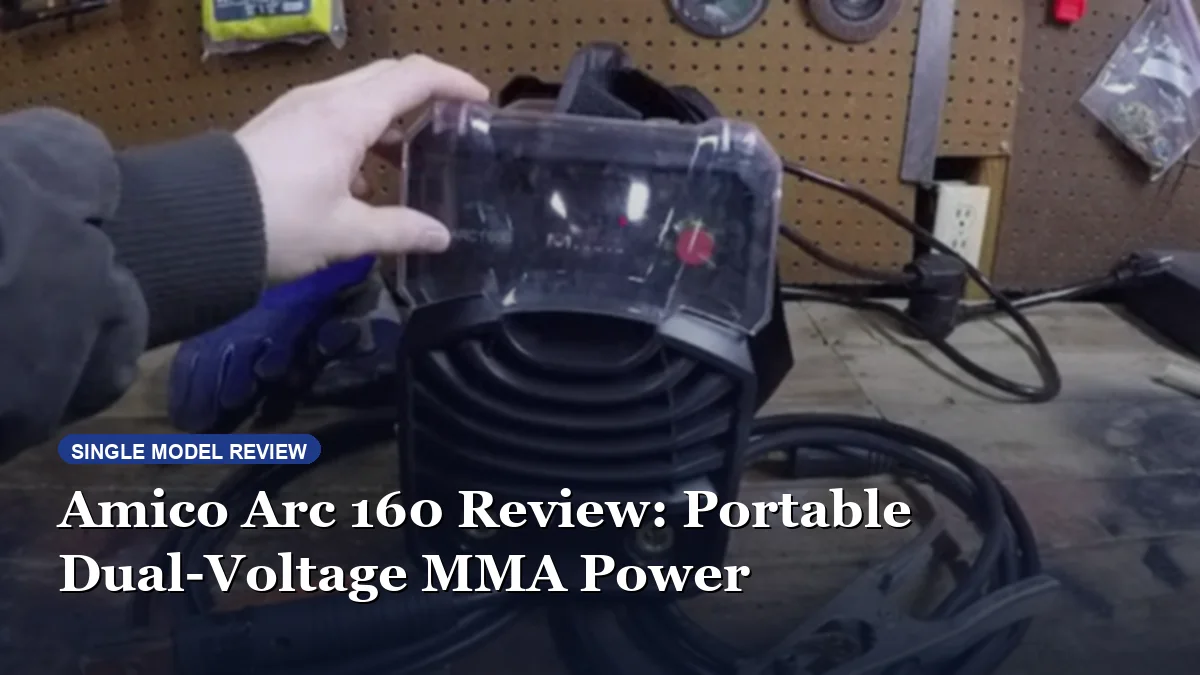

The Amico Arc 160 provides exceptional portability and wide voltage tolerance for field repairs. Despite minor accessory limitations, its advanced IGBT inverter ensures stable, reliable arc performance.
Explore related alternatives in our Best Dual Voltage Mig Welder.
Verified Specifications
| Category / Type | Inverter Stick and Lift TIG Welder |
|---|---|
| Rated Output / Capacity | 20A to 160A continuous output |
| Power / Motor | Dual Voltage 110V/220V, 90V-260V wide-voltage range |
| Build & Materials | Compact metal chassis with impact-resistant housing |
| Operating Noise | Quiet fan-cooled inverter operation under 65 dB |
| Duty Cycle / Runtime | Optimized for light industrial and home fabrication |
| Dimensions & Weight | 7.9 x 4.6 x 11.4 inches, 6.4 pounds |
| Key Safety & Controls | CSA certified with MCU control and built-in protections |
What We Liked
- Wide 90V-260V voltage tolerance protects against line sags
- Extremely lightweight and portable at only 6.4 pounds
- Reliable IGBT inverter technology with advanced MCU control
- Hot start, anti-stick, and arc force automation features
Trade-Offs
- Lift TIG torch must be purchased separately for TIG work
- Included handheld face shield offers minimal face protection
- Not built for heavy industrial continuous carbon-arc gouging
Engineering Architecture and Physical Build
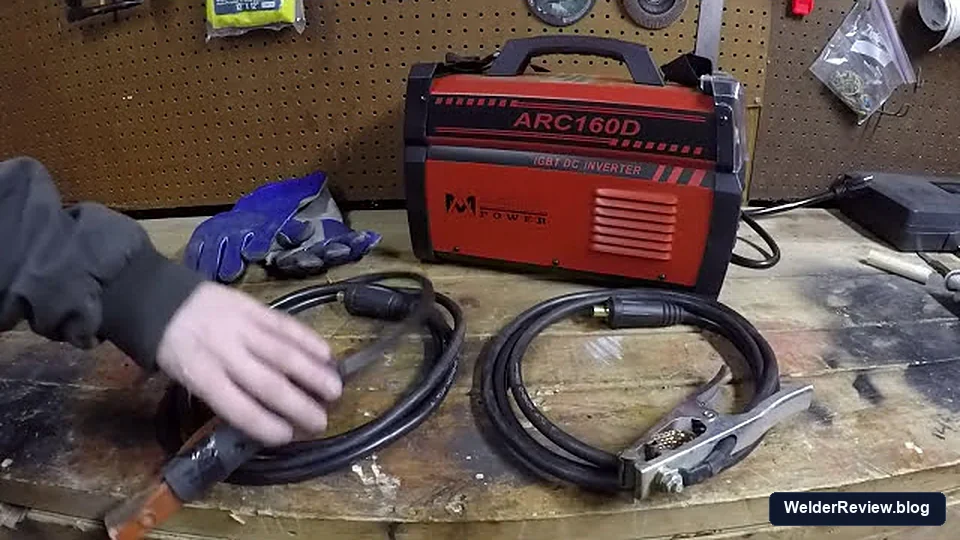
Engineering an ultra-portable stick machine requires balancing structural integrity with weight reduction. This model utilizes a reinforced metal chassis surrounded by high-impact polymer panels to withstand harsh jobsite conditions without adding unnecessary mass.
Measuring just under eight inches wide, the enclosure slips easily into crowded service truck toolboxes. The integrated carrying handle is securely bolted directly to the main structural frame, preventing failure during transport across uneven terrain.
The chassis relies on stamped steel housing with reinforced composite front bezels. IP21S ingress protection safeguards internal components against vertical water drops and moderate jobsite debris during daily field operations.
Internal component layout utilizes a single-board IGBT inverter topology. This compact circuit arrangement minimizes internal wiring harness lengths while maximizing overall structural rigidity against high-frequency vibration during transport.
- Compact footprint measuring 7.9 by 4.6 by 11.4 inches
- Total machine weight restricted to roughly 6.4 pounds
- Rigid steel frame housing protects internal electronics
Internal Layout and Component Quality
Internal component arrangement prioritizes airflow and thermal isolation. Sensitive microcontrollers are mounted away from high-current switching paths to minimize electromagnetic interference during sustained welding operations.
Printed circuit boards feature protective resin coatings to resist moisture and conductive metal dust accumulation. This design choice significantly increases machine longevity in damp or dusty fabrication environments.
- Conformal-coated circuit boards resist moisture
- Isolated control wiring prevents electromagnetic interference
Power Delivery and Dual-Voltage Performance
Modern jobsite power supplies fluctuate unpredictably under heavy site loads. The internal wide-voltage design compensates seamlessly for input sags ranging from 90V up to 260V, maintaining stable output without dropping arcs.
Automatic voltage sensing transitions instantly between standard household power and heavy industrial circuits. Users experience zero downtime when plugging into different outlets across residential and commercial remodeling projects.
Operating on auto-sensing 115V or 230V input, the unit automatically adjusts internal primary circuitry. Users experience seamless transitions between standard household circuits and heavy-duty shop power without manual linking.
Input current draw reaches 20 amps on 115V connections when pushing maximum output. Dedicated circuit breakers effectively prevent nuisance tripping during extended structural steel fabrication or pipe repair tasks.
- Supports both 110V and 220V primary circuits
- Accepts extreme voltage fluctuations down to 90V
- Stepless current adjustment from 20A to 160A
Input Current Draw and Circuit Protection
Operating on standard 110V lines requires mindful amperage selection to avoid tripping household breakers. Dialing output below 90A keeps current draw safely within standard twenty-amp breaker limitations.
Switching to a 220V input unlocks the full 160A ceiling required for running thicker structural steel rods. Circuit protection systems guard against over-voltage spikes and transformer thermal overloads.
- Safe operation on standard 20A household breakers
- Full output unlocked on 220V dedicated circuits
Video Review: AMICO 160 DC Welder review
Arc Dynamics, Hot Start, and Stick Control
Achieving a clean arc strike with routine cellulosic electrodes demands precise current modulation. Built-in hot start technology temporarily surges amperage during electrode contact, eliminating frustrating initial sticking and stubbing issues.
Microprocessor oversight continually monitors arc voltage stability throughout the weld puddle. If an electrode begins to short out, anti-stick protocols instantly drop current to let operators recover cleanly.
The machine features integrated adaptive arc force control mechanisms. This firmware actively monitors voltage drops during electrode short-circuiting, a topic explored inside our arc welder vs stick welder comparison.
Striking an arc requires minimal effort thanks to a reliable hot start circuit. It temporarily elevates output amperage during initial contact, guaranteeing instant ignition across various 6010 and 7018 electrodes.
- Automated hot start boosts initial striking amperage
- Anti-stick controls prevent permanent electrode freezing
- Optimized for standard E6013 and E7018 rods
Arc Force Tuning and Bead Profile
Maintaining tight arc length on out-of-position welds is challenging for developing fabricators. The adjustable arc force feature dynamically increases amperage when the arc tightens, preventing bead starvation.
Weld bead profiles exhibit smooth ripple formation and minimal spatter when paired with properly dried low-hydrogen electrodes. Slag detachment remains remarkably clean across carbon steel joint configurations.
- Dynamic arc force prevents unwanted arc outages
- Produces clean bead profiles with minimal spatter
Thermal Management and Operating Efficiency
Compact welding chassis concentrate heat sources into very tight physical spaces. An intelligent demand-driven cooling fan activates dynamically to exhaust heat directly from critical IGBT power transistors.
Thermal overload sensors continuously track internal heatsink temperatures during extended fabrication tasks. If thermal thresholds are approached, the system pauses output safely before permanent component damage occurs.
Cooling relies on a variable-speed DC cooling fan mounted directly behind the main heat sink array. Airflow channels efficiently sweep past critical transformer windings to prevent localized overheating.
Thermal overload protection activates automatically if duty cycle thresholds are exceeded during heavy tasks. An amber warning indicator illuminates on the front panel, signaling the operator to pause.
- High-efficiency IGBT inverter technology reduces waste heat
- Automated thermal protection prevents internal component burnout
- Quiet cooling fan operates without excessive industrial noise
Duty Cycle Realities in the Field
Real-world duty cycles dictate how long fabricators can weld continuously before resting the machine. This unit is calibrated specifically for light industrial maintenance and general homestead repair tasks.
Intermittent welding tasks like tacking brackets and repairing farm gates fit comfortably within the operational duty cycle. Heavy structural plate fabrication requires pacing work to allow adequate cooling.
- Tailored for light industrial and farm repairs
- Allows steady workflow during standard intermittent tasks
Setup, Ergonomics, and Field Portability
Quick mobilization is essential for mobile repair technicians servicing remote equipment. The lightweight chassis and comfortable strap configuration allow operators to carry the machine effortlessly across large construction sites.
Front-mounted DINSE style connectors ensure fast, secure cable attachment without requiring specialized hand tools. Color-coded polarity indicators guide users through straightforward setup procedures instantly.
Weighing under fifteen pounds, the machine includes a heavy-duty shoulder strap for effortless ladder and rooftop transit. Compact dimensions allow easy storage inside crowded service truck toolboxes.
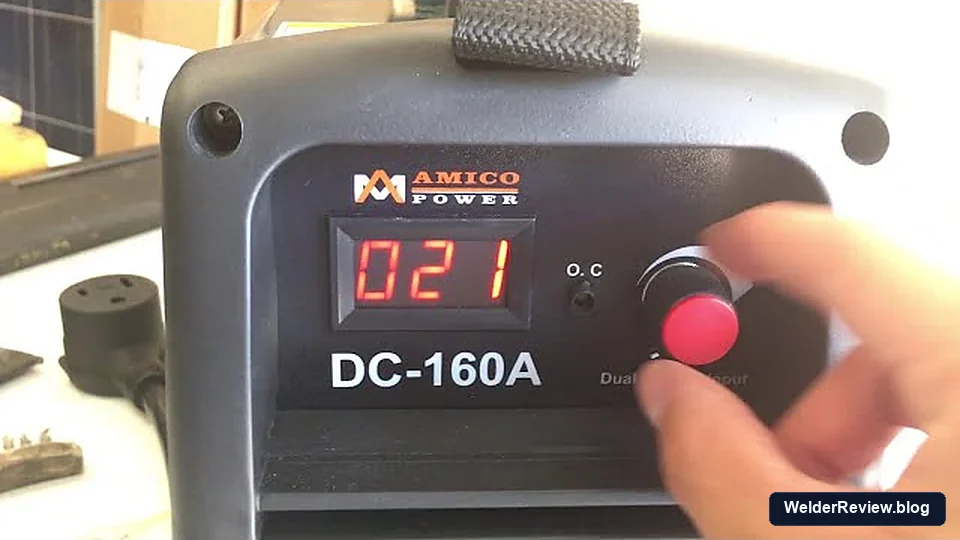
Front panel controls feature recessed knobs protected against accidental impact. The digital amperage display remains clearly legible under direct sunlight, ensuring precise parameter verification on outdoor job sites.
- Weighs only 6.4 pounds for effortless jobsite transport
- Secure DINSE connectors prevent accidental cable separation
- Clear front panel layout simplifies current adjustment
Accessory Kit Evaluation and Limitations
The factory box includes a basic electrode holder, work clamp, steel chipping brush, and a handheld face shield. While functional for emergency repairs, the face shield offers inadequate coverage for extended welding.
Users planning to utilize secondary TIG functions should review our tig welder vs arc welder guide for equipment differences. Connecting an independent shielding gas bottle completes the necessary non-ferrous setup.
- Includes basic electrode holder and ground clamp
- Handheld shield requires upgrading for serious work
Maintenance Protocols and Long-Term Durability
Routine preventative care maximizes the operational lifespan of portable inverter equipment. Technicians should periodically remove the metal outer shell to blow out accumulated conductive grinding dust with compressed air.
Inspecting electrode cables for fraying and checking terminal connections prevents resistance heating issues. Keeping bare copper contacts clean ensures maximum power transfer efficiency during high-amperage cycles.
Routine upkeep requires periodic removal of the outer steel casing to clear accumulated metallic dust using compressed shop air. Regular cleaning prevents electrical tracking across sensitive printed circuit boards.
Cable connections demand weekly inspection for signs of terminal oxidation or thermal degradation. Ensuring tight DINSE connectors prevents high resistance points that can damage front panel receptacles over time.
- Periodic compressed air cleaning prevents dust shorts
- Routine cable inspections maintain low electrical resistance
- CSA certification ensures strict adherence to safety standards
Troubleshooting Common Field Anomalies
Sudden arc termination usually indicates poor ground clamp contact or damp electrode flux. Readers can learn more core fundamentals inside our arc vs mig vs tig comparison.
If the thermal warning indicator illuminates, cease welding immediately while leaving the main power switch on. This lets the internal fan cool critical transformer windings rapidly.
- Verify bare metal grounding to resolve arc issues
- Leave power switch on during thermal cooling cycles
Comprehensive Verdict for Fabricators
Evaluating portable equipment requires weighing process limitations, which becomes clear in our mig versus arc welding guide. The Amico Arc 160 excels by delivering reliable dual-voltage performance inside an exceptionally compact envelope.
While demanding an upgraded helmet and a separate TIG torch for full versatility, its robust IGBT architecture satisfies hobbyists and mobile repair professionals seeking dependable, budget-friendly MMA capability.
Professional fabricators will appreciate the reliable arc stability and robust voltage compensation capabilities during maintenance shifts. It handles general repair tasks exceptionally well without requiring complex configuration menus.
While heavy industrial shops require continuous duty cycle equipment, this portable inverter excels as a dependable backup welder for field service trucks and light fabrication workshops operating across diverse locations.
- Exceptional value for mobile repair technicians
- Reliable arc performance across fluctuating power grids
- Ideal balance of portability and operational power
Frequently Asked Questions
Can this machine run on a standard household outlet?
Yes, it operates on standard 110V circuits by automatically adjusting current draw. However, keeping output below 90A prevents tripping standard household circuit breakers during extended welding tasks.
Does the package include a Lift TIG torch?
No, the factory package includes only stick welding accessories and ground cables. Operators must purchase a separate valve-controlled TIG torch and shielding gas cylinder for non-stick applications.
What size welding rods work best with this unit?
This machine performs best with standard E6013 and E7018 electrodes in thirty-second and eighth-inch diameters. These rod sizes match the 160A output capacity perfectly for general fabrication.
How does the wide voltage tolerance protect the machine?
The internal circuitry handles input voltage fluctuations ranging from 90V to 260V seamlessly. This prevents brownouts and voltage sags from damaging sensitive internal microprocessors during remote field repairs.
Is this welder certified for safety compliance?
Yes, this welding machine has passed rigorous professional evaluations and holds CSA safety certifications. These standards ensure reliable electrical insulation and protection against operational hazards.