What Size Breaker for 220V Welder?
Calculating electrical loads prevents overheating and equipment failure. Proper breaker selection ensures safe workshop operation during heavy welding projects.


Always match your breaker size to the machine's nameplate amperage and duty cycle demands. Utilizing proper copper wire on a dedicated fifty amp breaker handles most heavy-duty multi-process welding machines safely.
Ready to compare models? Start with our Best Welder: Top Home Shop & Jobsite Picks Tested.
Practical Quick-Reference Table
| Scenario / Metric | Recommended Target | Why It Matters |
|---|---|---|
| Standard MIG Welder | 50-Amp Breaker | Handles max output safely |
| Heavy TIG Inverter | 30 to 50-Amp Breaker | Prevents nuisance tripping |
| Wire Gauge (50A) | 8-Gauge Copper Wire | Prevents dangerous overheating |
| Wire Gauge (30A) | 10-Gauge Copper Wire | Matches lower amp draws |
| Run Distance > 50ft | Step Up Wire Size | Compensates for voltage drop |
| Receptacle Type | NEMA 6-50 or 14-50 | Ensures correct physical match |
Understanding Electrical Requirements for Welding Equipment
Selecting the proper circuit breaker for your welding machine demands careful analysis of input power ratings. Electrical codes dictate strict safety margins to prevent dangerous overheating situations during continuous fabrication tasks.
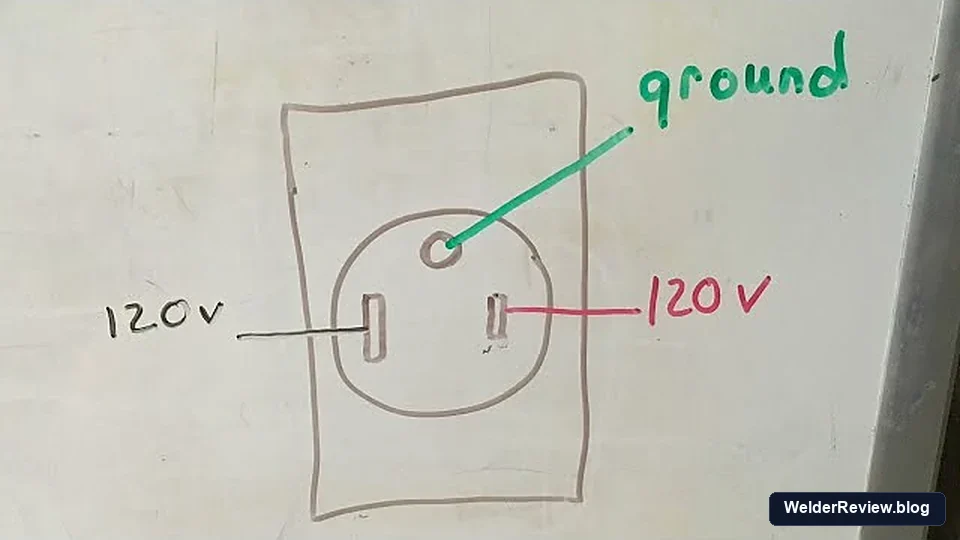
Modern inverter welders often require less continuous amperage than older transformer models while delivering exceptional output. Reviewing your machine manual helps determine the exact input current required at maximum rated output.
Workshop power distribution must accommodate startup surges without tripping prematurely during arc initiation phases. Balancing your total electrical load keeps your facility compliant and protects sensitive internal transformer components from damage.
Choosing the best 220v mig welder for home use requires stable power infrastructure. Single-phase circuits serve as the standard for hobbyists, while ensuring your sub-panel capacity matches equipment prevents voltage drops.
- Verify input voltage specifications directly from the manufacturer data plate before purchasing any electrical supply components or permanent mounting hardware.
- Calculate maximum possible current draw using the machine's rated duty cycle to prevent unexpected thermal overloads during extended structural fabrication runs.
- Inspect your existing workshop wiring infrastructure thoroughly for signs of physical degradation, corrosion, or improper sizing before connecting any heavy high-amperage welding machinery today.
- Always consult local municipal electrical codes to ensure complete regulatory compliance with national safety standards for all dedicated workshop power drop installations.
Transformer Versus Inverter Power Demands
Transformer welders draw massive amounts of continuous current under load, requiring oversized breakers and heavy thermal-magnetic protection. Understanding these inherent power draws prevents frustrating nuisance trips during large steel plate fabrication.
Inverter power sources utilize solid-state electronics to step down voltage efficiently, significantly reducing primary amperage requirements overall. Selecting optimized circuit protection lets operators maximize duty cycles without exceeding panel limits.
- Carefully compare older transformer primary amp draws against modern inverter equivalents before upgrading your entire workshop electrical panel infrastructure today.
- Always account for heavy startup surge currents that can instantly trip standard thermal magnetic breakers on older heavy transformer welding units.
Calculating Amperage Draw and Duty Cycle Ratings
Determining exact amperage draw requires evaluating both the effective input rating and maximum output capacity of your machine. Nameplate data provides the primary metric needed for calculating correct wire and breaker sizing.
Selecting the best welder for beginners involves understanding duty cycle percentages. These ratings dictate continuous operating times before mandatory cooling, ensuring your circuit breaker will not overheat during long sessions.
Effective primary current calculations involve dividing the maximum output amperage by the operating voltage efficiency ratio. Utilizing precise mathematical formulas prevents guesswork when sizing circuit breakers for heavy industrial welding tasks.
Ignoring duty cycle allowances often leads to frequent thermal tripping and accelerated degradation of electrical contact points. Proper thermal management safeguards both your facility wiring and your expensive welding power source.
- Locate the effective input amperage rating stamped clearly on the rear serial number plate of your welding machine.
- Multiply the maximum rated primary current by the standard safety factor percentage specified strictly by your local electrical regulatory guidelines today.
- Always evaluate your typical daily welding habits carefully to determine whether intermittent hobby use or continuous commercial fabrication applies here today.
- Always record all calculated amperage values in your workshop maintenance log for future electrical troubleshooting and comprehensive panel expansion reference.
Video Walkthrough: Correct Wire and Breaker Size for a 230 Volt Welder
Selecting the Correct Wire Gauge and Conduit
Choosing appropriate copper wire gauge prevents excessive voltage drop over long runs between the breaker panel and receptacle. Conductor sizing directly influences how efficiently electrical current transfers to your heavy-duty welding equipment.
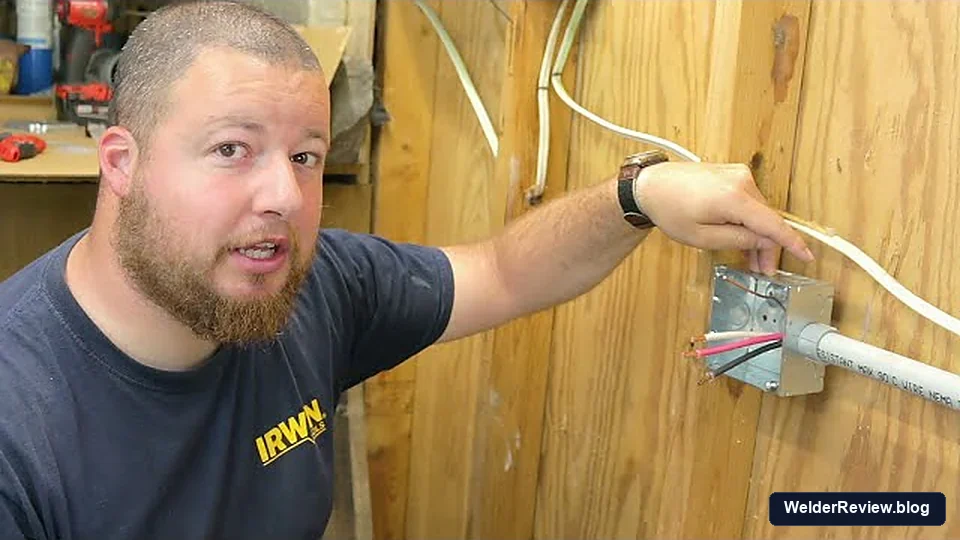
Running wires through protective metal or PVC conduit shields them from physical damage and environmental workshop hazards. Proper conduit fill ratios ensure heat dissipates safely without degrading the surrounding wire insulation over time.
Powering the best tig welder for aluminum requires careful conductor selection. Aluminum wiring demands larger gauges than copper due to resistance, leading most professional shops to prefer stranded copper conductors for flexibility.
Distance from the main service panel dictates whether you must step up wire gauge sizes to compensate. Accounting for total run length guarantees your welder receives full voltage under heavy operational loads.
- Match wire gauges precisely to breaker ratings using standard American Wire Gauge ampacity charts for safe workshop installations.
- Avoid splicing power cables along long runs to prevent high-resistance connection points that generate dangerous localized workshop heat.
- Secure all conduit runs firmly to structural walls using approved mounting hardware to prevent mechanical stress on electrical fittings.
- Leave adequate service loops inside junction boxes to facilitate future maintenance and simplify any upcoming electrical service panel modifications.
Evaluating Service Panel Compatibility and Main Breakers
Your main electrical service panel must possess sufficient spare capacity to handle an additional heavy-duty 220V load safely. Panel capacity limits prevent overloading the primary utility feed supplying your entire residential workshop building.
Using our amperage & thickness calculator helps determine your power needs, while inspecting bus bars inside your breaker box reveals whether corrosion or pitting threatens reliable electrical connectivity and overall safety.
Residential panels rated at one hundred amps might require a service upgrade before adding a dedicated fifty amp welder circuit. Consulting a certified electrician ensures your main breaker trips correctly during catastrophic short-circuit conditions.
Balancing phase loads across dual-leg breaker configurations prevents premature wear on your primary electrical meter and distribution equipment. Proper phase distribution keeps your workshop electrical system running smoothly during high-demand welding projects.
- Always calculate total simultaneous household and workshop electrical loads before committing to a new high-amperage dedicated breaker installation project.
- Always carefully verify that your breaker panel manufacturer allows mixing specific thermal magnetic breaker brands without violating strict safety listings.
- Always check main breaker trip flags and inspect incoming utility service lines for signs of weather-related physical wear or degradation.
- Always clearly label every newly installed breaker within your main directory panel to streamline emergency power shutdowns during accidents.
Installing Dedicated Receptacles and NEMA Plugs
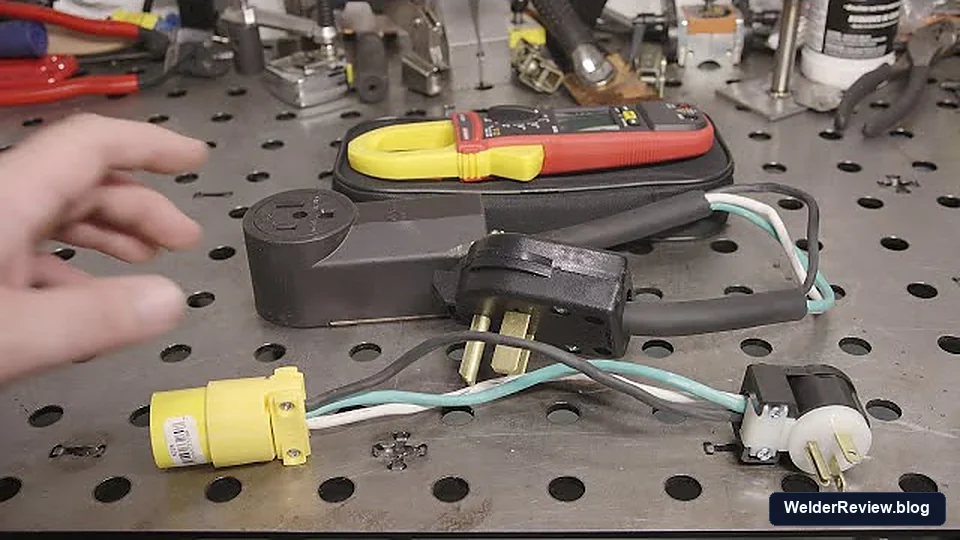
Dedicated circuits require specific NEMA receptacle configurations matching your welder input plug to prevent dangerous voltage mismatches. NEMA six-fifty and fourteen-fifty styles represent the most common heavy-duty plug types found in modern workshops.
Mounting wall receptacles securely inside heavy-duty metal boxes protects internal wiring connections from accidental impact and dust. Strain relief fittings prevent tension on terminal screws when dragging heavy extension cords across workshop floors.
Torque all terminal screws to manufacturer specifications using a calibrated tool to prevent loose connections and arcing. Proper torque values eliminate excessive electrical resistance that melts plastic housings during long continuous welding runs.
Testing receptacle voltage with a digital multimeter confirms correct phase orientation before plugging in expensive welding electronics. Voltage verification protects sensitive inverter boards from accidental phase imbalances and reverse polarity power spikes.
- Always match your welder power cord plug type precisely to the wall receptacle configuration before turning on main utility power.
- Always use heavy-duty industrial grade receptacles instead of cheap residential alternatives to withstand frequent daily plugging and unplugging cycles.
- Always carefully apply anti-oxidant compound on all aluminum wire connections to prevent galvanic corrosion inside the outlet mounting box enclosure.
- Always install durable, secure weatherproof covers on any workshop electrical receptacles located near grinding dust or moisture-prone fabrication areas.
Identifying Common Electrical Faults and Nuisance Tripping
Nuisance breaker trips during heavy welding usually indicate an undersized circuit or excessive duty cycle operation. Thermal overload protection acts as a safeguard, cutting power before wiring insulation melts inside the walls.
Loose terminal connections inside plugs or receptacles generate localized heat that triggers thermal magnetic breakers prematurely. Infrared thermal scanning helps locate high-resistance connection faults before catastrophic electrical failures occur in your shop.
Ground faults caused by damaged power cords can trip sensitive ground fault circuit interrupters instantly upon startup. Insulation integrity checks prevent dangerous shock hazards while ensuring uninterrupted power delivery during crucial welding projects.
Voltage sags on overloaded utility lines reduce welding arc stability and cause equipment erratic behavior under load. Dedicated circuits isolate your welding operation from household appliance surges, ensuring consistent arc performance every time.
- Always check for unusually warm breaker handles after heavy welding sessions to identify overloaded circuits requiring immediate capacity upgrades today.
- Always inspect all primary power cords regularly for deep cuts, abrasions, or exposed copper strands that could cause dangerous short circuits.
- Always carefully measure operating voltage under full welding load to ensure voltage drops do not exceed recommended manufacturer performance limits.
- Always safely replace faulty circuit breakers immediately using exact amperage and trip curve equivalents matched to your service panel brand.
Routine Maintenance Protocols for Workshop Circuits
Establishing regular electrical maintenance routines ensures your workshop power distribution system remains safe and dependable. Preventive inspections catch minor wiring defects before they escalate into costly workshop fires or equipment damage.
Dust accumulation inside electrical service panels can hinder breaker mechanical movement and trap dangerous operational heat. Panel cleaning schedules keep your circuit breakers functioning correctly within their designed thermal and magnetic tolerances.
Testing breaker trip mechanisms periodically guarantees they will disconnect power during an actual electrical fault condition. Functional testing provides peace of mind when operating heavy-duty welding equipment in professional fabrication environments.
Keeping accurate maintenance records helps track component lifespans and simplifies future electrical expansions in your workshop. Documentation discipline supports safe operations and ensures compliance with evolving industrial electrical safety standards over time.
- Always carefully inspect electrical service panel interiors annually for dust buildup, corrosion, and signs of insect or rodent nest intrusion.
- Always test arc fault and thermal breaker trip buttons semiannually to verify internal mechanical linkage freedom and high operational reliability.
- Always securely tighten all main electrical panel bus bar and breaker lug terminal screws during scheduled annual workshop maintenance shutdowns.
- Always hire licensed professional electricians to perform comprehensive electrical audits whenever upgrading heavy workshop machinery or expanding fabrication facilities.
Frequently Asked Questions
What size breaker do I need for a standard 220V MIG welder?
Most standard 220V MIG welders operate safely on a dedicated fifty-amp breaker when running at maximum output capacity during heavy structural fabrication projects.
Always check your specific machine nameplate technical specifications to verify exact input amperage requirements and duty cycle ratings before installing any new electrical supply components in your workshop.
Can I run a 220V welder on a dryer outlet?
Running a 220V heavy-duty welder on an existing household dryer outlet is strongly discouraged because typical residential dryer circuits utilize thirty-amp breakers and much thinner wire gauges.
Exceeding these electrical thermal limits during extended fabrication tasks creates severe fire hazards and triggers frequent nuisance tripping in your main electrical service panel.
What wire gauge should accompany a 50-amp 220V breaker?
A standard fifty-amp 220V breaker installation requires a minimum of eight-gauge copper wire to safely handle high continuous electrical loads over standard workshop distance runs.
Using undersized wiring causes dangerous resistive heating inside wall cavities and degrades overall welding arc performance significantly under heavy operational loads every single day.
Why does my welder keep tripping the circuit breaker?
Frequent circuit breaker tripping usually indicates that your welding machine is drawing significantly more input amperage than the existing circuit rating allows during heavy operation.
Inspecting your duty cycle limits and upgrading to a dedicated higher-amperage breaker circuit solves most chronic power delivery issues in professional fabrication shops.
Do inverter welders require smaller breakers than transformer welders?
Modern inverter welders generally require smaller circuit breakers than older heavy transformer models due to their much higher electrical conversion efficiency ratios and advanced circuitry.
Reviewing your machine manual input ratings carefully ensures you select appropriate breaker sizes that accommodate startup surges without ever exceeding electrical panel design limits.