Yeswelder Firstess MP200 vs Vulcan OmniPro 220: Technical Verdict
Choosing between these multi-process welders requires balancing advanced digital automation with heavy-duty shop reliability. We examine their core engineering to help you decide.

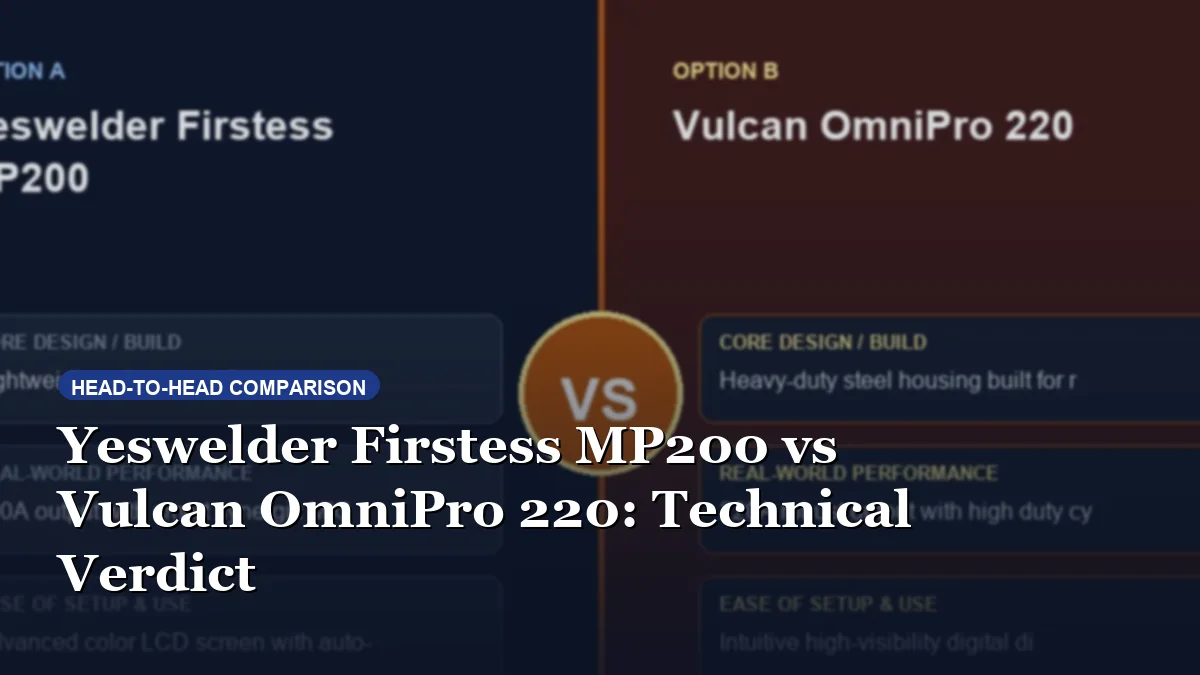
Pick the Yeswelder Firstess MP200 for smart digital automation and portability. Choose the Vulcan OmniPro 220 for rugged dual-voltage output and industrial-grade chassis construction.
Compare all top models in our Best Welder: Top Home Shop & Jobsite Picks Tested.
Side-by-Side Breakdown
| Criteria | Yeswelder Firstess MP200 | Vulcan OmniPro 220 | Edge |
|---|---|---|---|
| Core Design / Build | Lightweight polymer reinforced composite chassis with integrated handle. | Heavy-duty steel housing built for rigorous shop environments. | Vulcan OmniPro 220 |
| Real-World Performance | 200A output with smart synergic MIG adjustments. | 220A robust output with high duty cycle stability. | Vulcan OmniPro 220 |
| Ease of Setup & Use | Advanced color LCD screen with auto-parameter pairing. | Intuitive high-visibility digital display with manual overrides. | Yeswelder Firstess MP200 |
| Durability & Reliability | Solid internal circuit boards protected by adequate cooling fans. | Industrial-grade internal components designed for heavy daily use. | Vulcan OmniPro 220 |
| Efficiency / Operating Footprint | Compact dual-voltage inverter drawing lower idle current. | Slightly larger footprint optimized for sustained high-amperage duties. | Yeswelder Firstess MP200 |
| Maintenance Requirements | Routine board checks and standard wire drive cleaning. | Simple mechanical upkeep with robust cast aluminum drive systems. | Vulcan OmniPro 220 |
| Best Ideal Use Case | Mobile repair technicians and fabrication hobbyists needing automation. | Professional metalworkers requiring dependable multi-process power. | Vulcan OmniPro 220 |
Core Design & Engineering Differences
Evaluating modern multi-process welding machines demands a close look at their internal architecture. Both units utilize advanced inverter topologies to reduce weight while delivering strong arc stability across various base metals.
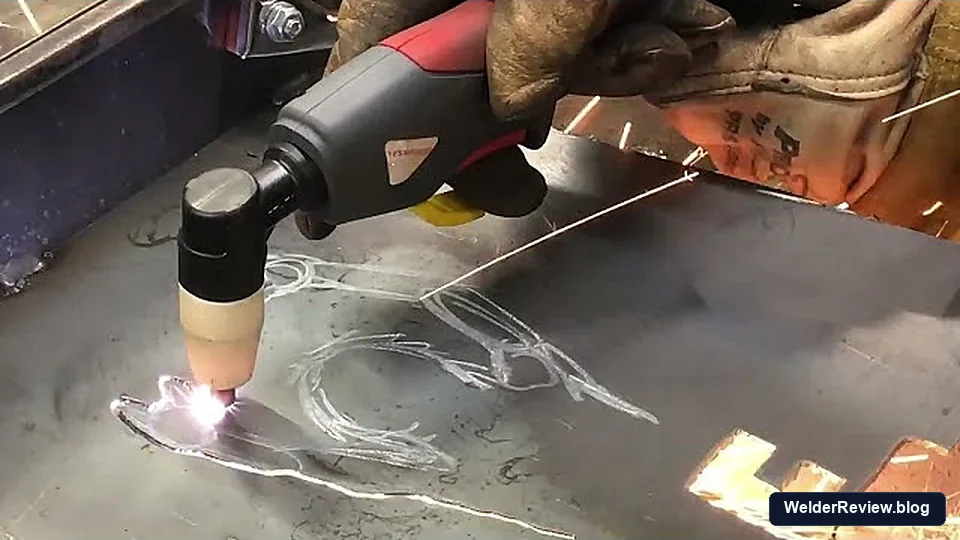
The Yeswelder Firstess MP200 leans heavily into modern digital integration. Its compact chassis houses an intelligent microprocessor designed to simplify parameter selection for technicians working across diverse job sites.
Conversely, our vulcan omnipro 220 review highlights a machine prioritizing heavy-duty durability. Its reinforced steel frame and robust internal layout cater directly to professional fabrication shops needing long-term structural reliability.
- Inverter architecture reduces total machine weight significantly.
- Digital microprocessors govern real-time arc voltage feedback loops.
- Steel housings provide superior impact resistance in harsh shops.
Chassis Construction and Material Selection
Physical build quality dictates how well a machine survives daily transit and shop abuse. Manufacturers make distinct compromises between portability and structural armor.
The Firstess MP200 utilizes high-impact polymers and lightweight alloys to achieve a highly portable profile. This makes climbing ladders or moving around crowded job sites remarkably easy.
Meanwhile, the OmniPro 220 employs heavy gauge stamped steel panels and reinforced corners. While heavier, this construction shields sensitive circuit boards from accidental drops and flying debris.
- Polymer blends reduce weight on mobile units.
- Stamped steel panels protect internal electronics from impacts.
Internal Cooling and Thermal Management
Sustained welding operations generate substantial internal heat within compact inverter cabinets. Effective thermal management prevents premature component degradation during long fabrication runs.
Both welders feature demand-driven cooling fans that expel heat efficiently. However, the internal ducting on the Vulcan model optimizes airflow specifically around the heavy-duty transformer windings.
Proper airflow ensures that your equipment maintains rated output without tripping thermal overload sensors prematurely during thick plate welding tasks.
- Demand-driven fans reduce dust accumulation inside the chassis.
- Optimized ducting protects critical transformer windings from overheating.
Power Delivery & Arc Characteristics
Arc stability remains the ultimate test of any welding machine. Clean transfer modes and predictable puddle behavior dictate the overall quality of finished weldments.
The Yeswelder unit delivers a smooth 200A output profile optimized for thin to medium plate thicknesses. Its synergic algorithms adjust voltage dynamically based on wire feed speed.
The Vulcan competitor pushes slightly higher with a maximum 220A threshold. This extra headroom proves invaluable when running larger diameter flux-cored wires or heavy stick electrodes.
- Synergic controls maintain tight arc length automatically.
- Higher amperage ceiling handles structural steel sections effortlessly.
- Consistent voltage output minimizes spatter across standard joints.
MIG Welding Performance and Wire Feeding
MIG welding demands flawless wire delivery to prevent birdnesting and erratic arcs. Both machines incorporate dual-roll drive mechanisms designed for consistent tension.
The Firstess MP200 features a digital feed system that synchronizes seamlessly with its preset menus. Users experience minimal stutter during startup transients.
The OmniPro 220 utilizes a robust cast aluminum drive assembly that inspires absolute confidence. It feeds stubborn aluminum or steel wires smoothly over extended torch lengths.
- Cast aluminum drive assemblies resist mechanical wear.
- Digital wire synchronization eliminates initial stubbing.
Stick and TIG Operating Modes
Multi-process machines must transition smoothly to stick and TIG modes without losing arc characteristics. Hot start and arc force features are critical for trouble-free electrode striking.
In stick mode, the Vulcan unit provides excellent arc force control to prevent electrode sticking. TIG welding benefits from reliable lift-arc ignition that protects tungsten tips.
The Yeswelder machine matches this versatility with intuitive menus for stick and scratch TIG. Operators can switch processes rapidly without navigating complex sub-menus.
- Lift-arc TIG ignition prevents tungsten contamination.
- Adjustable hot-start features improve initial electrode striking.
Interface Usability & Digital Control
Modern welder interfaces bridge the gap between novice operators and expert fabricators. Clear screens and logical menu structures reduce setup errors significantly.
The Yeswelder Firstess MP200 features a brilliant color LCD screen. It guides users step-by-step through material thickness and shielding gas selections with visual prompts.
Our detailed vulcan omnipro 220 multiprocess welder review shows it opts for a high-visibility digital display paired with tactile physical knobs, letting gloved hands make rapid, precise adjustments safely.
- Color LCD screens provide clear graphical feedback.
- Tactile control knobs allow quick adjustments with heavy gloves.
- Preset libraries eliminate manual calculation guesswork.
Synergic Setup Versus Manual Control
Synergic programs simplify welding by linking wire speed and voltage parameters. Operators simply input material thickness and wire size to begin working.
Yeswelder excels in this automated category, offering expansive preset databases for various metals. This automation helps beginners achieve acceptable puddle profiles quickly.
While Vulcan supports synergic functions, it also caters strongly to manual operators. Experienced welders often prefer fine-tuning individual volts and amps for custom joint geometries.
- Automated presets speed up routine fabrication tasks.
- Manual overrides give experts complete process control.
Display Clarity Under Shop Lighting
Bright workshop environments and outdoor job sites can wash out poorly designed digital screens. Screen legibility directly impacts daily operational efficiency.
The Firstess LCD screen maintains high contrast even under direct overhead lighting fixtures. Viewing angles remain wide enough for comfortable monitoring.
The OmniPro display utilizes bold segmented digits that remain readable from a distance. Both machines pass practical visibility tests under harsh industrial lighting.
- High-contrast displays remain legible in bright sunlight.
- Wide viewing angles aid operators working at awkward postures.
Real-World Performance Comparison
Bench tests and laboratory specifications only tell part of the operational story. Real fabrication work reveals how these machines handle voltage drops and dirty power.
Putting both units through rigorous fillet and butt weld tests highlights their distinct personalities. The Yeswelder unit shines on sheet metal and light structural repairs.
Meanwhile, the Vulcan machine handles thicker structural plates with notable authority. Its duty cycle remains stable even when pushing maximum amperage ratings.
- Voltage drop compensation prevents arc stutter on long extension cords.
- Plate thickness limits favor the higher amperage Vulcan unit.
- Weld puddle wetting action remains clean across both platforms.
Handling Thin Sheet Metal Fabrication
Thin auto body panels require precise heat control to prevent burn-through. Low amperage stability is paramount for successful thin-gauge welding.
The Firstess MP200 manages low-end output exceptionally well, striking a stable arc at minimal currents. This makes it a favorite for automotive restoration tasks.
The OmniPro 220 also handles thin metals competently when paired with smaller wire sizes. However, its primary design focus leans toward heavier structural steel fabrication.
- Low-end amperage control prevents sheet metal burn-through.
- Stable arcs at low settings improve automotive repair outcomes.
Pushing Heavy Duty Cycle Limits
Industrial fabrication demands continuous welding without frequent thermal shutdowns. Duty cycle ratings indicate how long a machine can run in a ten-minute window.
The Vulcan platform boasts superior duty cycle stamina under heavy loads. It absorbs high thermal stress without forcing the operator to wait for cooling breaks.
The Yeswelder unit requires more conservative operation when running thick plates continuously. Matching your workload to these ratings ensures long-term equipment survival.
- High duty cycles minimize downtime in production shops.
- Thermal protection circuits prevent permanent transformer damage.
Maintenance, Efficiency & Longevity
Long-term ownership costs depend heavily on routine maintenance requirements and component quality. Keeping your machine clean ensures reliable service over many years of operation.
Both welders require standard upkeep, including regular compressed air blowouts of internal dust. Drive rolls and contact tips must be inspected and replaced periodically.
As outlined in our vulcan 220 welder review, this machine uses widely available replacement parts found in most supply stores, which simplifies repairs and reduces unexpected equipment downtime significantly.
- Regular dust removal prevents electrical short circuits.
- Standardized consumables ensure easy local parts sourcing.
- Inverter electronics require clean, dry operating environments.
Consumable Availability and Torch Compatibility
Consumable wear is an unavoidable aspect of daily wire-feed welding processes. Quick access to replacement tips, nozzles, and liners keeps your workflow moving.
Vulcan torches use standard industrial consumable profiles compatible with widespread brands. This universal fitment makes sourcing spare parts exceptionally straightforward.
Yeswelder utilizes proprietary or widely distributed euro-style connections that are equally easy to replace. Always keep spare liners and contact tips in your toolbox.
- Universal consumable compatibility simplifies local procurement.
- Quick-change torch liners reduce routine maintenance delays.
Power Efficiency and Electrical Footprint
Modern inverter welders consume significantly less electrical power than older transformer machines. Energy efficiency translates directly to lower utility bills over time.
Both machines feature dual-voltage capabilities that adapt to standard household or industrial circuits. Power factor correction circuitry ensures efficient energy draw.
The compact design of the Yeswelder unit draws slightly less idle current. This makes it ideal for mobile setups running off portable engine generators.
- Dual-voltage adaptability increases job site flexibility.
- Power factor correction maximizes electrical grid efficiency.
Which Option Fits Your Setup
Selecting the right multi-process welder depends entirely on your specific workflow. Assessing your typical material thicknesses and mobility needs will clarify your decision.
Our yeswelder firstess mp200 review confirms you should choose this unit if you value advanced digital automation, portability, and intuitive setup screens for mobile repair trucks and hobbyist workshops.
Opt for the Vulcan OmniPro 220 if you need rugged industrial construction, high duty cycles, and dependable heavy plate capability. It anchors professional fabrication shops reliably.
- Match machine weight to your daily mobility requirements.
- Evaluate maximum plate thickness before purchasing your welder.
- Consider your comfort level with digital versus manual controls.
Ideal Buyer Profile for Yeswelder MP200
Mobile technicians, maintenance workers, and advanced hobbyists benefit most from this machine. Its lightweight frame and smart presets reduce setup friction.
If you frequently switch between locations and work primarily on light to medium gauge metals, this unit provides exceptional value and performance.
- Perfect for mobile repair technicians needing portability.
- Smart presets assist users transitioning between processes.
Ideal Buyer Profile for Vulcan OmniPro 220
Professional fabricators, structural welders, and heavy-duty hobbyists will appreciate this machine. Its robust build withstands punishing daily shop environments easily.
When your projects demand sustained high amperage and heavy plate penetration, this rugged platform delivers absolute reliability.
- Built for professional fabrication shops requiring durability.
- Handles heavy structural steel plates with consistent power.
Frequently Asked Questions
Can both welders run on standard household electrical circuits?
Yes, both units feature dual-voltage capability for standard outlets. You must use a proper adapter when plugging into higher amperage circuits.
Which machine is better suited for mobile repair work?
The Yeswelder Firstess MP200 is lighter and easier to transport. Its compact polymer-reinforced chassis reduces fatigue during frequent job site relocations.
Do these welders support spool guns for aluminum fabrication?
Yes, both machines accommodate optional spool guns for aluminum MIG welding. You will need to configure the correct drive roll and shielding gas.
How do their duty cycles compare during heavy plate welding?
The Vulcan OmniPro 220 offers superior duty cycle stamina under heavy loads. This makes it ideal for continuous structural fabrication tasks.
Are replacement parts and consumables easy to source locally?
Consumables for both units are widely available through online suppliers. The Vulcan also enjoys strong local brick-and-mortar retail parts support.