Wp9 vs Wp 17 TIG Torches: Complete Technical Comparison
Choosing the right TIG torch geometry impacts your weld quality and physical endurance. We evaluate the compact WP9 against the heavy-duty WP17 to determine the ideal shop setup.

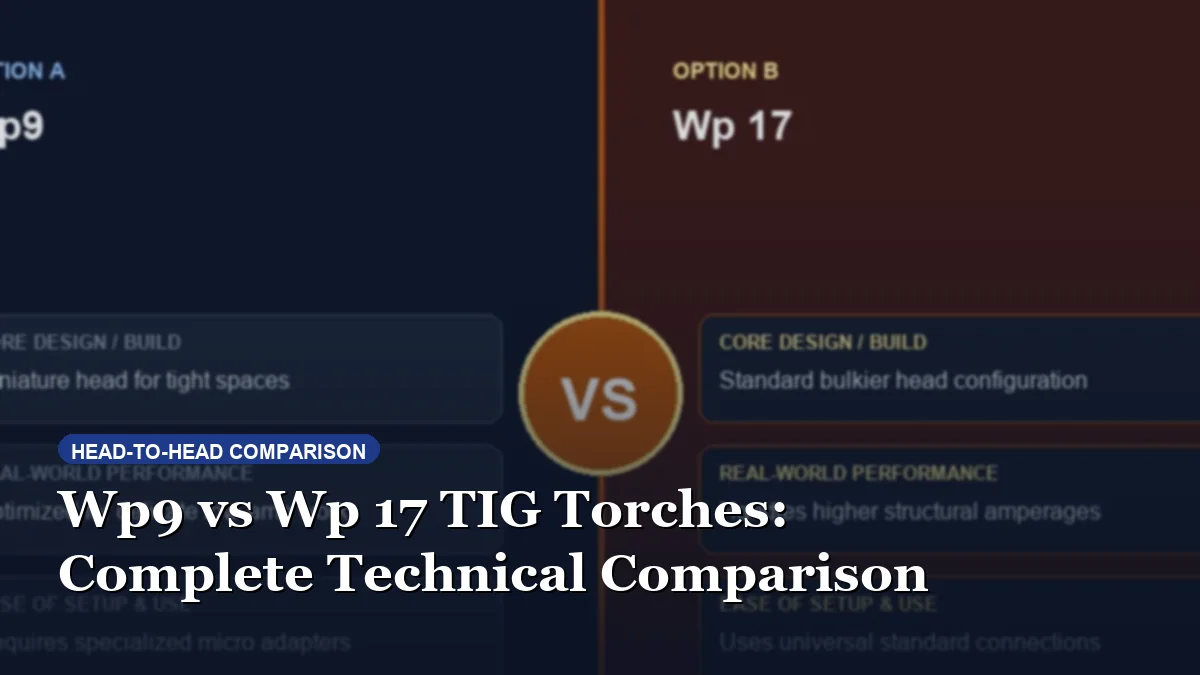
Choose the WP9 for intricate low-amp precision and tight joint clearances. Opt for the WP17 when handling extended high-amp fabrication runs requiring standard consumables.
Compare all top models in our Best Welder: Top Home Shop & Jobsite Picks Tested.
Side-by-Side Breakdown
| Criteria | Wp9 | Wp 17 | Edge |
|---|---|---|---|
| Core Design / Build | Miniature head for tight spaces | Standard bulkier head configuration | WP9 |
| Real-World Performance | Optimized for delicate low-amp work | Handles higher structural amperages | WP17 |
| Ease of Setup & Use | Requires specialized micro adapters | Uses universal standard connections | WP17 |
| Durability & Reliability | Delicate internal brass components | Robust build for harsh sites | WP17 |
| Efficiency / Operating Footprint | Ultra-lightweight cable whip | Heavier lines with stiff hoses | WP9 |
| Maintenance Requirements | Frequent consumable part replacements | Standard readily available spare parts | WP17 |
| Best Ideal Use Case | Motorsport roll cages and tubing | General shop and plate fabrication | Split |
Torch Architecture and Physical Geometry
The WP9 torch features a significantly slimmer head profile designed for tight spaces. This compact geometry allows fabricators to navigate complex joints where standard torches simply cannot reach safely.
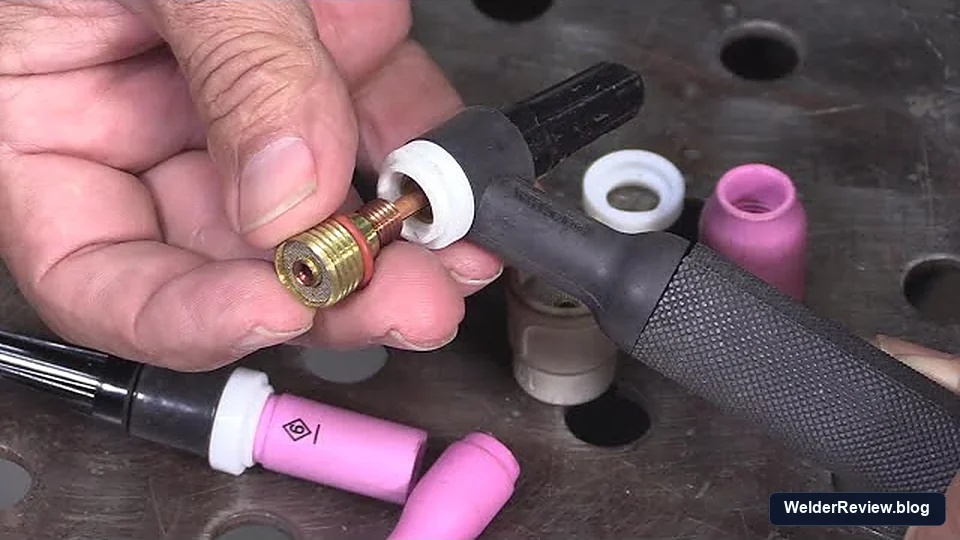
Conversely, the WP17 utilizes a bulkier head configuration built to house larger internal components often found in standard equipment. Choosing the right top starter welder models helps prevent these access limitations during heavy shop usage.
The WP-9 features a slim profile designed specifically for tight clearance joints. Its micro-torch body measures significantly smaller than standard configurations, allowing precise access inside complex weldments and restrictive aerospace structures.
Conversely, the WP-17 utilizes a robust housing that accommodates larger internal components. This bulky geometric layout increases overall torch weight but provides greater structural durability for heavy industrial fabrication and shop environments.
- WP9 head width allows clearance in tight aerospace joints.
- WP17 body accommodates standard 10N series consumables easily.
- Torch angle variations dictate overall joint accessibility limits.
Internal Design Constraints
Examining internal head dimensions reveals why the WP9 remains a favorite for delicate stainless work. Its miniature design reduces overall torch weight significantly during long overhead welding tasks.
The WP17 prioritizes structural robustness over miniaturization, incorporating heavy brass load paths. This robust internal layout ensures stable electrical contact under high mechanical stress conditions.
- Miniature wedge collet body design in WP9.
- Standard valve body configuration available for WP17.
Thermal Capacity and Amperage Limits
Operating parameters dictate clear operational boundaries between these two popular TIG torch models. The WP9 is strictly rated for lower amperage tasks, typically topping out around 125 DC amps.
Meanwhile, the WP17 handles significantly higher thermal loads, supporting up to 150 DC amps comfortably. This extra capacity makes the WP17 far more versatile for general structural steel fabrication work.
Operating at a maximum rating of 125 amps DC, the WP-9 handles delicate sheet metal tasks effectively. Exceeding this threshold quickly overheats the compact head, causing rapid degradation of internal seals and insulating gaskets.
The WP-17 delivers a 150 amp capacity, sustaining higher duty cycles on carbon steel plates. This extra thermal headroom prevents unexpected equipment failure during extended production runs requiring substantial continuous arc time.
- WP9 limited to 125 amps continuous duty cycle.
- WP17 delivers up to 150 amps under standard conditions.
- Exceeding amperage ratings causes rapid head insulation breakdown.
Duty Cycle Realities
Pushing either torch beyond its thermal threshold will quickly degrade the rubber insulation and torch body. Operators must match their machine output settings carefully to prevent catastrophic failure.
Cooling limitations also dictate how long you can sustain an arc before taking a break. Air-cooled torches rely entirely on ambient air flow and shielding gas movement.
- Air-cooled designs trap heat inside rubber jackets.
- Monitoring interpass temperature prevents torch handle melting.
Consumable Ecosystem and Part Interchangeability
Consumable availability heavily influences daily operating costs and workflow continuity in your fabrication shop. The WP17 shares parts with the massive WP18 and WP26 torch families.
This massive cross-compatibility means replacement cups, collets, and back caps are inexpensive and widely stocked. Finding specialized replacement parts for the smaller WP9 can occasionally prove slightly more challenging.
Series 9 torches require stubby consumables, including specialized collets, gas lenses, and smaller alumina cups. These miniature parts reduce the front end profile but limit direct compatibility with standard torch hardware configurations found universally.
Conversely, the WP-17 accepts industry standard parts, sharing its consumable lineage with the widespread series 18 and 26 torches. This universal compatibility lowers operating costs and simplifies replacement parts inventory management significantly.
- WP17 uses standard 10N series consumables universally.
- WP9 requires smaller stubby or micro torch consumables.
- Gas lens options vary significantly between both torch heads.
Sourcing and Cost Factors
Keeping a diverse inventory of spare cups ensures your production line never stops due to broken ceramics. Standardizing your shop around the WP17 simplifies tool crib management.
Specialty micro components for the WP9 demand careful handling during routine cleaning and maintenance cycles. Selecting the best welder for beginners helps hobbyists avoid dropping tiny collets on concrete floors and halting precision welding projects.
- Standard alumina nozzles fit the WP17 easily.
- Specialty gas lenses improve WP9 gas coverage.
Ergonomics, Cable Flexibility, and Operator Fatigue
Physical strain during long production shifts depends heavily on cable weight and handle ergonomics. The WP9 features a lightweight, thin power cable that reduces wrist fatigue remarkably.
The WP17 typically pairs with heavier power lines, increasing physical resistance when maneuvering around large assemblies. Pairing your setup with the best multi process welder or adding leather cable covers helps mitigate stiffness.
Lightweight coaxial lines on the WP-9 promote exceptional dexterity, drastically minimizing wrist strain during intricate positional welding. Welders can manipulate the torch freely without fighting stiff, heavy rubber conduit assemblies.
The WP-17 features heavier power cables that create noticeable pull, increasing operator fatigue over long shifts. Leather cable covers are frequently added to mitigate stiffness, though they add extra bulk to the setup.
- WP9 lightweight hoses enhance fine motor control.
- WP17 heavy-duty lines withstand rugged job site abuse.
- Swivel handle adapters reduce repetitive strain injuries.
Handle Design and Grip Comfort
Ergonomic handles provide secure gripping surfaces even when wearing heavy leather welding gloves. Manufacturers design WP9 handles with slender profiles to match delicate tig manipulation techniques.
The larger diameter grip on the WP17 fills the operator hand securely for high-amperage push techniques. Choosing between these handles depends entirely on your personal hand size preferences.
- Slender ribbed handles improve WP9 tactile feedback.
- Contoured rubber grips prevent slipping during sweating.
Cooling Requirements and Thermal Management
Effective thermal management prevents premature degradation of internal copper power leads and outer protective jackets. Both torches rely on passive ambient air cooling and internal shielding gas.
Because the WP9 has less mass, it absorbs heat much faster during prolonged medium-ampere welding operations. The WP17 dissipates thermal energy slightly better due to its greater physical dimensions.
As an inherently gas cooled model, the WP 9 relies exclusively on argon shielding gas flowing internally to dissipate operating heat. Maintaining adequate post flow times is critical to prevent torch body degradation.
The WP 17 uses gas cooling and manages higher thermal loads through a larger mass of copper components. Without external chillers, operators must respect strict duty cycle limits to avoid overheating internal braids.
- Shielding gas flow rate helps cool internal torch parts.
- Post-flow timer settings protect tungsten and collet integrity.
- Air-cooled systems require adequate ambient shop ventilation.
Preventing Overheating Failures
Running high currents through a small WP9 torch will melt the internal copper threads rapidly. Operators should switch to a water-cooled setup if higher amperages are required daily.
Maintaining proper post-flow gas shielding protects the tungsten electrode and consumable stack from oxidizing while hot. Ignoring this vital step shortens consumable lifespan across both torch models.
- Keep post-flow set to one second per ten amps.
- Inspect rubber insulation lines for cracking regularly.
Setup Complexity and Equipment Integration
Integrating either torch into your existing TIG welding machine requires verifying connection thread sizes carefully. Most modern power sources accommodate standard Dinse connectors and gas hose fittings seamlessly.
The WP17 often comes standard with entry-level and mid-tier TIG welding machines out of the box. Upgrading to a WP9 torch usually requires purchasing specialized adapter kits or aftermarket whips.
Integrating the WP 9 requires matching specialized adapters to connect standard power blocks with miniature gas hoses. Technicians must verify proper fitting torque to prevent gas leaks and premature shielding failure.
Connecting the WP 17 is straightforward and direct, using standard 3/8 inch fittings compatible with most TIG welding machines. This plug and play simplicity reduces initial installation time and minimizes connection errors.
- Verify machine output stud size before ordering assemblies.
- Check gas solenoid valve compatibility for valve torches.
- Ensure remote fingertip amperage controls match pin configurations.
Machine Portability and Field Use
Field technicians value the compact storage footprint of the WP9 when packing portable inverter machines. The smaller whip coils easily inside cramped toolboxes alongside other essential gear.
Construction sites demand rugged equipment that withstands being dragged across concrete floors and scaffolding. The robust outer rubber jacket of the WP17 excels in these harsh environments.
- Compact torches fit inside small portable tool cases.
- Heavy-duty outer jackets resist abrasion on job sites.
Application Suitability and Shop Integration
Pairing the right torch with your best welder for the job ensures optimal productivity and weld quality. Automotive restoration shops often prefer the WP9 for delicate sheet metal fabrication tasks.
Structural steel fabricators and pipeline contractors rely on the WP17 for general fabrication and repair work. Selecting the correct model prevents equipment bottlenecks and reduces overall project delays.
Ideal for thin gauge stainless steel and precision aerospace work, the WP 9 excels where heat input must remain tightly controlled. It is the premier choice for intricate weldments demanding exceptional visual aesthetics.
The WP 17 dominates general fabrication shops, handling varied maintenance repairs and thick structural joints with ease. Its rugged design withstands harsh shop environments where delicate micro torches might suffer physical damage.
- WP9 excels in thin-wall tubing and motorsport fabrication.
- WP17 handles general maintenance and thicker plate welding.
- Evaluate typical joint thickness before purchasing new torches.
Workflow Optimization Strategies
Streamlining your consumable inventory around a single torch family minimizes downtime and supply costs. Evaluate whether your workload leans toward precision motorsport parts or heavy structural components.
Training junior welders on standardized equipment accelerates skill acquisition and reduces consumable waste. Both torches serve vital roles depending on your exact manufacturing niche and daily demands.
- Standardizing shop tools reduces replacement part inventory overhead.
- Matching equipment to operators improves overall fabrication output.
Frequently Asked Questions
Can I use WP17 consumables on a WP9 torch?
No, the WP9 requires miniature stubby consumables due to its smaller head size. Always purchase dedicated WP9 parts to ensure proper fitment.
Is the WP9 torch water-cooled?
Most standard WP9 torches are air-cooled units designed for lower amperage work. You must select a specialty micro torch if water cooling is required.
What is the maximum amperage for a WP17?
The WP17 is typically rated for up to 150 DC amps at a standard duty cycle. Exceeding this thermal threshold will melt internal components.
Which torch is better for automotive roll cages?
The WP9 is widely favored for roll cage tubing due to its superior clearance. Its slender head lets you navigate tight clusters easily.
Do both torches fit standard TIG welders?
Yes, they connect to standard machines using matching gas and power adapters. Always verify your machine stud size before ordering.