When To Use TIG vs MIG: Expert Technical Guide
Selecting the proper welding process dictates structural integrity, aesthetic finish, and shop productivity. This comprehensive technical guide analyzes exact parameters for optimal results.

Choose TIG for precision architectural work and thin exotic alloys. Select MIG for high-production fabrication and thick structural carbon steel assemblies.
Compare all top models in our Best Welder: Top Home Shop & Jobsite Picks Tested.
Side-by-Side Breakdown
| Criteria | When To Use TIG | MIG | Edge |
|---|---|---|---|
| Core Design / Build | Non-consumable tungsten electrode | Continuous wire feed mechanism | Tie |
| Real-World Performance | Exceptional control on thin metals | High deposition rates for thick stock | Tie |
| Ease of Setup & Use | Steep learning curve, manual filler | User-friendly, excellent for beginners | MIG |
| Durability & Reliability | Flawless x-ray quality welds | Robust structural integrity if fused right | TIG |
| Efficiency / Operating Footprint | Slower travel speeds, high gas use | Fast travel speeds, continuous operation | MIG |
| Maintenance Requirements | Frequent torch cleaning, tungsten grinding | Regular contact tip and nozzle replacements | Tie |
| Best Ideal Use Case | Motorsports exhaust and aerospace tubing | Automotive body panels and heavy trailers | Tie |
Core Engineering Principles and Arc Physics
Gas tungsten arc welding establishes an intense electrical arc between a non-consumable tungsten electrode and the actual workpiece. An independent inert shielding gas completely envelops the molten puddle.
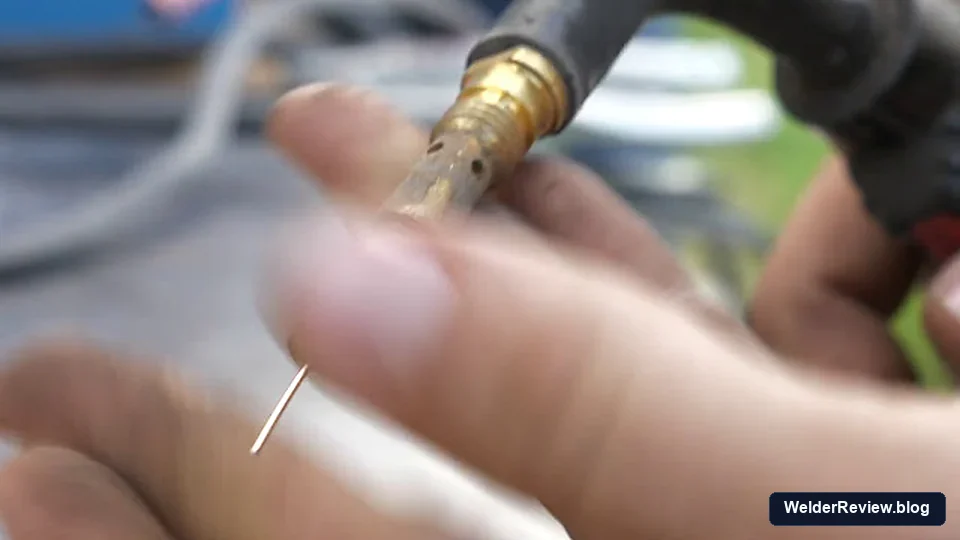
Gas metal arc welding utilizes a motorized wire feeder to continuously push a consumable electrode through a welding gun. The wire melts into the joint, creating a robust metallurgical bond.
Understanding these foundational differences helps fabricators select the correct thermal input for specific joint geometries. Improper heat distribution leads directly to warping, lack of fusion, or excessive distortion.
Gas Tungsten Arc Welding utilizes a non-consumable tungsten electrode to establish a localized electric arc, generating intense heat up to 20,000 degrees Fahrenheit to melt the base metal directly.
Conversely, Gas Metal Arc Welding feeds a continuous wire electrode through a welding gun, simultaneously supplying filler material and shielding gas to the molten puddle at high deposition rates.
Understanding electron emission and arc voltage gradients helps welders manipulate heat input, minimizing metallurgical distortion and ensuring maximum penetration across various structural carbon steel alloy configurations.
- Tungsten electrode remains intact during the welding cycle.
- MIG wire serves as both electrical conductor and filler metal.
- Inert gases protect reactive molten metals from atmospheric oxidation.
Thermal Input and Heat Affected Zones
Thermal management dictates final metallurgical properties in high-stress structural applications. TIG welding allows precise amperage modulation via foot pedals to control penetration depths.
MIG welding delivers higher overall heat inputs over shorter timeframes, increasing production speeds while expanding the heat affected zone across carbon steels, especially when using a top rated home mig welder.
- Pedal control permits dynamic puddle freezing.
- Continuous wire feeding maintains steady thermal states.
Material Compatibility Across Thickness Ranges
Selecting the correct joining method depends heavily on base metal composition and gauge thickness. Thin aerospace aluminum sheets require delicate handling that standard wire feeders cannot replicate reliably.
Structural steel frames demand rapid deep penetration achievable through continuous wire processes. Trying to join heavy structural plates with manual tungsten techniques severely limits daily workshop output efficiency.
TIG welding excels on thin-gauge materials below 1/16 inch, offering exceptional puddle control for aluminum, stainless steel, and exotic titanium assemblies without risking catastrophic burn-through.
MIG welding dominates heavy industrial fabrication involving thick structural plates exceeding 1/4 inch, delivering rapid fill rates and deep root penetration for demanding structural joints via a powerful 220v mig machine.
- Exotic alloys like titanium demand absolute inert shielding.
- Carbon steel plates benefit from high deposition wire speeds.
Handling Exotic Alloys and Thin Gauges
Thin stainless steel tubing used in sanitary food processing equipment requires pristine internal purge lines. TIG welding prevents catastrophic sugar formation on root passes effectively.
Attempting thin-gauge sheet metal work with high-amperage wire setups often results in burn-through. Operators must balance voltage drops and wire feed speeds to prevent structural failures.
- Sanitary tubing demands flawless root penetration profiles.
- Sheet metal fabrication requires strict voltage regulation.
Operational Speed and Deposition Efficiency
Production throughput remains a primary driver for industrial fabrication facilities operating under tight deadlines. Continuous wire feed systems outperform manual filler rod techniques by dramatic margins daily.
Operators spend zero time feeding external filler wire manually during standard GMAW operations. This mechanical advantage drastically cuts down total arc-on time for long structural weldments.
The manual nature of TIG welding inherently limits travel speeds because operators must feed filler rod independently while maintaining precise torch angles, simplified using a versatile multi process machine.
MIG systems achieve significantly higher deposition efficiency due to continuous wire feeding, making them the preferred choice for production environments requiring high output and reduced labor costs.
- Continuous wire feeding eliminates manual filler pauses.
- Higher deposition rates fill large joint bevels faster.
Maximizing Workshop Throughput Metrics
Balancing speed against quality requires analyzing total project hours rather than simple arc-on metrics. Complex multi-pass joints often require extensive cleaning between layers regardless of process.
Shops focusing on high-volume structural assembly lean heavily on wire-feed methods to maintain profitable margins. Precision custom fabrication shops rely on manual dexterity for unique geometries.
- Production facilities prioritize rapid joint completion rates.
- Custom fabrication demands adaptive manual torch control.
Shielding Gas Dynamics and Purity Control
Atmospheric contamination compromises weld integrity by introducing porosity and brittle oxides into the molten pool. Pure argon is standard for TIG, while wire processes often use argon-carbon dioxide mixes.
Windy outdoor job sites present severe challenges for gas shielding effectiveness. Fabricators must erect protective wind screens or switch to self-shielded flux-cored wires to prevent weld degradation.
TIG welding requires 100 percent argon for most applications to prevent atmospheric contamination, ensuring clean, oxide-free welds on sensitive metals like aluminum and aerospace-grade stainless steel.
MIG processes typically rely on argon-CO2 mixtures to stabilize the spray transfer arc, reduce spatter, and maintain proper bead profiles when exploring top rated starter mig setups.
- Argon purity ensures bright, clean stainless steel finishes.
- Gas mixtures stabilize arcs during high-speed wire feeding.
Managing Drafts and Environmental Factors
Even minor shop drafts can disrupt delicate gas flows exiting standard gas nozzles. Maintaining correct stickout distances preserves adequate atmospheric coverage over hot metal zones.
Outdoor field repairs require robust shielding strategies to combat crosswinds that sweep away protective gases. Proper flow meter calibration prevents excessive gas waste during extended operations.
- Drafts displace protective shielding gas envelopes instantly.
- Flow meters require routine calibration for optimal coverage.
Ergonomics, Joint Preparation, and Setup
Physical demands on operators vary significantly between these two primary welding techniques. Two-handed coordination is mandatory for TIG, while wire guns offer single-handed gun manipulation.
Joint fit-up tolerances are far less forgiving when utilizing low-heat tungsten equipment. Tight joint clearances ensure proper capillary action and fusion without relying on excess filler metal.
Proper joint cleaning is non-negotiable for TIG, requiring the complete removal of mill scale and oils to prevent tungsten contamination and porosity in critical weld zones.
MIG setup focuses on contact tip alignment and drive roll tension, ensuring smooth wire feeding and consistent electrical conductivity during extended high-amperage structural welding operations.
- TIG requires simultaneous hand and foot pedal operation.
- MIG allows comfortable single-handed gun positioning easily.
Minimizing Post-Weld Cleanup Time
Reducing grinding and finishing labor improves overall fabrication profitability across all project types. Clean gas shielding minimizes stubborn slag inclusions and excessive spatter accumulation.
Wire processes frequently generate small spatter droplets that require mechanical removal before painting. High-frequency arc starts on tungsten torches eliminate touch-starting tungsten contamination entirely.
- Spatter reduction saves valuable post-weld cleanup hours.
- Clean starts prevent embedded tungsten inclusions in aluminum.
Maintenance Protocols and Consumable Lifespan
Proactive equipment maintenance prevents unexpected downtime and ensures consistent arc stability during critical runs. Contact tips, drive rolls, and gas diffusers require regular inspection on wire feeders.
Tungsten electrodes demand careful diamond-wheel grinding to maintain optimal tip geometry for focused arcs. Contaminated tungsten must be snapped off and reground immediately to restore proper arc performance.
TIG torches demand regular inspection of collet bodies and ceramic cups, alongside meticulous bench grinder shaping of tungsten electrodes to maintain a focused, stable arc cone.
MIG gun maintenance centers on replacing worn contact tips and cleaning nozzle spatter build-up with anti-spatter gel to prevent erratic wire feeding and electrical resistance issues.
- Drive rolls need periodic cleaning to prevent wire slips.
- Tungsten geometry directly affects arc cone concentration.
Preventative Care for Machine Longevity
Internal transformer components and cooling fans accumulate dust and metal shavings over months of heavy shop use. Routine compressed air blowouts prevent overheating failures during peak loads.
Inspect water-cooled torch lines regularly for leaks or blockages that restrict critical coolant flow. Maintaining clean electrical connections reduces resistance heating at high amperage levels.
- Cooling systems prevent premature internal torch damage.
- Electrical terminal checks ensure stable voltage delivery.
Choosing the Right Process for Your Shop
Evaluating equipment investments requires aligning machine capabilities with your specific client base and material types. Automotive restoration shops benefit greatly from versatile multi-process inverter welding units.
Heavy structural contractors need robust, high-duty-cycle wire machines capable of running all day without thermal shutdowns. Assessing your typical material thicknesses guides the final machinery selection process.
Select TIG when your shop prioritizes aesthetic weld quality and precision on intricate assemblies, custom automotive components, or aerospace projects where structural flawlessness is paramount.
Deploy MIG systems when high-volume production, thick material fabrication, and minimized labor hours dictate shop profitability and turnaround times on standard commercial structural steel fabrications.
- Match machine duty cycles to daily production demands.
- Consider future project expansions when buying equipment.
Final Equipment Selection Guidelines
Investing in quality power sources pays dividends through reliable arc starts and stable output parameters. Review warranty terms and customer support availability before finalizing your equipment purchases.
Prioritize safety gear and proper ventilation systems to protect operators from hazardous welding fumes. A well-equipped workstation ensures long-term productivity and superior structural weld quality.
- Quality power sources guarantee consistent arc stability.
- Proper ventilation protects workers from toxic fumes.
Frequently Asked Questions
Can I weld aluminum using standard MIG equipment?
Yes, but you must install a spool gun or push-pull system to prevent soft aluminum wire from birdnesting inside the drive rollers. Using pure argon shielding gas is also mandatory for clean aluminum fusion.
Why is TIG welding considered much harder to learn?
Operators must synchronize both hands while simultaneously managing a foot pedal for amperage control. This complex manual dexterity requirement creates a steep learning curve for beginners.
What shielding gas should I use for mild steel wire welding?
A blend of seventy-five percent argon and twenty-five percent carbon dioxide provides optimal arc stability and minimal spatter. Pure carbon dioxide offers deeper penetration but creates a rougher weld bead surface.
How do I prevent tungsten contamination during aluminum TIG passes?
Always use high-frequency start features or AC balance controls to avoid touching the tungsten tip to the puddle. If contamination occurs, immediately grind the electrode back to a clean point.
Is MIG welding strong enough for structural trailer repairs?
Yes, provided you use correct wire sizes, proper bevel preparations, and adequate machine amperage. Achieving full joint penetration ensures the structural integrity matches original factory specifications.