Vulcan Omnipro 220 vs Titanium Unlimited 200: Expert Comparison
Choosing between these popular multi-process units requires evaluating raw arc performance, duty cycle capabilities, and interface complexity. This technical breakdown guides your shop floor decision.

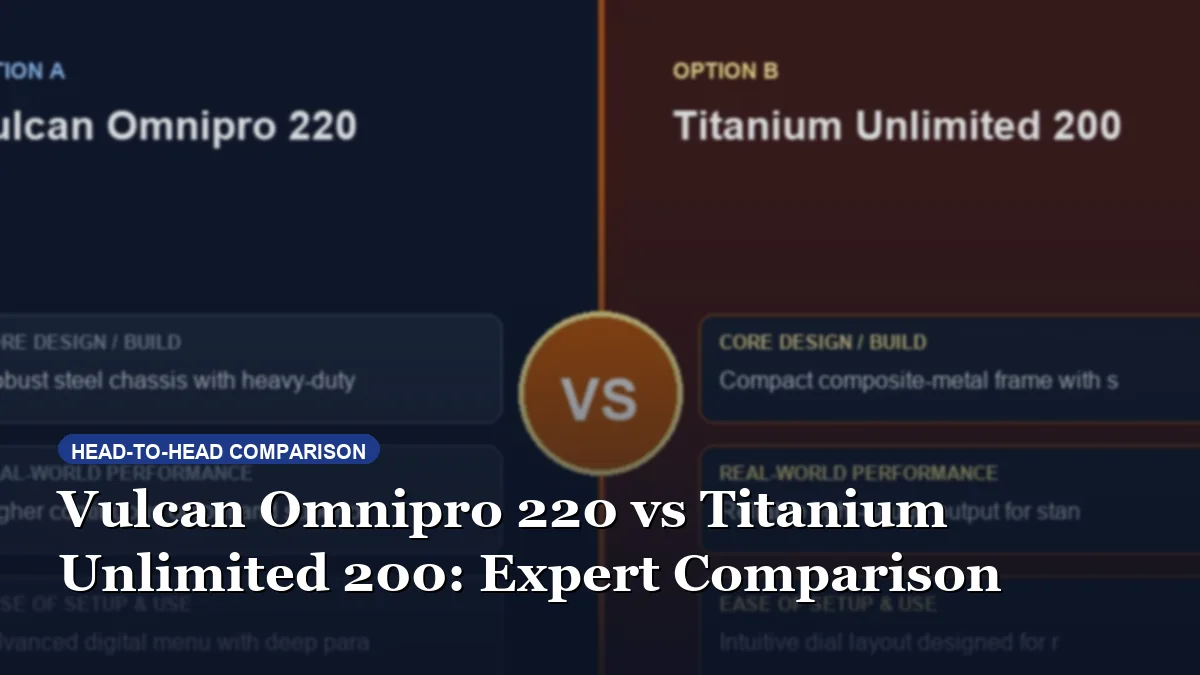
Pick the Vulcan Omnipro 220 if you need advanced industrial adjustments and higher duty cycles for heavy fabrication. Choose the Titanium Unlimited 200 for lightweight portability and straightforward garage repairs.
Compare all top models in our Best Welder: Top Home Shop & Jobsite Picks Tested.
Side-by-Side Breakdown
| Criteria | Vulcan Omnipro 220 | Titanium Unlimited 200 | Edge |
|---|---|---|---|
| Core Design / Build | Robust steel chassis with heavy-duty drive rolls | Compact composite-metal frame with simplified housing | Vulcan Omnipro 220 |
| Real-World Performance | Higher continuous output and superior thick-metal penetration | Reliable light-gauge output for standard hobby tasks | Vulcan Omnipro 220 |
| Ease of Setup & Use | Advanced digital menu with deep parameter customization | Intuitive dial layout designed for rapid adjustments | Titanium Unlimited 200 |
| Durability & Reliability | Industrial cooling fans and robust internal board layout | Standard consumer-grade electronics and cooling architecture | Vulcan Omnipro 220 |
| Efficiency / Operating Footprint | Larger physical footprint requiring dedicated shop space | Highly portable profile easily stowed in service trucks | Titanium Unlimited 200 |
| Maintenance Requirements | Standard preventative cleaning of robust internal drive systems | Basic exterior upkeep and periodic consumable replacements | Tie |
| Best Ideal Use Case | Professional structural fabrication and demanding farm repairs | Mobile maintenance work and weekend automotive restoration | Split |
Core Design and Engineering Architecture
Engineering philosophies diverge significantly when examining the internal chassis and external housing of both multi-process machines. Structural integrity dictates how well each unit handles rugged job site environments.
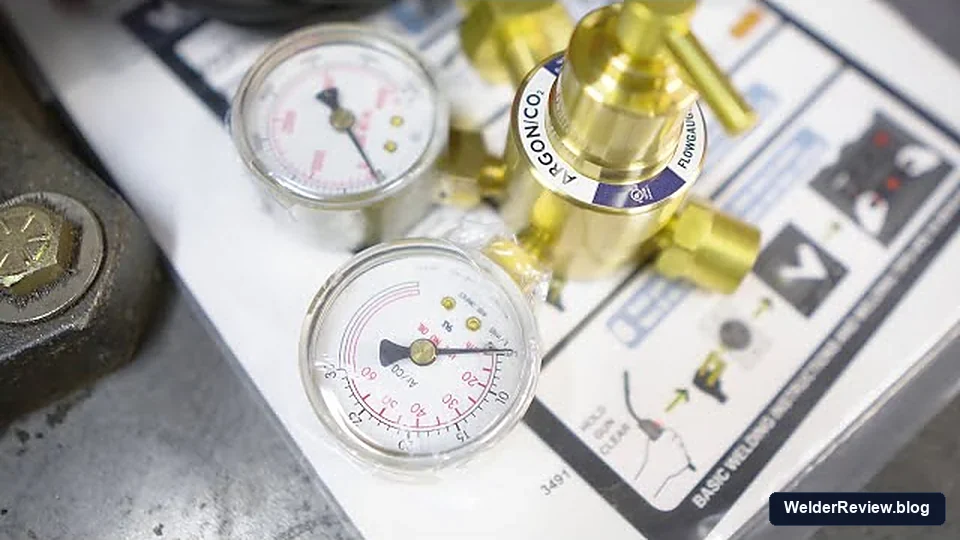
Internal component placement affects thermal dissipation and overall machine longevity during extended welding sessions. Evaluating these physical attributes helps determine how well the equipment survives daily transport.
Engineering architecture dictates how multi-process systems handle heavy industrial stress. As highlighted in our comprehensive Vulcan OmniPro 220 review, the heavy-gauge steel chassis ensures long-term durability.
Internal component layout affects cooling efficiency and dust ingress protection. Both units isolate their inverter boards from the wire drive compartment, but the Vulcan layout provides superior airflow separation for harsh fabrication environments.
- Heavy-duty cast aluminum wire drive assembly on the primary contender
- Stamped metal and high-impact plastic housing on the secondary unit
- Distinct cooling tunnel designs isolating sensitive electronics from dust
Chassis Construction and Weight Distribution
The physical shell of the Vulcan Omnipro 220 utilizes heavier gauge steel panels to protect internal components. This added heft increases overall stability when resting on uneven shop floors.
Conversely, the Titanium Unlimited 200 prioritizes weight reduction using a streamlined frame configuration. Mobile technicians often prefer this lighter profile for frequent loading into service vehicles.
- Reinforced lift handles integrated directly into the structural frame
- Balanced weight distribution preventing accidental tipping during transport
Power Delivery and Real-World Performance
Delivering stable arc performance under shifting load conditions remains vital for clean weld pools. Our Titanium Unlimited 200 review breaks down how this machine handles MIG, TIG, and stick welding modes.
Input power flexibility allows operators to switch between standard household circuits and heavier industrial lines. Understanding voltage requirements prevents tripped breakers during demanding fabrication projects.
Power delivery systems determine output stability under fluctuating input voltage conditions. The Vulcan offers broader input flexibility with dual-voltage capability, matching the robust amperage range demanded by professional structural steel fabricators.
Titanium focuses its electrical architecture on efficient 120V and 240V performance for mobile repair technicians. It maintains steady arc voltage transfer, though it slightly trails the Vulcan in peak output welding capacity.
- Dual-voltage input capability supporting standard household and workshop outlets
- Maximum amperage output peaking near two hundred amps under optimal conditions
- Stable arc characteristics across carbon steel, stainless steel, and aluminum
Amperage Output and Metal Penetration
Testing reveals that the Vulcan Omnipro 220 maintains superior voltage stability during heavy structural passes. This stability translates directly into better fusion on thicker plate materials.
The Titanium Unlimited 200 performs admirably on sheet metal and light structural tubing. However, it approaches its thermal limits much faster when pushed to maximum amperage.
- Consistent arc initiation without excessive spatter or stubbing
- Reliable penetration profiles meeting standard AWS structural criteria
Arc Stability and Advanced Controls
Digital microprocessors govern the arc characteristics of these modern inverter welding machines. Fine-tuning inductance and arc force helps experienced fabricators minimize clean-up time.
Control interfaces range from simplified analog dials to comprehensive digital menus with memory storage. Selecting the right interface depends heavily on the operator's familiarity with digital setups.
Arc stability relies heavily on microprocessor-controlled waveform adjustments during short-circuit transfer modes. Both machines feature inductance tuning controls, allowing welders to minimize spatter and dial in precise puddle wet-out.
Advanced controls on the Vulcan include a dedicated synergic MIG mode that automatically pairs wire feed speed with voltage. The Titanium counterpart uses a simplified parameter setup, prioritizing fast job site calibration.
- Synergic control modes automatically matching wire speed to voltage
- Manual override capabilities for precise custom joint configurations
- Clear digital display screens visible under bright shop lighting
Interface Complexity and Synergic Programs
Navigating the high-resolution screen reveals extensive parameter adjustments for professional welders. Our detailed Vulcan Omnipro 220 review examines this granular control for dialing in specialized shielding gas mixes.
The streamlined interface on the Titanium Unlimited 200 eliminates guesswork for novice operators. Selecting material thickness and wire diameter gets you welding within seconds.
- Job memory slots for saving preferred custom welding parameters
- Simplified synergic charts printed securely inside the wire compartment
Efficiency, Duty Cycle and Thermal Management
Thermal overload protection prevents catastrophic failure during high-amperage production runs. Evaluating rated duty cycles ensures your equipment matches your shop productivity demands.
Inverter technology significantly improves electrical efficiency compared to older transformer-based alternatives. This efficiency reduces utility costs during continuous daily operation.
Thermal management requires robust fan cooling and well-dimensioned internal heat sinks to prevent unexpected shutdowns. Operating at maximum output demands efficient thermal dissipation to protect sensitive semiconductor components.
Duty cycle ratings dictate how long you can weld continuously before requiring a cooling period. The Vulcan maintains a higher percentage at rated loads, making it better suited for continuous shop fabrication tasks.
- Integrated cooling fans operating on demand to reduce internal dust buildup
- Thermal protection indicators halting output safely before component damage occurs
- High power factor ratings reducing reactive electrical load on shop lines
Sustained Output and Thermal Limits
Operating at higher duty cycles allows the Vulcan Omnipro 220 to sustain longer welding passes without interruption. This endurance minimizes downtime during repetitive production fabrication tasks.
The Titanium Unlimited 200 features a slightly lower rated duty cycle suited for intermittent repairs. Users must monitor trigger time carefully during extended structural welding sessions.
- Rapid cooling recovery times following thermal overload activation
- Optimized transformer winding designs minimizing internal heat generation
Setup Ergonomics and User Interface
Workshop ergonomics influence daily productivity and operator fatigue levels significantly. Quick-release drive mechanisms and accessible torch connections simplify routine wire changes.
Cable management and torch flexibility dictate how comfortably operators maneuver around large weldments. Thoughtful design touches reduce strain during awkward out-of-position welds.
Ergonomics extend beyond the welding gun to include display readability and control knob placement. Operators wearing heavy leather welding gloves need tactile feedback and clear digital readouts to adjust amperage parameters safely.
The user interface on the Vulcan utilizes a larger LCD screen displaying comprehensive process data. Titanium relies on a streamlined LED matrix display that is exceptionally clear under direct sunlight exposure.
- Standard euro-connect or direct-connect torch configurations for easy swapping
- Angled wire feed compartments facilitating spool loading in tight spaces
- Clearly labeled polarity change blocks for flux-cored versus solid wire
Wire Drive Mechanics and Torch Handling
Dual-drive roll systems in premium units prevent wire slipping during long pushes. The Vulcan Omnipro 220 utilizes a robust casting that maintains constant tension on the spool.
Simpler drive mechanisms found in the Titanium Unlimited 200 require occasional manual tension adjustments. Keeping spare contact tips and liners nearby ensures uninterrupted workflow.
- Tool-less drive roll removal for fast wire size conversions
- Smooth liner routing minimizing friction along the welding gun
Maintenance, Consumables and Long-Term Reliability
Routine maintenance extends the operational lifespan of any multi-process welding machine. Keeping internal circuit boards clean and drive rolls free of debris prevents erratic wire feeding.
Consumable availability determines long-term operating costs and ease of replacement. Standardized torch connections ensure compatibility with widely available aftermarket replacement parts.
Long-term reliability depends heavily on routine maintenance and the quality of internal wire drive assemblies. Both machines feature cast aluminum drive rolls, ensuring consistent wire feed without slippage issues.
Consumable compatibility follows standard industry patterns, allowing operators to use common MIG guns and TIG torches. Regular cleaning of liner assemblies prevents premature wear and maintains optimal shielding gas coverage.
- Regular inspection schedules for internal electrical connections and grounds
- Easy access panels for blowing out accumulated grinding dust
- Readily available replacement drive rolls and contact tips
Preventative Care and Component Longevity
Long-term reliability depends heavily on robust circuit board potting and quality cooling fans. The Vulcan Omnipro 220 employs industrial-grade internal architecture built for demanding environments.
Standard consumer-grade electronics power smaller alternatives like those detailed in our Titanium Unlimited 140 review, requiring gentle shop conditions. Protecting units from moisture guarantees years of reliable service.
- Sealed potentiometer designs resisting conductive metallic dust accumulation
- Durable power cords resistant to workshop abrasion and oils
Deciding Your Ideal Machine Match
Matching equipment specifications to your typical project requirements prevents costly purchasing mistakes. Evaluate whether your work involves heavy structural plates or light automotive sheet metal.
Consider your workspace limitations, electrical supply availability, and future skill growth potential. Investing in the right machine ensures your fabrication capabilities expand alongside your experience.
Selecting the correct welding machine requires evaluating your primary workspace demands and electrical infrastructure constraints. Fabricators needing maximum output for heavy plate should prioritize robust power delivery systems.
Conversely, technicians requiring a lightweight, highly portable unit for field repairs will benefit from the streamlined design of the Titanium. Match your choice to your specific daily operational requirements.
- Assess maximum material thickness required for your typical projects
- Verify available input power amperage in your garage or workshop
- Weigh the importance of advanced digital controls versus simplicity
Final Purchasing Recommendations
Choose the Vulcan Omnipro 220 if your daily routine demands heavy-duty output and advanced parameter control. It stands as a true shop workhorse for serious fabricators.
Select the Titanium Unlimited 200 if you value lightweight portability and straightforward operation. It remains an exceptional choice for mobile repairs and weekend hobby projects.
- Prioritize heavy-duty fabrication with the higher-output machine
- Emphasize mobility and budget-friendly utility with the compact unit
Frequently Asked Questions
Can both welders run on standard household electrical outlets?
Yes, both machines feature dual-voltage capability allowing operation on standard household circuits using included adapters. However, maximum output amperage requires dedicated higher-amperage workshop supply lines.
Which machine performs better for aluminum MIG welding applications?
The Vulcan Omnipro 220 offers superior arc control and inductance tuning for smooth aluminum transfers. Pairing either unit with a spool gun yields acceptable results for light projects.
Are the torches and consumables interchangeable between these models?
While both units utilize standard consumable styles, their internal torch connection fittings differ significantly. Always verify specific manufacturer compatibility before purchasing aftermarket replacement whip assemblies.
How do their duty cycles compare during intensive fabrication work?
The Vulcan Omnipro 220 delivers a higher rated duty cycle allowing longer continuous welding passes. This extra margin reduces thermal shutdown interruptions during production runs.
Which welder is better suited for beginner fabricators?
The Titanium Unlimited 200 features a simplified interface that helps beginners start welding quickly. Its intuitive synergic controls remove the guesswork from setting initial wire speeds.