Vulcan Migmax 215 vs Lincoln Power Mig 210 Mp: Concise Verdict
Choosing between these popular multi-process welders requires balancing industrial pedigree with workshop budget value. We carefully evaluate actual arc performance, build quality, and daily usability.

Choose the Lincoln for unmatched brand reliability and advanced digital controls. Select the Vulcan if you prioritize heavy-duty structural framing and exceptional value for standard fabrication tasks.
Compare all top models in our Best Welder: Top Home Shop & Jobsite Picks Tested.
Side-by-Side Breakdown
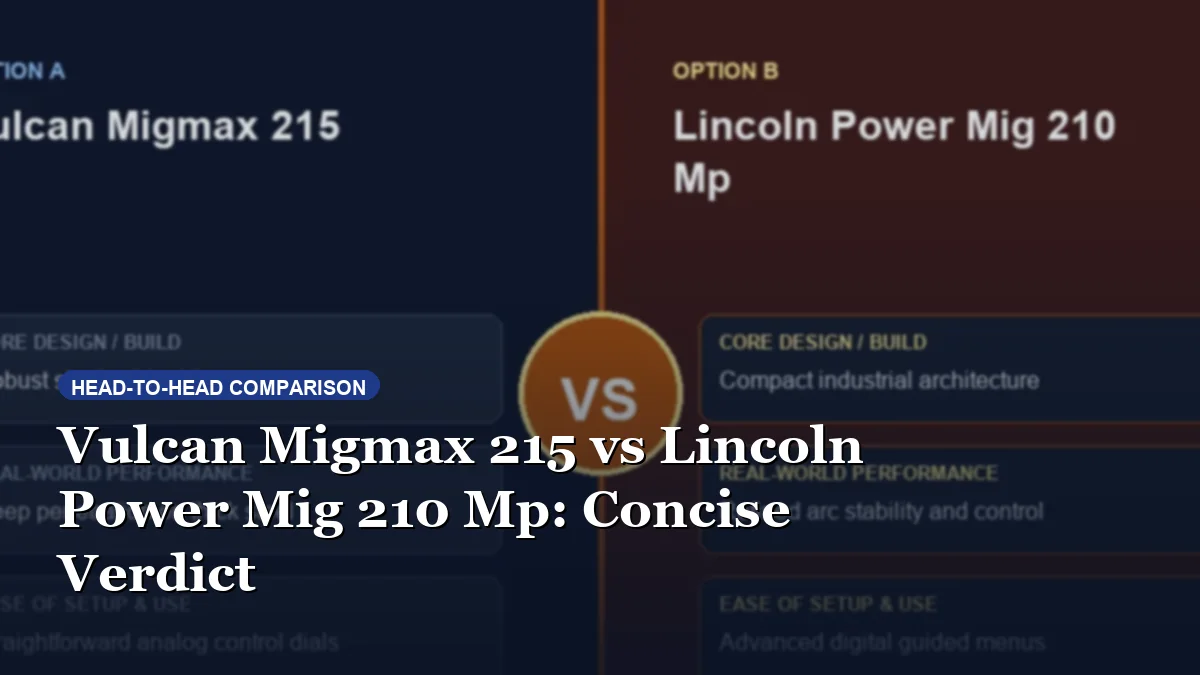
| Criteria | Vulcan Migmax 215 | Lincoln Power Mig 210 Mp | Edge |
|---|---|---|---|
| Core Design / Build | Robust steel cabinet frame | Compact industrial architecture | Lincoln Power Mig 210 Mp |
| Real-World Performance | Deep penetration on thick steel | Refined arc stability and control | Lincoln Power Mig 210 Mp |
| Ease of Setup & Use | Straightforward analog control dials | Advanced digital guided menus | Lincoln Power Mig 210 Mp |
| Durability & Reliability | Solid workshop impact resistance | Proven long-term component longevity | Lincoln Power Mig 210 Mp |
| Efficiency / Operating Footprint | Dual-voltage inverter power efficiency | Optimized power factor correction | Vulcan Migmax 215 |
| Maintenance Requirements | Standard accessible drive assembly | Modular quick-service internal layout | Lincoln Power Mig 210 Mp |
| Best Ideal Use Case | General budget-conscious fabrication | Professional mobile repair work | Lincoln Power Mig 210 Mp |
Core Design and Engineering Differences
Engineering priorities define the core identity of both machines in daily use. Lincoln focuses on compact portability while Harbor Freight builds a robust steel chassis designed for heavy shop environments.
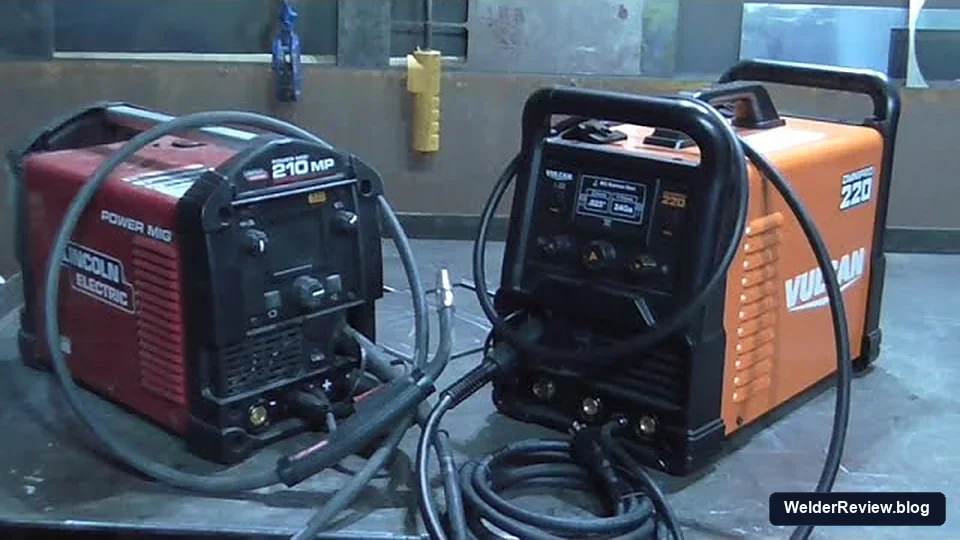
Internal transformer design impacts duty cycle performance during extended welding sessions. Both units leverage inverter technology to reduce overall weight, yet their internal component layouts reflect entirely different manufacturing philosophies.
Cabinet construction directly influences how well internal wire feed mechanisms withstand workshop abuse. Proper alignment prevents birdnesting and ensures smooth wire delivery across demanding aluminum or steel fabrication runs.
The Vulcan MigMax 215 utilizes a heavy-duty cast aluminum drive assembly that ensures smooth wire feeding during long structural fabrication runs. Its internal chassis layout provides adequate airflow channels to protect sensitive electronics.
Conversely, our detailed Lincoln Electric Power MIG 210 MP review highlights its precision-engineered dual-gear drive system designed for exact tension control on softer aluminum wires during high-speed production welding tasks.
Transformer design and inverter topology also differ substantially between these units. The Lincoln relies on a compact, highly efficient inverter topology, whereas the Vulcan incorporates a ruggedized transformer architecture meant for heavy shop environments.
- Heavy-gauge stamped steel cabinet construction
- Advanced internal cooling fan configuration
- Precision gear-driven wire drive assembly
Drive Roll Mechanics
Wire drive mechanisms dictate long-term reliability under high-tension flux-core applications. The Lincoln features a cast aluminum housing, whereas the Vulcan utilizes a comparable dual-drive roll system for consistent wire feeding.
Maintaining proper tension prevents premature motor wear and eliminates erratic arc characteristics. Operators should regularly inspect drive rolls for debris accumulation and wear patterns to maintain optimal weld bead profiles.
- Cast aluminum versus stamped housing designs
- Tool-less quick-change drive roll tensioners
Real-World Performance and Arc Quality
Arc stability remains the ultimate test for any multi-process machine operating on standard circuits. Both welders deliver crisp starts, minimal spatter, and deep penetration when configured for standard steel applications.
Voltage tuning flexibility allows fabricators to dial in precise parameters for tricky sheet metal joints. The Lincoln digital interface provides fine adjustments, while the Vulcan relies on traditional analog control dials.
Pushing these machines to their maximum amperage limits reveals distinct thermal management differences. Duty cycles dictate how long you can weld before internal safety switches interrupt your workflow for cooling.
As detailed in our comprehensive Vulcan MigMax 215 review, the machine delivers a stable arc capable of deep penetration on quarter-inch materials while preventing annoying arc stutter during input fluctuations.
Meanwhile, the Lincoln Power MIG 210 MP excels in fine arc modulation, providing ultra-smooth short-circuit transfers on thin automotive sheet metal. Welders can easily dial in exact parameters to minimize spatter and reduce costly post-weld cleanup time.
Duty cycle performance dictates continuous operational limits for both machines under demanding shop conditions. Operators must monitor thermal thresholds closely when running maximum amperage outputs to prevent premature thermal overload trips on either unit.
- Smooth arc initiation on thin gauge steel
- Predictable puddle control during vertical-up passes
- Reliable shielding gas coverage at high flow rates
Multi-Process Versatility
Transitioning between MIG, TIG, and stick modes should be straightforward and mechanically secure. Both platforms accommodate multiple welding processes, though arc characteristics vary notably during scratch-start TIG operations.
Dedicated terminal connections ensure safety and prevent accidental arcing during mode changes. Fabricators must select the appropriate polarity configuration before beginning any structural or cosmetic fabrication project.
- Dedicated TIG torch valve integration
- Optimized stick electrode hot-start curves
Setup, Usability and Interface Design
User interface design significantly impacts daily productivity for both novice fabricators and experienced welders. Digital display screens offer quick parameter reference, while manual knobs provide tactile feedback through heavy work gloves.
Setting wire feed speed and voltage accurately prevents common defects like lack of fusion. Clear reference charts printed inside the wire compartment help operators establish baseline settings for various material thicknesses.
Portability handles and overall weight determine how easily you can transport the machine. Ergonomic placement of power switches and gas hookups reduces setup friction during fast-paced mobile repair jobs.
Navigating the Vulcan MigMax 215 relies on a traditional dual-knob control setup paired with a clear digital readout. This straightforward interface allows fabricators to adjust wire feed speed and voltage quickly without wading through complex digital menus.
Similar to insights found in our Lincoln Power MIG 260 review, this model utilizes an advanced color screen and intuitive push-and-turn dial for rapid parameter selection based on material thickness.
Physical ergonomics extend to torch connection points and ground clamp quality. Both units incorporate robust Euro-style or standard receptacles, though the overall cable flexibility differs noticeably during cold-weather outdoor repair jobs.
- High-contrast digital screen visibility
- Ergonomic gun trigger and cable flexibility
- Quick-release spool gun connection ports
Parameter Control Layouts
Navigating menu trees on advanced multi-process units requires intuitive software programming. Lincoln prioritizes a guided setup menu, whereas Vulcan favors a more straightforward manual approach for rapid parameter adjustments.
Minimizing button presses lets fabricators stay focused on the molten weld puddle. Clear visual feedback ensures that operators immediately recognize any deviation from desired voltage and amperage targets.
- Menu navigation speed and simplicity
- Tactile feedback on control knobs
Durability, Reliability and Build Standards
Workshop environments demand equipment capable of withstanding dust, moisture, and occasional physical impacts. Protective corner guards and sturdy door latches preserve internal electronics from harsh jobsite conditions and debris.
Component longevity depends heavily on circuit board conformal coating and transformer build quality. Investing in a dependable machine minimizes costly downtime and reduces unexpected repair expenses over years of service.
Thermal overload protection safeguards sensitive internal electronics when pushing equipment beyond rated limits. Automatic reset functions restore operation once internal temperatures drop to safe levels during heavy fabrication cycles.
Cabinet construction on the Vulcan MigMax 215 employs heavy-gauge stamped steel coated with a durable powder finish to resist shop corrosion. Plastic front bezels are reinforced to withstand accidental impacts from dropped hand tools.
Building on findings from our Lincoln Power MIG 260 K3520 1 review, this machine features a high-impact composite chassis frame that successfully reduces total unit weight while protecting against moisture ingress.
Long-term reliability ultimately depends on cooling fan efficiency and transformer thermal insulation ratings. Both machines incorporate temperature-controlled fans that run only when necessary, reducing dust accumulation inside the primary electrical enclosures.
- Industrial-grade circuit board conformal coating
- Reinforced structural internal frame design
- Impact-resistant external composite housing
Environmental Resistance
Airborne metal dust poses a constant hazard to unsealed inverter welding machines. Internal cooling fans must pull air efficiently while preventing conductive debris from bridging sensitive electrical components.
Regular cleaning with compressed air prevents dust buildup that causes premature thermal failure. Operators should establish a routine maintenance schedule based on daily usage intensity in dirty environments.
- Sealed fan motor housing protection
- Dust filtration barrier screen placement
Operating Efficiency and Power Consumption
Electrical efficiency affects operating costs, especially when running equipment on residential dual-voltage circuits. Inverter technology optimizes power factor correction, drawing fewer amps while delivering robust output arc performance.
Compatibility with portable engine-driven generators makes both welders suitable for remote field repairs. Stable voltage regulation prevents electronic damage when power input fluctuates unpredictably on remote jobsites.
Minimizing idle power consumption helps reduce overall utility overhead during intermittent fabrication tasks. Standby modes shut down unnecessary cooling fans when the welding arc remains inactive for extended periods.
Electrical efficiency directly impacts operating costs during heavy industrial fabrication projects. The Lincoln Power MIG 210 MP leverages high-frequency inverter technology to draw fewer amps from the main breaker while delivering high arc output.
Operating on dual-voltage input requires robust internal relays that switch seamlessly between 120V and 240V circuits. Both welders handle this transition automatically, but users must verify breaker sizing to prevent nuisance tripping during peak loads.
Power factor correction circuitry helps these multi-process machines maintain stable performance even when connected to long extension cords or engine-driven generators on remote job sites, maximizing overall energy utilization significantly.
- Dual-voltage automatic input detection
- Low idle power consumption design
- Generator-friendly power factor correction
Input Power Flexibility
Switching between one-hundred-twenty and two-hundred-thirty volts requires reliable plug adapters. Automatic sensing technology eliminates manual internal linking jumpers, ensuring safe operation right out of the box.
Operating on standard household circuits limits maximum output amperage for heavy structural joints. Connecting to dedicated heavy-duty workshop receptacles unlocks the full thermal capacity of both welding systems.
- Adapter plug durability and locking
- Voltage fluctuation tolerance thresholds
Maintenance, Serviceability and Upkeep
Routine maintenance extends equipment life and ensures consistent weld quality over decades. Keeping drive rolls clean, checking ground clamp connections, and inspecting torch liners prevent common wire feeding failures.
Consumable availability determines how quickly you can source replacement contact tips and nozzles. Local welding supply stores readily stock standard gun consumables for both popular machine brands without delays.
Troubleshooting electrical faults requires accessible internal wiring diagrams and responsive customer support networks. Clear diagnostic error codes displayed on digital screens simplify identifying sensor failures or thermal trips.
Routine maintenance involves inspecting drive rolls, contact tips, and liner conditions regularly to ensure consistent wire feeding performance. The Vulcan MigMax 215 offers tool-free access to the drive compartment, simplifying daily inspections.
Servicing the internal components of the Lincoln Power MIG 210 MP requires basic hand tools and adherence to safe electrical discharge procedures. Replacement circuit boards and modular drive assemblies are readily available through authorized distributors.
Keeping cooling vents clear of metal shavings and dust prevents overheating and extends transformer lifespan. Technicians should use compressed air at low pressures to clean internal heatsinks during scheduled preventative maintenance intervals.
- Easily accessible fuse and terminal blocks
- Standardized consumable tip compatibility
- Comprehensive user manual maintenance schedules
Consumable Wear Management
Contact tips experience severe thermal cycling and friction during continuous wire feeding operations. Inspecting tips frequently prevents arc wandering and maintains optimal electrical transfer efficiency at the gun.
Liners collect metallic dust and debris that increase wire feed resistance over time. Replacing worn liners restores smooth feeding performance and eliminates frustrating birdnesting inside the cabinet.
- Tip orifice erosion inspection methods
- Weld cable liner replacement intervals
Choosing the Right Machine for Your Setup
Selecting the ideal welder depends primarily on your specific application requirements and budget. Professional contractors often favor established industrial brands, while hobbyists appreciate high-value alternatives for occasional projects.
Evaluating workspace constraints helps determine whether a compact footprint or a heavier chassis fits best. Assessing your typical material thicknesses ensures you purchase adequate power without paying for unused capacity.
Balancing initial investment against long-term reliability guarantees satisfaction with your welding equipment purchase. Reviewing warranty coverage and local service availability provides additional peace of mind for your workshop.
Selecting between these two exceptional multi-process welders depends heavily on your specific workflow requirements and budget constraints. Fabricators needing rugged dependability for heavy steel work often favor the Vulcan platform.
Conversely, mobile technicians and automotive specialists who prioritize advanced user interfaces and precise fine-tuning capabilities will find the Lincoln model better suited to their intricate fabrication tasks.
Review your primary input power availability, typical material thicknesses, and desired welding processes before making a final purchasing decision to ensure optimal long-term satisfaction in your workshop environment.
- Match amperage output to maximum material thickness
- Consider portability versus stationary bench mounting
- Factor in consumable and accessory replacement costs
Final Decision Framework
Weighing technical specifications against real-world usability clarifies which machine suits your workflow. Prioritize features that directly impact your most frequent fabrication tasks rather than buying unnecessary complexity.
Investing in proper safety gear and shielding gas cylinders completes your functional welding package. Taking time to practice on scrap metal builds confidence before tackling critical structural joints.
- Core project requirement alignment
- Long-term dealer support networks
Frequently Asked Questions
Can both welders run on standard household power?
Yes, both units feature automatic voltage sensing for standard circuits. They easily switch to higher input power when connected to heavy workshop receptacles.
Do these machines support spool guns for aluminum?
Both models accommodate direct-connect spool guns for dedicated aluminum fabrication. Operators simply plug the accessory in and select the appropriate gun setting on the interface.
Which welder is better for beginner fabricators?
The Lincoln offers guided digital menus that simplify parameter selection for novices. Meanwhile, the Vulcan provides a straightforward manual setup that teaches fundamental principles effectively.
Are replacement parts and consumables easy to find?
Standard consumable tips, nozzles, and liners are widely available at local welding supply stores. Both brands utilize common gun configurations that simplify routine maintenance and repairs.
Which machine offers better long-term durability?
The Lincoln benefits from decades of industrial engineering and robust component sourcing. The Vulcan delivers impressive build quality for its price point, holding up well under normal conditions.