Tig vs Stick Strength: Structural Integrity Compared
Choosing between tungsten inert gas and shielded metal arc welding dictates ultimate joint load capacity. Understanding mechanical properties ensures your structural fabrications survive extreme operational stress.

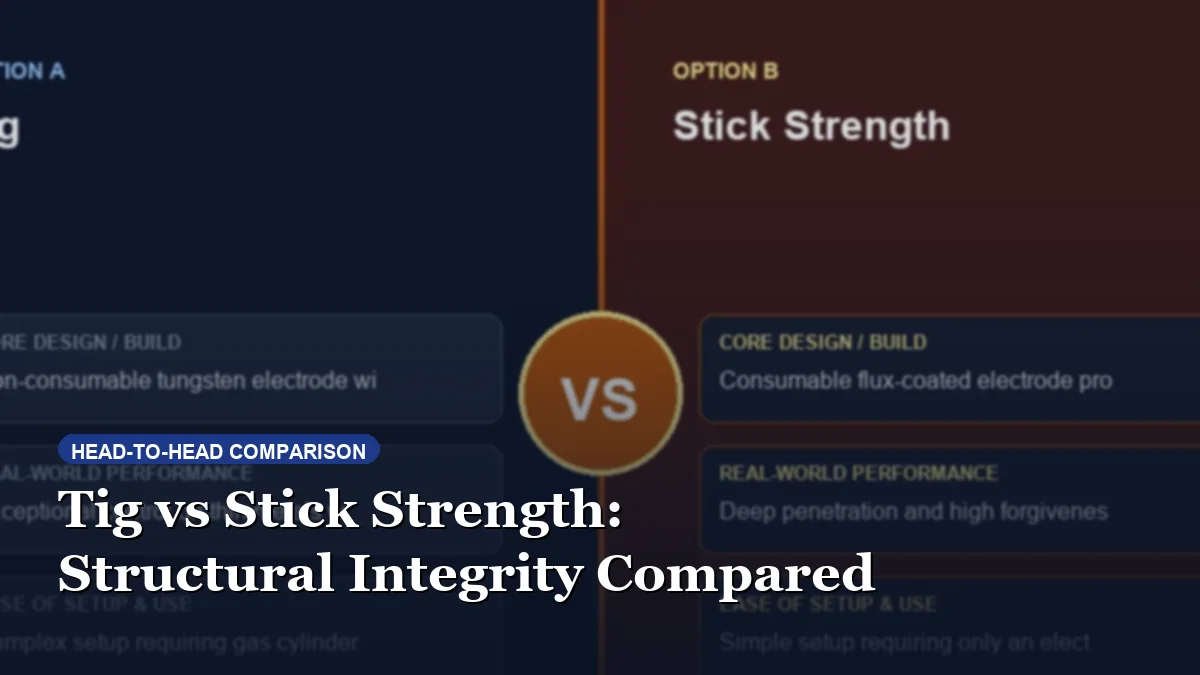
Choose TIG welding for precision root passes and ultra-clean thin gauge joints requiring maximum aesthetic control. Select stick strength for heavy structural repairs, thick carbon steels, and outdoor windy conditions.
Compare all top models in our Best Welder: Top Home Shop & Jobsite Picks Tested.
Side-by-Side Breakdown
| Criteria | Tig | Stick Strength | Edge |
|---|---|---|---|
| Core Design / Build | Non-consumable tungsten electrode with separate filler metal and shielding gas. | Consumable flux-coated electrode providing both filler and protective slag. | Stick Strength |
| Real-World Performance | Exceptional control on thin metals with minimal distortion and clean beads. | Deep penetration and high forgiveness on dirty, rusted, or thick steel. | Stick Strength |
| Ease of Setup & Use | Complex setup requiring gas cylinders, flow meters, and precise torch handling. | Simple setup requiring only an electrode holder, ground clamp, and power source. | Stick Strength |
| Durability & Reliability | Requires sheltered environments to prevent gas shielding disruption from wind. | Highly rugged and wind-resistant performance in harsh outdoor field conditions. | Stick Strength |
| Efficiency / Operating Footprint | Slower deposition rates with high consumable purity demands and lower travel speeds. | Faster heavy deposition rates with straightforward slag chipping and cleanup. | Stick Strength |
| Maintenance Requirements | Frequent torch collet, cup, and tungsten grinding maintenance procedures. | Minimal equipment upkeep centered mainly on cable connections and stinger jaws. | Stick Strength |
| Best Ideal Use Case | Aerospace components, thin stainless tubing, and critical motorsport fabrications. | Structural steel, heavy equipment repair, and construction site fabrication. | Stick Strength |
Understanding The Physics Of Gas Tungsten Arc Welding
Gas tungsten arc welding utilizes a non-consumable electrode to establish the electric arc. This process relies on inert shielding gases like pure argon to protect the molten weld pool from atmospheric contamination.
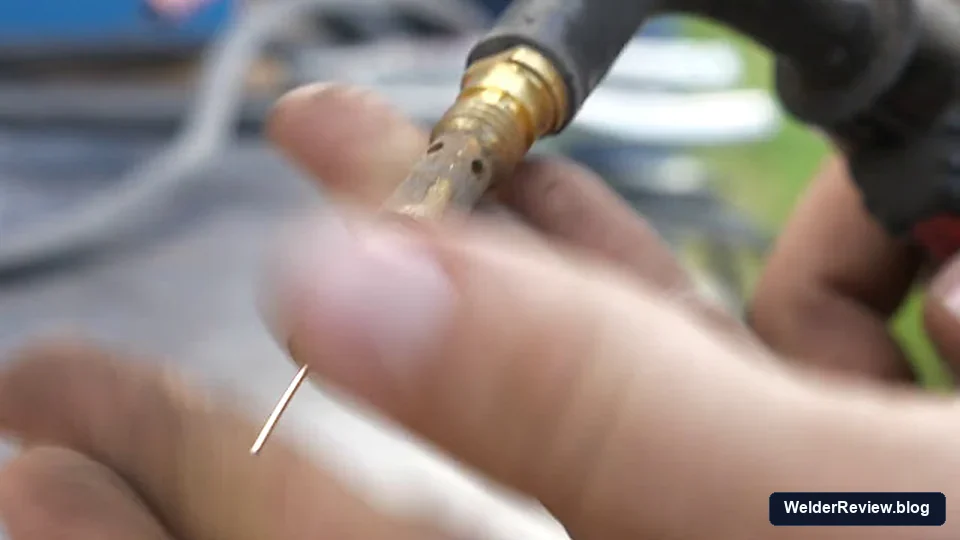
Operators manually feed filler rod into the puddle while managing foot pedal amperage control. Such meticulous heat input regulation prevents burn-through on delicate materials while maintaining absolute control over penetration profiles.
The resulting microstructures often exhibit exceptional grain refinement and superior ductility. However, achieving maximum tensile strength demands pristine joint preparation and absolute cleanliness across all mating metal surfaces.
Gas Tungsten Arc Welding utilizes a non-consumable tungsten electrode to establish a stable electrical arc. The inert shielding gas protects the molten puddle from atmospheric contamination during the critical solidification phase.
Thermal energy input is strictly controlled via precise amperage adjustments on constant current power sources. This high localized heat concentration allows meticulous penetration control on thin aerospace alloys and delicate structural tubing.
Voltage fluctuates directly with arc length changes during manual welding tasks. Selecting a best budget stick welder helps beginners maintain stable arc characteristics and prevents voltage drops that cause weld porosity.
- Non-consumable tungsten electrode maintains a stable, concentrated arc.
- Inert gas shielding prevents oxidation and porosity in the weld pool.
- Manual filler addition allows precise control over weld metal volume.
- Low heat input distortion preserves tight dimensional tolerances.
What Do I Need to TIG Weld?
Assembling a proper setup requires a constant current power source equipped with high-frequency start capabilities. You also need a dedicated argon gas cylinder paired with a dual-stage pressure regulator.
Torch consumables include collets, collet bodies, alumina nozzles, and properly ground tungsten electrodes. Selecting the correct tungsten alloy depends entirely on whether you are welding steel, aluminum, or exotic alloys.
- Constant current power supply with high-frequency arc initiation.
- Pure argon shielding gas and accurate flow meter regulators.
- Water-cooled or air-cooled torches with matched consumable kits.
Mechanics And Metallurgy Of Shielded Metal Arc Welding
When comparing processes, consider how a best aluminium tig welder differs from shielded metal arc welding. An electric current runs through a flux-coated consumable electrode to vaporize protective gases safely.
This self-shielded mechanism makes the process remarkably resilient against outdoor environmental factors. Wind and drafts cannot easily blow away the localized shielding gas generated directly at the arc interface.
The resulting weld metal features high tensile strength and deep root penetration. These metallurgical characteristics make it a preferred choice for heavy structural steel erection and demanding industrial maintenance tasks.
Shielded Metal Arc Welding relies on a consumable flux-coated electrode that generates its own gaseous shield. As the core wire melts, the outer flux coating disintegrates to produce protective carbon dioxide gas clouds.
The molten slag layer floats atop the weld puddle, slowing the cooling rate significantly. This metallurgical advantage helps prevent hydrogen cracking in high-carbon structural steels subjected to severe mechanical stress.
Electrode classifications dictate the ultimate mechanical properties of the deposited weld metal. Welders must select appropriate filler metals matching the specified tensile strength requirements outlined in structural engineering codes.
- Consumable electrode provides both electrical arc and filler metal.
- Flux coating melts to form protective slag over cooling beads.
- Extremely tolerant of adverse weather and windy job sites.
- Delivers deep joint penetration on thick structural plate.
Core Equipment And Power Requirements
Operating this heavy-duty process demands a robust constant current welding machine capable of handling high amperage loads. Standard setups utilize a simple electrode holder and a heavy-duty ground clamp.
Selecting the appropriate electrode classification ensures the deposited weld matches the base metal strength. Common choices include fast-freezing and low-hydrogen electrodes designed for critical structural load-bearing applications.
- Robust constant current welding machine with high duty cycle.
- Insulated electrode holder and secure copper ground clamp.
- Properly stored electrodes matching specific tensile strength codes.
Ultimate Tensile Strength And Load Bearing Capabilities
Structural integrity depends heavily on how well the deposited weld metal resists pulling forces. Evaluating a best tig welder for aluminum highlights how underlying metallurgical properties dictate overall performance limits.
Shielded metal arc welding typically provides higher baseline tensile strength on thick carbon steel structures. The deep penetration profile ensures maximum fusion across heavy joint cross-sections without requiring complex beveling.
Conversely, tungsten inert gas joints offer superior elongation and impact toughness at lower temperatures. While maximum load limits are high, achieving that strength requires flawless execution without internal tungsten inclusions.
Both welding processes achieve exceptional ultimate tensile strength when executed with correct parameters. However, the absence of slag inclusions in tungsten inert gas joints often yields superior elongation percentages.
Shielded metal arc welds compensate for minor imperfections through massive overall deposit thickness. Structural engineers frequently specify larger weld sizes to handle cyclic fatigue loads in heavy bridge construction applications.
Load bearing calculations must account for the heat-affected zone properties adjacent to the fusion line. Excessive heat input reduces yield strength, requiring careful preheating protocols on thick plate steel weldments.
- Deep penetration profiles maximize load transfer in thick plates.
- High elongation values improve resistance to dynamic shock loading.
- Proper electrode selection dictates final yield and tensile limits.
- Internal inclusions can significantly compromise ultimate joint strength.
Evaluating Yield Strength Under Stress
Yield strength measures the exact point where permanent material deformation begins under load. Heavy structural applications demand electrodes with verified minimum yield ratings to prevent catastrophic joint failure.
Low-hydrogen variants prevent hydrogen-induced cracking in high-strength steels. This ensures the finished joint maintains its structural integrity under extreme mechanical stress and cyclic fatigue conditions.
- Measured threshold where permanent structural deformation begins.
- Low-hydrogen consumables prevent cracking in high-carbon steels.
- Dynamic fatigue resistance protects against repeated mechanical loading.
Joint Preparation, Fit-Up, And Contamination Tolerance
Surface cleanliness represents the single biggest factor influencing final weld integrity and defect rates. Neglecting proper metal preparation introduces porosity, inclusions, and premature structural failure across both procedures.
Gas-shielded tungsten processes have zero tolerance for mill scale, rust, oil, or paint contamination. Any surface impurity instantly causes arc instability, tungsten fouling, and severe weld pool porosity.
In contrast, shielded metal arc equipment burns through minor rust and paint layers effectively. The powerful arc cleaning action and active flux composition help float impurities out of the molten puddle.
Tungsten inert gas welding demands immaculate joint preparation, requiring complete removal of mill scale, grease, and oxides. Any organic surface contaminant introduces carbon, which causes severe porosity and brittle tungsten embrittlement.
Conversely, shielded metal arc welding exhibits high contamination tolerance on dirty or rusted outdoor surfaces. The energetic arc action and active flux ingredients actively scavenge surface impurities during metal transfer.
Tight fit-up tolerances are mandatory for precision tungsten joints, particularly on root passes lacking backing bars. Poor joint alignment leads to excessive burn-through and structural compromise in thin-walled pipe configurations.
- Absolute surface cleanliness required for gas-shielded procedures.
- Mill scale and rust must be mechanically removed prior to welding.
- Active flux coatings tolerate minor surface contaminants effortlessly.
- Porosity risks increase drastically when welding dirty metal surfaces.
Surface Cleaning Protocols
Preparation protocols for critical joints require stainless steel wire brushing and chemical degreasing. Eliminating hydrocarbon residues prevents hydrogen embrittlement in high-strength alloy fabrications.
Grinding root faces ensures uniform penetration and eliminates subsurface lack of fusion defects. Taking time during fit-up directly correlates with superior structural test results.
- Dedicated stainless steel brushes prevent cross-contamination.
- Solvent degreasing removes oils and organic manufacturing residues.
- Mechanical grinding establishes proper root opening geometry.
Field Portability, Equipment Footprint, And Power Needs
Job site logistics often dictate which welding process remains practical for specific structural tasks. Equipment weight, power availability, and environmental exposure heavily influence daily productivity levels.
Field repairs involving heavy structural members favor simple, rugged machines driven by engine generators. Eliminating heavy gas cylinders simplifies movement across rugged construction sites and elevated scaffolds.
Conversely, precision shop fabrication benefits from stationary power sources and controlled indoor environments. Managing shielding gas lines and water coolers becomes manageable within a dedicated workshop layout.
Shielded metal arc welding dominates remote job sites due to its minimal equipment footprint and rugged power sources. Engine-driven generators provide reliable electricity without needing auxiliary shielding gas cylinders in windy environments.
Gas tungsten arc setups require bulky gas cylinders, water coolers, and sensitive high-frequency arc starters. Transporting this delicate array across rugged construction terrains increases setup times and logistical support requirements.
Electrical power demands heavily favor using a best starter stick welder when operating on unstable generator lines. Modern inverters designed for coated electrodes manage input voltage sags far better than sensitive units.
- Rugged field machines simplify transport across remote construction sites.
- Eliminating gas cylinders reduces setup weight on elevated scaffolds.
- Stationary workshop layouts optimize gas-shielded precision operations.
- Engine-driven generators provide reliable power for remote repairs.
Managing Environmental Challenges
Outdoor wind gusts easily disrupt shielding gas envelopes, causing immediate weld oxidation and porosity. Field technicians must erect protective wind screens or switch to flux-shielded alternatives.
Ambient temperature extremes also impact equipment performance and preheat requirements. Maintaining proper interpass temperatures prevents cracking in heavy structural carbon steel weldments.
- Wind barriers protect gas shielding during outdoor fabrication.
- Temperature monitoring ensures proper preheat and interpass ranges.
- Weatherproof enclosures safeguard sensitive electronics on remote sites.
Operator Skill Curves And Procedural Control Metrics
Mastering either welding technique demands extensive training, muscle memory, and metallurgical knowledge. The learning curve varies significantly depending on joint complexity and precision requirements.
Operating gas-shielded equipment requires simultaneous coordination of both hands and a foot pedal. Operators must maintain a tight, consistent arc length while feeding filler wire smoothly into the puddle.
Managing heavy flux-shielded electrodes focuses primarily on maintaining correct arc length and travel angles. While physical dexterity is still required, the process is generally more forgiving for beginners.
Mastering gas tungsten arc welding demands exceptional ambidextrous coordination and strict visual focus on the puddle. Operators must simultaneously feed filler rod while maintaining precise arc length with the non-consumable torch.
Conversely, stick welding features a shorter learning curve for achieving baseline structural integrity on carbon steel. Welders focus primarily on travel speed and electrode angle while the flux handles arc stabilization.
Procedural control metrics for high-end applications enforce strict heat input limits and interpass temperature monitoring. Quality assurance programs track these variables closely to prevent metallurgical degradation in alloy steel components.
- Two-handed coordination required for gas-shielded precision work.
- Foot pedal amperage control refines heat input during welding.
- Electrode angle management ensures proper slag control and profile.
- Steep learning curves demand consistent practice and formal training.
Standardized Certification And Testing
Professional fabricators must pass rigorous American Welding Society qualification tests for structural work. These destructive bend and tensile tests verify operator capability and procedure compliance.
Documented procedure qualification records establish essential variables like amperage ranges and travel speeds. Such strict standards ensure predictable mechanical strength across critical infrastructure projects.
- AWS qualification tests verify structural operator competency.
- Destructive bend tests check for internal root defects.
- Documented variables guarantee consistent mechanical performance levels.
Long-Term Weld Integrity, Inspection, And Defect Rates
Ensuring structural reliability requires comprehensive non-destructive testing and meticulous defect prevention strategies. Internal flaws can dramatically reduce the ultimate load capacity of any welded joint.
Radiographic and ultrasonic testing frequently inspect critical structural welds for hidden cracks or inclusions. Gas-shielded joints often reveal clean internal structures when executed under strict procedural controls.
Conversely, heavy flux-shielded welds require careful slag removal between passes to prevent slag inclusions. Proper cleaning protocols and interpass inspection guarantee maximum long-term durability and structural safety.
Non-destructive examination techniques reveal fewer internal defects in gas tungsten arc welds due to cleaner fusion boundaries. Radiographic testing frequently confirms superior soundness in critical pressure vessel and piping applications.
Stick welds exhibit slightly higher volumetric defect rates, including isolated slag inclusions and minor porosity pockets. Rigorous interpass cleaning and proper electrode storage minimize these risks during multi-pass structural fabrication.
Long-term structural integrity relies heavily on post-weld inspection protocols and compliance with recognized welding codes. Establishing robust inspection routines ensures welded assets withstand decades of demanding operational service without premature failure.
- Non-destructive testing uncovers hidden internal structural flaws.
- Radiographic inspection verifies complete root penetration quality.
- Interpass slag removal prevents inclusions in multi-pass welds.
- Rigid quality control minimizes premature structural joint failures.
Preventing Common Structural Defects
Common defects include undercut, porosity, lack of fusion, and cracking. Adjusting travel speed and voltage parameters effectively eliminates undercut along the weld toe boundaries.
Maintaining proper electrode storage conditions prevents moisture absorption in low-hydrogen coatings. This proactive approach eliminates hydrogen-induced cracking risks in critical heavy steel fabrications.
- Voltage adjustments eliminate problematic toe undercut defects.
- Dry electrode ovens prevent moisture absorption and cracking.
- Travel speed control ensures complete sidewall fusion.
Frequently Asked Questions
Which welding process offers higher structural tensile strength?
Both methods achieve exceptional tensile strength when using matching filler metals. Shielded metal arc welding typically excels in heavy structural applications due to deep penetration and robust mechanical properties.
Can I weld outdoors without wind protection using gas shielding?
Outdoor wind easily disrupts shielding gas envelopes, causing severe weld porosity. Shielded metal arc welding remains the preferred choice for windy field repairs.
Why is surface preparation more critical for tungsten inert gas setups?
Gas-shielded procedures lack active flux agents to dissolve surface contaminants. Thorough mechanical cleaning is mandatory to prevent porosity and arc instability.
What causes hydrogen cracking in high-strength carbon steel joints?
Moisture trapped in electrode flux or surface oils introduces damaging hydrogen. Using low-hydrogen electrodes stored in heated ovens prevents this structural failure.
Which technique is better suited for thin-gauge metal fabrication?
Thin materials require precise heat input control to prevent burn-through. Tungsten inert gas welding provides unmatched precision for delicate sheet metal applications.