Tig vs Mig For Aluminum: Concise Verdict
Mastering aluminum fabrication requires evaluating precise process controls. Choosing the right method depends entirely on your material thickness and production goals.

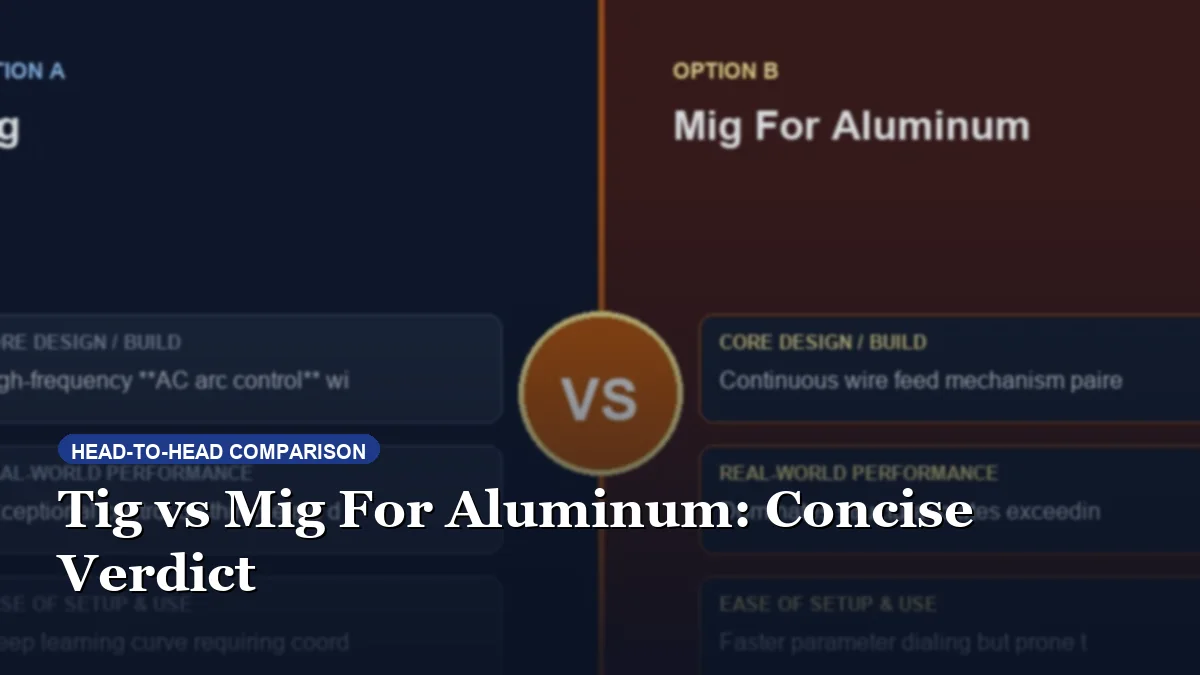
Choose TIG welding for pristine aesthetics and ultra-thin sheet precision. Select MIG for aluminum when high deposition rates and rapid production speed dictate project deadlines.
Compare all top models in our Best Welder: Top Home Shop & Jobsite Picks Tested.
Side-by-Side Breakdown
| Criteria | Tig | Mig For Aluminum | Edge |
|---|---|---|---|
| Core Design / Build | High-frequency AC arc control with precise hand-torch manipulation. | Continuous wire feed mechanism paired with a spool gun system. | Tie |
| Real-World Performance | Exceptional control on thin metals down to 0.030 inches thickness. | Dominates structural plates exceeding 1/8 inch with deep penetration. | Tie |
| Ease of Setup & Use | Steep learning curve requiring coordinated foot pedal and torch operation. | Faster parameter dialing but prone to birdnesting wire feeds. | Side B |
| Durability & Reliability | Produces clean, contamination-resistant welds matching AWS D1.2 structural standards. | Requires rigorous gun maintenance to prevent arc instability issues. | Side A |
| Efficiency / Operating Footprint | Slower travel speeds limit daily output on large industrial assemblies. | Maximizes joint completion rates for high-volume shop environments. | Side B |
| Maintenance Requirements | Minimal consumables limited to tungsten grinding and gas lens upkeep. | Frequent liner replacements, contact tips, and drive roll cleanings. | Side A |
| Best Ideal Use Case | Custom automotive frames, aerospace repairs, and artistic sculptures. | Boat building, trailer manufacturing, and heavy structural fabrication. | Tie |
Understanding Aluminum Metallurgy and Oxide Layers
Welding aluminum presents unique metallurgical challenges due to its stubborn surface oxide layer. This refractory coating melts at a much higher temperature than the underlying base metal, demanding specialized electrical cleaning action.
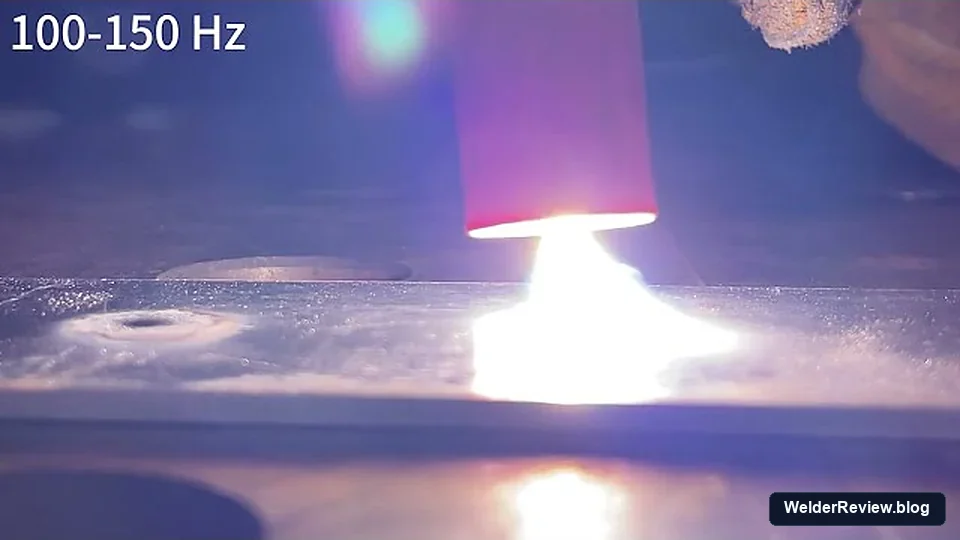
Both processes must effectively disrupt this protective barrier to achieve sound fusion. Failing to properly clean the joint interface leads directly to trapped oxides, lack of fusion, and premature structural failure in service.
Professional fabricators always rely on mechanical brushing and chemical solvents before striking an arc. Preparing the metal correctly eliminates surface contaminants and ensures consistent weld pool wetting across the entire joint.
Raw aluminum rapidly develops a tough aluminum oxide layer that melts at roughly 3,700°F, whereas the underlying base metal melts near 1,220°F, creating severe welding challenges without proper cleaning protocols.
Mechanical cleaning removes surface contaminants, but microscopic layers require proper arc action. Reviewing our best tig welder for aluminum and stainless steel guide helps guarantee porosity-free fusion zones.
Failing to properly neutralize or remove these stubborn oxides traps impurities directly in the molten puddle, leading to severe inclusions, cracking, and structural failure under standard tensile load testing conditions.
- Aluminum oxide melts at approximately 3700 degrees Fahrenheit.
- Base aluminum metal melts near 1220 degrees Fahrenheit.
- Surface preparation requires dedicated stainless steel wire brushes.
The Role of AC Balance and Frequency
Alternating current serves as the primary mechanism for cleaning aluminum surfaces during welding operations. The electrode positive cycle removes oxides while the negative cycle provides deep penetration into the base material.
Modern power sources allow operators to fine-tune balance percentages and output frequencies. Adjusting these parameters optimizes cleaning action and arc stability for varying joint configurations.
- AC balance controls the ratio of cleaning versus penetration.
- Higher frequency settings concentrate the arc for pinpoint control.
How TIG Welding Operates on Aluminum Sheets
Gas tungsten arc welding utilizes a non-consumable tungsten electrode to establish a stable electrical arc. When fabricating lightweight metals, choosing the best tig welder for aluminum ensures optimal arc stability and penetration.
This manual technique shines when fabricating intricate assemblies requiring superior cosmetic finishes. The precision of the heat source minimizes distortion on delicate sheet metal components and complex joints.
Operators coordinate their hands and feet simultaneously to manage amperage output and filler rod feeding. This rigorous coordination separates master craftsmen from novice fabricators in high-end shops.
TIG welding utilizes a non-consumable tungsten electrode paired with alternating current to effectively combine cathode cleaning action with deep weld penetration on delicate sheet metal assemblies.
The AC wave balances electrode positive and negative cycles, blasting away stubborn surface oxides while preventing excessive tungsten erosion during extended continuous welding runs on thin material.
Advanced square-wave inverters allow operators to independently adjust frequency and balance controls, optimizing arc stability and minimizing heat input for precision aerospace fabrication projects.
- Uses pure or zirconiated tungsten electrode profiles.
- Requires 100 percent pure argon shielding gas flows.
- Allows independent control of filler metal addition.
Essential Equipment Requirements for TIG
Successful aluminum TIG welding demands an advanced power source capable of delivering adjustable AC output. Conventional transformer machines lack the digital waveform controls found on modern inverters.
Cooling systems and high-frequency arc starters complete the necessary setup for continuous heavy production. Investing in quality equipment prevents frustrating downtime during critical fabrication projects.
- Inverter-based power sources with high-frequency arc stabilization.
- Water-cooled torches for high-amperage continuous operations.
Mechanics of MIG Welding Aluminum Structures
Gas metal arc welding feeds a continuous consumable wire electrode through a specialized delivery system. The high deposition rate makes this process ideal for large structural frames and thick plates.
Aluminum wire is inherently soft and prone to buckling inside standard welding torch liners. Specialized hardware configurations are mandatory to prevent feeding failures and maintain a steady arc.
Shielding gases must provide adequate coverage to prevent atmospheric contamination of the molten weld pool. Pure argon remains the industry standard for achieving clean, sound structural welds.
Aluminum MIG welding relies on a continuous electrode feed system using a spool gun or push-pull mechanism to overcome the extreme softness of 4043 or 5354 filler wires.
Shielding gases must consist of pure argon to prevent oxidation, utilizing high flow rates between 40 to 50 CFH to adequately protect the hot molten pool from atmospheric contamination.
Spray transfer mode is heavily favored over conventional short-circuiting transfer to eliminate lack of fusion defects and ensure robust structural integrity in thick plate commercial applications.
- Continuous wire feed drastically increases production speeds.
- Requires stiff alloy wires like 4043 or 5356.
- Demands high gas flow rates to protect the puddle.
Overcoming Wire Feeding Challenges with Spool Guns
Standard push-style welding guns create too much friction for soft aluminum wire alloys. A spool gun mounts a small wire reel directly onto the torch body to shorten travel distance.
This mechanical innovation eliminates binding issues and ensures smooth, consistent wire delivery into the weld zone. Operators working on larger structures often rely exclusively on push-pull setups.
- Spool guns house four-inch wire spools directly on the torch.
- Push-pull systems use motorized assist rollers at both ends.
Comparative Weld Quality and Aesthetic Finish
Visual appearance often dictates the chosen welding process for visible architectural and automotive components. TIG welding consistently delivers stacked dime ripples that require minimal post-weld grinding.
MIG welds on aluminum appear wider than TIG counterparts. Choosing an upgrade from our best entry level tig welder for aluminum selections ensures a refined finish on custom display pieces.
Post-weld cleanup varies significantly between the two distinct fabrication methods. TIG leaves virtually no spatter, whereas MIG may generate minor spatter requiring mechanical removal.
TIG processes naturally produce iconic, stacked-dime reinforcement profiles that require zero post-weld grinding, making them the gold standard for visible architectural and automotive restoration components.
MIG welding often results in flatter, wider beads that may exhibit minor spatter, requiring secondary cleanup operations unless optimized with advanced pulse wave synergic control systems.
Internal metallurgical integrity heavily favors TIG for critical pressure vessels, whereas high-end pulsed MIG safely meets stringent radiographic inspection standards for heavy industrial manufacturing frameworks.
- TIG provides unmatched control over bead profile aesthetics.
- MIG produces functional welds with higher initial crown profiles.
- Spatter cleaning is minimal with properly tuned shielding gas.
Penetration Depth and Heat Affected Zone
Heat input management directly influences the final structural integrity of the fabricated assembly. TIG welding introduces concentrated heat, creating a narrow heat-affected zone across thin sections.
MIG welding delivers higher overall heat input due to elevated amperage requirements. This broader thermal footprint increases the risk of warping on thin-gauge sheet assemblies.
- Narrow heat-affected zones preserve base metal mechanical properties.
- Excessive heat input can cause severe distortion in plates.
Production Speed and Fabrication Efficiency
Time management dictates profitability in commercial metal fabrication and production manufacturing environments. MIG welding excels in this arena by depositing filler metal at exceptionally high rates.
TIG welding requires methodical, slow travel speeds to ensure proper fusion and cleaning action. Consequently, project timelines expand rapidly when utilizing manual tungsten arcs.
Shops balancing tight deadlines on thick aluminum plate assemblies invariably select wire processes. Conversely, custom one-off repairs benefit from the flexibility of the TIG torch.
Aluminum MIG welding delivers superior deposition rates, making it the definitive choice for high-volume structural assembly lines requiring rapid travel speeds and minimal downtime between passes.
Conversely, TIG welding demands meticulous joint preparation and slower manipulation techniques, trading overall throughput speed for absolute control over heat-affected zones in thin gauge assemblies.
Shops balancing tight delivery schedules often deploy MIG for long structural fillets while reserving precision TIG workstations for complex corner joints requiring exacting dimensional tolerances.
- High deposition rates accelerate overall assembly completion.
- Manual rod feeding inherently restricts daily output totals.
- Joint preparation time remains consistent across both methods.
Duty Cycles and Consumable Consumption Rates
Equipment durability under heavy industrial workloads determines long-term operating overhead expenses. High duty cycle power sources prevent thermal shutdowns during extended production shifts.
Consumable wear rates differ markedly between tungsten electrodes and continuous wire feeds. Contact tips and drive rolls demand regular inspection to maintain optimal operational performance.
- Industrial power sources require high amperage duty ratings.
- Regular consumable replacement prevents erratic wire feeding.
Setup Complexity and Operator Skill Demands
Mastering aluminum joining techniques requires dedication and extensive practical training. Upgrading to the best cup for tig welding aluminum improves gas coverage while demanding precise foot pedal manipulation.
MIG welding offers a flatter learning curve for machine setup and basic operation. However, troubleshooting feeding issues requires mechanical aptitude and careful equipment tuning.
Safety protocols remain stringent regardless of the chosen welding process. Proper ventilation and appropriate filter shades protect operators from intense ultraviolet radiation emissions.
Operating an aluminum TIG setup requires advanced hand-eye coordination, precise filler rod feeding timing, and deep understanding of high-frequency arc initiation safety parameters.
MIG systems reduce manual dexterity barriers through semi-automatic wire feeding, yet technicians must still master drive-roll tension adjustments to prevent bird-nesting of soft aluminum wire.
Comprehensive training programs typically require significantly longer hours to develop competent TIG welders compared to cross-training certified steel operators on modern pulsed MIG equipment.
- Steep learning curve for manual TIG torch coordination.
- Faster initial parameter setup with aluminum MIG systems.
- Strict adherence to personal protective equipment standards.
Troubleshooting Common Field Welding Defects
Porosity remains the most frequent defect encountered when joining aluminum materials. Moisture contamination on the wire or base metal typically triggers this frustrating structural issue.
Cracking can occur if incorrect filler alloys are selected for the base metal. Following established metallurgical compatibility charts prevents premature joint failure under load.
- Moisture on filler wire causes severe internal porosity.
- Alloy mismatch leads to hot cracking during solidification.
Long-Term Maintenance and Operating Costs
Evaluating total operating expenses involves calculating shielding gas consumption and consumable replacement frequency. Argon gas represents a major recurring cost for both welding methods.
TIG torches require minimal maintenance beyond occasional tungsten grinding and torch body cleaning. This simplicity translates into lower ongoing upkeep expenditures over machine lifespans.
MIG systems demand frequent replacement of drive rolls, contact tips, and Teflon liners. Neglecting these maintenance tasks results in erratic wire feeding and poor weld quality.
TIG welding consumables include pure argon gas, specialized tungsten electrodes, and precision filler metals, keeping initial operational overhead relatively low for maintenance repair workshops.
Aluminum MIG operations consume higher volumes of shielding gas, drive tips, and specialized push-pull gun liners, increasing long-term consumable expenses during continuous heavy production shifts.
Routine maintenance for both processes requires regular cleaning of torch liners, contact tips, and cooling water filters to ensure consistent wire feed and optimal electrical conductivity.
- Argon shielding gas consumption drives ongoing operational costs.
- TIG upkeep is limited to simple tungsten electrode maintenance.
- MIG systems require frequent liner and contact tip changes.
Gas Shielding and Shielding Purity Standards
Maintaining adequate gas coverage is critical for successful aluminum welding operations. Even minor atmospheric contamination ruins the molten weld puddle and causes severe oxidation.
Using dedicated gas regulators and inspecting supply hoses prevents leaks and pressure drops. High purity argon ensures consistent arc stability and clean weld surfaces.
- Shielding gas purity must exceed standard industrial grades.
- Hose inspections prevent atmospheric contamination during welding.
Frequently Asked Questions
Can I weld aluminum with standard shielding gas?
You must use 100 percent pure argon for effective shielding results. Using argon-co2 mixes will instantly contaminate your aluminum weld pool.
Why is my aluminum TIG weld turning black?
A blackened weld bead indicates severe shielding gas starvation or surface contamination. Check your gas flow rate and clean the metal thoroughly.
Do I need a spool gun for aluminum MIG?
A spool gun or push-pull system is virtually mandatory for reliable feeding. Standard push guns cause soft aluminum wire to buckle instantly.
What is the best filler alloy for general repairs?
The alloy 4043 wire offers excellent fluidity and crack resistance for general fabrication. Select 5356 if your finished joint requires higher tensile strength.
Is TIG harder to learn than aluminum MIG?
TIG welding demands superior manual dexterity and foot pedal coordination. MIG offers an easier initial setup but requires careful equipment maintenance.