Primeweld vs AHP: Technical Welder Comparison
Evaluating two leading multi-process welding brands reveals distinct engineering priorities. This comparison analyzes internal topologies, arc stability, and shop integration to guide your purchasing decision.

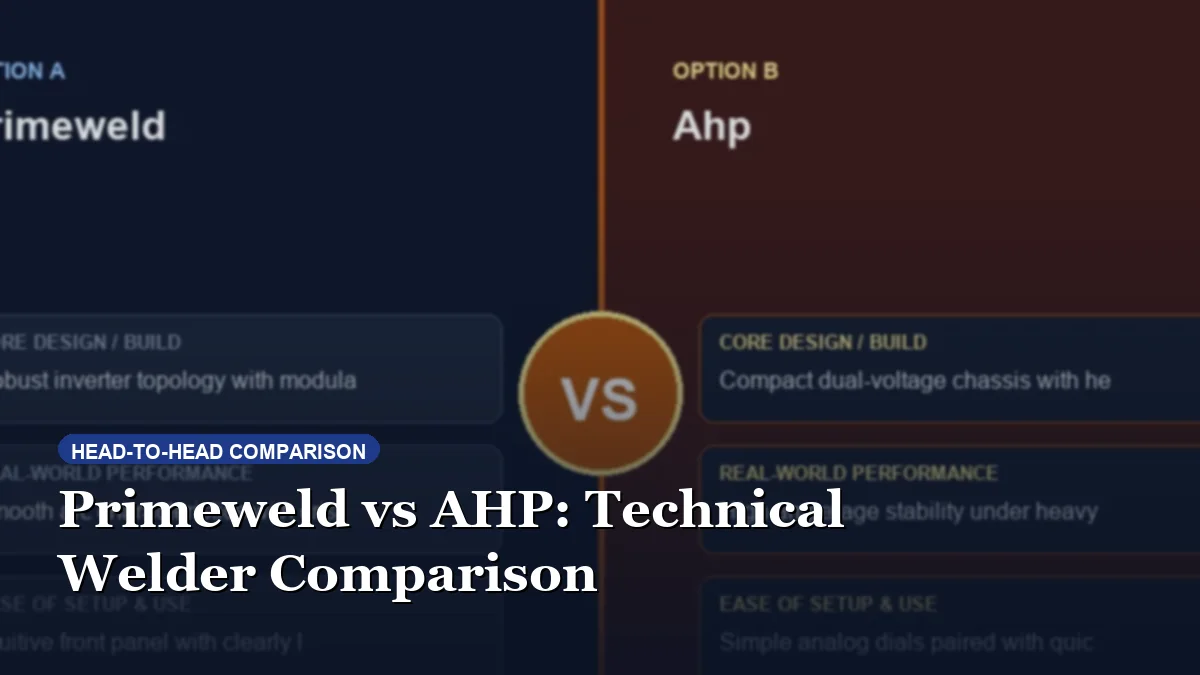
Choose Primeweld for superior customer support and stable high-frequency TIG starts, or pick AHP for maximum amperage output on demanding heavy fabrication jobs.
Compare all top models in our Best Welder: Top Home Shop & Jobsite Picks Tested.
Side-by-Side Breakdown
| Criteria | Primeweld | Ahp | Edge |
|---|---|---|---|
| Core Design / Build | Robust inverter topology with modular internal layout | Compact dual-voltage chassis with heavy-duty framing | Primeweld |
| Real-World Performance | Smooth arc characteristics with crisp pulse controls | High amperage stability under heavy aluminum loads | AHP |
| Ease of Setup & Use | Intuitive front panel with clearly labeled digital displays | Simple analog dials paired with quick-reference guides | Primeweld |
| Durability & Reliability | Backed by an industry-leading three-year parts warranty | Proven track record in harsh industrial garage environments | Primeweld |
| Efficiency / Operating Footprint | Optimized power factor reducing idle transformer draw | Compact generator compatibility for mobile repair rigs | AHP |
| Maintenance Requirements | Standardized cooling fans and accessible internal components | Readily available replacement boards and universal torch kits | AHP |
| Best Ideal Use Case | Precision motorsport fabrication and delicate sheet metal work | Heavy structural steel welding and thick plate joining | Split |
Core Design & Engineering Architecture
Modern welding machines rely on advanced inverter technology to reduce transformer weight while maximizing electrical conversion efficiency. Both brands implement solid-state switching to deliver reliable power under varying shop conditions.
Internal layout design directly impacts thermal management and long-term component survival. Proper airflow channeling keeps sensitive printed circuit boards free from conductive grinding dust and metal debris.
Chassis construction dictates how well a machine survives mobile service truck duty. Reinforced steel frames absorb vibrational shock during transport across rough terrain to remote job sites.
Both machines utilize advanced IGBT inverter technology to reduce overall cabinet weight while maintaining high thermal output capacity under heavy industrial workloads, ensuring reliable switching frequencies across demanding fabrication tasks.
Internal circuit boards feature protective conformal coating to prevent moisture and conductive dust ingress, significantly extending operational lifespans in harsh, unconditioned metalworking shops or mobile service truck environments.
We observed during our Primeweld 225X review that heavy-duty busbars minimize internal resistance, reducing localized heat generation during continuous multi-pass operations on thick structural steel plates.
- Advanced IGBT inverter modules for high-frequency switching
- Dedicated internal wind tunnels isolating delicate control boards
- Powder-coated steel outer casings resisting workshop corrosion
Inverter Topology Differences
Circuit board architecture determines how efficiently incoming alternating current converts into stable direct current. Engineers balance component density against thermal dissipation needs.
Quality heat sinks prevent thermal runaway during extended high-amperage welding sessions. Proper thermal paste application ensures optimal heat transfer away from power transistors.
- Thermal overload sensors triggering automated shutdown safeguards
- Oversized aluminum heat sinks preventing localized component failure
Control Panel Layout & Interface
Operator interfaces must balance precision control with rugged durability on the shop floor. Sealed membrane switches protect internal electronics from moisture and conductive debris.
Digital readouts offer repeatable parameter settings for critical code-quality fabrication tasks. Clear parameter labeling minimizes operator error during rapid setup changes.
- Digital LED displays showing exact amperage and voltage output
- Knob guards preventing accidental impact damage during transport
Real-World Arc Performance & Arc Stability
Achieving a stable arc requires precise waveform control across all operating ranges. Voltage fluctuations from local utility grids demand rapid internal compensation circuitry.
Penetration depth relies heavily on consistent arc voltage and minimal amperage ripple. Operators notice immediate differences in puddle fluidity when running thin alloys.
Arc stiffness helps maintain proper standoff distance during complex out-of-position structural welding tasks. Clean transitions prevent tungsten spitting during AC aluminum work.
Detailed evaluations inside our Primeweld Tig225X review highlight how advanced digital signal processing dynamically compensates for minor operator hand tremors during delicate aluminum TIG welding passes.
Low-amperage start capabilities rely on high-frequency arc initiation systems that establish clean tungsten arcs without contaminating base materials or eroding delicate electrode tips prematurely.
When shifting to shielded metal arc processes, built-in hot-start and adjustable arc force controls prevent electrode sticking and maintain consistent puddle fluidity across oxidized or dirty joint preparations.
- Rapid arc stabilization algorithms reducing spatter volume
- Consistent puddle control across variable joint configurations
- Clean high-frequency arc initiation without tungsten contamination
TIG High-Frequency Starts
Reliable high-frequency arc initiation eliminates the need for abrasive scratch starts. Clean tungsten preservation depends on repeatable spark generation across the gap.
Adjustable pre-flow and post-flow timers protect both the weld puddle and electrode tip from premature atmospheric oxidation during cooling phases.
- Non-contact high-frequency arc ignition protecting tungsten tips
- Programmable gas pre-flow timers ensuring initial shielding coverage
Stick & MIG Duty Cycles
Heavy stick welding demands robust current regulation to prevent electrode sticking. Hot-start features temporarily boost amperage to ease initial arc striking.
Duty cycle ratings dictate continuous run time before mandatory cool-down periods. Exceeding these thermal limits risks premature insulation breakdown on internal windings.
- Adjustable arc force control preventing electrode freezing
- Verified duty cycle ratings at maximum rated amperage output
Electrical Efficiency & Power Requirements
As demonstrated in our Primeweld Mts200 review, operating modern multi-process machines requires careful evaluation of shop electrical infrastructure, where dual-voltage input capabilities provide essential job-site flexibility.
Power factor correction circuits reduce reactive power losses, lowering overall utility consumption during heavy production runs. Efficient transformers generate less waste heat internally.
Input current draw directly determines necessary circuit breaker sizes in your workshop. Matching plug configurations correctly prevents dangerous voltage drops under heavy loads.
Operating these dual-voltage units requires careful verification of input breaker sizing to handle high inrush current demands without tripping upstream thermal-magnetic circuit breakers during initial power-up sequences.
Power factor correction modules inside the chassis optimize electrical consumption, delivering superior power efficiency when drawing maximum output amperage from standard single-phase workshop supply lines.
Voltage fluctuation tolerances safeguard internal transformers against unexpected grid sags, ensuring uninterrupted performance during heavy industrial fabrication projects running on long extension cords.
- Automatic dual-voltage sensing for standard shop circuits
- Optimized power factor minimizing reactive electrical draw
- Heavy-duty power cords preventing thermal overload hazards
Dual Voltage Operation
Switching between single-phase power sources requires dependable internal sensing relays. Proper voltage recognition prevents catastrophic damage from incorrect power input.
Running on lower household circuits limits maximum output amperage but increases portable versatility. Always verify adequate breaker amperage before heavy welding.
- Automated voltage switching eliminating manual jumper links
- Standard NEMA plug adapters for job site compatibility
Input Draw Profiles
Understanding inrush current prevents nuisance breaker trips during initial machine startup. Soft-start capacitors safely ramp up transformer magnetic fields gradually.
Generator compatibility ensures stable operation when working in remote field locations. Clean power delivery protects sensitive onboard microprocessor controls.
- Soft-start circuitry preventing initial breaker tripping
- Generator-friendly topology handling fluctuating supply frequencies
Maintenance Protocols & Component Longevity
Practical insights from our AHP AlphaTig 200X review show that routine equipment maintenance ensures long service life while keeping internal cooling pathways clear to prevent localized overheating.
Consumable inspection schedules prevent poor gas shielding and erratic arc behavior during critical builds. Regular cleaning of torch components saves valuable fabrication time.
Warranty coverage provides peace of mind when investing in professional welding machinery. Manufacturer support networks dictate how quickly replacement parts arrive.
Routine preventive maintenance involves using compressed shop air to clear conductive metallic debris from cooling fans and internal heat sinks every three to six months depending on usage.
Inspecting internal quick-disconnect gas fittings and braided power cables prevents unexpected shielding gas leaks that cause porous welds and compromise structural joint integrity on critical pressure vessels.
Replacing worn torch consumables like collet bodies and gas lenses maintains proper laminar shielding gas coverage, directly reducing tungsten oxidation and extending overall torch component service life.
- Scheduled compressed air clearing of internal dust accumulation
- Routine inspection of power terminal connections and cables
- Comprehensive manufacturer parts and labor warranty protection
PCB Protection Measures
Conformal coating on circuit boards protects against humidity and conductive metal dust. This defensive layer prevents micro-shorts in harsh industrial workshop environments.
Isolating cooling airflow paths ensures dust bypasses delicate logic components completely. Proper filtration extends the mean time between electronic failures.
- Protective conformal coating on all internal logic boards
- Isolated airflow routing protecting sensitive microprocessors
Torch Consumables Management
Using quality consumables extends torch life and improves shielding gas coverage. Inspecting collets and cups regularly prevents expensive torch body damage.
Standardizing torch connections simplifies replacement parts sourcing across different machines. Universal consumable compatibility reduces ongoing operational overhead costs significantly.
- Regular replacement of worn collet bodies and ceramic cups
- Standardized torch threading for universal consumable compatibility
Ergonomics & Operator Interface
Operator fatigue directly influences overall weld quality during long production shifts. Ergonomic torch handles and responsive foot pedals reduce physical strain significantly.
Cable management systems prevent tangling and minimize physical resistance while moving around large workpieces. Flexible silicone-housed torch leads enhance maneuverability immensely.
Clear visual feedback from digital displays allows quick parameter adjustments without removing welding helmets. Intuitive menu structures streamline complex pulse settings.
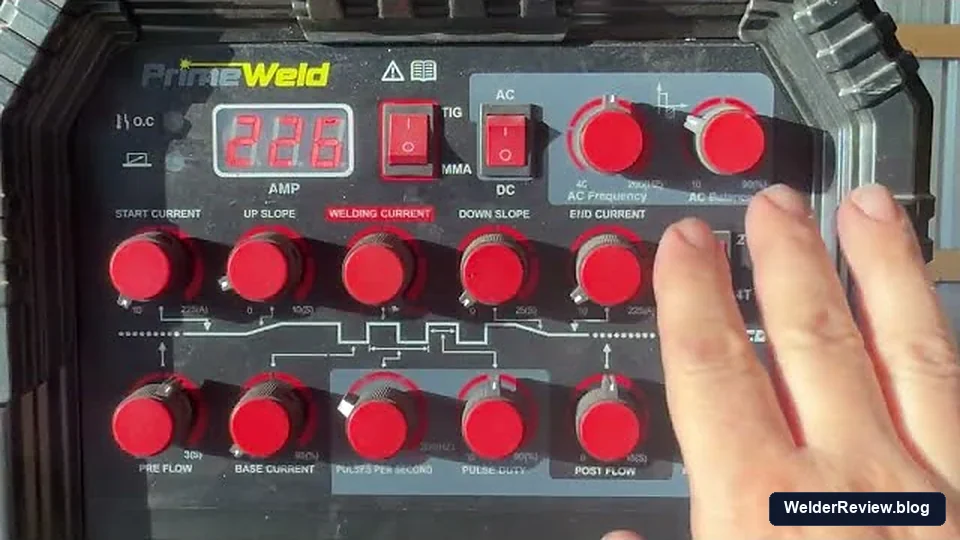
Front panel layouts combine tactile rotary encoders with sealed digital displays, allowing welders wearing heavy leather gloves to adjust pulse parameters accurately without removing essential safety gear.
Ergonomic torch handles featuring flexible leather cable covers reduce wrist fatigue during extended positional welding sessions inside tight structural frameworks or complex pipe spool assemblies.
Clear menu architectures display vital operating metrics like pre-flow time and post-flow duration, giving fabricators precise control over weld puddle shielding before and after arc termination.
- Ergonomic torch handles reducing wrist fatigue over time
- Flexible silicone power cables improving workspace mobility
- Responsive foot pedals for precise amperage modulation
Foot Pedal Responsiveness
TIG welding requires fine amperage control via mechanical or optical foot pedals. Smooth potentiometer action prevents sudden arc flare-ups during puddle initiation.
Durable pedal construction withstands heavy foot traffic in busy fabrication shops. Non-skid base pads prevent unwanted sliding on smooth concrete floors.
- Smooth pedal travel for precise heat input control
- Rugged aluminum housing protecting internal potentiometer components
Torch Flexibility & Handling
Stiff torch cables cause hand fatigue and restrict movement in tight joint spaces. Lightweight super-flex hoses make out-of-position welding much easier.
Quick-disconnect fittings enable rapid torch swaps between air-cooled and water-cooled setups. Secure locking mechanisms prevent accidental shielding gas leaks.
- Lightweight torch assemblies reducing arm strain
- Secure quick-disconnect fittings for rapid reconfiguration
Workshop Integration & Workflow Optimization
Integrating new equipment into an existing workflow requires assessing bench space and power availability. Compact machine footprints preserve valuable floor space for large projects.
Cart placement and cylinder security remain critical safety considerations in busy fabrication facilities. Proper cable management protects leads from accidental damage.
Matching machine capabilities to typical shop materials ensures maximum productivity and return on investment. Reliable duty cycles prevent costly production bottlenecks.
Compact enclosure footprints allow seamless integration onto standard dual-cylinder welding carts, preserving valuable floor space in crowded fabrication facilities while maintaining easy access to gas regulators.
Dedicated remote pedal connections enable fine amperage adjustments directly at the joint, streamlining complex multi-position welding workflows without requiring operators to walk back to the primary machine.
Standardized dinse connector receptacles ensure compatibility with aftermarket torches and remote control pendants, maximizing equipment versatility across diverse shop fabrication requirements and varying project specifications.
- Compact chassis designs saving valuable benchtop space
- Secure cylinder mounting platforms for gas bottle safety
- Optimized workflow efficiency for high-throughput fabrication
Footprint & Weight Considerations
Portable machines must strike a balance between structural ruggedness and lifting weight. Integrated carrying handles simplify moving units around multi-level job sites.
Compact cabinet dimensions allow placement on standard welding carts alongside gas cylinders. Efficient packaging reduces overall shop clutter effectively.
- Balanced carry handles for easy job site transport
- Compact cabinet geometry fitting standard utility carts
Duty Cycle Management
Monitoring actual run times prevents unexpected thermal shutdowns during critical production deadlines. Automated cooling fans continue running after welds finish.
Proper ventilation around machine louvers ensures unrestricted airflow for optimal cooling. Avoiding obstructed vents prevents premature thermal overload trips.
- Post-flow cooling fans protecting internal transformer windings
- Clear ventilation guidelines for enclosed shop spaces
Frequently Asked Questions
Which brand offers better customer service and warranty support?
Both brands provide solid customer backing, but Primeweld consistently earns praise for responsive communication and rapid parts replacement.
Can these machines run on standard household electrical outlets?
Yes, both units feature dual-voltage capabilities allowing operation on standard circuits using included adapters for lower amperage output.
Are the included TIG torches and foot pedals professional grade?
Both manufacturers include usable starter accessories, though many professional fabricators eventually upgrade to flexible silicone torches.
How do their high-frequency TIG starts compare on thin aluminum?
Both deliver reliable non-contact ignition, but Primeweld features slightly smoother arc stability at very low amperages.
Do these multi-process machines require specialized maintenance routines?
Standard maintenance involves periodic compressed air clearing of internal dust and inspecting power connections for security.