Primeweld TIG225X vs AHP AlphaTIG 200X
Comparing two dominant budget TIG units. We evaluate duty cycles, arc stability, and high-frequency start reliability.

Choose the Primeweld TIG225X for higher amperage overhead and a superior CK Worldwide torch. Select the AHP AlphaTIG 200X if you prioritize a compact dual-voltage footprint for field repairs.
Compare all top models in our Best Welder: Top Home Shop & Jobsite Picks Tested.
Side-by-Side Breakdown
| Criteria | Primeweld Tig225X | Ahp Alphatig 200X | Edge |
|---|---|---|---|
| Core Design / Build | Robust steel chassis with IGBT inverter technology. | Compact portable case utilizing modern MOSFET boards. | Primeweld Tig225X |
| Real-World Performance | Stable arc output up to 225 amps on AC/DC. | Clean aluminum cleaning action rated at 200 amps. | Primeweld Tig225X |
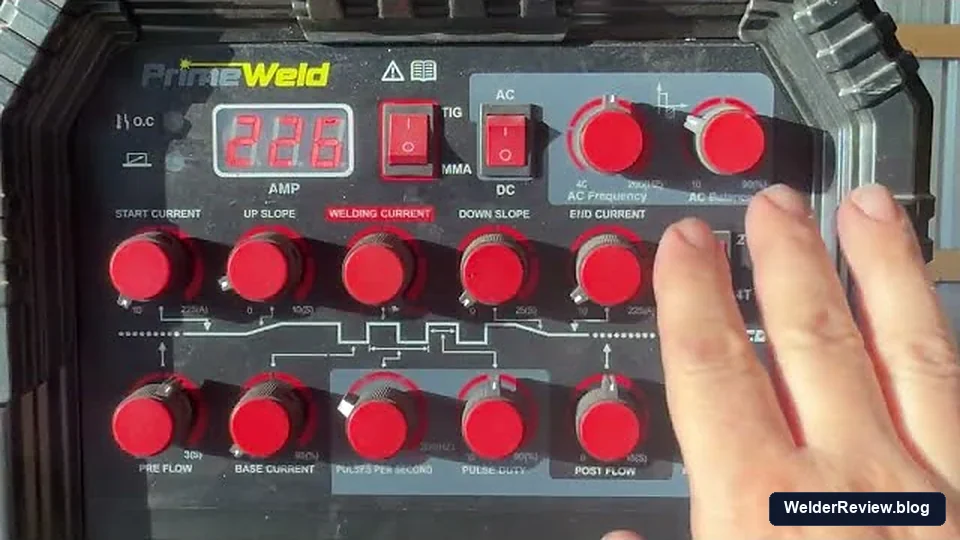
| Ease of Setup & Use | Intuitive analog knobs with clear digital amperage readouts. | Straightforward control panel featuring basic toggle switches. | Ahp Alphatig 200X |
| Durability & Reliability | Backed by an exceptional three-year manufacturer warranty. | Standard three-year warranty with proven field longevity. | Primeweld Tig225X |
| Efficiency / Operating Footprint | Heavier frame requiring dedicated shop floor space. | Lighter portable layout excellent for tight workshop spaces. | Ahp Alphatig 200X |
| Maintenance Requirements | Standard internal dust cleaning and terminal inspections. | Routine board clearing and gas valve upkeep checks. | Tie |
| Best Ideal Use Case | Heavy-duty automotive fabrication and structural aluminum welding. | Mobile service trucks and light-gauge sheet metal work. | Primeweld Tig225X |
Core Design and Engineering Differences
Evaluating structural engineering involves looking closely at how each manufacturer packages delicate inverter boards inside rugged metal housings. Both units utilize forced air cooling to protect internal electronics during extended welding sessions under heavy loads.
Enclosure dimensions dictate how easily these machines transition from workshop benches to mobile service trucks, as detailed in our ahp alphatig 200x review. Structural rigidity ensures internal wiring harnesses safely withstand severe transport vibrations.
Terminal connections and gas solenoid placements reveal distinct engineering priorities regarding user serviceability and long-term operating safety standards. Understanding these foundational blueprints helps professional fabricators anticipate potential service bottlenecks in busy workshops.
- Chassis gauge steel construction protects internal inverter boards.
- Optimized internal airflow channels prevent localized hot spots.
- Heavy-duty input power cables ensure safe electrical current delivery.
Power Architecture and Circuitry
Modern power architectures dictate how smoothly each machine converts incoming line voltage into a stable welding arc. Advanced IGBT inverter modules deliver superior efficiency compared to older transformer-based welding power sources.
Circuit protection safeguards against unexpected power surges while maintaining consistent arc characteristics across varying metal thicknesses.
- High-frequency arc stabilization ensures reliable tungsten initiation.
- Dual-voltage capability allows flexible operation on different circuits.
Torch and Consumables Package
Supplied torch packages heavily influence initial usability right out of the shipping container without requiring immediate aftermarket upgrades. Standardized industry torch connections permit easy swapping of flexible torch heads and gas lenses.
Consumable availability keeps operating costs low during high-production welding runs involving aluminum and stainless steel.
- Flex-head torch options improve ergonomics in tight weld joints.
- Standard consumable kits simplify local welding supply restocking.
Real-World Performance and Arc Quality
Real-world performance testing highlights how effectively each machine handles variable arc lengths and fluctuating shielding gas pressures. Maintaining a crisp, focused arc is essential for depositing clean filler metal into critical structural joints.
Arc stability directly impacts bead appearance and overall weld penetration depth across challenging materials like thin aluminum sheets. Professional fabricators demand consistent high-frequency starts to eliminate tungsten contamination risks during delicate welding projects.
Voltage compensation features prevent arc stutter when running long extension cords across large industrial shop floors or job sites.
- High-frequency arc ignition prevents tungsten spitting on start.
- Consistent puddle control aids precision root pass welding tasks.
- Minimal arc wander ensures clean edges on fillet welds.
AC Balance and Aluminum Performance
Welding aluminum requires precise adjustment of the AC balance control to optimize cleaning action versus tungsten penetration. Fine-tuning this balance minimizes oxide buildup while preventing excessive heat input into base metals.
Advanced frequency controls allow operators to narrow the arc cone for pinpoint accuracy on intricate automotive components, which we examine closely in our primeweld tig225x review. Proper arc stability prevents common tungsten spitting issues.
- Adjustable cleaning scale removes stubborn aluminum surface oxides.
- Stable AC wave output reduces audible transformer buzzing noises.
DC TIG and Pulsing Capabilities
Direct current operation delivers deep, narrow penetration profiles ideal for joining stainless steel tubing and carbon steel plates. Integrated pulse frequency settings help manage heat input to minimize thermal distortion on thin sheets.
Pulsing parameters let skilled operators control cooling rates effectively during out-of-position structural welding operations.
- Pulse modulation controls puddle freeze rates on thin metals.
- Deep DC penetration ensures structural integrity on thick joints.
Duty Cycle and Thermal Management
Thermal management systems dictate how long operators can weld continuously before the machine triggers over-temperature protection shutdowns. Efficient heat sinks and variable-speed cooling fans play vital roles in sustaining high duty cycles.
Industrial fabrication demands reliable equipment that will not overheat prematurely during extended production runs on thick aluminum weldments. Monitoring internal operating temperatures protects sensitive semiconductor boards from catastrophic thermal overload failures.
Robust thermal sensors automatically pause welding output when safe operating thresholds are exceeded during demanding joint preparations.
- High amperage duty cycles sustain long structural fabrication passes.
- Automatic thermal shutdown prevents internal component heat damage.
- Quiet cooling fans exhaust accumulated heat away from electronics.
Internal Cooling and Fan Operation
Cooling fan design directly affects dust ingestion rates within the chassis during dusty workshop operating conditions. Smart fan algorithms activate cooling airflow only when internal temperatures demand active thermal dissipation.
Reducing unnecessary fan run time minimizes airborne debris accumulation on sensitive circuit board traces over time.
- Tunnel airflow design isolates vulnerable electronic control boards.
- Filtered intake vents block large grinding dust particles efficiently.
Pushing Limits on Heavy Plate
Operating near maximum amperage limits requires careful monitoring of joint preparation and shielding gas coverage rates. Thick plate applications demand pre-heating strategies to compensate for rapid thermal conductivity in aluminum assemblies.
Operators must balance travel speeds against current settings to prevent lack of fusion defects in heavy sections.
- Pre-heating heavy aluminum sections prevents premature arc quenching.
- Adequate gas flow rates protect cooling weld pools thoroughly.
Ease of Setup and Usability
Quick setup procedures minimize downtime when switching between different welding processes or metal thicknesses on busy project schedules. Clear front panel layouts help novice operators navigate complex pulse and AC frequency menus easily.
Ergonomic foot pedals allow precise amperage feathering throughout complex weld sequences without causing foot fatigue. Quick-disconnect gas fittings speed up daily workstation preparation and teardown routines significantly.
Comprehensive user manuals provide valuable parameter reference charts for setting up unfamiliar joint configurations correctly, as highlighted in our primeweld mts200 review. Clear reference guides accelerate the operator learning curve.
- Intuitive control layouts reduce operator learning curves.
- Smooth foot pedal travel offers granular amperage modulation.
- Quick-lock gas connections prevent accidental hose disconnections.
Front Panel Interface and Controls
Physical dial layouts and digital readout screens dictate how fast operators can adjust parameters mid-project with gloved hands. Clearly labeled toggle switches prevent accidental selection of incorrect operating modes during critical welds.
Precise encoder knobs allow incremental adjustments of pre-flow and post-flow gas timer settings.
- Digital displays show exact amperage output during welding.
- Glove-friendly control knobs simplify adjustments in the booth.
Foot Pedal Response and Ergonomics
Foot pedal design dictates physical comfort and fine motor control during long periods of bench welding work. Responsive mechanical linkages ensure smooth current ramp-up and decay without abrupt arc jumps.
Non-slip pedal bases prevent unwanted sliding on smooth concrete workshop floors during operation.
- Ergonomic pedal angles reduce ankle strain during long shifts.
- Durable microswitches ensure reliable arc initiation every press.
Maintenance, Efficiency and Longevity
Regular maintenance routines preserve electrical efficiency and extend the working lifespan of professional TIG welding equipment. Keeping internal transformer windings and circuit boards free from metallic dust prevents dangerous electrical short circuits.
Power factor correction technology enhances electrical efficiency by drawing less current from standard wall circuit breakers under load. Long-term equipment reliability depends heavily on using high-grade internal wiring and sturdy terminal blocks.
Routine inspection of gas hoses and torch switches prevents frustrating shielding gas leaks during critical fabrication tasks.
- Regular compressed air cleaning prevents dust buildup internally.
- Inspecting power cord terminals avoids dangerous high-resistance heating.
- Replacing worn torch consumables maintains stable shielding gas coverage.
Internal Components and Repairability
Modular internal layouts allow technicians to replace failed circuit boards or gas solenoids without scrapping entire machines. High-quality modular connectors simplify diagnostic testing procedures during professional equipment servicing appointments.
Readily available replacement parts minimize equipment downtime when unexpected component failures occur in busy shops.
- Modular board designs simplify technician diagnostic testing.
- Accessible fuse panels protect against minor electrical surges.
Electrical Efficiency and Input Draw
Inverter-based power sources draw significantly less amperage from building circuits than older transformer-based welding units. High electrical efficiency lowers monthly utility bills while allowing operation on standard workshop power outlets.
Power factor optimization ensures stable performance even when running on portable engine-driven generators, a topic covered inside our ahp alphatig review. Consistent arc performance protects sensitive electronics against sudden voltage sags.
- Low idle power consumption reduces unnecessary electricity waste.
- Compatible with standard generator power for remote job sites.
Which Option Fits Your Setup
Selecting the ideal welding machine depends on your specific workspace limitations, typical material thicknesses, and budget constraints. Fabricators working primarily with thick aluminum should prioritize higher amperage output and superior torch packages.
Mobile service technicians benefit immensely from lightweight, dual-voltage inverter units that operate reliably on various remote job site generators. Evaluating your long-term fabrication goals ensures you invest in equipment that grows with your expanding skills.
Careful comparison of duty cycles and control features guarantees optimal performance across all your future metal joining projects.
- Assess maximum metal thickness requirements before purchasing equipment.
- Consider workspace portability versus stationary workbench installation needs.
- Verify local electrical service capacity matches machine input requirements.
Fabrication Shop Integration
Permanent shop installations require sturdy shelving or dedicated welding carts to protect equipment from workshop hazards. Positioning machines near dedicated shielding gas drops streamlines daily workflow in professional fabrication environments.
Integrating water coolers may be necessary for heavy production welding runs exceeding standard air-cooled torch limits.
- Dedicated welding carts improve shop organization and safety.
- Convenient gas cylinder racks secure high-pressure bottles safely.
Mobile Repair and Field Rig Usage
Field service trucks require rugged, compact welding machines that withstand constant transit vibration on unpaved roads. Dual-voltage capability lets mobile technicians plug into existing residential or commercial power sources effortlessly.
Weather-resistant chassis designs protect internal electronics from occasional job site moisture and blowing dust.
- Compact footprints fit easily inside crowded service truck toolboxes.
- Rugged handles facilitate quick loading onto mobile repair rigs.
Frequently Asked Questions
Can both machines run on standard household electrical circuits?
Both welders support dual-voltage input, allowing operation on 110V or 220V power sources. Operating on 110V limits maximum output amperage significantly compared to dedicated 220V workshop circuits.
What shielding gas is required for TIG welding aluminum?
Pure argon shielding gas is universally required for achieving clean AC aluminum welds. Using pure argon gas ensures stable arc ignition and effective oxide cleaning action.
Are the included foot pedals durable for heavy professional use?
Both units ship with functional foot pedals suitable for standard fabrication work. Upgrading to a heavy-duty aftermarket ergonomic foot pedal improves fine current control.
Do these machines support stick welding in addition to TIG?
Both units feature built-in stick welding capabilities with adjustable arc force controls. This versatile MMA welding mode provides backup functionality for outdoor structural repair tasks.
How important is the high-frequency start feature for thin metals?
High-frequency arc ignition is crucial for preventing tungsten contamination on thin materials. Utilizing non-contact high frequency start protects delicate workpiece edges from damage.