Primeweld TIG 225 vs AHP AlphaTIG 200X: Head-to-Head
Two popular budget TIG units face off. We evaluate their engineering, arcs, and shop value.

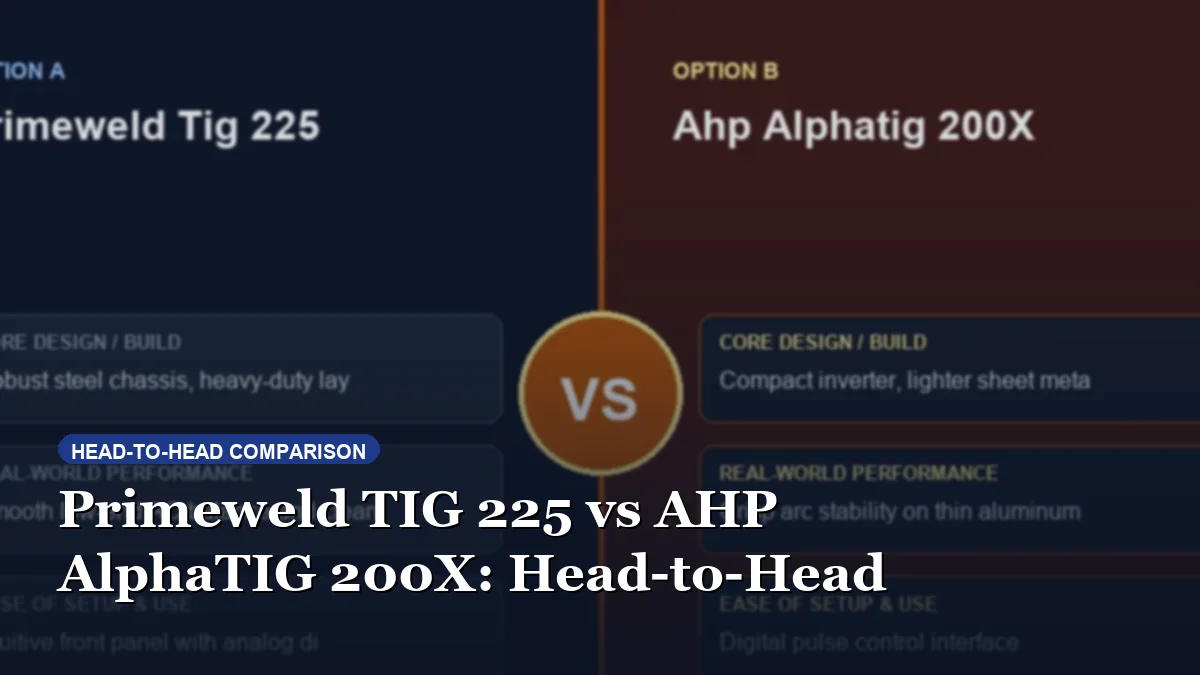
Choose the Primeweld Tig 225 for superior amperage headroom and a CK Worldwide torch package. Opt for the Ahp Alphatig 200X if you need a compact, dual-voltage inverter for mobile field repairs.
Compare all top models in our Best Welder: Top Home Shop & Jobsite Picks Tested.
Side-by-Side Breakdown
| Criteria | Primeweld Tig 225 | Ahp Alphatig 200X | Edge |
|---|---|---|---|
| Core Design / Build | Robust steel chassis, heavy-duty layout | Compact inverter, lighter sheet metal | Primeweld Tig 225 |
| Real-World Performance | Smooth low-end AC balance and cleaning | Crisp arc stability on thin aluminum | Tie |
| Ease of Setup & Use | Intuitive front panel with analog dials | Digital pulse control interface | Ahp Alphatig 200X |
| Durability & Reliability | Industry-backed three-year warranty support | Proven multi-year hobbyist track record | Primeweld Tig 225 |
| Efficiency / Operating Footprint | Larger cabinet requiring dedicated shop space | Highly portable dual-voltage enclosure | Ahp Alphatig 200X |
| Maintenance Requirements | Standard dust cleaning and terminal checks | Periodic airflow clearing and connection tightening | Tie |
| Best Ideal Use Case | Dedicated automotive and fabrication shops | Mobile service trucks and garage hobbyists | Primeweld Tig 225 |
Core Design & Engineering Differences
Evaluating structural layout reveals distinct engineering philosophies between these machines. The Primeweld unit prioritizes a heavy-duty chassis housing robust internal transformers. Meanwhile, the competitor builds around a compact printed circuit board architecture focused on reduced overall weight.
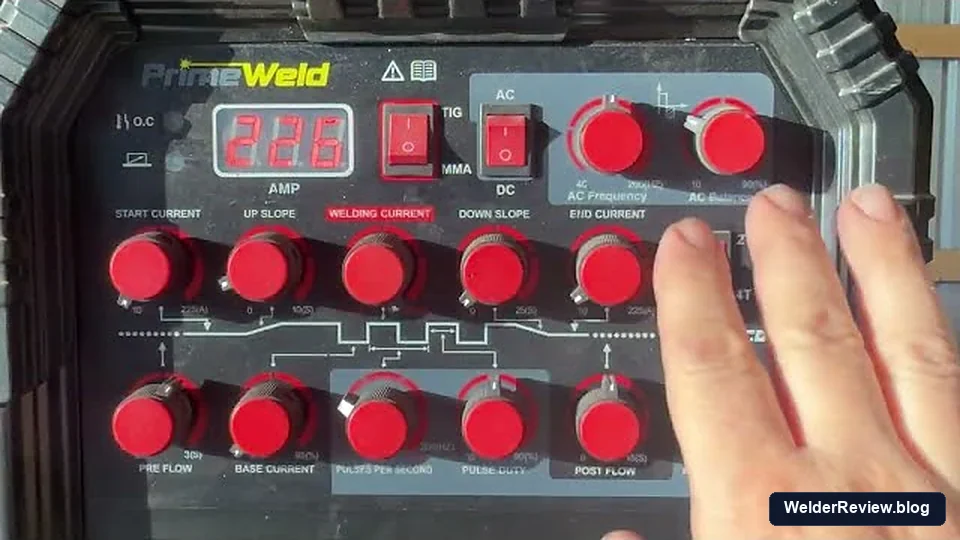
Thermal management strategies also differ significantly across both platforms. Internal cooling fans run continuously on older iterations while newer versions use demand-driven airflow. Proper cabinet ventilation prevents premature IGBT failure during extended heavy aluminum welding sessions.
The PrimeWeld features a robust transformer-inverter hybrid architecture, utilizing heavy-duty internal IGBT components to maintain consistent arc stability across heavy industrial plates and delicate structural applications without thermal degradation.
Conversely, the AHP AlphaTIG 200X review highlights a streamlined digital pulse board and compact inverter topology, prioritizing portability and rapid arc response for mobile crews needing immediate starts.
- Primeweld utilizes a heavier steel housing designed for stationary shop longevity.
- AHP features a compact, lighter frame optimized for frequent jobsite transport.
- Both models rely on advanced inverter technology to reduce power consumption.
Chassis Layout and Internal Architecture
Internal component arrangement dictates how easily technicians can service the machine. Primeweld separates high-voltage pathways from sensitive control boards to minimize electrical interference. AHP places primary emphasis on a tight, space-saving footprint ideal for cramped service trucks.
Circuit board coating quality protects against conductive metal dust common in fabrication environments. Inspecting internal wiring harnesses reveals solid crimping standards on both competing units.
- Isolated control boards reduce electromagnetic interference risks.
- Coated internal electronics resist conductive workshop particulate buildup.
Real-World TIG Performance Comparison
Arc stability defines the true value of any high-frequency TIG machine. Operating on thin gauge aluminum reveals distinct arc characteristics between these models. Clean high-frequency starts prevent tungsten contamination during intricate aerospace alloy repairs.
AC frequency adjustments allow operators to manipulate puddle constriction effectively. As detailed in our Primeweld TIG 225 review, this machine delivers exceptional cleaning action on oxidized plate and precision joints.
When welding thin-gauge aluminum, the PrimeWeld provides precise frequency adjustments from 20 to 250 Hz, allowing operators to tightly focus the cleaning action and reduce tungsten balling during long runs.
The AHP counters with a maximum frequency of 200 Hz, offering exceptional puddle control and rapid freeze rates that benefit out-of-position stainless steel joints where heat input must stay critically low.
- High-frequency arc ignition remains reliable across both power sources.
- AC frequency controls shape the cleaning action and penetration profile.
- Both systems handle standard 6061 aluminum without noticeable arc stutter.
Aluminum Cleaning and AC Balance
Controlling oxide layers requires precise AC balance adjustments on the front panel. Users can dial in optimal cleaning action while preserving tungsten geometry. Maintaining a sharp point improves arc placement on demanding thin-walled joints.
Deep penetration is achieved by lowering cleaning percentage while boosting overall amperage output. Both welders execute these transitions smoothly without dropping arc stability.
- AC balance adjustments remove stubborn aluminum oxides efficiently.
- Precise tungsten preparation preserves arc focus during high amps.
Stick Welding and Secondary Output
Backup stick welding capability transforms a dedicated TIG unit into a versatile repair tool. Striking stubborn 7018 electrodes is effortless due to built-in hot start features. Arc force control prevents electrode sticking during out-of-position structural repairs.
Open-circuit voltage ratings ensure smooth arc initiation even with damp cellulosic rods. Switching between processes requires nothing more than quick-disconnect cable repositioning at the front terminals.
For MMA operations, the PrimeWeld delivers up to 200 amps of smooth DC output with built-in hot start technology, ensuring reliable electrode ignition even when striking on rusty or painted structural steel.
The AHP provides a comparable stick mode featuring adaptive arc force control, which dynamically increases amperage to prevent sticking when running low-hydrogen E7018 rods in tight joint configurations.
- Hot start functionality eliminates initial electrode sticking issues.
- Arc force stabilization maintains puddle consistency during tight fits.
- Process selection takes seconds via front-panel toggle switches.
Electrode Compatibility and Arc Force
Handling various rod classifications proves the robustness of internal rectifiers. Both machines burn rutile and basic electrodes smoothly without thermal overload tripping. Operators appreciate reliable arc stability when tackling emergency field maintenance tasks.
Duty cycle limitations apply when pushing maximum stick amperages for extended durations. Following manufacturer guidelines prevents premature thermal shutdown during heavy plate fabrication.
- Excellent compatibility with standard 7018 and 6010 electrodes.
- Thermal overload protection prevents internal component damage safely.
Torch Ergonomics and Cable Quality
Factory-bundled accessories heavily influence initial usability and ongoing operating costs. Primeweld includes a premium flexible-head torch equipped with super-flex rubber power cables. This addition reduces wrist fatigue during long production welding shifts significantly.
The competing AHP package typically ships with a standard rigid torch configuration. Many operators eventually upgrade these stock hoses to aftermarket silicone alternatives for improved maneuverability in tight spaces.
PrimeWeld ships standard with a flexible 17-series torch featuring a durable rubber sheath, which significantly reduces wrist fatigue during extended welding sessions requiring intricate torch manipulation and steady movement.
AHP includes a standard super-flex style torch hose equipped with standard quick-disconnect fittings, allowing fast swaps between air-cooled configurations and heavy-duty water coolers for high-amperage production runs.
- Primeweld bundles an upgraded CK-style flexible torch assembly.
- AHP provides a standard rigid torch requiring optional hose upgrades.
- Consumable availability remains high for both standard torch types.
Foot Pedal Design and Tactile Feedback
Fine amperage control relies heavily on responsive foot pedal mechanics. A smooth mechanical sweep allows operators to taper heat input cleanly. Flimsy pedals often lead to erratic arc current during delicate sheet metal fusion.
Both brands supply functional pedals, though heavy fabrication shops frequently opt for robust aftermarket replacements. Solid construction ensures reliable potentiometer response over thousands of pedal actuations.
- Smooth pedal travel prevents sudden amperage spikes during welding.
- Durable internal potentiometers resist wear from heavy boot traffic.
Maintenance, Efficiency & Longevity
Routine upkeep preserves performance and extends the operational lifespan of power sources. Compressed air should be used regularly to clear conductive debris from internal heatsinks. Keeping internal components clean prevents thermal degradation over time.
Electrical efficiency ratings determine ongoing utility costs for busy production workshops. Modern inverter designs minimize idle power draw while maximizing conversion efficiency during active arcing cycles.
Internal circuit board conformal coating protects the PrimeWeld from conductive metal dust, while accessible modular components simplify routine diagnostic checks during scheduled preventative maintenance intervals in busy shops.
AHP utilizes an optimized cooling tunnel design that routes airflow away from sensitive logic boards, extending the operational lifespan of internal power semiconductors under continuous industrial workloads.
- Regular dust removal prevents internal short circuits and overheating.
- Inverter technology optimizes electrical power conversion efficiency.
- Solid terminal connections prevent localized resistive heating issues.
Preventative Care and Troubleshooting
Basic troubleshooting involves checking gas solenoids, high-frequency points, and ground clamps. Loose work leads frequently cause erratic arc behavior and poor cleaning action. Routine visual inspections catch minor wiring faults before catastrophic component failure occurs.
Consulting user manuals helps technicians interpret error codes displayed on digital screens. Proper preventative maintenance ensures reliable performance across demanding multi-shift schedules.
- Inspect ground clamp connections daily to maintain arc stability.
- Clean high-frequency points periodically to ensure effortless arc starts.
Power Demands and Electrical Footprint
Understanding electrical requirements ensures safe installation within your specific shop environment. Both machines typically operate efficiently on standard single-phase residential circuits. However, maximizing output amperage requires a dedicated high-amperage breaker setup.
Voltage fluctuation protection prevents sudden grid surges from damaging sensitive internal boards. Using appropriately sized input wiring guarantees optimal machine performance under heavy operational loads.
Operating on dual-voltage input, the PrimeWeld draws up to 35 amps on 220V lines, requiring a dedicated heavy-duty breaker to handle maximum output without tripping facility electrical panels.
The AHP features automatic voltage sensing that switches between 110V and 220V inputs, drawing lower peak currents while maintaining a stable power factor across standard garage wiring setups.
- Requires proper breaker sizing for maximum output utilization.
- Built-in surge protection safeguards internal digital microprocessors.
- Compatible with standard workshop generator power sources safely.
Generator Compatibility and Voltage Fluctuations
Mobile fabrication often demands running welding equipment off portable engine drives. Clean power output from modern inverters prevents damage to sensitive electronics. Selecting a properly rated generator ensures uninterrupted field service operations.
Voltage spikes from unstable power sources can trigger internal protection modes instantly. Using line reactors provides an extra layer of defense against dirty grid power.
- Inverter design handles minor generator power fluctuations smoothly.
- Line reactors protect sensitive internal components from dirty power.
Which Option Fits Your Setup
Selecting the right machine depends entirely on your specific workflow demands. Fabricators needing maximum amperage headroom and superior bundled torches should choose Primeweld. Conversely, mobile contractors prioritizing a lightweight, dual-voltage footprint will prefer AHP.
Evaluating your primary metal thicknesses and shop space constraints clarifies the final decision. Investing in the correct machine ensures years of reliable service and exceptional weld quality output.
Choose the PrimeWeld if your daily workflow demands higher amperage headroom, robust duty cycles, and exceptional aluminum cleaning control for heavy-duty structural fabrication and custom automotive chassis building.
Select the AHP AlphaTIG if your shop prioritizes footprint efficiency, dual-voltage flexibility, and a responsive digital interface as outlined in our AHP AlphaTIG review for precision motorsport repair.
- Choose Primeweld for stationary shop power and upgraded accessories.
- Select AHP for portable dual-voltage jobsite flexibility.
- Match machine specifications to your typical material thickness needs.
Making the Final Buying Decision
Take time to assess your electrical supply and workspace limitations before purchasing. Consider long-term consumable costs and warranty backing when comparing final options. Making an informed choice guarantees satisfaction with your new welding investment.
Consulting our Alpha TIG 200X review and technical forums provides additional real-world usage insights. Both units represent incredible value within the modern entry-level TIG market.
- Review warranty terms and customer support availability carefully.
- Verify local electrical requirements match your chosen machine specs.
Frequently Asked Questions
Can both welders operate on standard household power outlets?
Yes, both units operate on standard input power using included adapters. However, achieving maximum output requires a dedicated 50-amp circuit breaker.
Which machine includes a better stock TIG torch package?
The Primeweld includes an upgraded flexible-head torch with super-flex cables. This accessory significantly improves ergonomics during extended fabrication welding sessions.
Are these welders capable of welding thin gauge aluminum?
Both machines feature adjustable AC frequency and balance controls. These settings allow precise cleaning and penetration control on thin aluminum sheet metal.
Do these units support standard foot pedals for amperage control?
Yes, both models ship complete with mechanical foot pedals. They provide smooth travel for tapering heat input during intricate joint configurations.
What kind of warranty protection comes with these welders?
Both brands offer competitive warranty coverage on their main transformer assemblies. Always register your equipment immediately to ensure full manufacturer support coverage.