Multi Process Welder vs Dedicated Mig
Choosing the right welding architecture impacts your shop efficiency. Compare multi-process units against dedicated MIG machines to find your ideal fit.

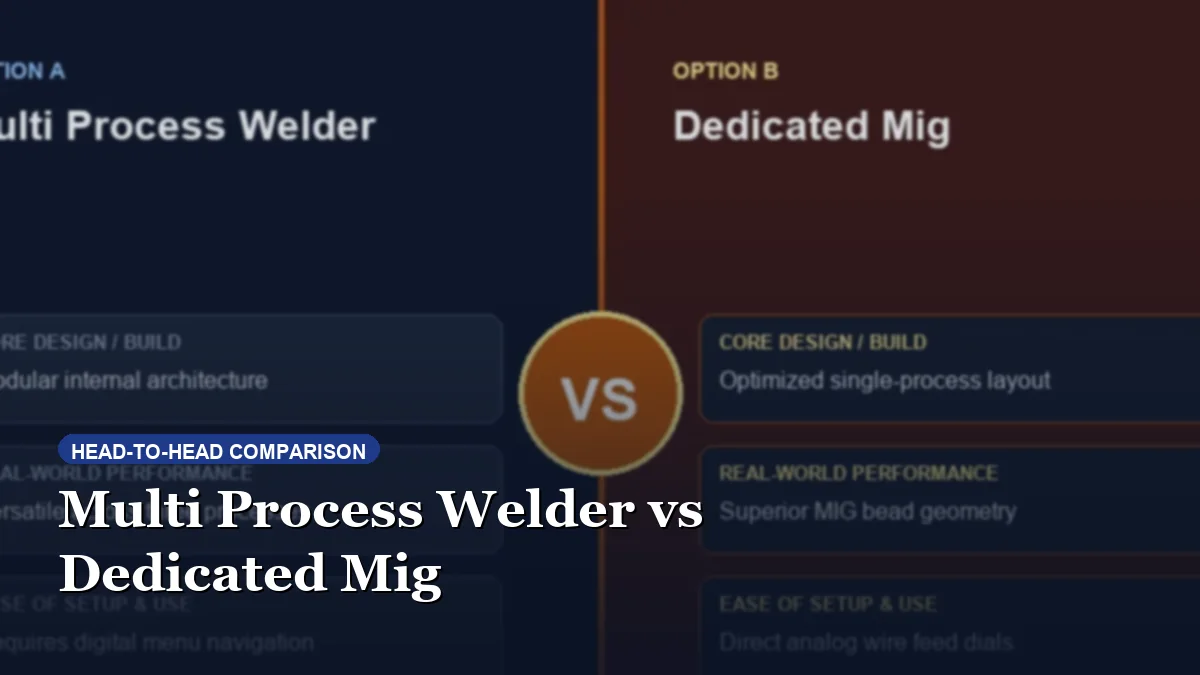
Choose a multi-process machine for maximum shop versatility, or select a dedicated MIG welder for uncompromising arc stability.
Compare all top models in our Best Welder: Top Home Shop & Jobsite Picks Tested.
Side-by-Side Breakdown
| Criteria | Multi Process Welder | Dedicated Mig | Edge |
|---|---|---|---|
| Core Design / Build | Modular internal architecture | Optimized single-process layout | Dedicated Mig |
| Real-World Performance | Versatile across three processes | Superior MIG bead geometry | Dedicated Mig |
| Ease of Setup & Use | Requires digital menu navigation | Direct analog wire feed dials | Dedicated Mig |
| Durability & Reliability | Complex circuit boards | Rugged heavy-duty contactors | Dedicated Mig |
| Efficiency / Operating Footprint | Consolidates three units into one | Requires dedicated bench space | Multi Process Welder |
| Maintenance Requirements | Higher diagnostic overhead | Simple mechanical upkeep | Dedicated Mig |
| Best Ideal Use Case | Fabricators needing rapid process switching | Production shops running continuous wire | Dependent on Shop Needs |
Architectural Overview And System Layout
Modern fabrication shops demand intelligent equipment that adapts to diverse metal joining requirements without sacrificing operational floor space. Evaluating internal layouts reveals how engineering compromises shape daily workflow efficiency.
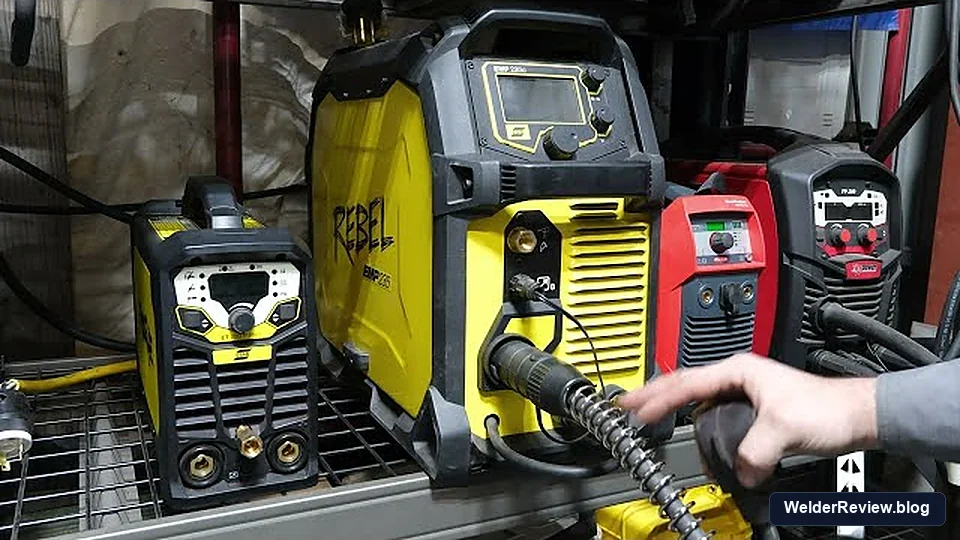
Selecting our top value multi process welder picks integrates multiple power topologies inside a single compact chassis. This design allows operators to transition smoothly between distinct welding methods using unified control panels.
Multi-process architectures integrate multi-voltage transformers and shared inverter blocks within a single chassis. This design reduces internal copper wiring but increases component density, requiring robust thermal dissipation pathways to prevent premature electronic failure.
Dedicated MIG units utilize dedicated constant voltage topologies optimized strictly for wire delivery. Their straightforward electrical pathways yield superior arc stability during high-amperage spray transfer, minimizing voltage drop across long internal bus bars under heavy loads.
- Integrated inverter boards handle mixed electrical loads.
- Shared cooling fans manage internal thermal dissipation.
- Consolidated gas solenoids reduce external plumbing requirements.
Internal Circuitry And Component Density
Packing three distinct welding circuits into one enclosure increases component density significantly. Technicians must manage complex wiring harnesses and multi-layered printed circuit boards during routine servicing.
Dedicated MIG systems feature uncluttered interior layouts built around heavy-duty transformer or dedicated inverter architectures. This mechanical simplicity enhances long-term thermal management and reduces failure rates.
- Simplified copper winding configurations.
- Independent diode bridge assemblies.
Arc Performance And Process Optimization
Consulting our beginner multi process welder guide highlights how achieving flawless weld puddles requires precise current delivery tailored to specific wire diameters. Multi-process units utilize software waveform controls to emulate dedicated arc characteristics.
Dedicated MIG machines deliver unrivaled arc stability specifically tuned for short-circuit and spray transfer modes. Their dedicated output inductors smooth out current ripples naturally during high-speed wire feed operations.
Switching between processes demands rapid firmware adjustments to recalibrate inductance curves. While modern microprocessors handle this efficiently, slight transient voltage spikes can occur when transitioning from pulsed MIG to high-frequency TIG ignition modes.
Dedicated MIG machines maintain fixed inductance tuning tailored specifically for solid and flux-cored wires. This eliminates software-driven compromises, delivering crisp puddle wetting and minimal spatter across demanding structural carbon steel fabrication operations.
- Optimized inductance curves for carbon steel.
- Precise voltage regulation under heavy duty cycles.
- Minimal spatter generation during root passes.
Transient Response And Voltage Control
When dealing with sudden arc length variations, dedicated systems react instantaneously through hardwired analog feedback loops. This physical responsiveness prevents stubbing and erratic wire burnback.
Multi-process units rely on digital signal processors to interpret arc feedback before adjusting output parameters. While highly adaptable, this digital translation can introduce microscopic latency during rapid transitions.
- Sub-millisecond analog correction speeds.
- Microprocessor sampling rate variations.
Interface Ergonomics And Operator Controls
Operator interaction dictates how quickly a fabricator can dial in correct parameters for varying material thicknesses. Digital menu systems contrast sharply with traditional analog potentiometers found on older units.
Multi-process welders utilize centralized digital dashboards to navigate complex parameter menus across different welding techniques. Operators must learn layered software interfaces to adjust inductance and arc force.
Examining ac tig multi process welder reviews reveals front panels relying on multifunction digital displays. Operators wearing heavy leather welding gloves often struggle with tactile feedback on membrane switches during fast shop-floor changes.
Dedicated MIG systems feature analog rotary potentiometers for wire feed speed and voltage. These physical dials provide immediate, glove-friendly adjustments, reducing setup errors and maximizing productivity in high-volume production welding environments.
- Multi-function rotary encoders for parameter selection.
- LCD screens displaying real-time amperage and voltage.
- Preset synergy charts stored in onboard memory.
Analog Simplicity Versus Digital Menus
Dedicated MIG welders prioritize tactile feedback using physical dials for wire feed speed and voltage. Welders can make blind adjustments with heavy gloves while maintaining visual focus on the puddle.
Digital interfaces on versatile units offer precise repeatability but can slow down temporary adjustments on the shop floor. Gloves often hinder accurate capacitive touch screen navigation.
- Dedicated coarse and fine voltage taps.
- Robust mechanical toggle switches.
Shop Footprint And Resource Management
Floor space directly influences operational productivity in modern metal fabrication environments. Consolidating equipment minimizes clutter and streamlines material handling around the main work table.
Exploring the best multi process welder options reduces equipment footprint by replacing three standalone power sources with one portable unit. This consolidation frees up valuable bench space for assembly work.
Multi-process units conserve valuable floor space by consolidating three separate power sources into one cabinet. However, frequent torch and gas line swaps can create operational bottlenecks around the shared cylinder cart configuration.
Dedicated MIG setups require dedicated gas cylinders and permanent gun setups, eliminating daily reconfiguration delays. This stationary footprint suits assembly lines where maximum uptime outweighs the need for multi-process flexibility.
- Single cart configuration for gas cylinders.
- Reduced primary electrical drop requirements.
- Streamlined cable management across the shop.
Power Distribution And Electrical Efficiency
Running multiple dedicated machines requires complex sub-panels and heavy-duty cabling distributed throughout the facility. A unified multi-process machine attaches to a single primary drop efficiently.
Facilities handling high-amperage production runs still benefit from dedicated heavy industrial MIG units connected to dedicated lines. These machines handle continuous high-duty cycles without thermal throttling.
- Optimized primary power factor correction.
- Reduced idle transformer energy losses.
Maintenance Protocols And Reliability Metrics
Equipment uptime dictates profitability for commercial fabrication shops and mobile repair technicians alike. Understanding failure modes helps maintenance personnel schedule preventative interventions effectively.
Multi-process machines feature complex internal diagnostics that quickly isolate circuit board failures during routine troubleshooting. However, sourcing specialized replacement components can occasionally introduce extended downtime.
Complex circuit boards inside multi-process welders increase diagnostic downtime when component-level failures occur. Technicians often need specialized diagnostic software and multimeters to isolate issues across shared control and power modules.
Dedicated MIG machines utilize modular contactors and straightforward transformer designs that simplify routine electrical maintenance. Plant electricians can quickly replace worn drive rolls or gas solenoids without extensive electronic troubleshooting.
- Onboard error codes for rapid fault identification.
- Integrated thermal overload protection sensors.
- Modular sub-assemblies for easier board swaps.
Mechanical Wear And Field Servicing
Dedicated MIG welders rely on robust electromechanical contactors and heavy copper transformers that withstand harsh industrial environments. Local technicians can easily repair these mechanical systems using universal replacement parts.
Sensitive electronics inside multi-process units require clean operating conditions free from excessive metal dust and moisture. Protective conformal coatings help mitigate environmental risks in heavy industrial settings.
- Heavy-duty drive roll gearboxes.
- Replaceable copper contact tips and liners.
Application Versatility And Metal Fabrication Fit
Matching the tool to the specific metallurgical requirements of your project ensures structural integrity and aesthetic appeal. Fabricators must weigh occasional multi-method needs against specialized production volume demands.
When your workload shifts unpredictably between thick structural steel and thin aluminum, a multi-process unit provides instant workflow adaptation. You eliminate time wasted swapping heavy equipment out.
Field service contractors benefit from high adaptability when tackling diverse repair jobs involving structural steel and thin aluminum sheets. Shifting from shielded metal arc to gas metal arc requires only minor lead reconfigurations.
Dedicated MIG systems excel in heavy structural fabrication where uninterrupted high-duty-cycle wire feeding is mandatory. They handle continuous multi-pass welds on thick carbon plates without thermal overload interruptions common in smaller units.
- Seamless transitions between stick and wire processes.
- Adjustable AC frequency for aluminum TIG welding.
- Dual-voltage input capabilities for job site mobility.
High-Volume Production Versus Job Shop Flexibility
Dedicated MIG setups excel in manufacturing cells where operators repeat identical fillet welds all day long. Their consistent wire feed mechanisms prevent birdnesting during extended trigger-down runs.
Job shops handling custom architectural elements require the expansive process capability of versatile multi-process power sources. They tackle unexpected repair jobs without dragging secondary equipment across the floor.
- Uninterrupted wire spool feeding stability.
- Optimized duty cycles for continuous production.
Economic Value And Long-Term Investment
Capital expenditure decisions require careful analysis of initial equipment costs against expected operational lifespans. Investing in the correct architecture prevents premature replacement and lost productivity.
Purchasing one versatile machine delivers superior capital efficiency compared to buying separate dedicated power sources for MIG, TIG, and stick welding. This approach stretches limited startup equipment budgets.
Purchasing a single multi-process machine reduces initial capital expenditure compared to acquiring separate MIG, TIG, and stick power sources. This upfront savings makes advanced welding capabilities accessible for growing fabrication shops.
Dedicated MIG units offer superior depreciation lifespans in production settings due to their rugged, single-purpose electrical architecture. Fewer internal crossover components translate into lower repair frequency and extended operational longevity over decades.
- Lower initial expenditure for startup operations.
- Consolidated accessory and consumable inventory.
- Reduced depreciation across a single asset.
Resale Value And Depreciation Considerations
Dedicated industrial MIG machines retain strong resale value due to their simple construction and proven durability. Fabrication shops eagerly purchase used units for dedicated production lines.
Multi-process units depreciate faster as digital technology evolves rapidly in the welding industry. Outdated software interfaces can complicate long-term parts availability and secondary market appeal.
- Established market demand for industrial transformers.
- Rapid technological obsolescence of digital boards.
Frequently Asked Questions
Can a multi-process welder perform MIG welding as well as a dedicated machine?
Modern multi-process units offer exceptional arc quality that satisfies most fabrication needs. However, dedicated MIG machines still maintain an edge in extreme high-duty cycle production environments.
What is the primary maintenance drawback of multi-process welders?
These versatile units contain complex circuit boards that complicate field repairs. Technicians usually must replace entire modular assemblies rather than fixing individual mechanical components.
Why do production shops prefer dedicated MIG equipment?
Dedicated machines provide unrivaled arc stability and straightforward analog controls. Operators can maintain continuous high-speed wire feeds without dealing with digital menu navigation.
Are multi-process welders difficult to set up for beginners?
Digital control panels provide helpful synergy charts that simplify initial parameter selection. Users simply input material thickness and wire diameter to automatically generate starting values.
Which machine type offers better long-term equipment durability?
Dedicated MIG systems feature robust mechanical designs that withstand harsh shop conditions for decades. Their simple internal architectures experience fewer electronic failures over time.